Constitutional amendments are necessary to ensure stability and progress for the people: Faisal
8 އޯގަސްޓު 2026 | ހޮނިހިރު 08:26Commemorating the 18th anniversary of the Constitution, former Vice President Faisal Naseem has expressed concern over the blurring of the separation of powers and proposed 14 key reforms to improve the governance system. His recommendations include reducing the number of parliamentary seats, restructuring the Judicial Service Commission (JSC), and establishing a legal limit on the appointment of political appointees.


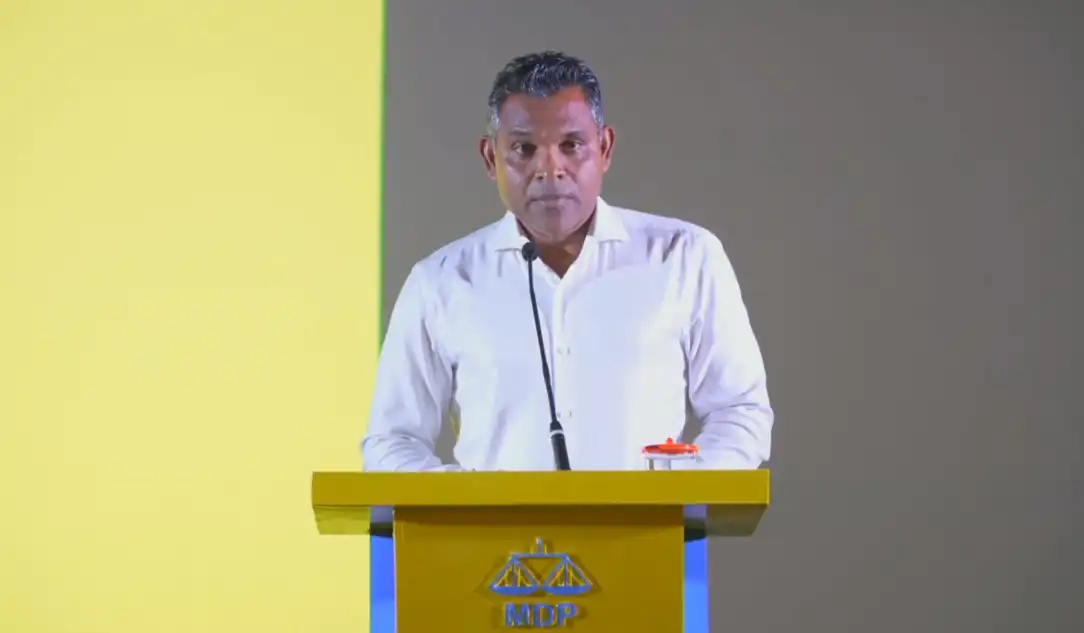
Former Vice President Faisal Naseem speaking at an MDP event. | Raajje MV
Former Vice President Faisal Naseem has stated that constitutional amendments are necessary to establish a governance system that commands full public trust, transform the nation into an economically self-sufficient state, and ensure stability and progress for its citizens.
In a post on X marking the 18th anniversary of the Constitution, Faisal stated that during the drafting process between 2004 and 2008, there were high hopes for the future. However, he noted that it is now necessary to reflect on the extent to which those aspirations have actually been realized for the citizens.
Expressing concern that the separation of powers mandated by the "Green Constitution" has been compromised by excessive inter-branch influence, Faisal stated that the public is deeply worried the nation is drifting off course. In a social media post, he outlined 14 proposed constitutional amendments he believes are necessary to rectify these issues.
These proposals include reducing the number of Parliament members to 60 and transitioning to an atoll-wide electoral system. To ensure judicial independence, the measures call for reforming the appointment processes for both the Judicial Service Commission (JSC) and the Chief Justice. Furthermore, the proposals seek to eliminate the President's role in appointing heads of independent institutions, shifting the authority to a direct nomination and approval process within Parliament. Additionally, the plan aims to amend Article 115 of the Constitution to curtail the President's currently unrestricted powers and to establish a definitive cap on the number of political appointees across government ministries, offices, and state-owned enterprises.
Furthermore, the proposal includes transitioning atoll administration to a fully decentralized system and devolving powers to local islands. It also outlines the establishment of a long-term national development plan, ensuring that ongoing development projects remain mandatory and uninterrupted despite changes in government. Additionally, it incorporates necessary reforms to expand opportunities for Maldivians within the country’s business and labor markets.
Faisal has expressed his support for constitutional reforms to introduce a publicly elected Head of State in addition to the President, who is directly elected by the people to lead the government. Furthermore, he advocated for the implementation of a specialized human resource development project aligned with international standards, prioritizing sectors most vital to national progress.
As the "Green Constitution" marks its 18th anniversary, Faisal noted that the Maldives has undergone significant positive transformations across successive administrations.