Government has never claimed that Maldives is in a favorable financial position: Chief Spokesperson
27 ޖޫން 2026 | ހޮނިހިރު 11:59The President's Office spokesperson stated that the government's ongoing structural reforms will reduce operational expenditures, addressing concerns over the Maldives' significantly high domestic debt. This comes as a World Bank report highlights an increase in government borrowing from financial institutions to cover expenses, while forecasting a widening fiscal deficit and a slowdown in economic growth for the coming years.

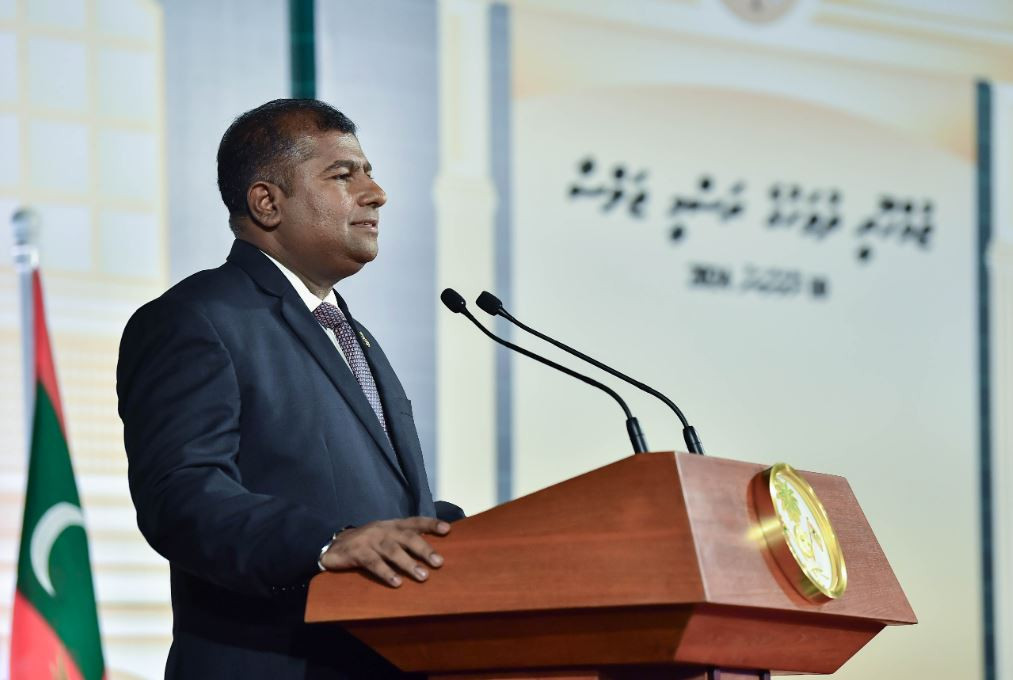
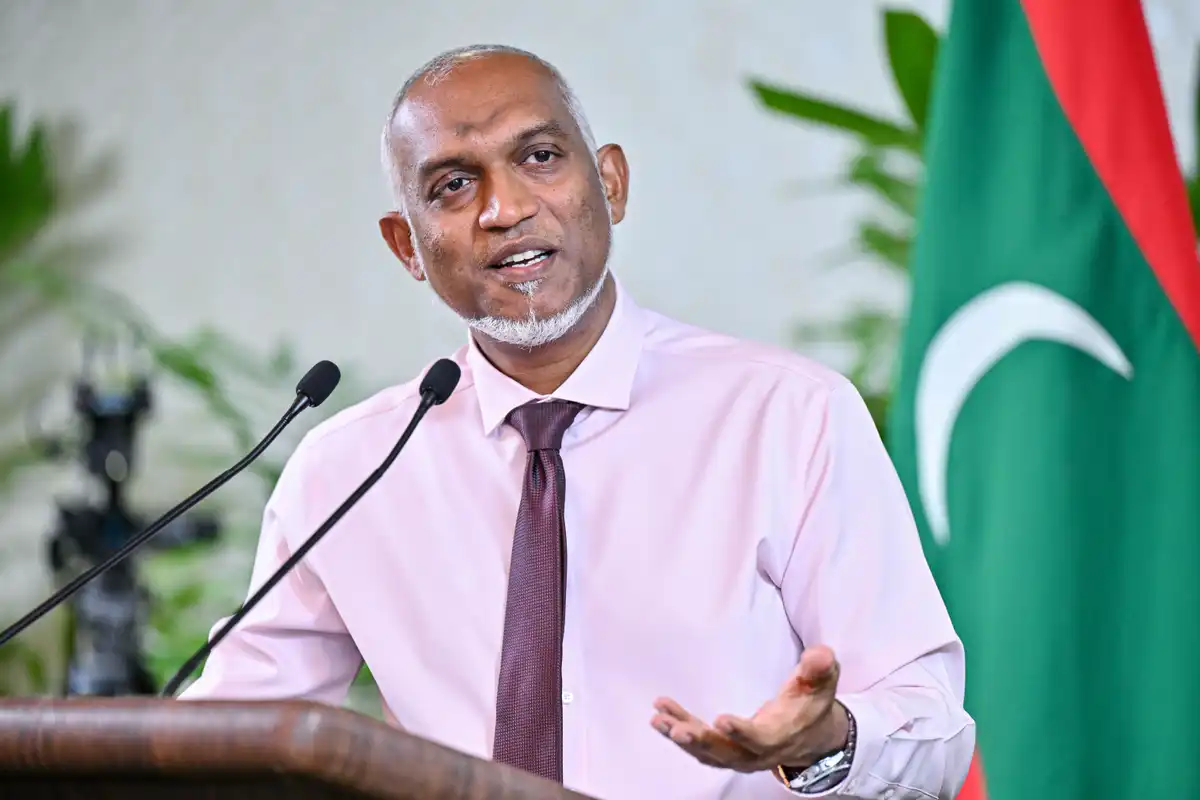
Chief Government Spokesperson Mohamed Hussain Shareef speaking during the "Presser with the Spox" program. | President's Office
The Chief Spokesperson at the President's Office, Mohamed Hussain Shareef, has stated that the government has never claimed the Maldives is in a favorable financial position.
Responding to a query from RaajjeTV regarding a World Bank report highlighting the Maldives' alarming debt situation, Chief Spokesperson at the President's Office, Shareef stated during Saturday's "Press with the Spokes" briefing that the government has never claimed the country's financial situation is in good standing.
Shareef stated that there are certain measures proposed by financial institutions that are simply not feasible to implement.
Shareef acknowledged that the Maldives' domestic debt has reached significantly high levels. He further noted that the current debt situation has escalated well beyond acceptable limits.
"You have raised a very valid point; our domestic debt is indeed high."
Shareef stated that administrative costs will be reduced once the government's ongoing reform initiatives are completed.
The World Bank's "Maldives Development Update" highlights that credit extended by the financial sector to the state and state-owned enterprises increased by 15.4 percent by the end of 2025 compared to the previous year.
This includes 75 billion Maldivian Rufiyaa ($4.9 billion, or 62.8% of GDP) in government securities and loans, as well as 8.5 billion Maldivian Rufiyaa ($552 million, or 7.1% of GDP) in loans issued to state-owned enterprises.
Overall, by the end of 2025, banks have extended 40 percent of their total assets to the state, while other financial institutions and the Maldives Monetary Authority (MMA) have provided 66 percent and 42 percent, respectively. The World Bank highlighted that these percentages represent the total volume of funds disbursed relative to the total assets of these institutions.
The World Bank has noted that while cash expenditures have been reduced, existing spending commitments remain high. This has led to reports of mounting payment arrears and significant financial challenges for state-owned enterprises. Looking ahead, the World Bank forecasts that due to declining tourism revenue and rising subsidy costs, the fiscal deficit is expected to climb to 10.9 percent of GDP by 2026, before stabilizing at 9.6 percent during the 2027-28 period.
The World Bank projects that economic growth will slow to 0.7 percent by 2026, driven by disruptions to tourism caused by ongoing conflicts in the Middle East, rising oil prices, and increasing challenges in securing financial assistance.