Each manta ray generates $2.6 million for the Maldives
6 ޖޫން 2026 | ހޮނިހިރު 12:09A new study by the Manta Trust reveals that each individual manta ray in Maldivian waters contributes approximately $2.6 million to the national economy over its lifetime. By assigning a specific financial value to these creatures, the study aims to demonstrate their economic significance to policymakers and bolster conservation efforts. As manta ray tourism continues to expand rapidly, the report emphasizes that reinvesting a portion of the industry's revenue into habitat protection is essential for ensuring a sustainable blue economy.
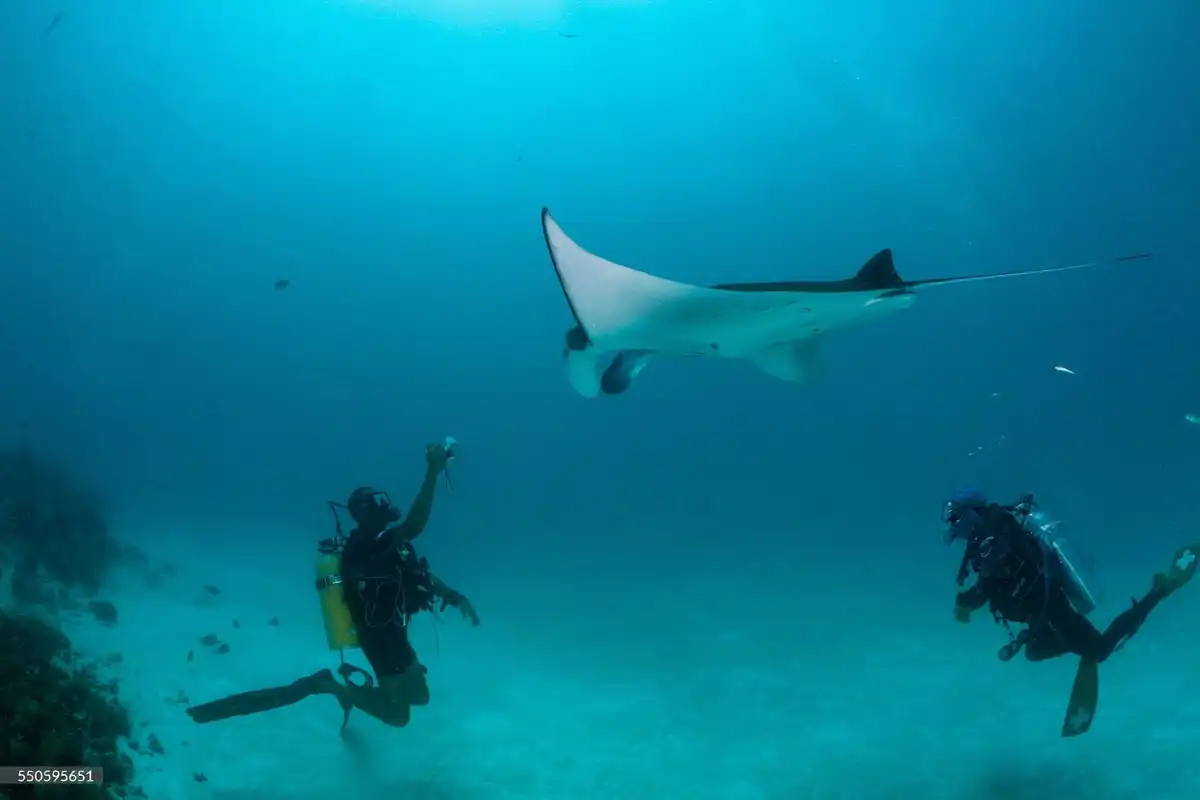
A scuba diver captures a photograph of an oceanic manta ray (*Manta birostris*) while diving in the protected waters of Hanifaru Bay in Baa Atoll. | getty images
A study has revealed that each manta ray is worth an estimated $2.6 million to the diving and snorkeling industry.
Manta ray tourism stands as one of the most significant natural assets to the Maldivian economy. A recent study conducted by the "Manta Trust" has now assigned a specific economic value to the nation's manta ray population. According to the research, manta ray sightings generate over $227 million in annual direct revenue for the Maldives. When indirect spending is factored in, this figure rises to $311 million, accounting for approximately 2.6 percent of the country's total Gross Domestic Product (GDP).
A UK-registered marine conservation organization, working alongside an international research team, determined these figures based on comprehensive data and surveys conducted among tour operators. The study calculated the long-term economic value of the Maldives' manta ray population, which is estimated at approximately 3,500 individuals. According to the findings, these manta rays are projected to generate a total of $8.6 billion in revenue for the Maldivian tourism industry over the course of their lifespans.
This means that every manta ray frequently sighted by scuba divers, freedivers, snorkelers, and other tourists is estimated to generate $2.6 million in revenue for the country over the course of its lifetime.
Conservation
"The reason it is essential to assign a financial value to creatures like manta rays is that many stakeholders, including politicians and decision-makers, primarily communicate in the language of economics," said Hannah Moloney, the lead author of the study and a PhD candidate at Australia’s University of the Sunshine Coast.
He further noted that assigning an economic value to an animal or an ecosystem provides stakeholders with greater clarity. He added that valuing wildlife increases the likelihood of implementing protective measures, which in turn leads to more effective outcomes for environmental conservation.
These findings highlight the critical importance of balancing tourism growth with the conservation of marine life, the protection of natural habitats, and the reinvestment of revenue back into environmental preservation efforts. Manta ray tourism in the Maldives has experienced rapid expansion, growing by 380 percent since 2008. These activities now take place across 95 percent of the country's administrative atolls. Furthermore, 80 percent of tourism service providers offer manta ray excursions, primarily centered around 92 key diving and snorkeling sites.
"This study effectively demonstrates that manta rays are not merely a species in need of protection, but are a vital national economic asset," said Dr. Guy Stevens, CEO of the Manta Trust.
He emphasized that with such valuable resources comes the responsibility to manage these populations effectively. This includes ensuring that tourism remains sustainable, protecting critical habitats, and reinvesting a sufficient portion of the revenue generated from these species back into their long-term conservation.
According to the Manta Trust, a portion of tourism revenue must be reinvested into conservation efforts. These initiatives should prioritize the protection of manta ray aggregation sites and feeding grounds, enhanced monitoring of tourism-related environmental pressures, and the implementation of robust conservation policies across the entire Maldives.
"As the manta ray tourism industry experiences rapid growth, the resulting pressures on these animals and their natural habitats are also intensifying," Molony stated.
He further emphasized the importance of identifying the most congested and high-risk areas. This is crucial for taking proactive measures to protect those locations before the adverse effects become severe.