Commander-in-Chief’s ignorance of military capabilities: a national concern?
25 މެއި 2026 | ހޯމަ 11:29A recent revelation that MNDF failed to inform Muizzu of its inability to conduct a specific search operation has raised serious concerns. Despite his role as Commander-in-Chief, the president was reportedly unaware of his military's lack of essential resources. This gap in awareness suggests a systemic failure in national security and communication, contradicting the administration's frequent claims of direct presidential guidance.

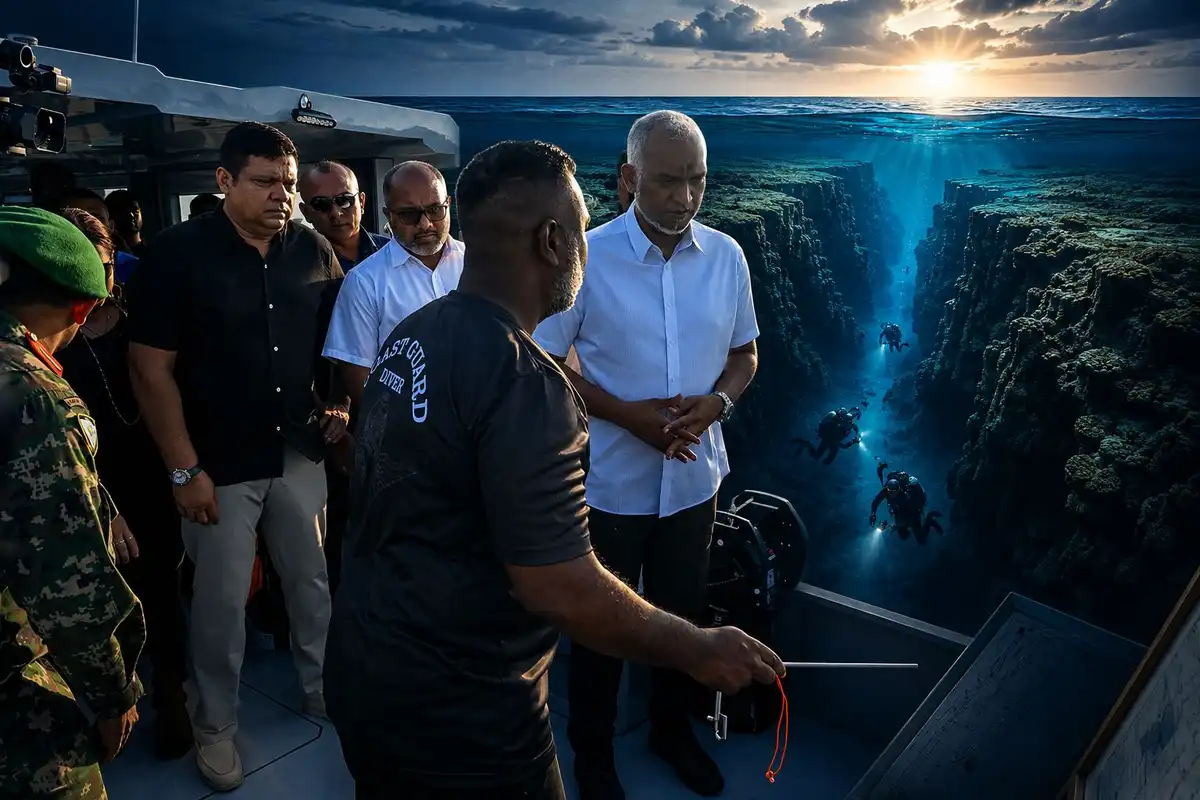
A soldier from the Maldives National Defence Force (MNDF) passed away while participating in a search and rescue operation on Saturday to locate four divers reported missing in Vaavu Atoll. | Raajje MV
The incumbent administration has made a noticeable habit out of a single, repetitive catchphrase. Since taking office, cabinet ministers, heads of state-owned enterprises and senior government officials have constantly declared that actions are being taken under the guidance and instructions of the incumbent. It is completely fair to say that a government press briefing almost never concludes without this exact line being delivered. The dynamic gives the distinct impression that these ministers and state institutions are utterly incapable of making even the most basic choices unless they receive explicit direction from the incumbent himself.
A stunning confession from the podium
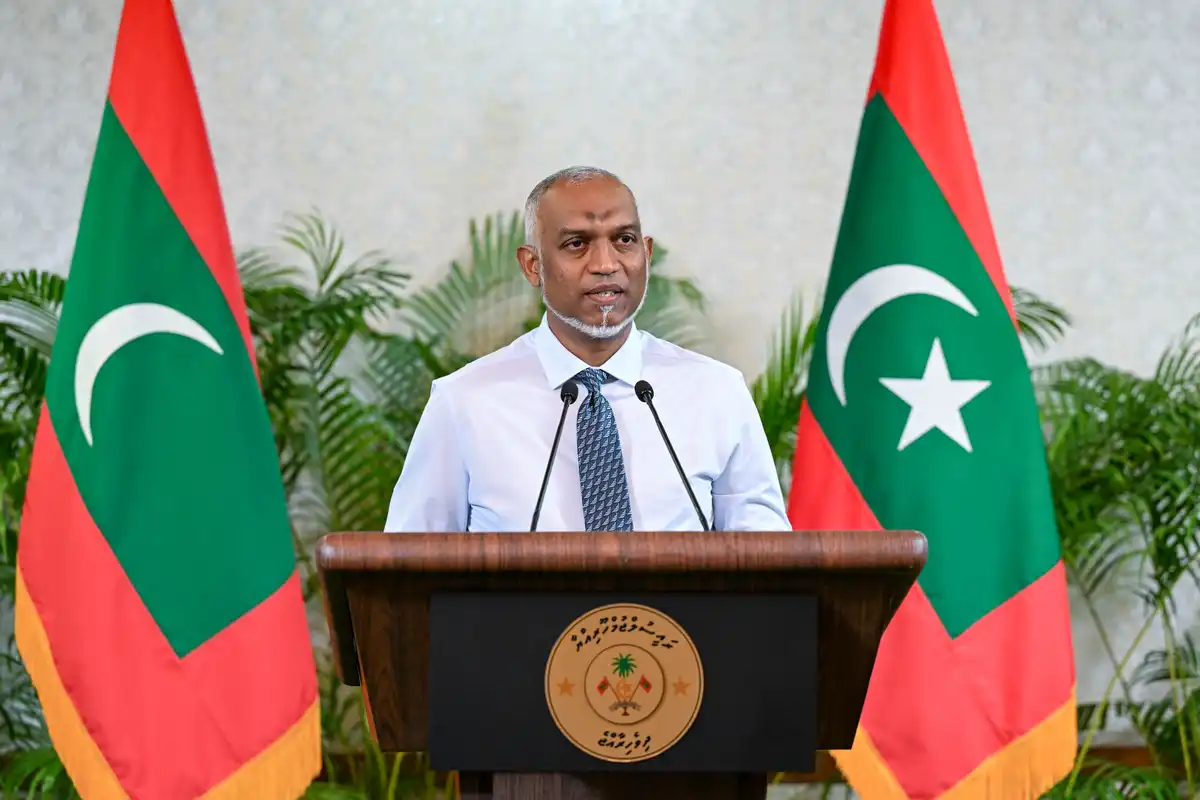
Despite that apparent micromanagement, a recent revelation from the government spokesperson has brought forward deeply troubling information for the Maldivian public. During a press conference on Saturday, government spokesperson Mohamed Hussain Shareef explained that when President Dr. Mohamed Muizzu personally visited the site to check on the progress of a search for missing divers, the military officers on the ground failed to inform him that the Maldives National Defence Force (MNDF), lacked the actual capability for that specific type of operation. The spokesperson went on to claim that if the incumbent had actually been told about this shortage, he would have stepped in to facilitate the necessary resources.
This admission sparks a fundamental and glaring question. As the official Commander-in-Chief of the armed forces, how is it possible that the incumbent was completely oblivious to his own military’s actual capabilities and key policy matters? When pressed on this exact issue by a journalist, Shareef attempted to explain it away by stating that even though the incumbent serves as the Commander-in-Chief, he chooses not to involve himself in handing down specific operational directives to the military.
Dodging the chain of command
The Armed Forces Act explicitly hands the incumbent the full legal authority to command the military. However, when the spokesperson was asked why the incumbent failed to exercise this power during such a critical emergency, he avoided giving a straight answer. Instead, he deflected the question entirely by pointing to the historical habits of past administrations, arguing that while the incumbent does hold the ultimate legal authority, he simply would not issue orders in that specific manner.
The latest narrative provided by the government regarding the search operation for the missing divers has ultimately pushed forward a dilemma that is far more serious and dangerous than the diving incident itself. If the incumbent, acting as the Commander-in-Chief, truly had no idea that the Maldivian military was completely unequipped to handle such a vital maritime search operation, it forces the public to ask who is actually directly responsible for keeping the country in a state of operational readiness.
Real danger of a disconnected leader
The core issue here is not about whether the incumbent should have been personally coordinating the tactical details of the rescue operation. The real crisis is the sudden revelation that the individual who is supposed to head national security was completely blind to the actual resources, limitations, constraints and overall readiness of the primary institution under his direct command.
This gap in awareness is incredibly significant when you consider that the Maldives is an archipelago entirely surrounded by vast oceans, which makes maritime military capability an absolute pillar of basic national defense. In a geographically scattered island nation like this, search and rescue operations are not a luxury, but a frequent and essential necessity.
A systemic failure at the very top
The explanation offered by the spokesperson leaves the public staring at two incredibly troubling possibilities. It means either that there is a severe operational deficiency buried within the military that the Commander-in-Chief is totally unaware of, or that the communication network between the civilian government and the military is so fundamentally weak that critical information cannot even reach the highest office in the country.
Ultimately, these official statements create a striking paradox. While the phrase presidential instruction is loudly credited for nearly every single routine government action, the incumbent’s actual involvement in critical military matters regarding national security and public safety is now facing serious scrutiny. This lack of awareness from the Commander-in-Chief regarding the capabilities of his own institution is being viewed by many as a massive, systemic failure in how the state is being governed.