Failure to resolve debt crisis risks plunging people into further hardship: former President Nasheed
17 މެއި 2026 | އާދީއްތަ 16:40Former President Nasheed has warned that the Maldives risks losing the social security and prosperity achieved through democracy if the nation's debt crisis remains unresolved. Highlighting that debt burdens are exacerbated by repayment obligations falling due long before development projects generate revenue, he argued that the solution lies not just in austerity measures but in comprehensive debt restructuring. Consequently, Nasheed emphasized the urgent need for a significant shift in the country's economic trajectory to navigate this precarious situation.

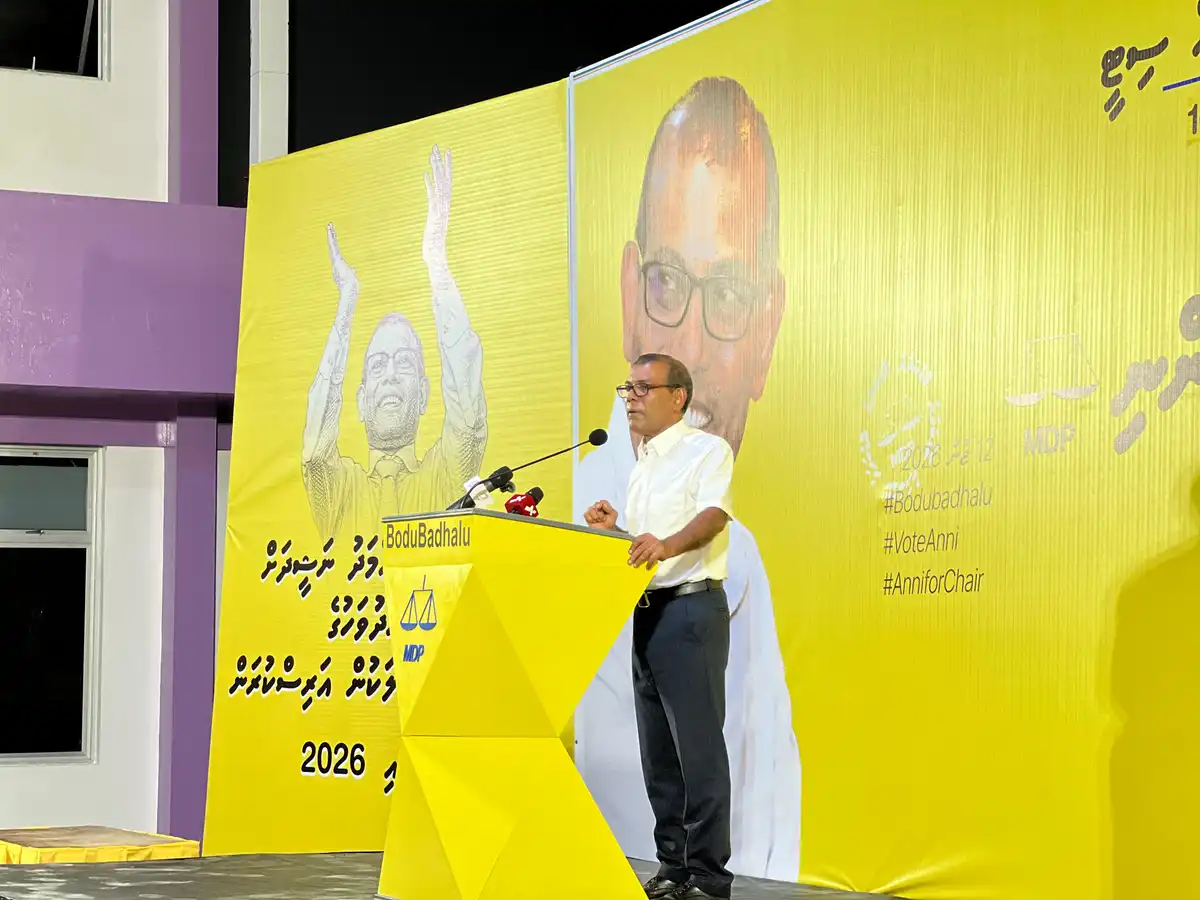
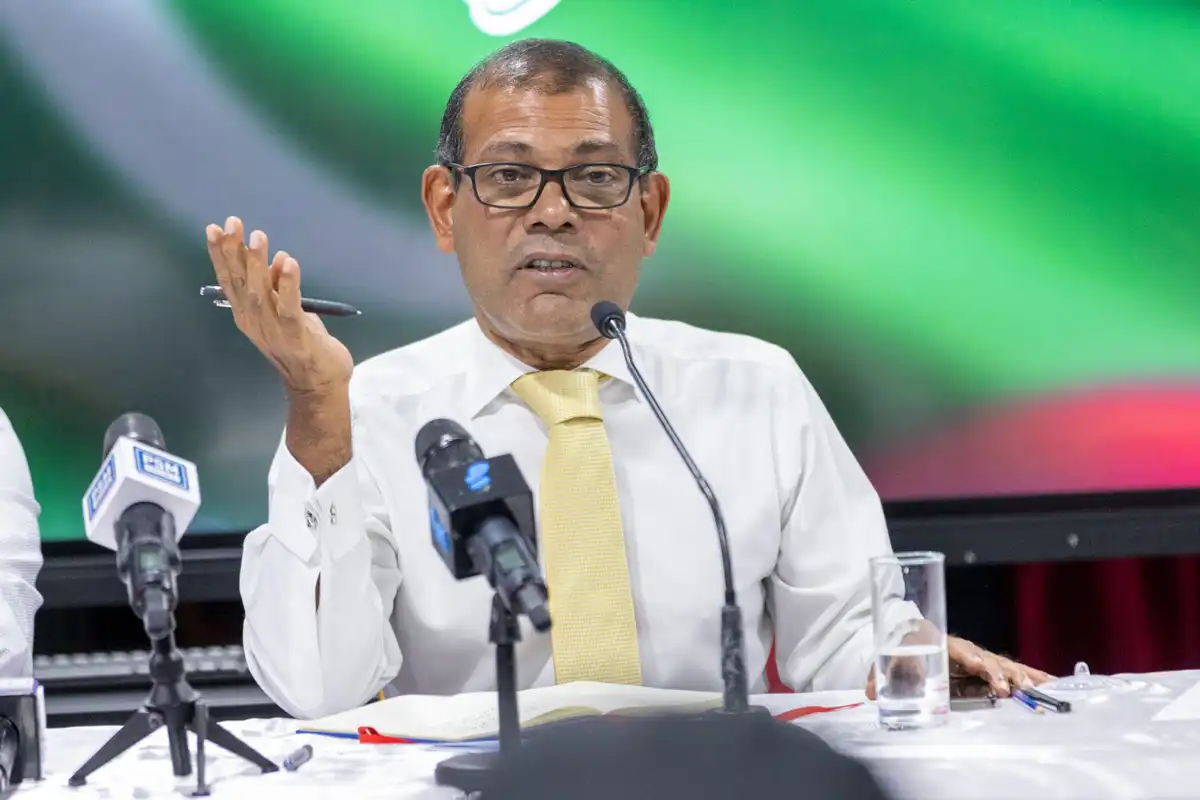
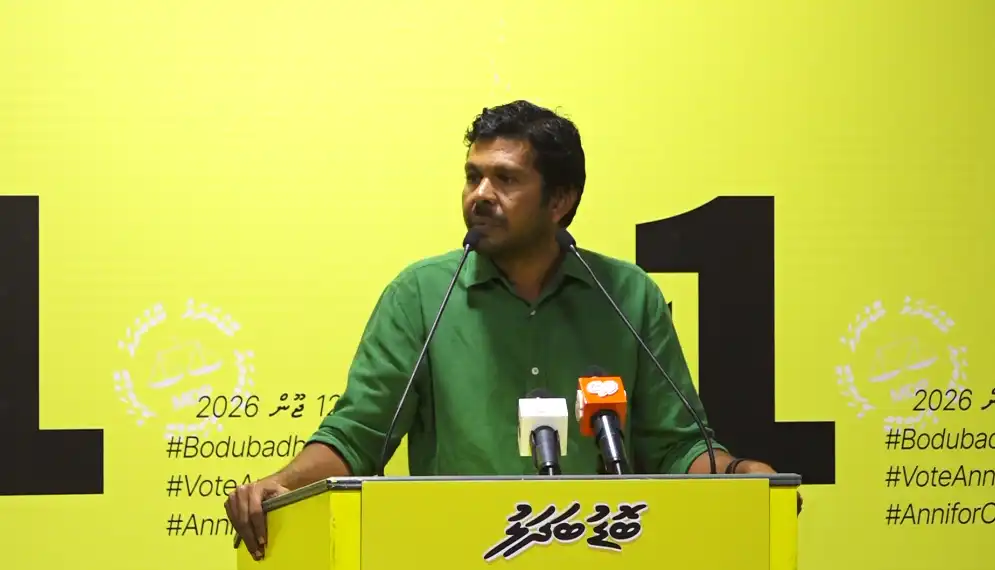
Former President Mohamed Nasheed delivers remarks during the "Bodu Badhalu" campaign rally held in Fuvahmulah City on Saturday night. | RaajjeMV
Former President Mohamed Nasheed has warned that the Maldives is facing a severe debt crisis, cautioning that failure to resolve the issue could push the public into further hardship.
Speaking at the "Bodu Badhalu" campaign rally held in Fuvahmulah City on Saturday night, Nasheed stated that the Maldives embraced a multi-party political system in 2008.
He stated that the transition to a system guaranteeing freedom of expression, freedom of assembly, and the right to engage in peaceful political activity has led to a multi-fold increase in public prosperity.
It is clear to everyone that the citizens of the Maldives are now provided with a comprehensive social safety net. Support is being extended to single mothers and orphaned children, while assistance is consistently provided to persons with disabilities. Furthermore, we have introduced senior citizens' pensions, provided students with essential stationery and learning materials, and facilitated free higher education. We have also successfully established a minimum wage in several sectors. This prosperity was achieved through the robust spirit of democracy and is the direct result of our collective efforts.Former President Mohamed Nasheed
Referring to the Maldives' debt situation, Nasheed expressed his deep concern, warning that failure to resolve the issue poses a significant risk of losing the nation's current prosperity and falling into economic hardship.
Highlighting the city's progress, Nasheed noted that between 200 million and 300 million Rufiyaa has been invested in various development projects in Fuvahmulah. However, he questioned the logic of being required to settle the loans for these projects before they are completed and before the public can reap their intended benefits.
These funds were expended on establishing water and sewerage systems, harbor construction, coastal protection, road development, and various other infrastructure projects. However, we must ask critical questions: for instance, the coastal protection revetments cost $4,000 per meter. Has this infrastructure truly enhanced the financial prosperity of our citizens? Does paving a road bring tangible economic growth to the families living alongside it? Ideally, the loans taken for these roads or breakwaters should be repaid through the increased income and wealth generated by these very projects. Over the past 20 years, I have observed a troubling pattern. It takes approximately two to three years just to initiate an infrastructure project. After citizens have spent years requesting a service, the startup phase alone consumes about two years, and completion takes another five. For that project to then generate income—to transform a road, for example, into actual economic prosperity—takes between seven and ten years. Yet, these loans typically fall due within five to six years. This creates a significant fiscal gap. In the Maldives, this gap is widening, making it increasingly difficult to find a sustainable path for debt management.Former President Mohamed Nasheed
Nasheed stated that President Dr. Mohamed Muizzu's administration is failing to consider viable solutions for the national debt. He emphasized that this issue cannot be resolved through expenditure cuts alone; instead, it requires restructuring the debt and seeking innovative repayment strategies. Furthermore, he asserted that the Maldives must head toward significant systemic changes to effectively address this crisis.