Pass the buck: Muizzu blames messenger after voters shred his agenda
20 އެޕްރީލު 2026 | ހޯމަ 09:11Muizzu is facing criticism for blaming campaign teams and opposition rhetoric for a major electoral defeat instead of taking responsibility. Despite using state media and resources to promote his agenda, over seventy percent of voters rejected his proposal, surpassing his 2023 victory margin. These results from the referendum and local by-elections signal a deep systemic disconnect and a significant loss of public trust early in his administration.

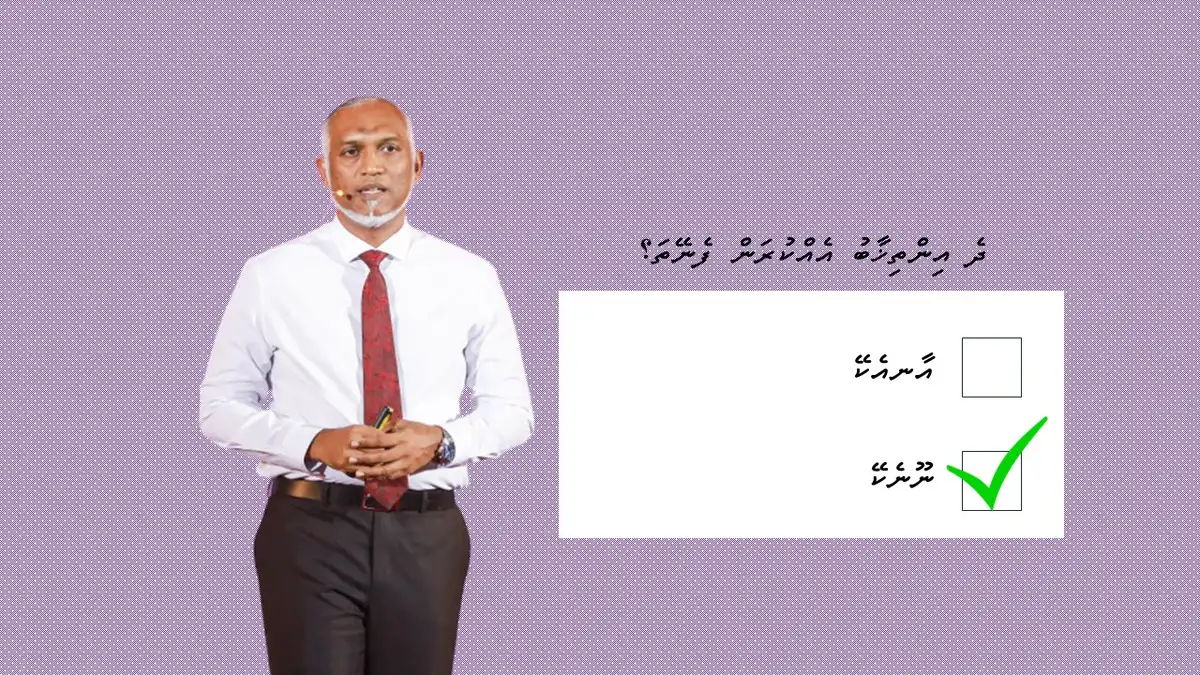
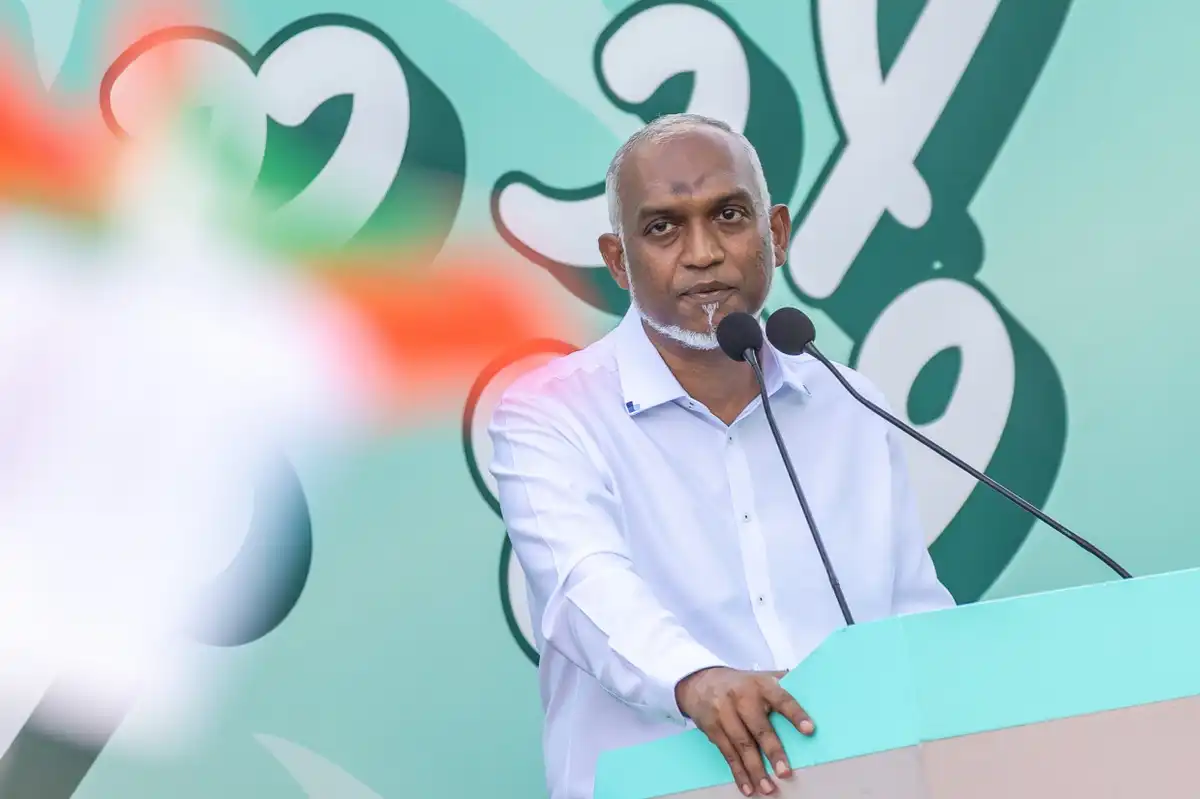
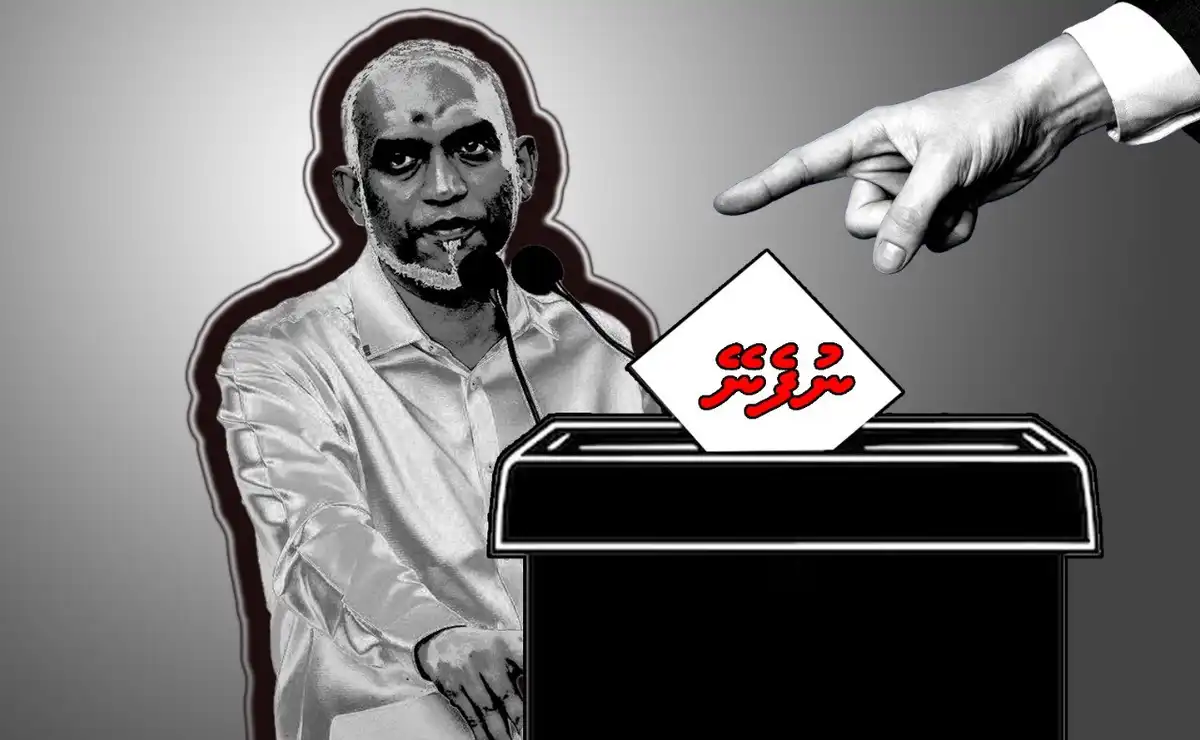
President Dr. Mohamed Muizzu. | RaajjeMV Graphics | Raajjemv graphics
In the aftermath of the constitutional referendum and the simultaneous by-elections for local councils and Women’s Development Committees, President Dr. Mohamed Muizzu’s response has been a masterclass in dodging accountability. Rather than owning a disastrous night at the polls, the incumbent has pivoted to a tired defense, claiming the disappointment was simply a result of incompetent campaign teams and a public that was somehow brainwashed by the opposition’s narrative. However, when you peel back the layers of this excuse, the narrative doesn't just crumble, it vanishes.
The monopoly on information
The incumbent's attempt to claim he was "out-talked" is particularly rich given that the presidential decree for the referendum was custom-built to showcase only his personal position. While the letter of the law might not technically force a leader to present both sides, a leader with an ounce of genuine good faith would have offered the public a balanced view. Instead, Muizzu chose a one-sided approach and is now acting shocked that the public didn't buy what he was selling.
The state-funded megaphone
The excuse that the government’s message didn't reach the ears of the public is laughable when you consider the sheer volume of state resources poured into the campaign. State media spent every waking hour acting as a tireless PR machine for government policies and the incumbent's personal agenda. Beyond the airwaves, the entire machinery of the state was mobilized, from choreographed rallies to high-pressure efforts to manufacture public support. To suggest that the electorate only heard "opposition rhetoric" in an environment saturated by government propaganda is nothing more than a convenient, transparent excuse to mask a total electoral collapse.
The brutal math of rejection
If the incumbent wants to find the real reason for the loss, he should look at the scoreboard, which provides a much more profound and damning message. The referendum acted as a blunt instrument for measuring public sentiment, and the numbers are staggering. Over 130,919 people cast votes against the incumbent's proposal, which is a figure that actually exceeds the 129,159 votes he managed to scrape together during his 2023 presidential victory. This isn't a minor campaign hiccup or a narrow loss; it is a cold, statistical confirmation that the government has successfully alienated a massive portion of its own electorate in record time.
A total lack of trust
The simultaneous council and WDC elections only hammered the point home. These results serve as the political pulse of the nation, and they show a heartbeat that is fading fast for this administration. The fact that this decline in trust was consistent across various constituencies proves that the problem isn't about how the message was "executed" by campaign workers, but rather a fundamental, systemic disconnect between the people in power and the people in the streets.
The 70 percent snub
The reality of the situation is underscored by the fact that roughly 70 percent of voters flatly rejected the incumbent's proposal. While politicians love to play with numbers, a margin this massive is impossible to hand-wave away. It is a screaming signal of deep-seated public dissatisfaction with how the country is being run, arriving exceptionally early in the administration's term.
Leadership by scapegoat
By shifting the blame onto the campaign teams, Muizzu is effectively abdicating the most basic responsibilities of leadership. You cannot blame the marketing department when the product itself is what the public is rejecting. These results are a direct reflection of government policy, a flawed leadership style and a total failure to engage meaningfully with the citizens. Instead of stepping up and showing an ounce of political accountability, the incumbent is desperately hunting for scapegoats to take the fall for his own shortcomings.
A verdict that can’t be ignored
Ultimately, the fantasy that the public was simply "uninformed" doesn't hold up against the reality of a campaign that used every available state resource. The people weren't confused; they were clear. They delivered a definitive, crushing verdict through the ballot box.
The only question left is whether this government is capable of actually listening to the message, or if it will continue to plug its ears and blame the help.