Explosive audio leaks ignite public fury across social media; gov't refuses to speak
9 ނޮވެމްބަރު 2026 | ހޯމަ 09:44Significant concerns have emerged following the leak of high-level government discussions regarding the 99-year leasing of land and the potential authorization of alcohol sales within the Ras Malé project. Given the confidential nature of the project's agreement, many perceive these developments as a potential threat to the Maldives' national independence and Islamic sovereignty

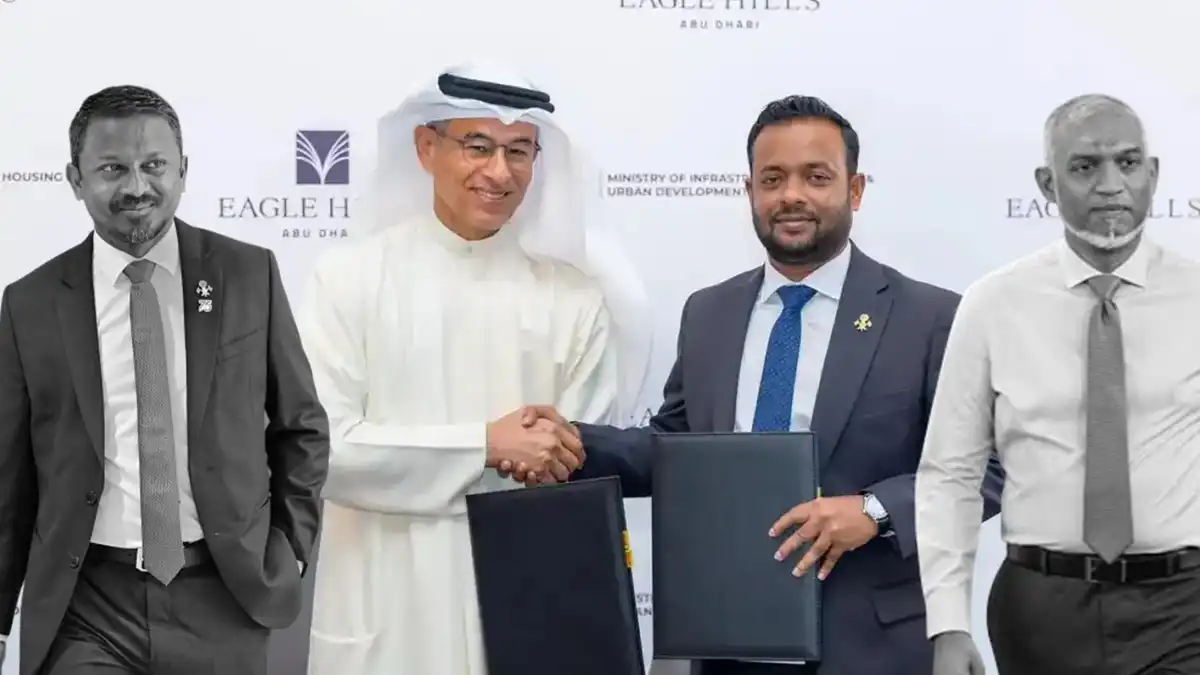
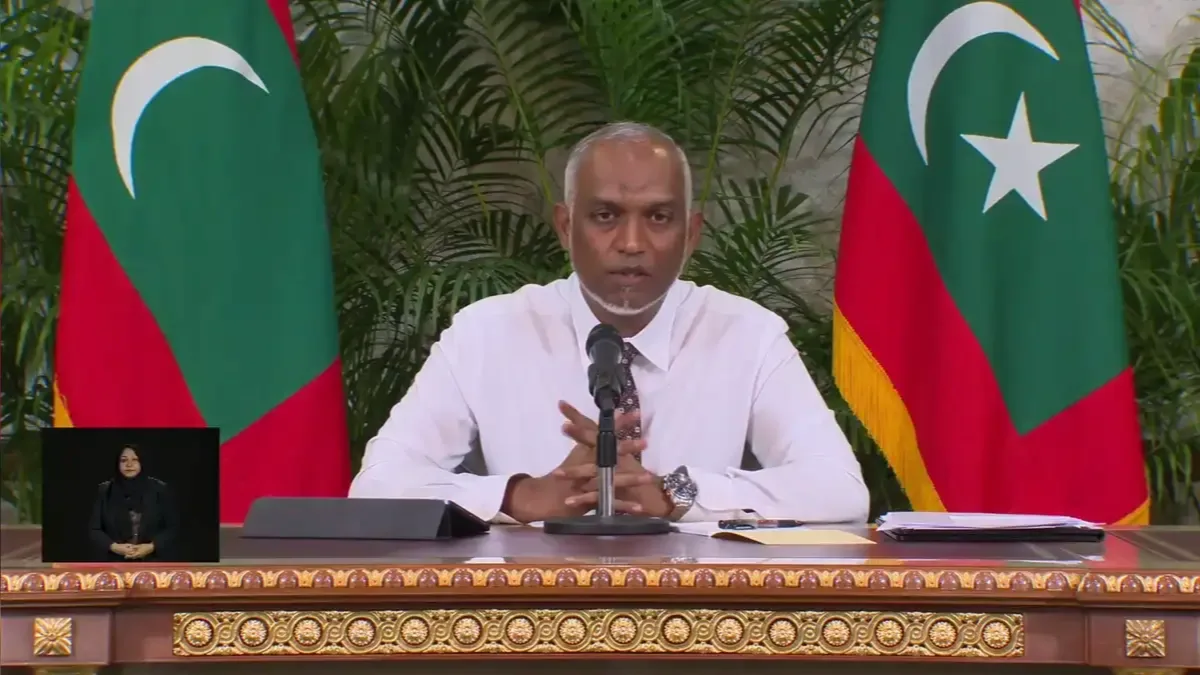
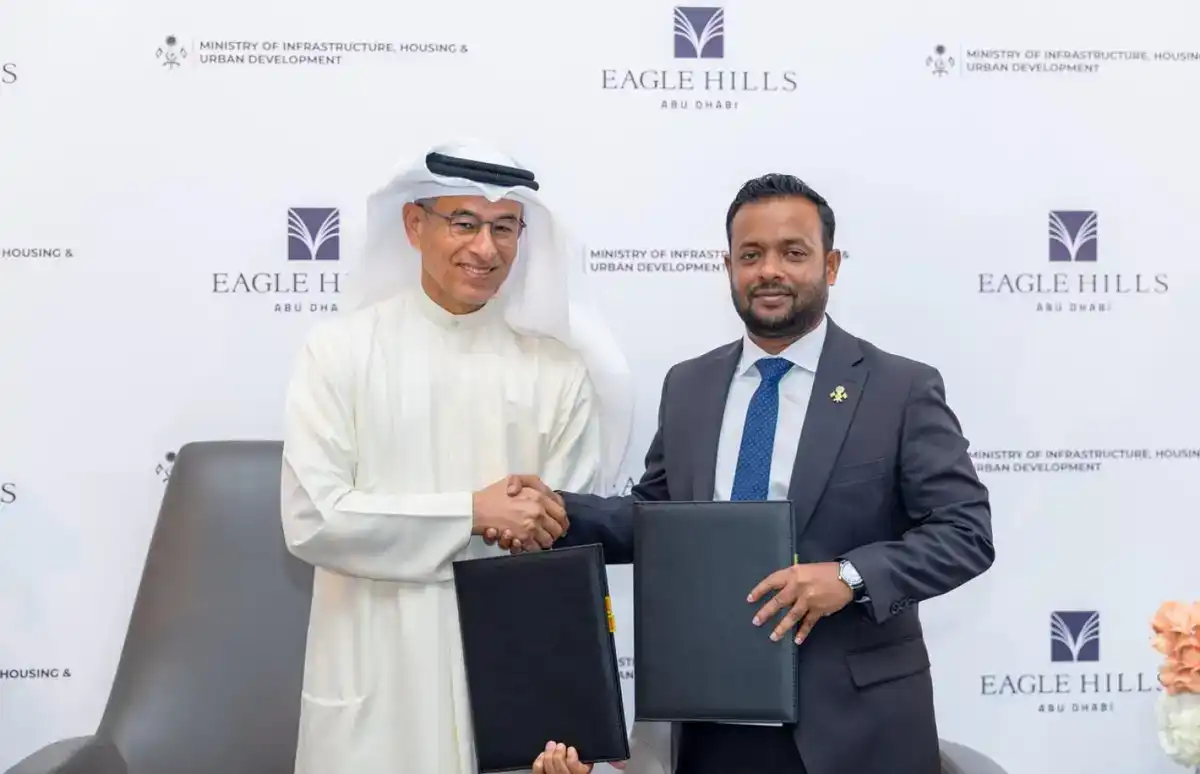
President Dr. Mohamed Muizzu (R), Minister Muththalib (RC), Attorney General Usham (L), and Mohamed Alabbar, Chairman of the UAE-based Eagle Hills company (LC) | raajjemv
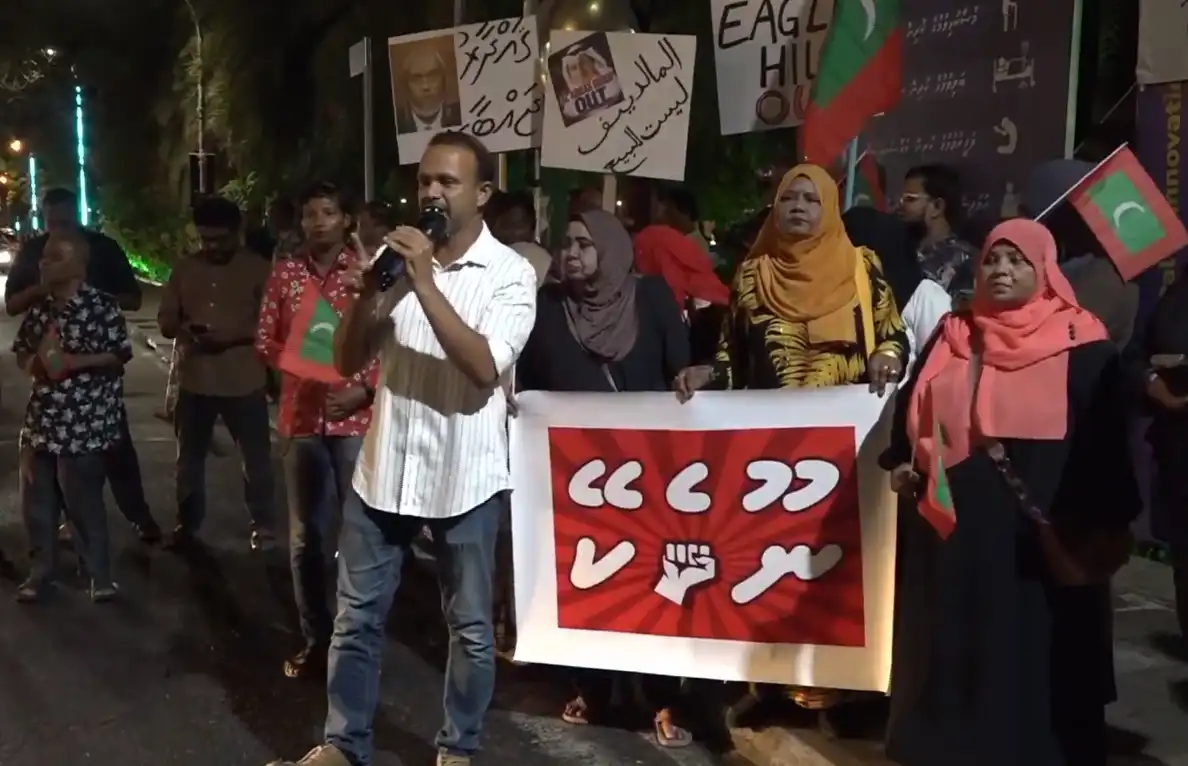
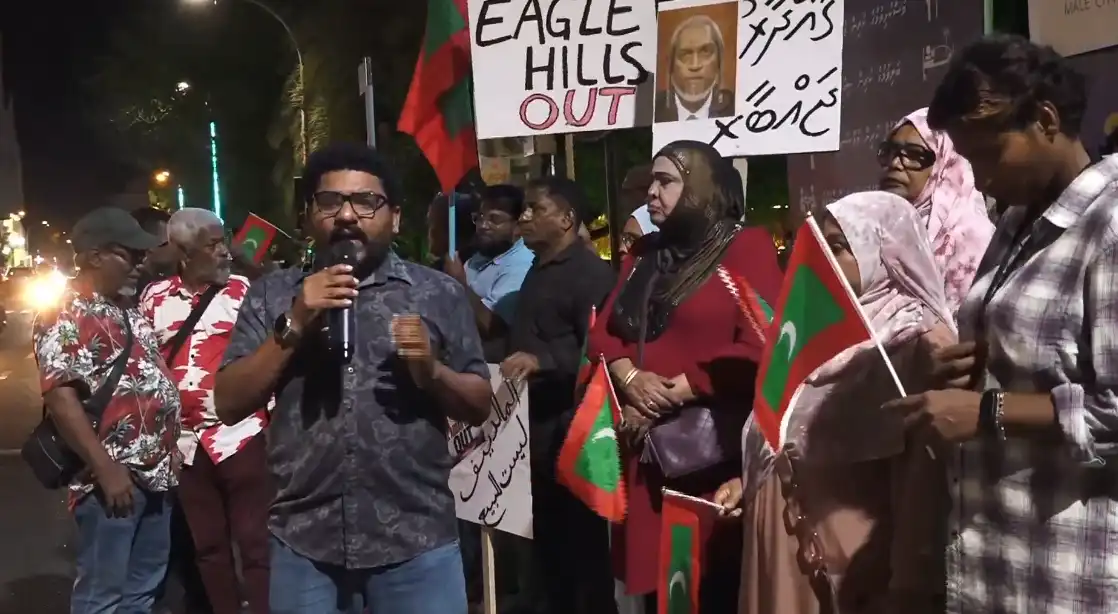
A relentless stream of leaked recordings across social media platforms has ignited widespread public fury, but the corridors of power remain eerily mute.
Each fresh exposure surrounding the Ras Malé scheme strips away another layer of what increasingly looks like a massive deception, one that the reigning regime continues to desperately paper over.
Far from a routine infrastructure venture, this sprawling mega-undertaking cuts straight through the constitutional architecture of the nation, gambling away both Maldivian sovereignty and the long-term destiny of its populace.
The administration’s covert maneuvering to surrender vast tracts of native soil to an overseas conglomerate, the United Arab Emirates-based firm Eagle Hills, has now been laid bare for all to witness.
99-year sellout and the subversion of law
Every fragment of evidence emerging from these unauthorized sound files paints a grim portrait of an executive branch comfortable with deceiving its electorate down to the most minute technicality.
In the leaked recordings concerning the site, the Minister of Infrastructure, Housing and Urban Development, Dr. Abdulla Muththalib, is heard explaining that parcels and title deeds across Ras Malé are slated for distribution under renewable 99-year tenure pacts.
This single admission lays bare a reckless mechanism devised by the state to confer virtually everlasting dominion over Maldivian territory to external actors, effectively trampling the Constitution and evading the jurisdiction of established domestic legislation.
Presidential guarantees crumbled by closed-door deals
The charade unravels further with an audio segment purported to feature Attorney General Ahmed Usham, in which he indicates that the commerce of liquor will in fact, be licensed across hotels slated for development within the project perimeter.
This private concession directly eviscerates the solemn vows offered to the public by President Dr. Mohamed Muizzu, who had repeatedly insisted that neither alcohol nor pork products would ever cross into the development.
During the officially hosted Nation Chat forum organized by the President’s Office, the Head of State made elaborate declarations assuring citizens that no trade involving intoxicating beverages would take place on the reclaimed island.
He made a point of insisting that the statutory restrictions enforced there would dwarf even the stringent standards applied to domestic tourist resorts, expressly dictating that libations could neither be purchased nor ingested.
The President went so far as to vow binding legal guarantees that would permanently outlaw liquor consumption across the territory, offering the pious forecast that the demographic makeup would consist overwhelmingly of Muslim residents, effectively discouraging anyone with non-conforming ways of life from establishing residence.
However, behind shut doors the taped exchanges between high-ranking cabinet officials reveal these pious assurances as empty theatre designed for political distraction, leaving the official narrative devoid of credibility.
500 hectares handed out for pocket change
Financial analysts and constitutional scholars are already sounding alarms over what they describe as permanent fallout for the independence and self-rule of the archipelago.
Without subjecting the development to even a semblance of open, competitive tendering, the authorities have relinquished in excess of 500 hectares of national property to an external corporate giant, while stubbornly refusing to publish the definitive monetary windfalls owed to the treasury.
The regime attempts to soothe taxpayers by insisting that the state will claw back a mere 10 percent of commercial development returns alongside a negligible four percent cut of residential condominium sales.
In practical terms, this arrangement resembles nothing short of handing over one of the country's most precious sovereign assets to foreign tycoons free of charge.
However, despite relentless demands from the citizenry to bring the signed contracts into the open, the administration continues to operate behind drawn blinds, scrambling to cement the paperwork before public dissent boils over completely.
Sovereignty sacrificed under the guise of secrecy
There is overwhelming cause to suspect that this relentless secrecy masks a far more damaging agenda. By obscuring the definitive contractual clauses, the demographic realities of overseas migration and the grave legal and societal perils rooted in global accords, the state is steering the nation into unchartered peril.
Surrendering sovereign ground on nearly century-long horizons could, under recognized conventions of international law, open doors for external legal jurisdictions within local borders and facilitate the construction of non-Islamic shrines, striking a fatal blow against the cultural heritage and Islamic cohesion that define the country.
The unyielding determination to cloak the Ras Malé enterprise in darkness stands as damning proof of grand corruption and unlawful profiteering, placing the very survival of the republic and its Islamic foundation on the line.