Malé flooding nightmares resurface, Muizzu’s flood calculations fall apart!
22 އޮކްޓޯބަރު 2026 | ބުރާސްފަތި 14:38Despite Muizzu's previous assurances that the flooding issues in Malé had been resolved, recent heavy rainfall has caused significant flooding, leading to immense hardship for residents. Malé City Mayor Adam Azim attributed the escalation of the problem to the removal of water pumps without a backup plan during road construction efforts. This situation has highlighted the critical need to strengthen and manage the entire drainage system under a unified framework.

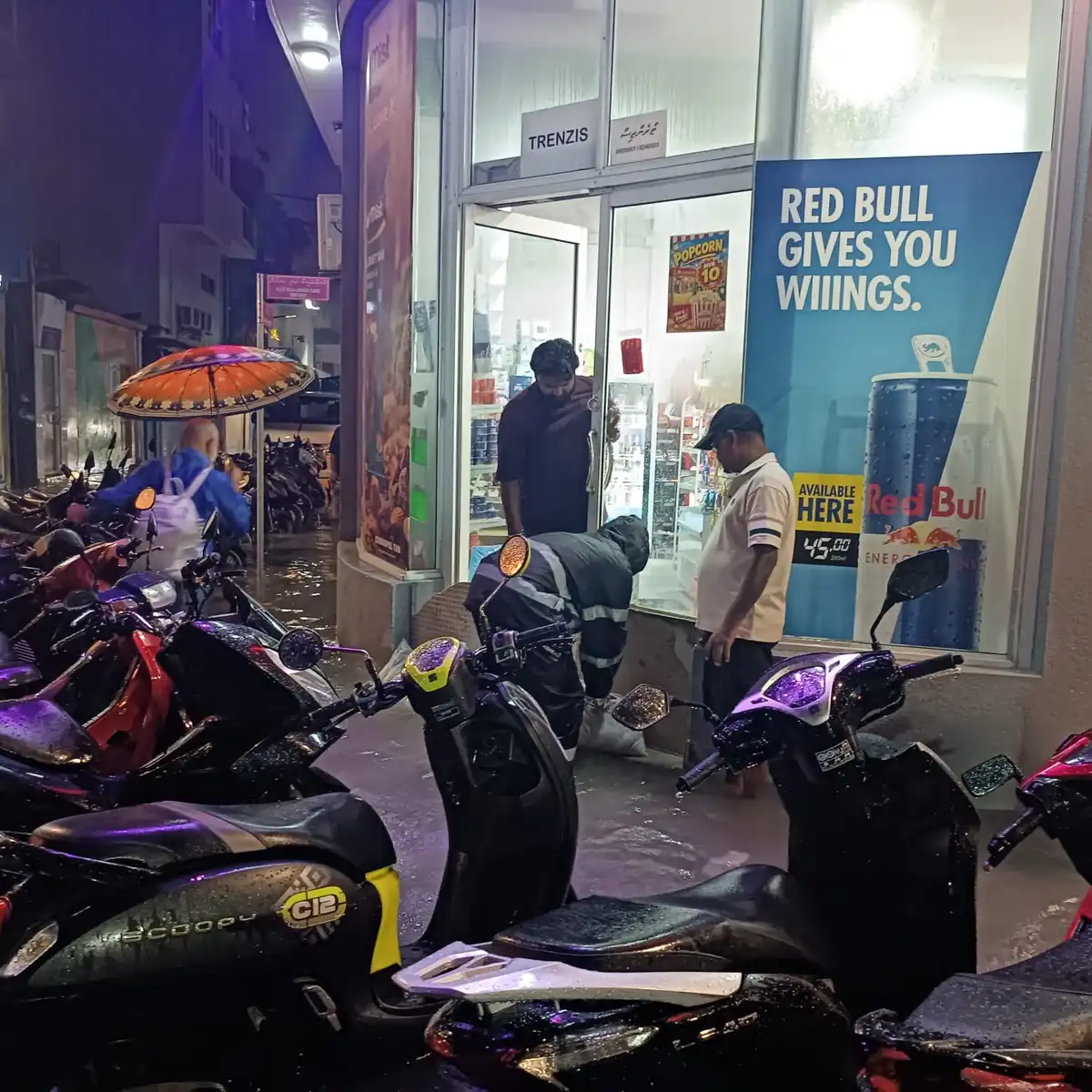
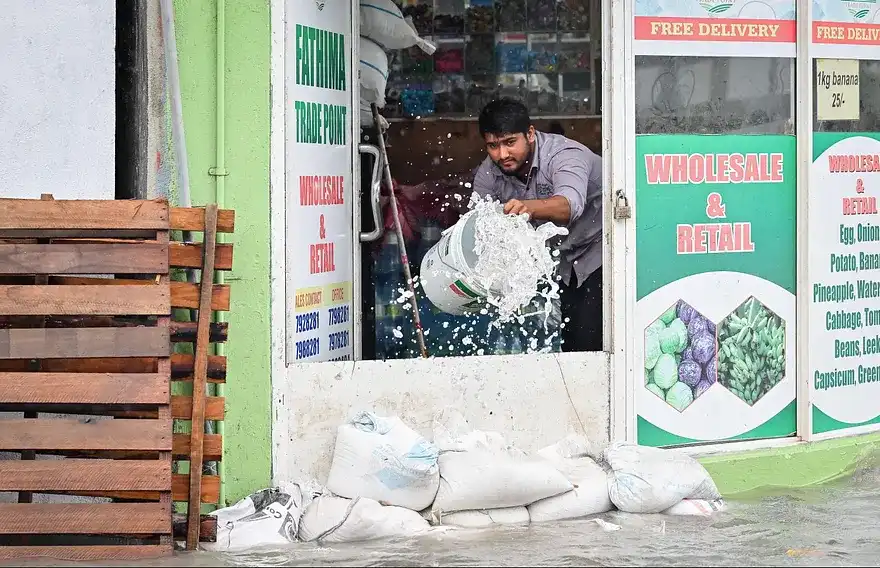
Authorities and shopkeepers stacking sandbags to prevent flooding after heavy torrential rain lashed Malé City on the night of 21 October 2026. | RaajjeMV
Try as one might to repress the grim visions of the flooded capital, those stubborn memories refuse to drown. Despite past insistence from the former Housing Minister that the public should simply wipe those memories clean, the lingering scenes stay uncomfortably sharp.
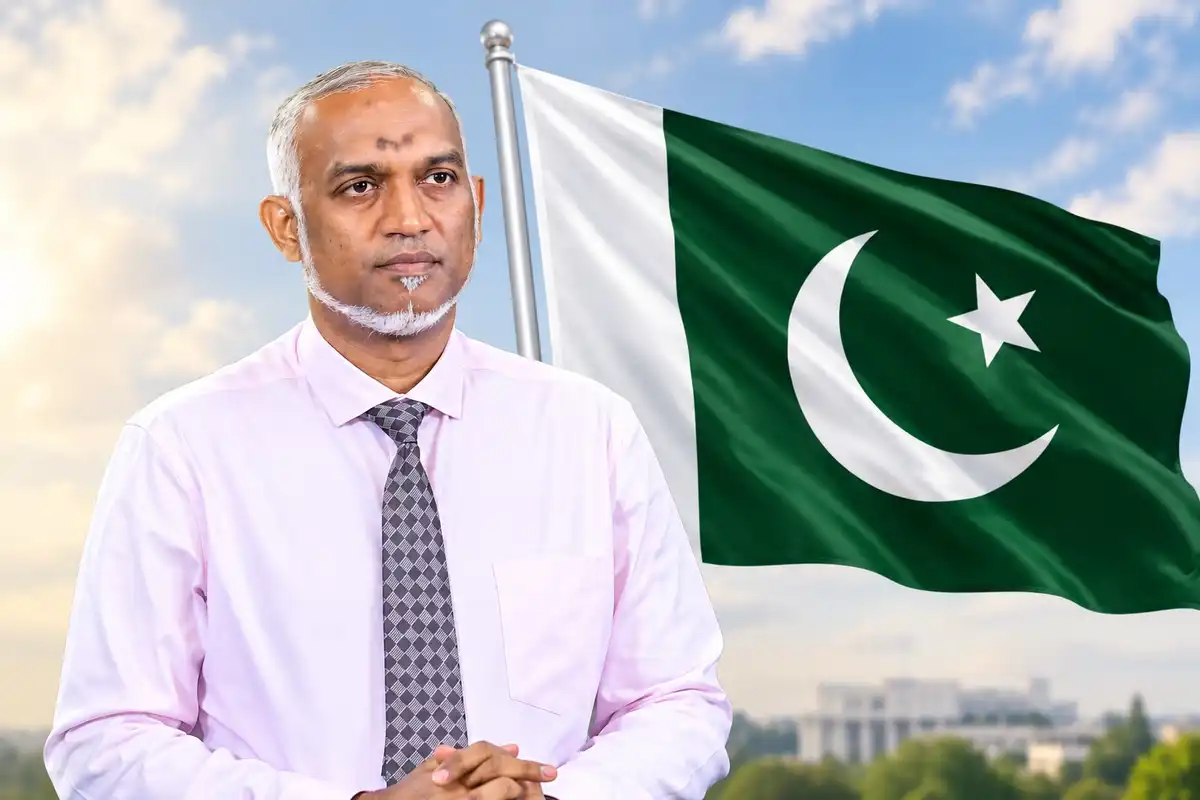
Cast your mind back to 31 August 2015, when the Ministry of Housing orchestrated an elaborate media event. The man of the hour, then-Housing Minister Dr. Mohamed Muizzu, stood before the cameras to proclaim that the capital's population had finally been delivered from a torment that had plagued them for generations.
Speaking to reporters inside ministry headquarters, Dr. Muizzu declared that until December 2014, waterlogged roads had been an unrelenting plague on everyday life. He bragged that teams from his own ministry, working hand-in-hand with the MRDC, had scoured and liberated every single drainage passage across the city.
According to his narrative, water was coursing off the roads at remarkable speed. He assured everyone that the initial phase of the storm water initiative had wrapped up, meaning the neighborhoods historically cursed with the worst rain storms were cured of their misery.
The minister went so far as to acknowledge that while naturally sunken road profiles across the island certainly encourage puddling, ordinary citizens had supposedly forgotten those headaches ever existed in the first place.
He boldly insisted that even after relentless cloudbursts, submerged sectors would be bone-dry within two to three hours flat. In his version of reality, high water around school grounds and the immediate perimeter of Indira Gandhi Memorial Hospital (IGMH) was ancient history. To ice the cake, he promised this was mere groundwork; once the upcoming second phase materialized, heavy-duty pumps would suck every drop of street water away in 60 minutes or less.
11 years down the road, those buried memories were dragged right back to the surface when the sky cracked. Nearly the whole capital found itself engulfed in water. The stagnant runoff sat for hours on end, thrusting ordinary residents into profound misery and disruption. Naturally, no one could tell what had collapsed behind the scenes. In an ironic twist of fate, the very official sitting at the pinnacle of national leadership while the city drowned was none other than the selfsame former Housing Minister, Dr. Muizzu.
Faced with the sudden resurrection of a catastrophe that was supposedly eliminated years ago, bewildered citizens began seeking explanations. But the man in charge who was also the architect of those original promises and the nation’s sitting head of state, offered absolute silence.
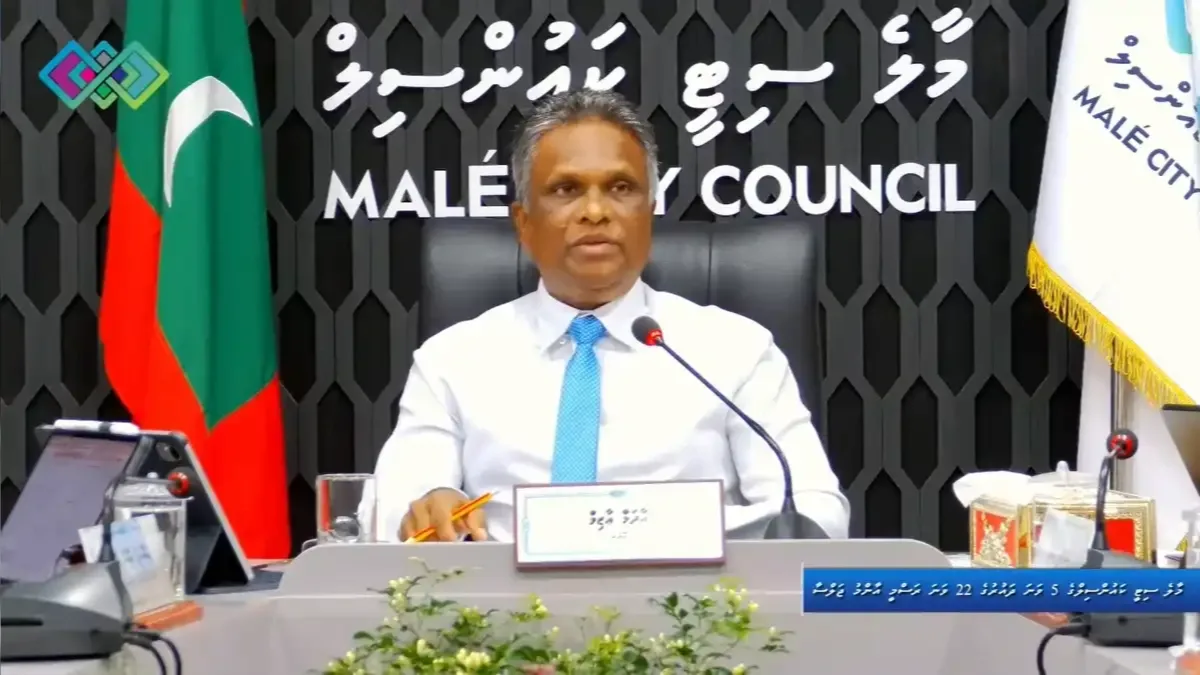
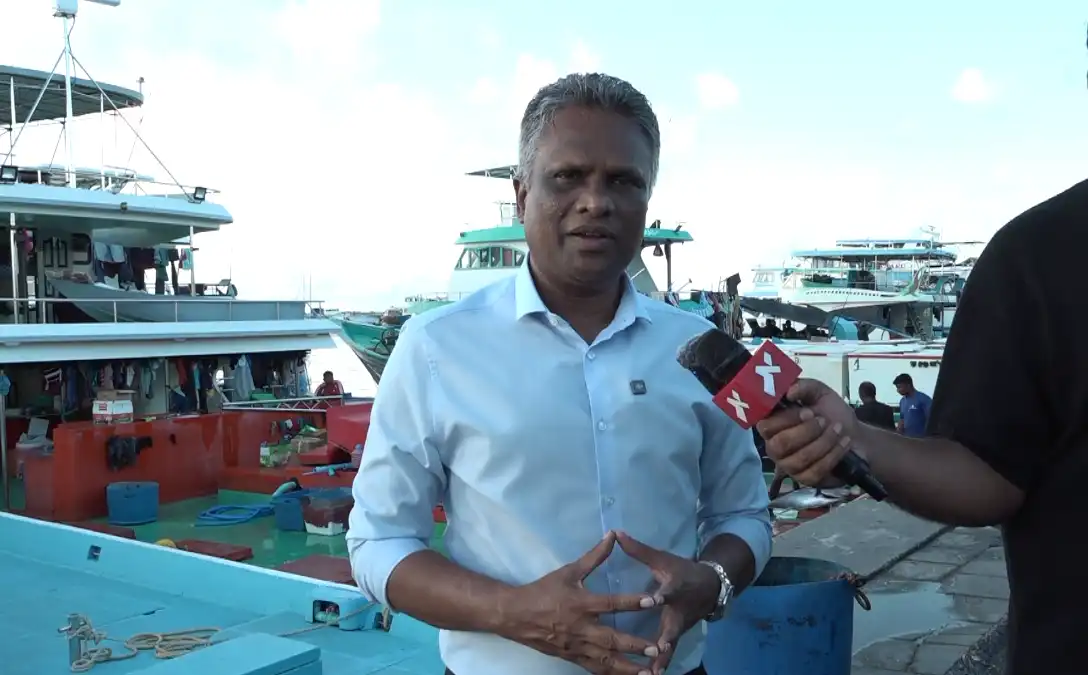
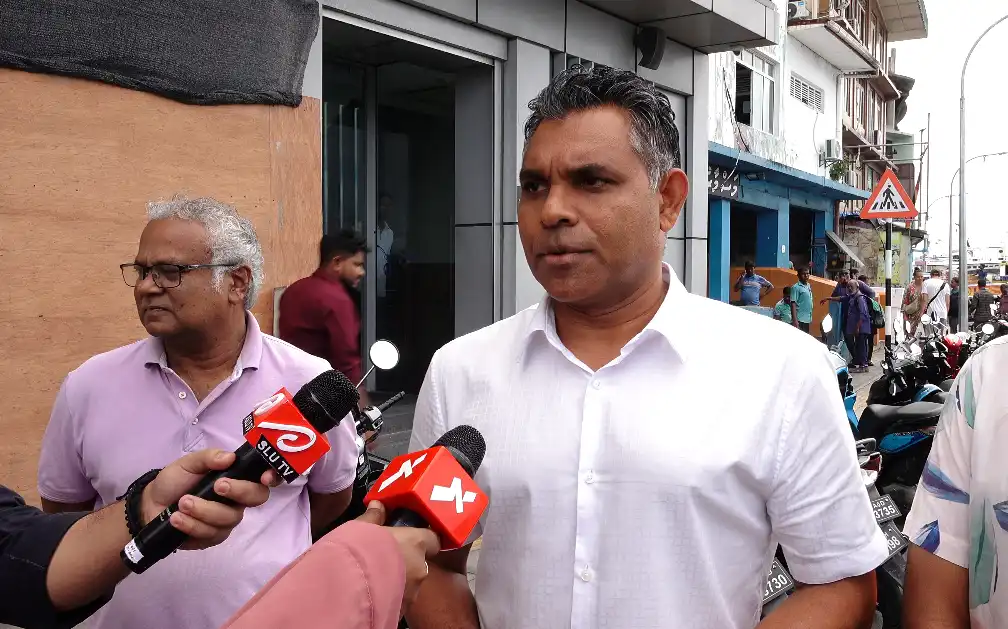
Accountability instead fell to the Malé City Council, a municipal body that has seen its jurisdiction and operational resources continuously gutted by central authorities. The lone official voice came from the capital’s incumbent Mayor, Adam Azim.
Taking to the social platform ‘X’, Mayor Azim vented his intense frustration over the harrowing conditions endured by city dwellers. He stressed that after his council spent the previous two years grinding away to engineer a genuine, working remedy for the capital's aquatic disasters, watching residents plunge back into the drink was intolerable.
Azim pointed out that the situation blew up precisely because the drainage pumps sitting in the most vulnerable flashpoints had been abruptly carted off without a shred of a fallback strategy, all under the convenient pretext of road upgrades.
Azim was simply vocalizing what was painfully obvious: pumping hardware had once stood guard across crucial sectors to keep the tides at bay. The burning question remains whether road construction crews ripped into the streets without a baseline plan, seemingly oblivious to the fact that it is monsoon season. The silent streets, drowning under muddy rainwater, answered that question on their own.
Azim's commentary on how the drainage network is handled also strikes at the core of the fiasco. As the city went under, emergency response devolved into a circus of fragmented efforts, with the military, the police force and municipal crews all working completely disconnected from one another. Azim underscored that splitting the governance of the storm water network across an assortment of independent institutions serves as a crippling handicap to keeping the system functional.
The Mayor appealed for the immediate rollout of a contingency fix to replace the vanished pumps, while demanding that the entirety of the drainage apparatus be united under a single, centralized command. He pressed every relevant government entity to align without delay to forge a swift, enduring escape from the chronic public misery.
When the capital goes under, the worst blow falls on everyday pedestrians and anyone trying to navigate the city interior, throwing life-or-death obstacles in the path of patients and individuals seeking critical care.
Here, too, previous government fixes collapsed under contact with reality. The state-backed taxi scheme, ostensibly rolled out to cure transport bottlenecks, turned out to be completely useless. Commuters were left stranded as dispatch lines crashed under the load. Desperate travelers willing to pay multiples over standard regulated rates could not secure a vehicle to save their lives. The heavily advertised fleet was nowhere to be found.
Ultimately, the nightmare of the capital’s underwater ordeal has come roaring back. Dr. Muizzu's glowing projections have been unmasked as pure fantasy, thoroughly detached from the reality on the ground.
The vehicular safety net intended to cushion the public during wet crises fell apart. The choice to dig up thoroughfares while ditching the pumps right in the middle of rainy season was an unmitigated blunder.
The shattered management of the pumps and runoff networks broke down in unison. Every calculation made was fundamentally flawed, leaving the blueprint floating in failure.