What Muizzu’s rapid rapprochement with Pakistan really signals
21 އޮކްޓޯބަރު 2026 | ބުދަ 15:20The strategic message from Muizzu’s Pakistan initiative is therefore larger than the bilateral visit; Maldives is testing how far it can diversify security relationships while relying on India’s proximity, markets, emergency assistance and enduring goodwill. That balancing act may succeed if it remains transparent, civilian-focused and insulated from rivalries; it may become dangerous if it opens sensitive institutions to outside influence or leaves radicalisation vulnerabilities unattended. Pakistan can be a legitimate partner of the Maldives. India, however, cannot sensibly be treated as a replaceable one. The ultimate test of a ‘Maldives First’ policy is whether it strengthens national sovereignty without turning the archipelago into another arena of Indian Ocean strategic competition.

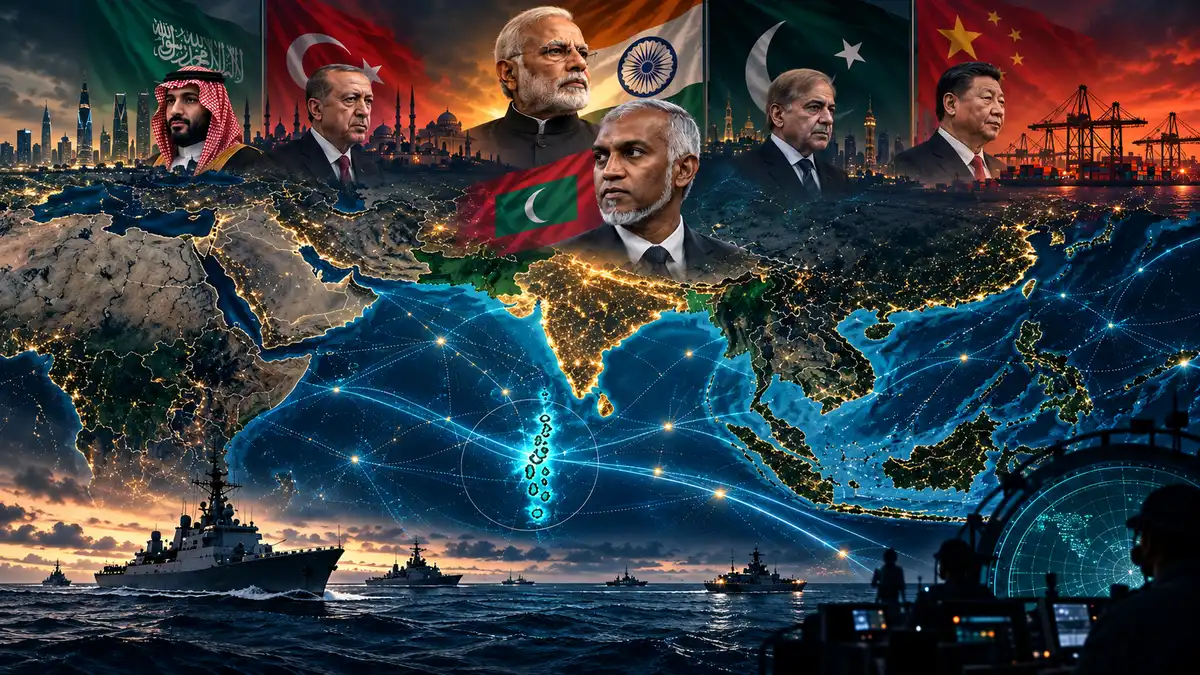
The Maldives between power blocs; security, influence and the Indian ocean. | Raajjemv graphics
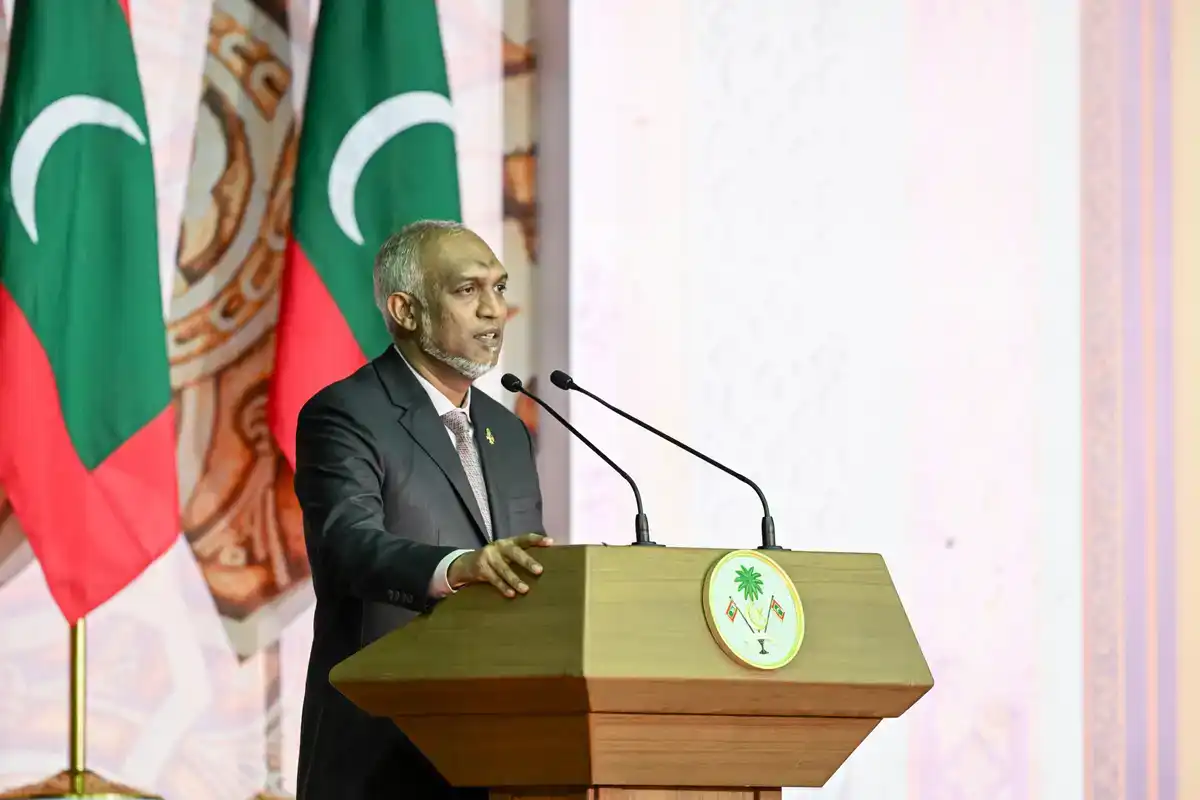
President Dr Mohamed Muizzu’s accelerated engagement with Pakistan is not, by itself, evidence of an anti-India alliance. But it would be a serious strategic mistake to dismiss it as routine diplomacy. What is changing is the depth, timing and institutional reach of the relationship. A country positioned astride critical Indian Ocean sea lanes is inviting closer cooperation with India’s principal South Asian security rival across defence, maritime surveillance, cybersecurity and law enforcement. The implications extend beyond Malé and Islamabad; they touch the security of India’s southern maritime approaches, regional counterterrorism, and the Maldives’ ability to preserve genuine strategic autonomy.
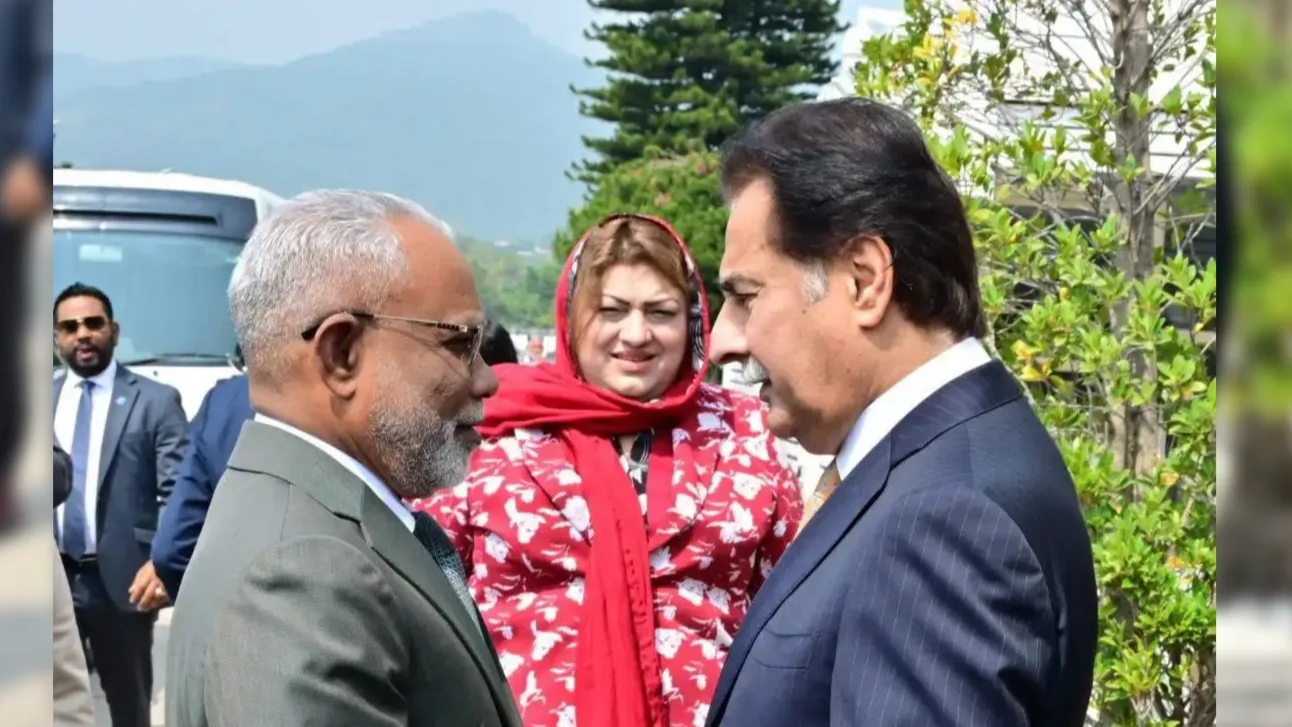
The sequence matters. On 24 September 2026, Maldivian parliamentary Speaker Abdul Raheem Abdullah met Pakistan’s senior military leadership, including Field Marshal Asim Munir. On 20 October, Muizzu began the first presidential visit to Pakistan in more than a decade. On 21 October, the two governments exchanged 20 memoranda of understanding, commemorating 60 years of diplomatic relations but moving decisively beyond ceremonial friendship. The agreements cover defence cooperation, maritime security, information technology, cybersecurity and artificial intelligence, combating narcotics trafficking, police academy links, civil-service training, education, health, tourism and connectivity. Pakistan also proposed expanding bilateral trade from roughly US$14 million to US$200 million within two years, an ambition that is not yet an achieved economic result. Taken together, these developments suggest deliberate strategic broadening rather than an isolated diplomatic gesture.
Muizzu can reasonably present this as a ‘Maldives First’ effort to diversify training, investment and external partnerships. Pakistan, too, has legitimate interests in educational exchanges, healthcare recruitment, trade and cooperation against narcotics. No public evidence from the announced memoranda demonstrates a Pakistani base, a mutual-defence commitment involving the Maldives or automatic intelligence-sharing rights. Yet the distinction between an agreement’s title and its future implementation is critical. Who will operate maritime systems, access sensitive data, maintain cybersecurity infrastructure, train security personnel and define the scope of information exchanges? In a small maritime state, these operational details can matter more than the language of a joint communiqué.
For India, the political context makes the shift especially sensitive. Pakistan is not an ordinary distant development partner; it is a state with which India has an enduring security rivalry. During Muizzu’s Islamabad visit, Prime Minister Shehbaz Sharif raised Kashmir and the Indus Waters Treaty, bringing India–Pakistan disputes into a bilateral engagement ostensibly centred on Maldivian development. That does not establish that Muizzu endorsed Pakistan’s positions, but it shows the risk of Maldivian government’s diplomacy being used to amplify a dispute in which it has little strategic interest. Calls to revive SAARC are constructive only if they rebuild regional trust; they cannot become an instrument for sidelining the region’s largest economy and indispensable geographic partner.
Geography explains why New Delhi will study the relationship closely. The Maldives lies near sea lanes linking the Arabian Sea, Gulf and East Africa to the wider Indo-Pacific, and near India’s Lakshadweep archipelago. Maritime domain awareness, surveillance feeds, vessel movements, aircraft access, submarine-relevant oceanographic information and communications networks have real strategic value. Defence cooperation with Pakistan need not threaten India, but sustained access by external security actors to sensitive Maldivian systems could generate new intelligence vulnerabilities and mistrust. India is likely to judge the relationship not by the number of memoranda signed but by any subsequent access arrangements, deployments, data-sharing protocols and foreign control over infrastructure.
The most serious additional concern is violent radicalisation, and here the historical record cannot be ignored. The United States Department of State’s 2010 terrorism reporting documented nine Maldivians arrested by Pakistani authorities in Waziristan in 2009 for involvement with violent extremist groups. The same reporting recorded concern over young Maldivians being recruited by militant networks in Pakistan and Afghanistan, and noted an estimate of 200 to 300 unregistered Maldivian students in Pakistan at the time. Later reporting on the Maldives identified recruitment vulnerabilities in prisons, criminal gangs and networks associated with foreign terrorist fighters. These are documented historical warning signs; not proof that today’s Pakistani government, its universities or the October 2026 agreements are promoting extremism.
Precisely because the historical problem was network-based rather than simply state-to-state, a new period of intensified travel, training and institutional exchange deserves proportionate counterterrorism scrutiny. The risk pathways include recruiters exploiting legitimate study routes, informal religious or charitable funding, illicit financial transfers, criminal to extremist linkages, and exposure of vulnerable young people to violent propaganda. None of these pathways makes Pakistani students, teachers, doctors or officials suspect as a group. It does mean Maldives should use intelligence-led screening, transparent scholarship channels, financial due diligence, prison rehabilitation, independent curriculum standards and case-specific oversight. Without these safeguards, deeper connectivity could increase opportunities for extremist intermediaries; with them, legitimate educational and policing ties might instead strengthen prevention. The possibility of renewed radicalisation is a risk scenario, not an established consequence.
This security question intersects with the wider regional realignment. Türkiye already supplies maritime capabilities to the Maldives, China has extensive economic and infrastructure interests, and Saudi Arabia provides significant development finance. Separately, Türkiye, Pakistan and Saudi Arabia concluded the Mecca Joint Defence Agreement in August 2026, with Turkish parliamentary consideration reported in October; a further Türkiye–Pakistan–Qatar–Indonesia defence-industry memorandum was announced on 21 October. The Maldives belongs to neither arrangement, and the four states should not be portrayed as a single anti-India bloc. Nevertheless, the convergence of defence relationships among several of Malé’s chosen partners creates a more complicated strategic environment in which apparently bilateral decisions may acquire broader geopolitical significance.
India’s place in this equation is fundamentally different. It is not merely another bidder for influence; it is the Maldives’ closest major neighbour and its most reliable emergency responder. India helped defeat the attempted coup of 1988, assisted after the 2004 tsunami, supplied emergency water during the 2014 Malé crisis and delivered essential support during COVID-19. Even after the dispute over Indian military personnel in 2024, New Delhi maintained cooperation and helped stabilise Maldivian finances through US$400 million and INR30 billion currency-swap arrangements. The two governments adopted a Comprehensive Economic and Maritime Security Partnership vision in October 2024 and advanced it during Prime Minister Narendra Modi’s July 2025 visit. Those commitments demonstrate enduring interests in Maldivian security and welfare, rather than a demand for diplomatic exclusivity.
The economic consequences deserve equal weight. An IMF assessment in June 2026 continued to classify the Maldives as facing high overall and external debt-distress risk. In these conditions, headline announcements about trade, technology or defence cooperation are not substitutes for costed delivery, transparent procurement and debt sustainability. The proposed Pakistan trade expansion is ambitious, but measurable gains will depend on connectivity, purchasing power, trade composition and implementation. Military technology can add recurring maintenance and cybersecurity obligations. A policy described as strategic diversification becomes self-defeating if it creates opaque financial dependencies, security-system vulnerabilities or reduced investor confidence in regional stability.
The strategic message from Muizzu’s Pakistan initiative is therefore larger than the bilateral visit; Maldives is testing how far it can diversify security relationships while relying on India’s proximity, markets, emergency assistance and enduring goodwill. That balancing act may succeed if it remains transparent, civilian-focused and insulated from rivalries; it may become dangerous if it opens sensitive institutions to outside influence or leaves radicalisation vulnerabilities unattended. Pakistan can be a legitimate partner of the Maldives. India, however, cannot sensibly be treated as a replaceable one.
The ultimate test of a ‘Maldives First’ policy is whether it strengthens national sovereignty without turning the archipelago into another arena of Indian Ocean strategic competition.