Evicting or pressuring citizens who are unable to pay their flat rents is not a solution: Saif
19 އޮކްޓޯބަރު 2026 | ހޯމަ 07:57Former Councilor Saif stated that instead of evicting social housing tenants who are unable to pay rent, the state has a responsibility to assess their circumstances and provide support through the social safety net. He noted that many face payment difficulties due to systemic issues and emphasized that making families homeless would lead to adverse social consequences and increase the long-term burden on the state.


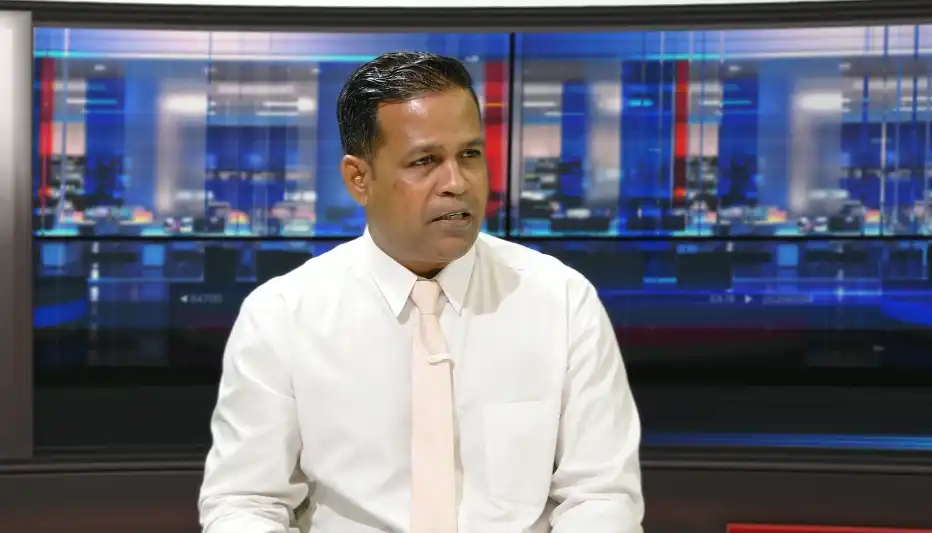
Saif Fathih, the former Male' City Councilor for the North Galolhu constituency, speaks during an appearance on RaajjeTV's "Fala Surukhee" program. | RaajjeMV
Saif Fathih, the former Male' City Councilor for the North Galolhu constituency, has stated that evicting tenants from social housing for non-payment of rent is not a legal responsibility of the government, given that such housing is specifically intended for those who lack the financial means to secure shelter on their own.
Speaking on RaajjeTV’s "Fala Surukhee" program, Saif stated that the current administration completely fails to grasp the concepts of social housing and social protection. He further remarked that the government’s current actions are akin to tightening a noose around the necks of the citizens.
Saif noted that in other countries, tenants of social housing are not evicted when they face difficulties paying rent. Instead, authorities assess changes in household size and income, check for job losses, and evaluate their ability to cover essential expenses like electricity and water bills, providing necessary support through the social safety net system.
Saif stated that evicting people and leaving them homeless due to unpaid rent has a detrimental impact on the entire community, noting that the state ultimately bears the resulting burden. He further highlighted that when a woman is left on the streets with children, it increases the risk of those children falling into delinquency and leads to the displacement of families. He warned that such situations, which may necessitate taking individuals into state care, place an additional strain on the government.
For instance, in other countries, assessments are made regarding the number of residents in a household and their current income status. They investigate why a person who previously met their payments can no longer do so. Does the individual require employment assistance? Do they need financial aid to cover their utility bills? There is a social protection mechanism in place for this. The purpose of such a mechanism is to act as a safety net, ensuring that someone facing a downfall does not hit rock bottom or have their life completely ruined. Is social housing provided by the government not a fundamental part of that safety net? What, then, is the consequence of evicting someone from such housing? The result is that the responsibility for their care ultimately falls back on the government anyway.Saif Fathih
Citing figures released by the Housing Development Corporation (HDC) in June 2025, Saif stated that out of the 8,511 flats managed by the corporation, only 3,219 units are making regular rent payments. He further noted that the statistics reveal the remaining 5,099 flats are currently in default of their regular payments.
Saif stated that this is not an exceptional case of a few individuals intentionally defaulting on rent, but rather a "structural" and systemic issue arising from people's genuine inability to afford the payments.
He stated that the government's responsibility, rather than evicting them, is to investigate the reasons behind their inability to pay rent and establish a mechanism to provide necessary assistance.