MDP passes resolution to launch direct action protests until President Muizzu resigns, unless significant reforms are made to government's economic policies
31 އޯގަސްޓު 2026 | ހޯމަ 18:31The Maldivian Democratic Party (MDP) has called for urgent consultations with the government to address the country's deteriorating financial situation, alleging that current economic policies are causing significant harm to the state and its citizens. The party's National Congress has passed a resolution to launch continuous direct action until the President resigns if the administration fails to respond to these concerns and rectify its economic decisions.

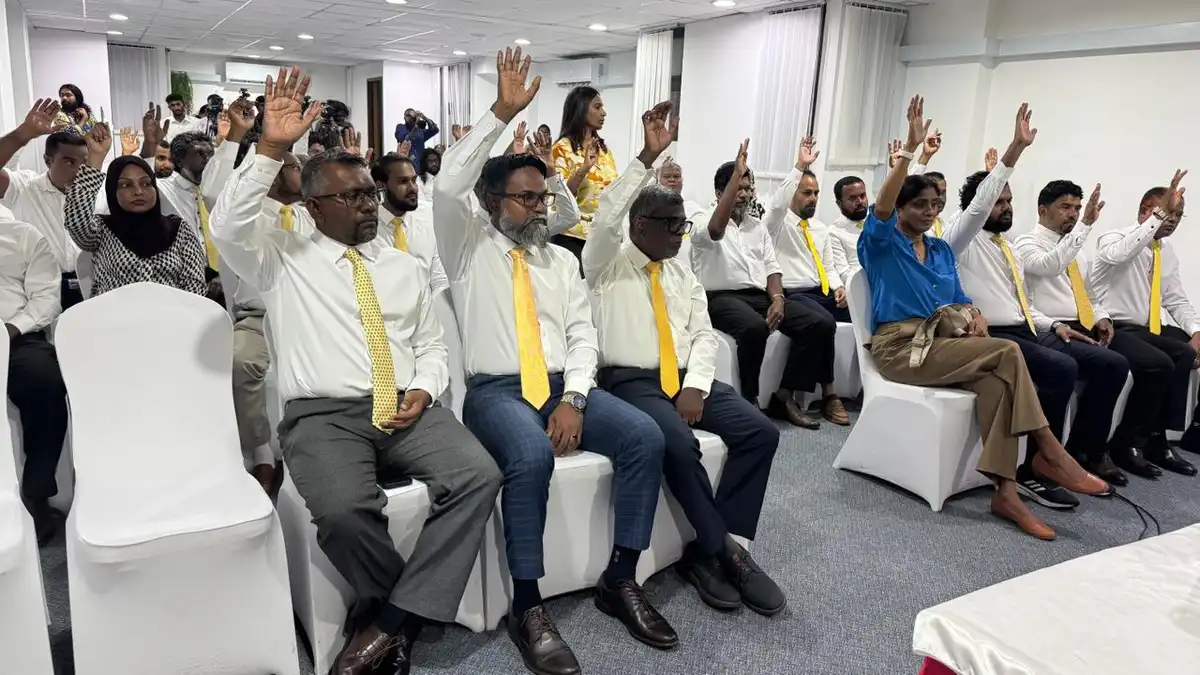
Meeting of the MDP National Congress. | Raajje MV
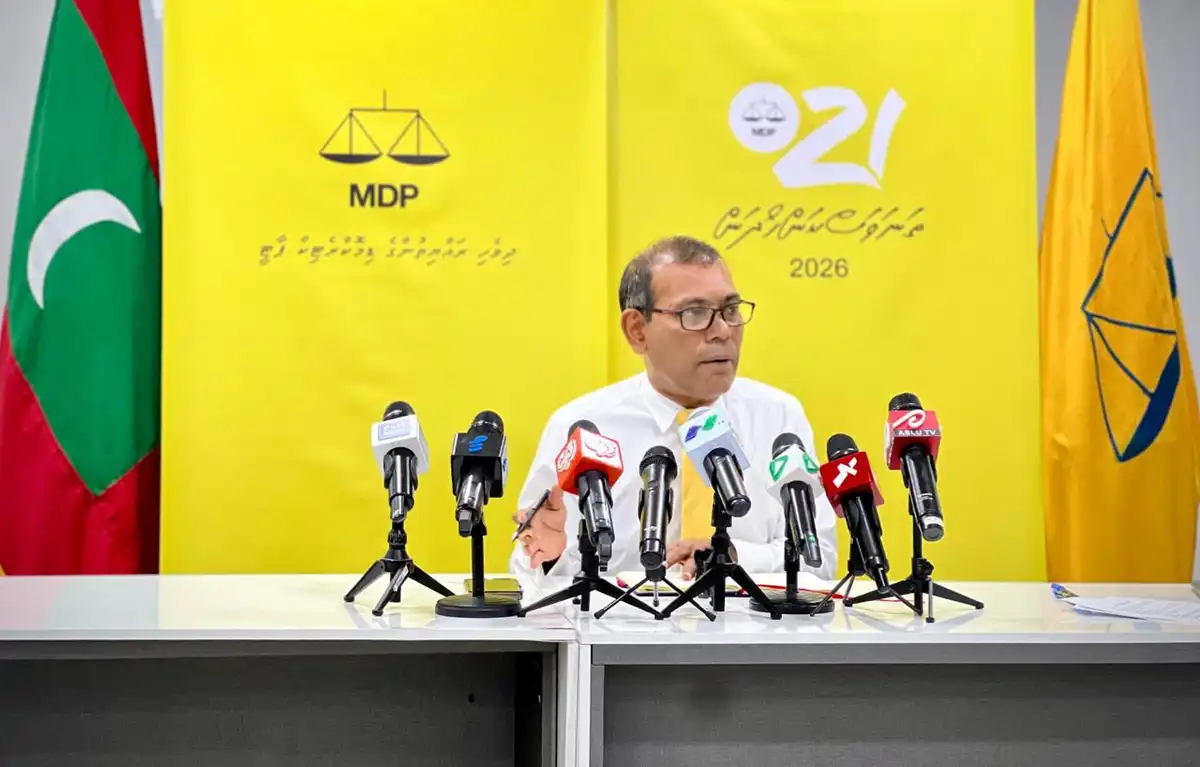
The main opposition party, the Maldivian Democratic Party (MDP), has passed a resolution to launch continuous direct action until President Dr. Mohamed Muizzu resigns, unless the administration strengthens its fiscal and economic policies.
This decision was passed during a meeting of the party's National Congress held on Monday night.
The decision was reached following a debate on a resolution proposed by the party's Chairperson, Mohamed Nasheed. In the vote held to pass the resolution, 33 out of the 34 members in attendance voted in favor of adopting the motion as presented.
The resolution passed by the MDP states that the reckless economic policies of President Dr. Mohamed Muizzu’s administration are causing immense harm to the state and its citizens. The party further highlighted that these policies are leading to a continuous day-by-day decline of the Maldivian economy.
Furthermore, the MDP has called on the government to join them at the negotiating table to discuss measures for improving the country's fiscal and economic situation. The party emphasized that the government must undertake sincere efforts to rectify the nation's current state.
However, the MDP National Congress has warned that if the government fails to respond and reform its economic policies, they will launch continuous direct action on the streets until President Muizzu resigns.
During the meeting, the majority of members spoke out strongly against the government's economic decisions, highlighting significant public concern regarding the matter.