All state powers are now concentrated within the President's Office: Shamheed
27 އޯގަސްޓު 2026 | ބުރާސްފަތި 10:48MP Shamheed stated that the recent legal amendment requiring tourism businesses to exchange 40 percent of their foreign currency earnings through the Maldives Monetary Authority (MMA) will not resolve the country's dollar shortage. He further noted that the implementation of this policy is unfairly benefiting certain businesses at the expense of others.
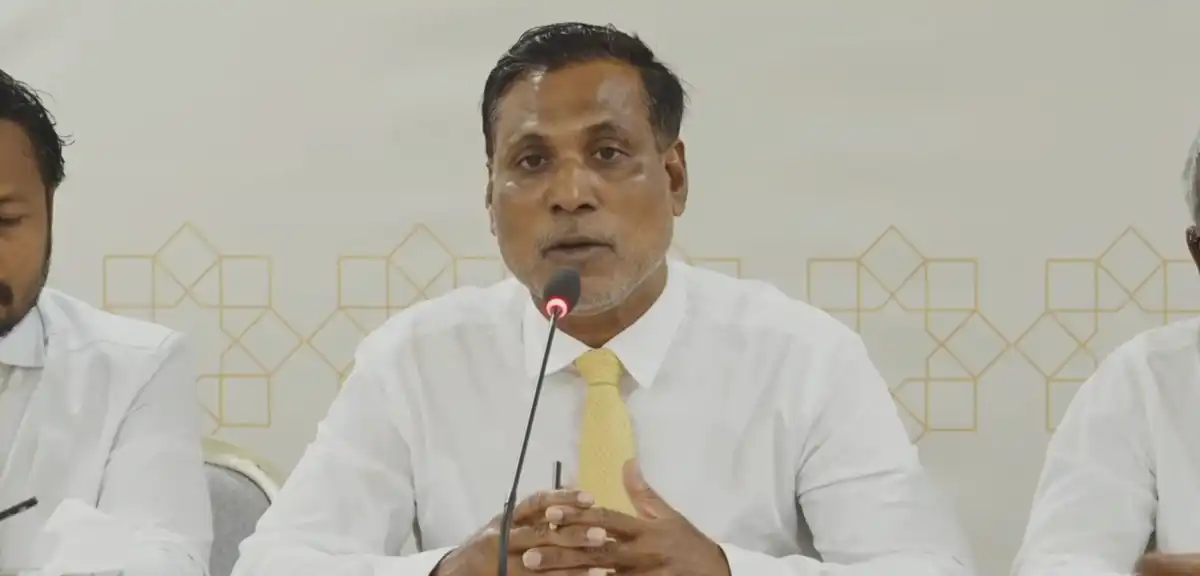
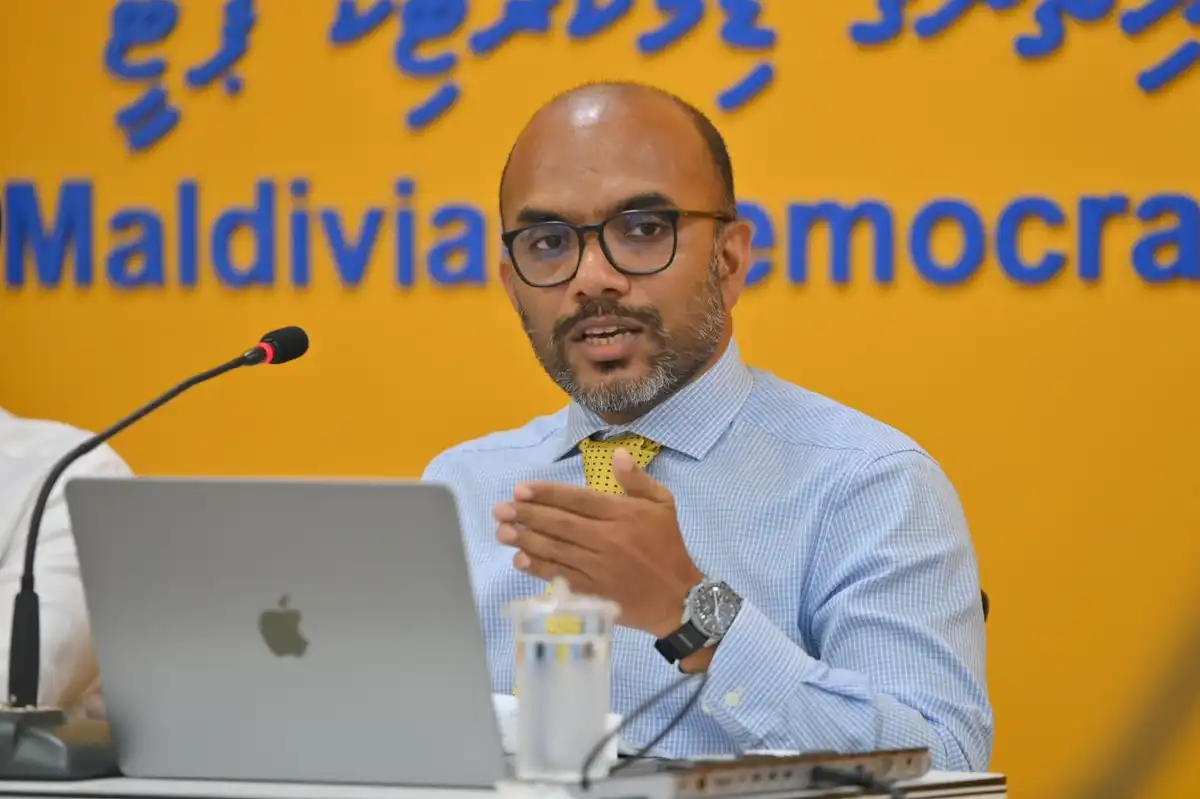
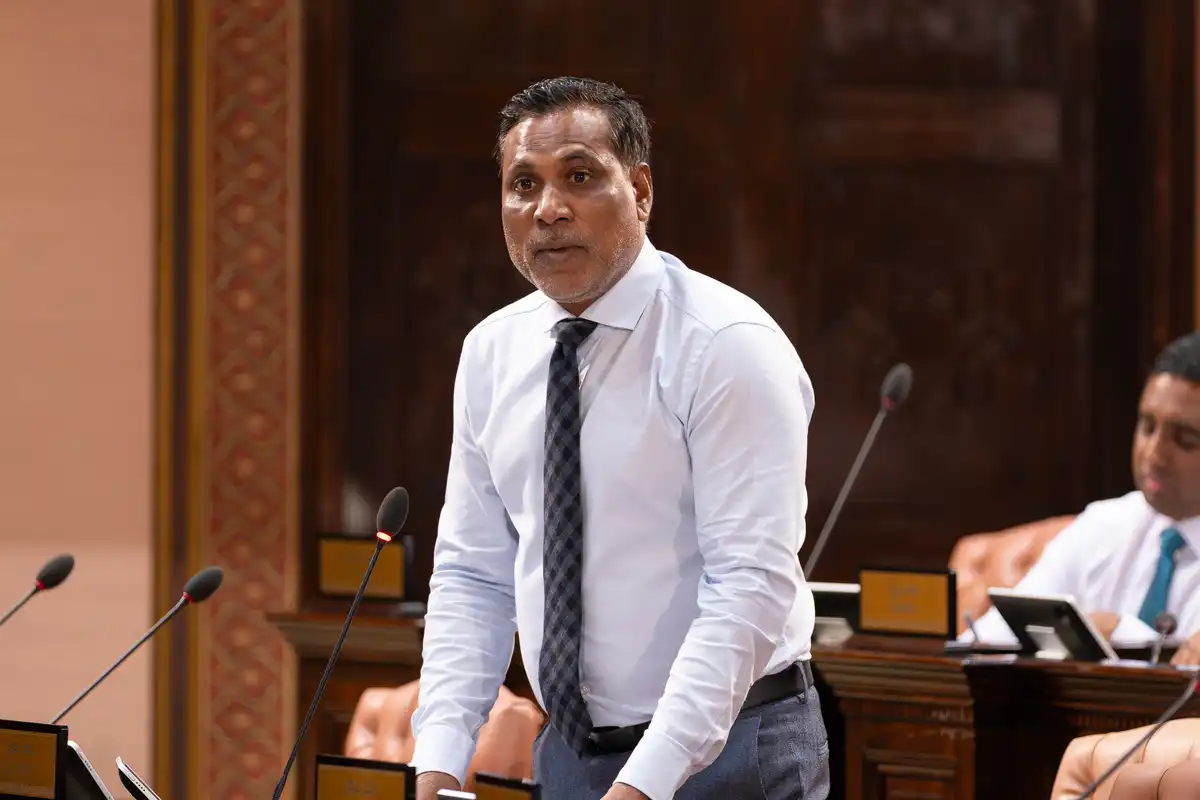
Member of Parliament Shamheed speaks at a press conference hosted by the MDP. | Raajje MV
Dr. Ahmed Shamheed, the Member of Parliament for the South Hulhumale constituency, has stated that all powers of the state are currently centralized within the President's Office.
Speaking at a press conference held by MDP parliamentarians, MP Shamheed stated that the Maldives Monetary Authority (MMA) Governor’s decision to meet with the press at the President's Office demonstrates that all state powers are now centralized within the executive.
MP Shamheed stated that the dollar shortage will not be resolved by the Maldives Monetary Authority (MMA) collecting foreign currency through the recent legal amendment requiring tourism businesses to exchange 40 percent of their dollar earnings. Furthermore, Shamheed noted that this policy allows certain businesses to gain an unfair advantage.
The fact that the MMA Governor held a press conference at the President's Office clearly demonstrates that all state authority and directives are now centralized within the President's Office. Simply mandating that the public and businesses surrender their foreign currency to the MMA will not resolve the underlying issues. A significant portion of the dollars acquired by the MMA is utilized by the government, with the remainder allocated to State-Owned Enterprises (SOEs) and the Bank of Maldives. Furthermore, the majority of the foreign exchange provided to the Bank of Maldives is being distributed to businesses closely affiliated with them.Dr. Ahmed Shamheed
MP Shamheed stated that despite the current practice of collecting 20 percent of the dollar revenue from companies operating in the tourism sector, the value of the dollar continues to rise.
MP Shamheed noted that the tourism industry does not rely on local banks for financing, pointing out that the capital required for resort development in the Maldives is provided by foreign financial institutions. He warned that if the Maldives imposes restrictions on the foreign currency brought in through these banks, international lenders may cease financing such projects. This, he cautioned, would lead to significant detrimental impacts on the tourism sector.
MP Shamheed stated that the issue cannot be resolved without the government increasing the demand for the Maldivian Rufiyaa. He noted that this demand can only be strengthened by requiring resorts to pay their taxes in local currency, rather than the US dollars they currently pay to the state.
MP Shamheed stated that the vote taken in Parliament on these amendments revealed that even members representing the government harbor concerns regarding the matter.
MP Shamheed noted that these decisions were not based on thorough government research. He warned that they could lead to skyrocketing prices in the future, a decline in foreign investment within the tourism sector, and significant overall damage to the industry.