Uncle Sam wants a piece of Thilafushi Port and everyone knows why
24 ޖުލައި 2026 | ހުކުރު 09:48As high-level U.S. delegations visit the Thilafushi port project and the U.S. government expresses growing interest, a Sri Lankan news outlet has reported that this development is part of a strategic policy to broaden American influence in the Indian Ocean. The United States is currently exploring avenues to strengthen its regional footprint through commercial infrastructure, development finance, and maritime security initiatives.

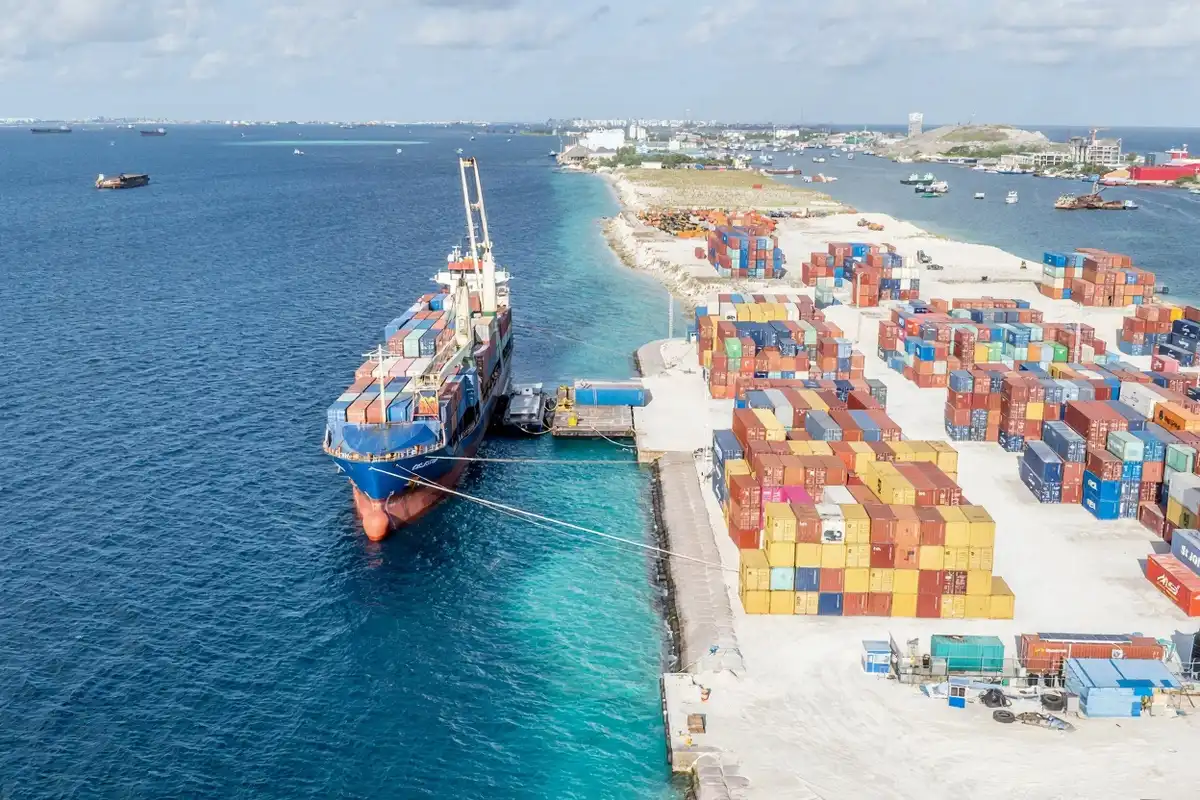
General cargo vessel unloads at the Thilafushi Port. | MPL
A well-known newspaper over in Sri Lanka, the Daily Mirror, recently pointed out the obvious: America’s suddenly intense interest in the commercial port popping up in Thilafushi looks less like pure generosity and far more like a calculated ploy to plant a firm foot in the Indian Ocean.
The project itself, steered by Maldives Ports Limited (MPL), is supposed to be the grand cure for the archipelago’s shipping woes, designed to modernize trade networks and relieve the chronic gridlock choking the Malé Commercial Harbour. On paper, it is built to shift bulk handling and move 400,000 TEUs or 20-foot shipping containers, every year, theoretically oiling the gears of regional logistics, speeding up ship turnaround times, and bringing down the price tag on imported goods.
However, top-brass diplomats from the U.S. State Department have been buzzing around the construction grounds like hawks, heavily invested in checking up on its development as part of Washington's overarching desire to remodel its maritime standing across South Asian territory.
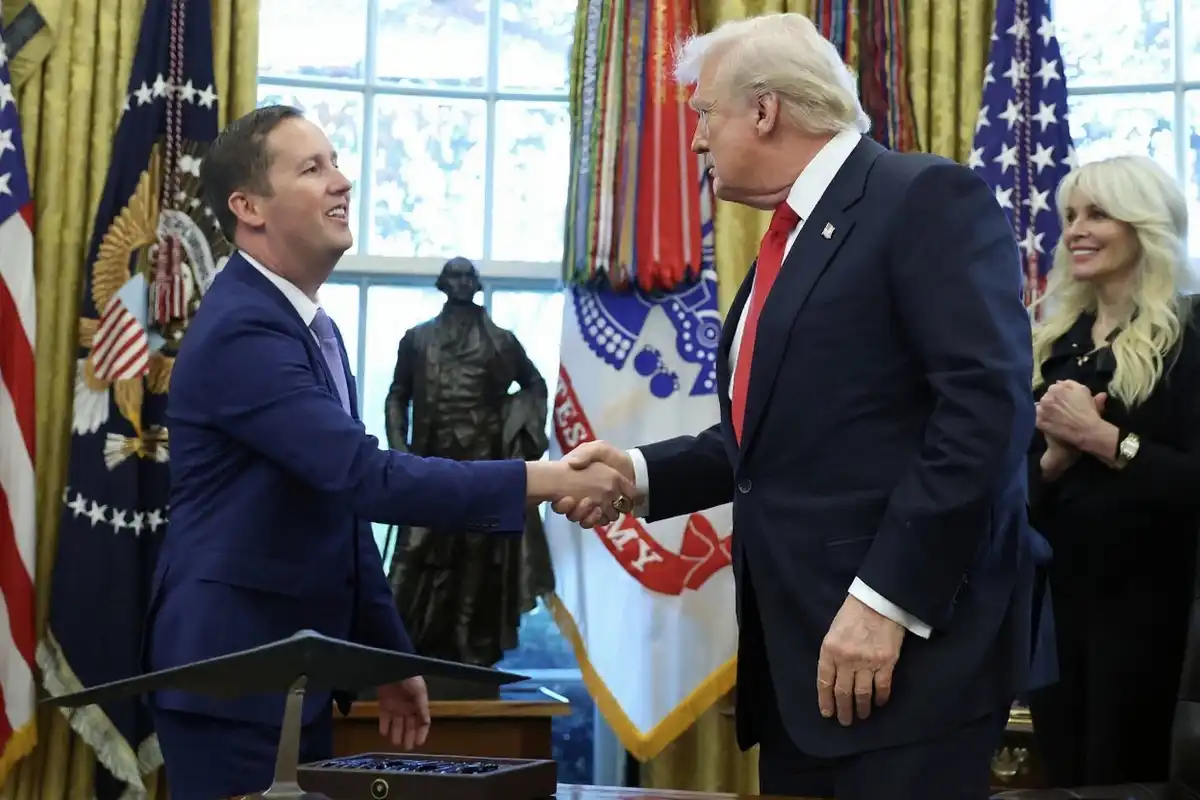
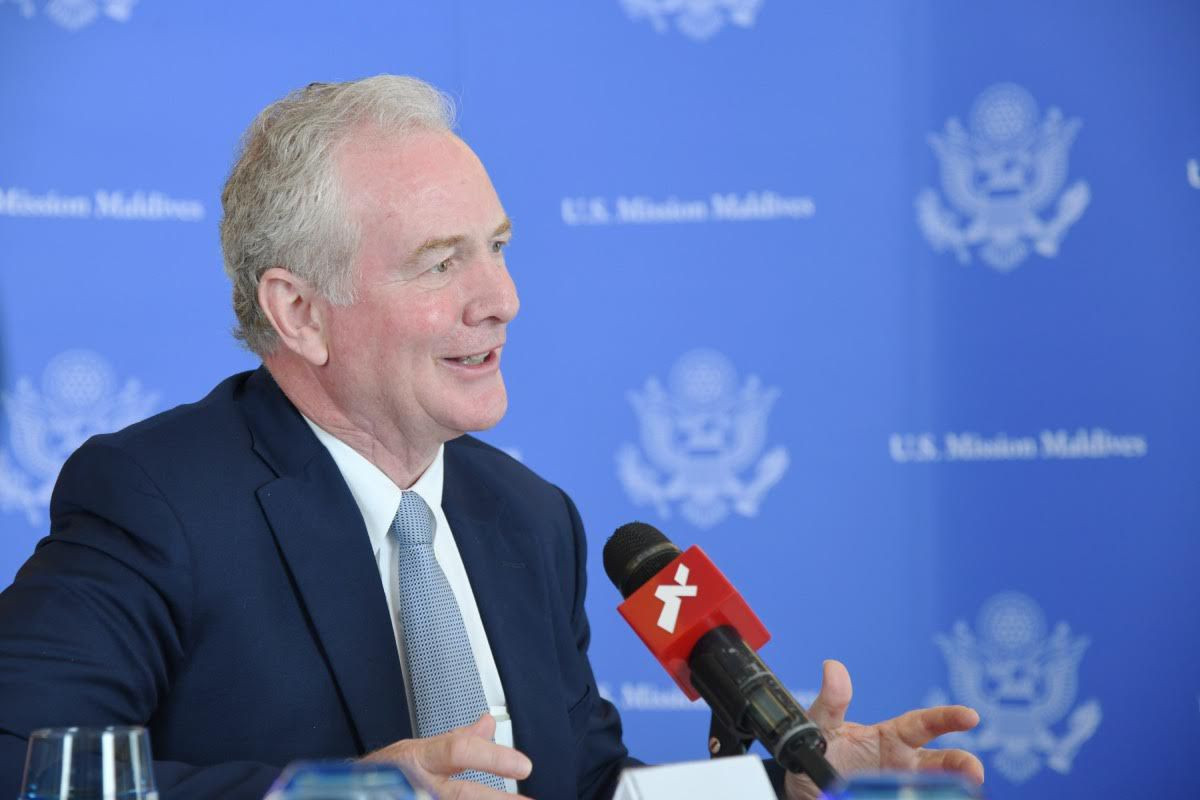
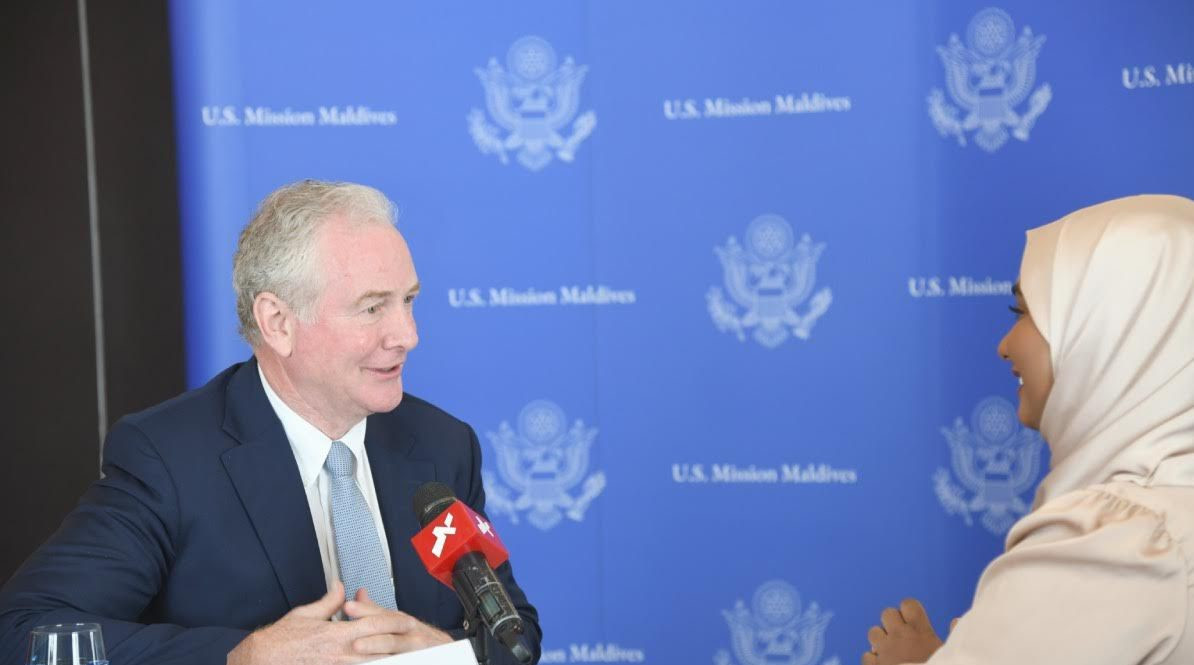
S. Paul Kapur, the U.S. Assistant Secretary of State for South and Central Asian Affairs, personally paraded around the Thilafushi development site during his official trip to the Maldives. He lavished praise on the facility, framing it as an upcoming hub for international trade logistics and a crucial node for goods distribution.
After taking his tour, the Assistant Secretary openly voiced Washington's eager intention to team up with the Maldives on the endeavor, emphasizing an overwhelming urge to help expand the island nation’s economic horizon.
Taking to social media platform X right after his site visit, the official repeated the message, stating that America is keen to partner on the Thilafushi Port build to unlock long-term economic gains.
Beijing builds while Washington visits
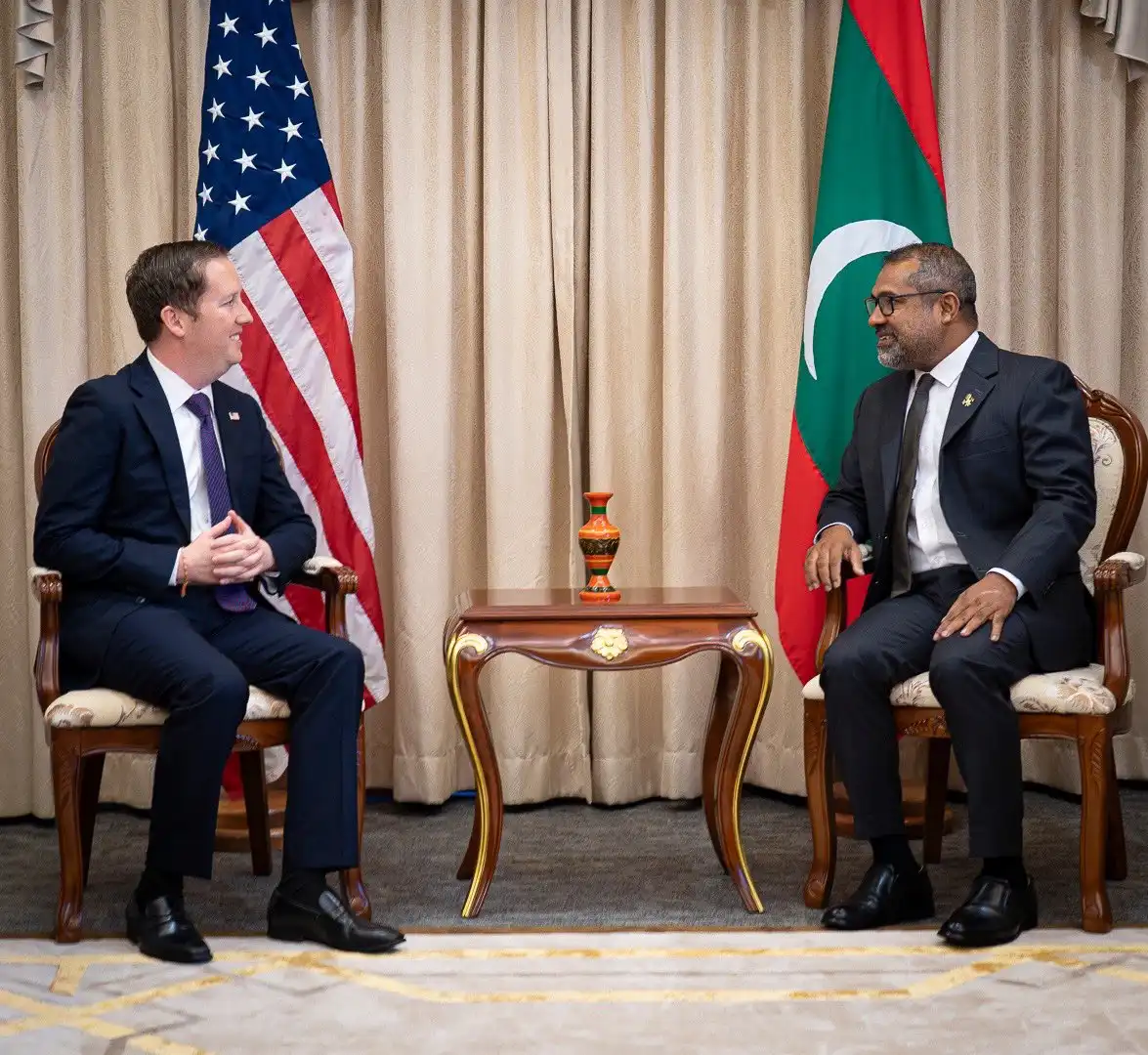
Accompanied by an entourage of high-ranking delegates, the U.S. official lined up meetings with President Dr. Mohamed Muizzu, Minister of Economic Development, Transport and Trade Mohamed Saeed, and Minister of Foreign Affairs Iruthisham Adam.
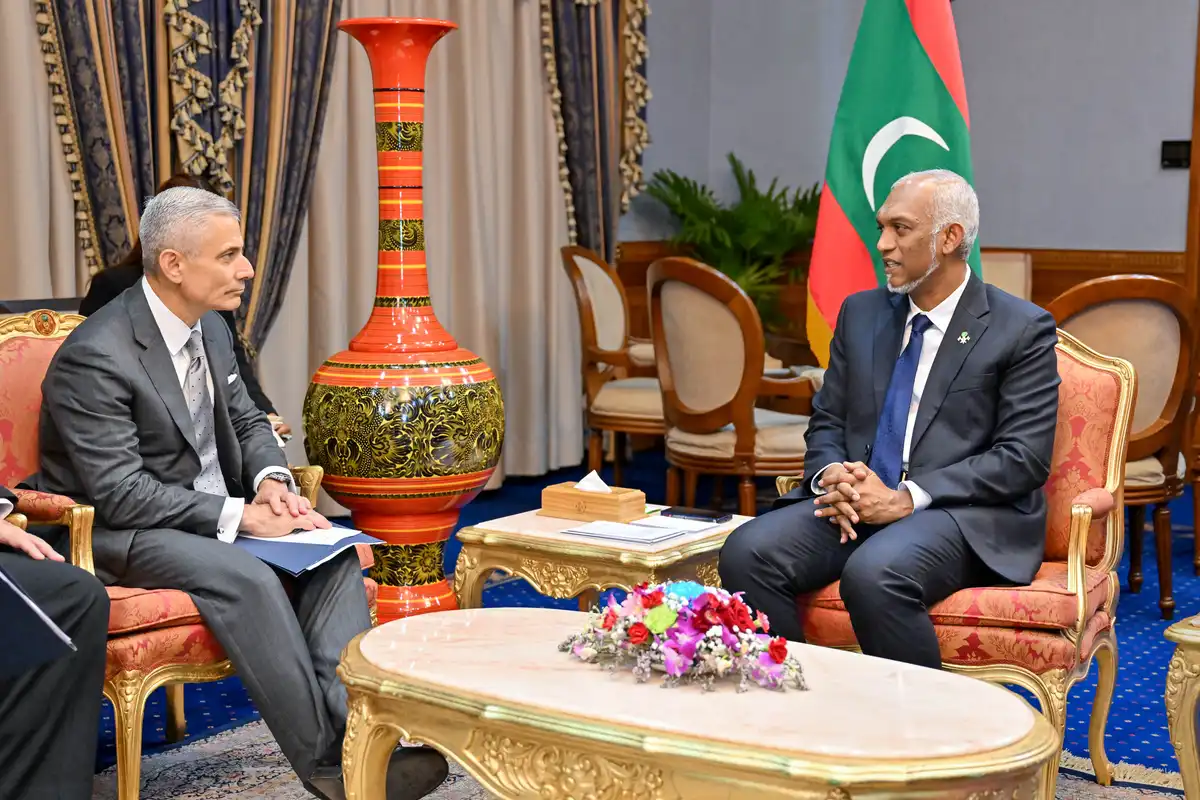
Paul Kapur, the Assistant Secretary of State for South and Central Asian Affairs of the United States of America, paid a courtesy call on His Excellency President Dr Mohamed Muizzu on June 24, 2026 at the President's Office. | President's Office
Spreading its own gloss over the encounter, the Maldivian government declared that the Assistant Secretary of State highlighted America's enthusiasm for cementing bonds in key focus areas like boosting foreign investment, advancing economic growth, and safeguarding maritime security. President Muizzu cordially welcomed this enthusiastic attention, remarking that the Maldives remains receptive to development schemes that aid in broadening the country's economic portfolio.
This was hardly the first time a U.S. envoy dropped by. Just months earlier in May, Nicole Chulick, serving as the Principal Deputy Assistant Secretary of the Bureau of South and Central Asian Affairs at the U.S. State Department, embarked on her own inspection of the project site.
During her visit, she met directly with MPL's executive leadership and toured both the clogged Malé Commercial Harbour and the new Thilafushi development grounds, echoing the exact same sentiment about America’s burning desire to back the Maldives' infrastructure plans.
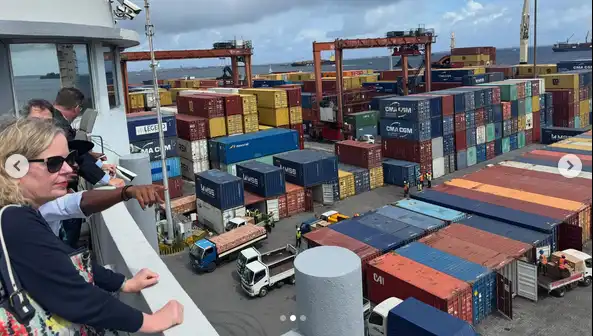
Principal Deputy Assistant Secretary Chulick meets with MPL officials and tours Thilafushi to learn more about the project and opportunities to partner with Maldives on critical infrastructure. | Instagram
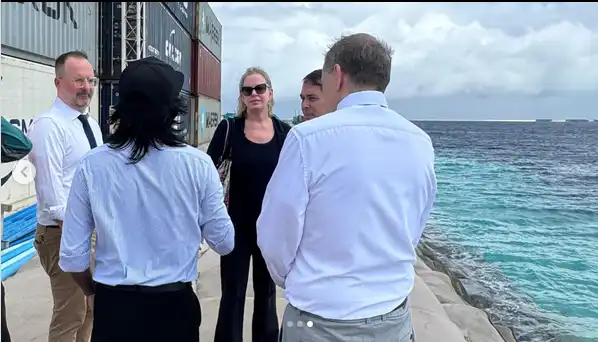
Principal Deputy Assistant Secretary Chulick visits Thilafushi to learn more about this project and opportunities to partner with Maldives on critical infrastructure. | Instagram
According to the Daily Mirror, these sudden diplomatic courtships are merely components of Washington’s expansive Indo-Pacific blueprint aimed at tightening grips on pivotal Indian Ocean real estate.
The coverage implies that the United States is quietly pivoting away from its ancient reliance on strictly military bases, choosing instead to elevate regional connectivity and secure crucial sea corridors by cozying up to commercial ports and logistical infrastructure.
Meanwhile, the actual heavy lifting is being handled by a rival power. Following the Maldivian administration’s policy directive to shift the nation’s main commercial shipping hub, Maldives Ports Limited (MPL) handed the design and survey consultancy for the initial phase over to China Harbour Engineering Company (CHEC) last February.
Dubbed the "Local Harbor Relief Project," this inaugural phase encompasses building a 650-meter quay wall, a 125-meter jetty, X-ray inspection amenities, automated cargo handling machinery, and a bonded warehouse facility.
Then on July 20, MPL signed another deal with CHEC to construct the international and domestic quay walls. This specific arrangement covers the creation of a 375-meter international quay wall dropping to a depth of 14.6 meters, tailored specifically for massive international container ships, along with an 820-meter domestic quay wall at a five-meter depth meant for local inter-island freight vessels.
Small nations in the crosshairs of big-power rivalry
The fierce obsession both China and the U.S. share over a single port highlights an escalating battle for maritime dominance across the Indian Ocean.
While Beijing executes the actual engineering and physical construction, Washington is attempting to insinuate its own power using diplomatic charms, investment handshakes, and supply-chain integration.
For the Maldives, the simple goal is converting Thilafushi into a state-of-the-art commercial center to diversify the national balance sheet and secure future prosperity. However, as the Daily Mirror notes, when global titans lock their sights on such prized geography, local ports stop being mere economic assets.
Much like Colombo and parallel hubs dotting the Indian Ocean, Thilafushi is rapidly becoming a political battleground where financial growth, maritime security, and superpower friction clash, presenting a terrifying tightrope act for tiny countries attempting to land investment without surrendering their own national sovereignty.
Despite the heavy downpour of cash and flattering diplomatic visits, the report warns South Asian states against falling for the charming presentation, urging them to stay sharp about the hidden agenda behind America's maritime playbook. It explicitly cautions that Washington habitually puts its own strategic interests first, calculating every move to block rival states and lock down its own logistics.
When a superpower's motives drive these arrangements, the self-governing freedom of smaller states takes a direct hit.
Developing nations desperate for debt relief and stable growth risk being coerced into bending toward Western security priorities, ultimately backing policies that do not actually serve their genuine domestic needs.
True cost of geopolitical entanglement
Worse still, the report cautions that security-heavy alliances threaten to turn routine infrastructure builds into dramatic arenas for big-power warfare. If the U.S. treats commercial docks and shipping centers as weapons for geopolitical rivalry, even neutral, non-aligned countries will inevitably get pulled into regional chaos. Far from nurturing honest economic teamwork, turning South Asian maritime doorways into tools for blocking rivals will only inflame regional hostility. Small nations hoping to keep friendly, balanced ties with everyone could wind up trapped in these rivalries, facing long-term security nightmares and political volatility.
While modern shipping setups are indispensable for national progress, the commentary highlights their raw strategic value to powers fighting for dominance across the Indian Ocean waters.
The fundamental challenge confronting small states is finding a way to draw in capital and build infrastructure without allowing those very projects to transform into disposable pawns in a global game of chess.
The commentary further reveals that the U.S. is desperately reassessing its maritime strategy across South Asia to counter China's sprawling Belt and Road Initiative (BRI) while reacting to the explosive volatility rocking the Middle East. Consequently, Washington has discarded its Cold War-era habit of relying solely on isolated military outposts, pivoting to a fresh tactic anchored in economic charm offenses and collaborative ties.
By broadening its footprint past guarded military fences to embrace commercial logistics, development financing, and maritime security, the U.S. is determinedly expanding its regional shadow.
While these dealings might look like economic lifelines, they raise serious alarm bells for nations attempting to remain strictly neutral.
The commentary concludes that the toughest challenge for small states is soaking up the financial perks of modern infrastructure without letting their own national assets turn into a battleground for major power feuds.
The Sri Lankan report finishes by noting that America is busy cementing its maritime strategy in South Asia by sinking its hooks into indispensable commercial assets, citing both Sri Lanka's Port of Colombo and the Maldives' Thilafushi Port as prime examples.
Under this aggressive playbook, the Maldives has landed right in the bullseye of American focus.
Though a relentless parade of high-level diplomatic visits is constantly wrapped up and sold as friendly missions to boost economic ties, it is glaringly obvious that Washington intends to secure a commanding seat at the table, shaping the future of one of the Indian Ocean's most prized maritime gateways.