MMA increases dollar allocation to banks by 25 percent to coincide with tourism off-season
27 ޖޫން 2026 | ހޮނިހިރު 12:01To address the worsening dollar shortage in the local market, the central bank has decided to increase the allocation of foreign currency to commercial banks by 25 percent for essential needs such as medical treatment and education. While this temporary measure is expected to ease access to dollars through the formal banking system over the next three months, experts emphasize that a permanent solution to the foreign exchange crisis will only be achieved by increasing the total inflow of foreign currency from the tourism sector.

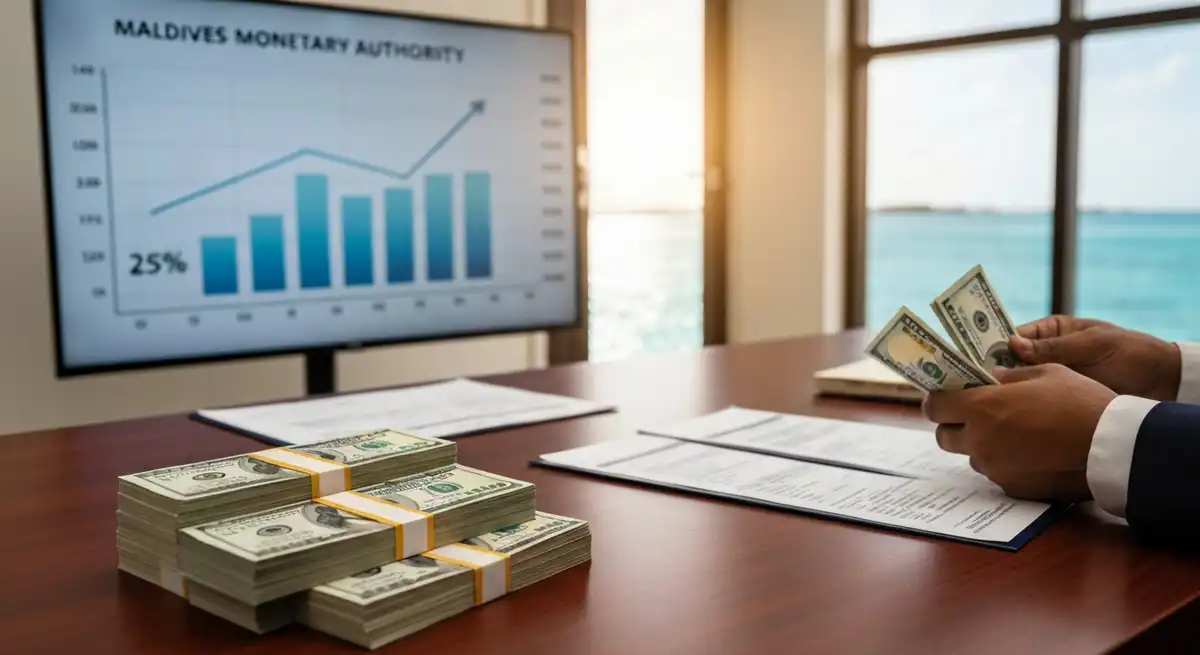
The Maldives Monetary Authority (MMA) is considering a 25 percent increase in US dollar allocations to commercial banks during the tourism off-season, as depicted alongside images of the central bank headquarters, US dollar banknotes, and currency exchange symbols. | RaajjeMV
In an effort to alleviate the ongoing pressures on the country’s foreign exchange market, the Maldives Monetary Authority (MMA) has decided to increase the weekly dollar allocation to commercial banks by 25 percent.
The Maldives Monetary Authority (MMA) has announced that it will begin increasing the allocation of US dollars to commercial banks starting next Tuesday, for a period of three months. The central bank stated that this decision was made to address the rising demand for foreign currency for medical expenses, education, remittances, and essential imports. This intervention comes despite the seasonal decline in foreign exchange inflows typically experienced during the tourism off-season.
The Maldives Monetary Authority (MMA) stated that the objective of this measure is to alleviate the current dollar shortage within the banking system and to facilitate easier access to foreign currency for essential priorities.
Statistics indicate a significant surge in dollar sales through banks during the first five months of this year. Specifically, the volume of dollars sold for medical and educational purposes has risen by 78 percent compared to the same period last year, while sales for business and general purposes have seen a 72 percent increase.
Despite an increase in the amount of dollars released to banks, the gap between supply and demand has widened due to a decline in overall foreign currency inflows. This imbalance has impacted the black market, where the exchange rate for a US dollar has surged past 20 Rufiyaa in recent days.
Last month, the Bank of Maldives (BML) reduced the limits for foreign transactions on Maldivian Rufiyaa cards. However, the bank has since announced that these limits will be eased before the end of this month.
The Maldives Monetary Authority (MMA) disbursed $72 million to banks during the first quarter of 2025, followed by $78 million in the first quarter of 2026. While these adjustments are expected to provide some relief to both banks and customers, experts suggest that a permanent solution to the foreign exchange challenges will only be achieved through an increase in tourism revenue.