Regulations for SOEs to develop resorts, gazetted
18 ޖޫން 2026 | ބުރާސްފަތި 19:48State-owned enterprises may be leased islands or lagoons for tourism development only if the government maintains at least a 45 percent stake and the company demonstrates sufficient financial and technical capacity. Under these regulations, companies are required to pay an acquisition cost and contribute $500,000 to a social responsibility fund or execute a project of equivalent value. Furthermore, the regulations strictly prohibit the transfer of any rights or the subleasing of properties acquired through this process to third parties.

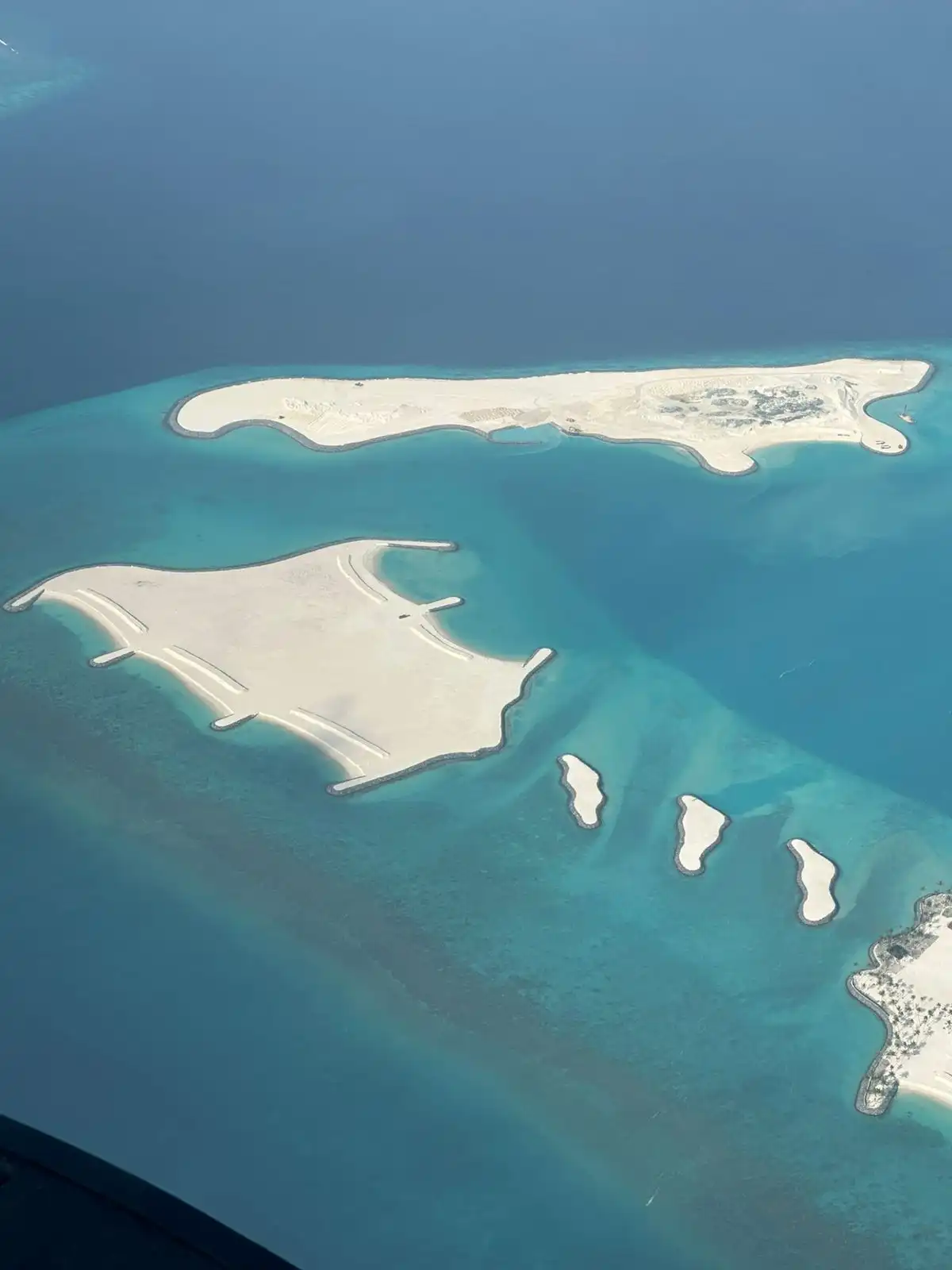
Several resorts are currently under development on reclaimed land within a lagoon. | Raajje MV
The government today gazetted a new regulation governing the lease of islands, land plots, and lagoons to state-owned enterprises for the development and operation of tourist resorts and integrated tourist resorts.
Formulated under Regulation No. 2026/R-55, these regulations are established by the Ministry of Tourism and Civil Aviation pursuant to the authority vested in it by the Maldives Tourism Act. The primary objective of these regulations is to define the eligibility criteria and procedural framework for leasing land and facilities to state-owned enterprises for tourism development purposes.
Under these regulations, islands, land plots, or lagoons may be leased to state-owned enterprises only if three primary conditions are met. Firstly, the company must demonstrate the financial and technical capacity to undertake such projects. Furthermore, the regulations mandate that the government must hold a minimum stake of 45 percent in the enterprise. Additionally, the lease must be approved by the Cabinet, and the President must officially designate the specific location for tourism development purposes.
Companies interested in the lease must submit several documents to the Ministry, including a corporate profile, evidence of financial and technical capability, a board resolution, and comprehensive project details. Additionally, applicants are required to provide a detailed breakdown of their proposed payment plan for the lease acquisition cost. Upon submission, the Ministry will conduct an initial review of the documentation. If any discrepancies or missing information are identified, applicants will be granted a 10-day period to rectify the issues. The Ministry reserves the right to disqualify any proposal that is not amended within this specified timeframe.
Under existing regulations, a lease acquisition cost must be paid for every property leased. These payments are to be made to the Maldives Inland Revenue Authority (MIRA). However, if the government owes any outstanding payments to a company, that company has the option to request that the acquisition cost be offset against the amount due. This arrangement can only be facilitated upon submission of a verification document from the Ministry of Finance.
Furthermore, a contribution of USD 500,000 must be made to the Tourism Trust Fund as part of Corporate Social Responsibility (CSR). Alternatively, the developer is required to undertake a social project of equivalent value as determined by the Ministry. These projects may include the construction of community centers in inhabited islands, human resource development, and the development of sports facilities. The Ministry reserves the right to terminate the lease agreement if these projects are not carried out in accordance with the terms of the contract.
The transfer or subleasing of any rights granted under these regulations is strictly prohibited. However, the management of a resort may be outsourced to a third party in accordance with the relevant governing regulations. State-owned enterprises operating within the jurisdiction of inhabited islands are permitted to develop only guesthouses and hotels under integrated tourism projects. These regulations shall come into effect upon their publication in the Government Gazette.