Audit: Faafu Atoll Council’s visit to Sri Lanka to study tea production and procure goods for the atoll shop was a wasteful expenditure
23 ފެބުރުއަރީ 2026 | ހޯމަ 10:04An audit report has revealed that the Faafu Atoll Council spent over MVR 100,000 on a trip to Sri Lanka for 20 employees, directly violating cost-cutting directives issued by the Ministry of Finance. Although the delegation observed tea production and medicinal practices during the visit, the Audit Office noted that these activities were unrelated to the council’s official mandate. Consequently, the report has classified the expenditure as a wasteful misuse of state funds.

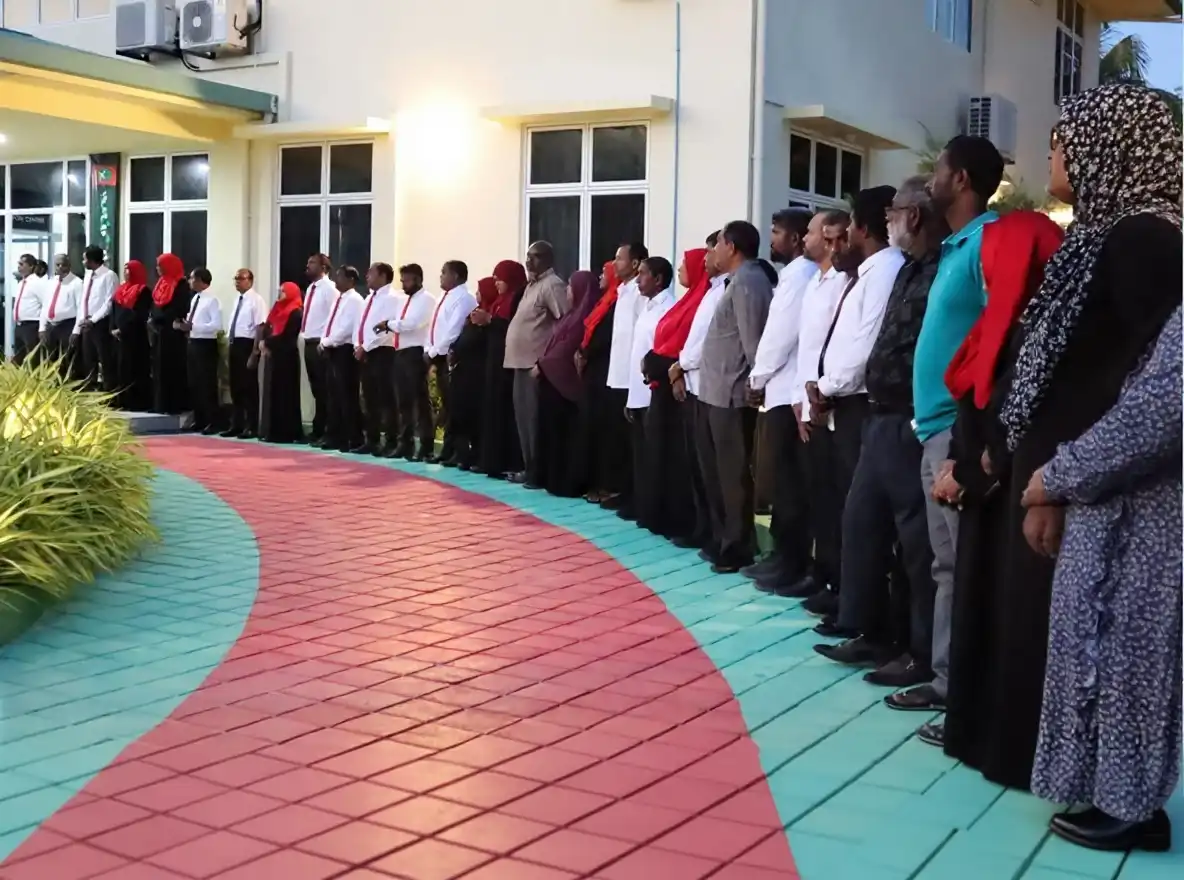
The members and staff of the Faafu Atoll Council. | F. Atoll Council | F. Atoll council
The Auditor General’s report has flagged a trip to Sri Lanka by the Faafu Atoll Council to study tea production and herbal medicine as an unjustified expenditure. The report stated that these activities are unrelated to the official mandate and administrative functions of the council office.
The 2024 compliance audit highlights that a cost-cutting circular has instructed agencies to suspend all training programs, with the exception of short-term courses and training fully funded by foreign sources. The audit further notes that local councils are required to align their spending with the guidelines set out in the circular when utilizing block grants and self-generated revenue. It emphasizes that councils must manage expenditures within their allocated budgets while prioritizing increased fiscal efficiency.
However, the Faafu Atoll Council failed to comply with the Ministry of Finance's directives regarding the expenditures for their 2024 trip to Sri Lanka. A total of 20 personnel—comprising two council members, the Secretary General, and 17 administrative staff—undertook an eight-day study tour to Sri Lanka from September 6 to 13. The audit revealed that MVR 140,971 was spent from the council's budget for this trip without securing alternative funding sources, contrary to the established guidelines.
According to the official travel report, the primary objectives of the trip were to gain professional experience and to foster stronger relationships and camaraderie among the staff. The report detailed several activities undertaken to acquire this experience, including observing tea production processes and Ayurvedic medicinal practices. Additionally, the delegation procured goods for the Faafu Atoll Store and visited the Maldivian High Commission in Colombo to gather information regarding foreign service operations.
The audit stated that these matters are unrelated to the official functions and mandates of the council administration.