State argues anti-defection amendment refers to "legal procedures" yet to be established in law!
14 އެޕްރީލު 2026 | އަންގާރަ 10:53Supreme Court justices have questioned whether the Maldives is governed by the rule of law or parliamentary supremacy after the state argued that the court lacks the jurisdiction to annul constitutional amendments. While the state contends that the specific legislation governing the vacation of parliamentary seats cited in the recent amendment does not yet exist, the petitioners argue that the provision refers to the existing Political Parties Act.

The issue of the constitutional amendment on floor-crossing. | RaajjeMV | Raajje MV
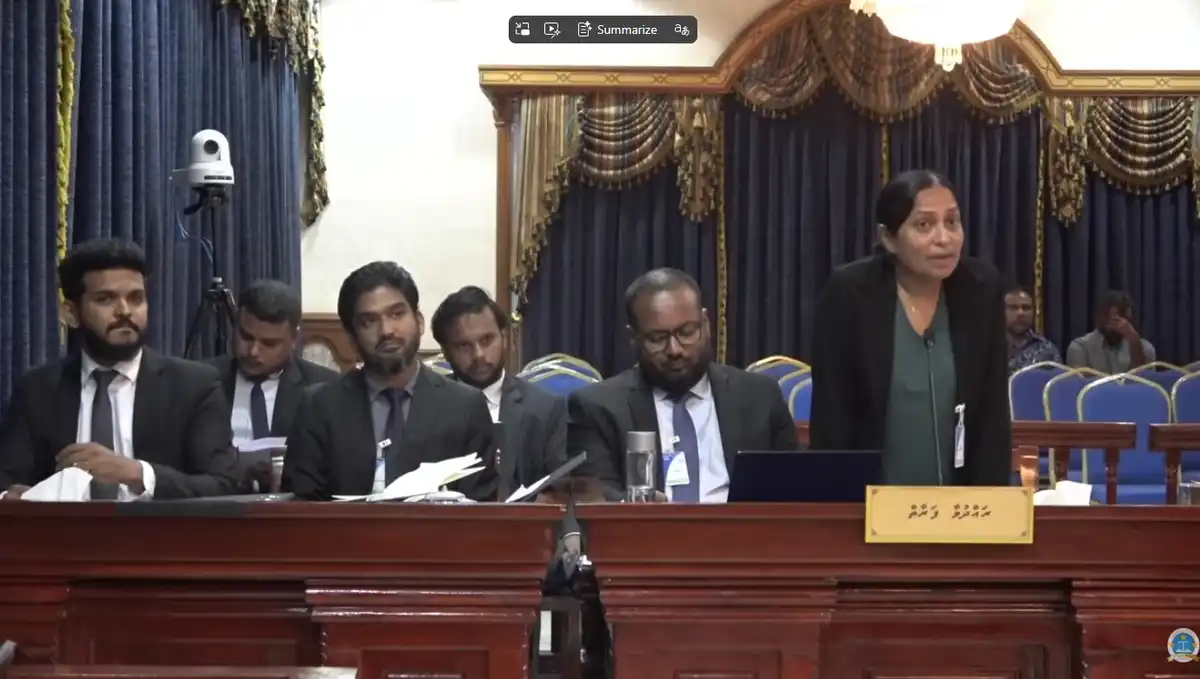
The state has informed the Supreme Court that the specific legislation governing the removal of a Member of Parliament from their political party—one of the conditions under which a member would lose their seat—does not currently exist.
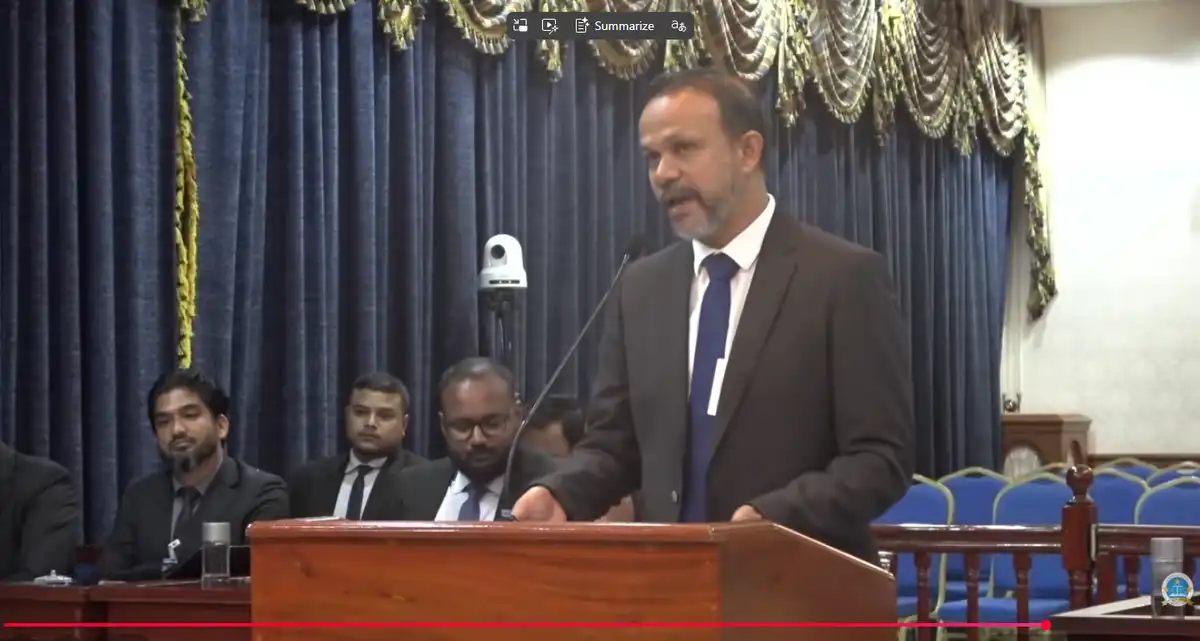
Responding to questions from the bench during the hearing, the state attorney argued that the power to annul constitutional amendments rests solely with Parliament, asserting that the Supreme Court lacks the jurisdiction to preside over the matter.
Consequently, Justice Shujune questioned whether any amendment passed by Parliament would be considered valid and raised concerns regarding how a system of checks and balances would be maintained in such a scenario.
In response to the question, the state attorney noted that the Constitution does not explicitly outline the consequences for such a situation. However, the counsel pointed out that subsequent parliaments have previously nullified amendments deemed unconstitutional.
Following the lawyer's statement, Justice Shujune questioned whether the Maldives is governed by the rule of law or by the supremacy of Parliament. In response, the State affirmed that the Maldives is governed by the rule of law.
According to the amendment passed by Parliament, one of the circumstances under which a Member of Parliament would lose their seat is if they are dismissed from their political party in accordance with the procedures prescribed by "law." However, the state attorney argued that the specific law referenced in that article does not currently exist.
The state attorney argued that the provision was specifically intended to safeguard the independence of members. Furthermore, the attorney questioned how a political party could claim such authority when the law in question is no longer in effect.
However, the petitioner contends that since the amendment stipulates removal in accordance with the law, it implies that the provisions of the Political Parties Act would be applicable in such circumstances.
The petitioner noted that the constitutional amendment, or the bill containing the amendment, would typically specify any further actions required to implement the changes. For instance, it would explicitly state if new regulations need to be drafted or if additional legislation must be enacted under the law.
Therefore, the lawyer argued that the provision cannot be viewed as a law intended for future application. Instead, it was noted that the current legal framework governing the removal of members by a party is stipulated within the Political Parties Act.