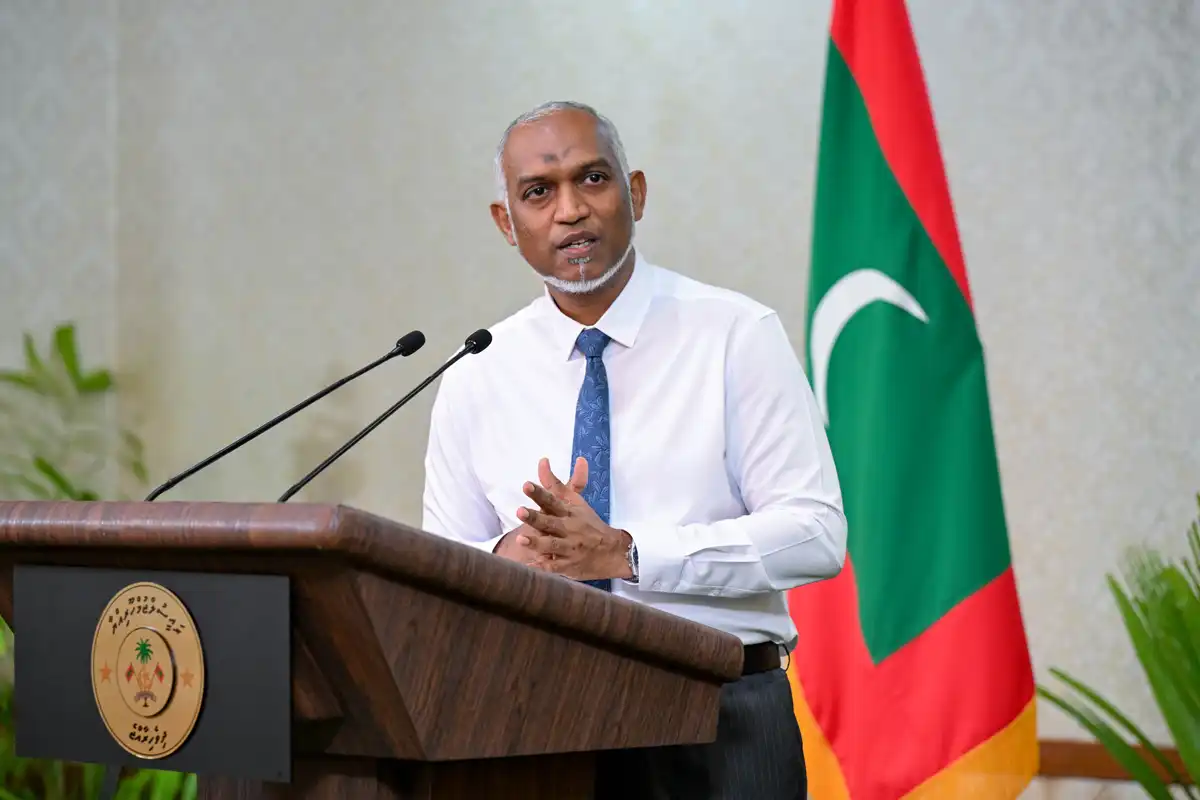
Control Commission issues statement defending government in move to intimidate media
26 މާރިޗު 2026 | ބުރާސްފަތި 11:03Following media reports regarding President Muizzu’s remarks on the Middle East conflict, the Media Council has urged journalists to strictly adhere to professional codes of ethics. In a formal statement, the Commission cautioned against broadcasting content that could jeopardize national security or utilizing manipulated audio and video that distorts the truth.
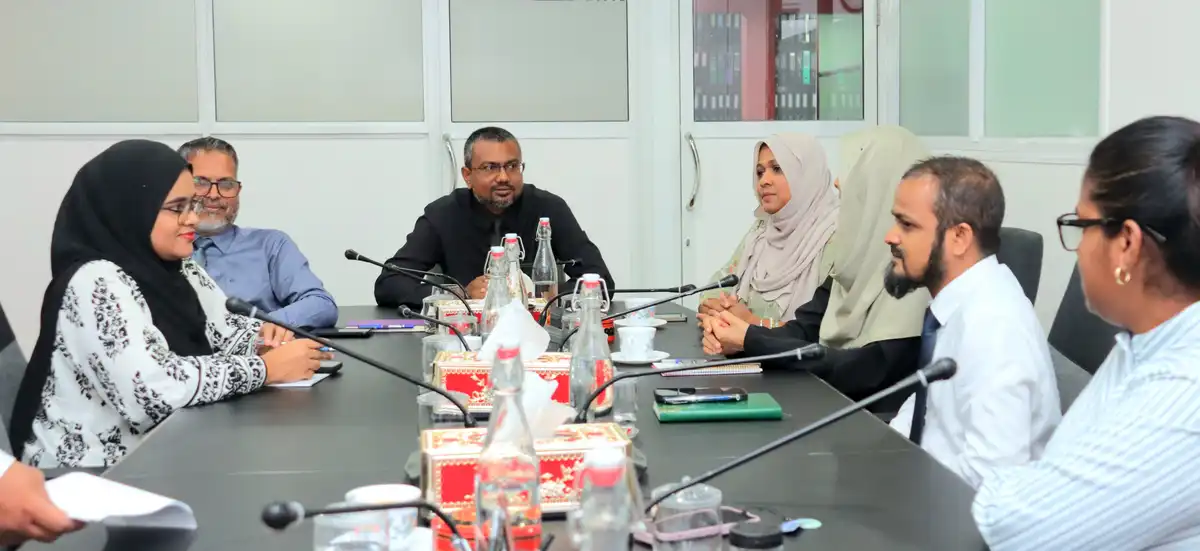
A meeting of the members of the Maldives Media and Broadcasting Commission in progress. | Media and Broadcasting Commission | Media and broadcasting commission
The Maldives Media and Broadcasting Commission—increasingly viewed as a government control body—has issued a statement defending the administration and intimidating media outlets that do not align with President Dr. Mohamed Muizzu’s preferred narrative on the conflict in the Middle East.
In a statement released Wednesday, the Control Commission urged media outlets to exercise responsibility in disseminating news and information to the public.
The Commission called on journalists and broadcasters to adhere strictly to the "Code of Ethics for Broadcasters, Media Personnel, and Journalists," established under Section 38 of the Maldives Media and Broadcasting Regulation Act.
The statement emphasized that media outlets must exercise heightened caution when disseminating news and information, particularly during this sensitive period as the world faces the looming threat of war. It highlighted the necessity of adhering to Article 5 of the Code of Conduct, "Maintaining National Security and Safety," and Article 6(k), which requires that content sourced from various parties for factual programming be presented without distorting the original context.
Furthermore, the statement underscored the importance of Article 14(r), which prohibits the use of manipulated or fabricated photos, audio, and video intended to incite hatred. Media organizations were urged to pay special attention to these specific provisions to ensure responsible reporting.
Furthermore, as the regulatory body for the media, it reminded all Maldivian journalists to uphold their individual professional responsibilities with accountability during this time.
The Control Commission issued this statement targeting the media following reports on President Muizzu’s remarks during a press conference, where he allegedly spoke in a manner that encouraged Iran to intensify its attacks against Israel and the United States. This move comes at a time when the Maldivian government is facing mounting international pressure, as the President's comments have drawn significant attention from global media outlets.
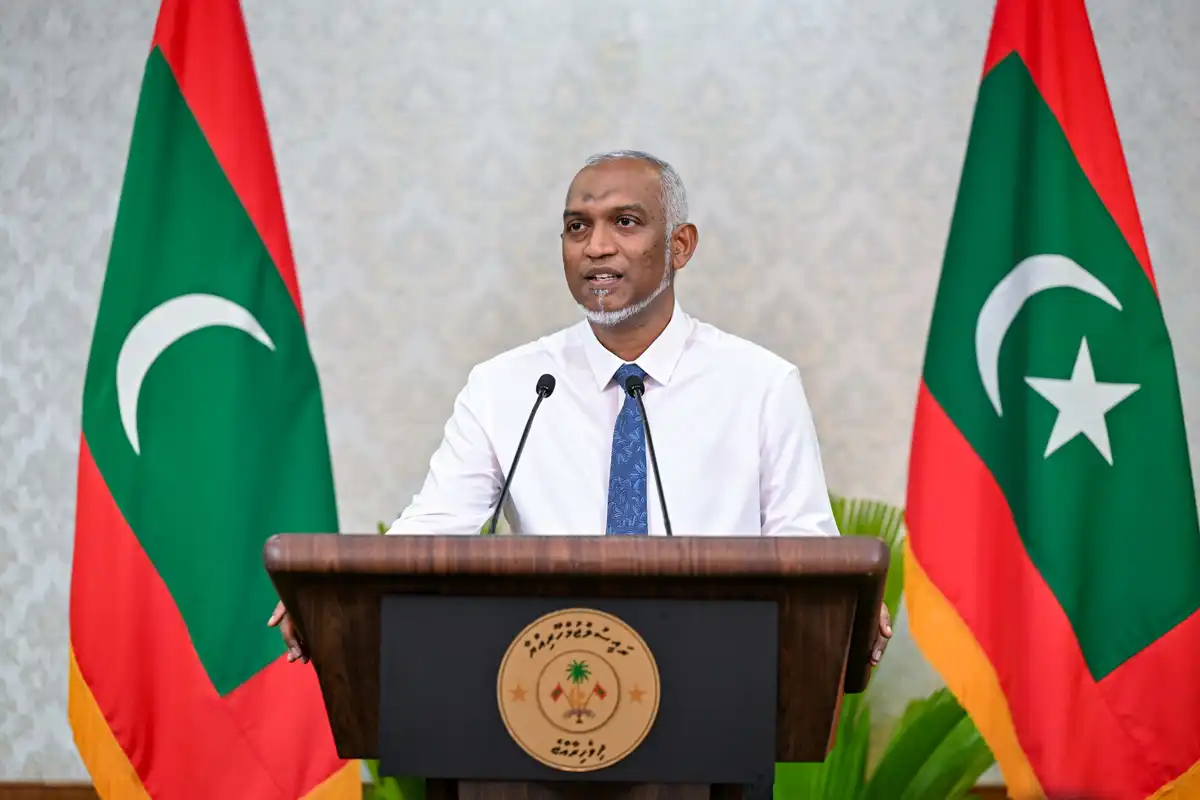
During a press conference held at the President's Office on the 23rd of this month, President Muizzu stated that if Iran were to launch an attack, it should be directed specifically at Israel and American interests. He noted that this is the position held by his administration.
Israel should be targeted day and night. We strongly desire for the situation to proceed in that manner. However, when Muslim Arab nations are attacked, it is Muslims who lose their lives and Muslim infrastructure that is destroyed. Instead, Iranian strikes should target Israel and the two entities attacking Iran—the United States and Israel—in a way that avoids harming Muslims in the region. This is likely how things should proceed. I believe this is the policy of the Maldivian government. Therefore, we will not allow the Maldives to be used for this war under any circumstances. This applies not only to military aircraft but also to diplomatic or any other organizational arrangements; no such opportunity will be granted to use the Maldives for this conflict.President Dr. Mohamed Muizzu
Despite President Muizzu’s remarks in this regard, the government later attempted to revise the narrative.