Daily cancellations reach approximately 3,000 bookings; urgent and robust measures must be taken!
16 މާރިޗު 2026 | ހޯމަ 09:41With daily tourist booking cancellations currently ranging between 2,500 and 3,000, the Maldives' tourism-dependent economy and local businesses are bracing for a significant financial impact.

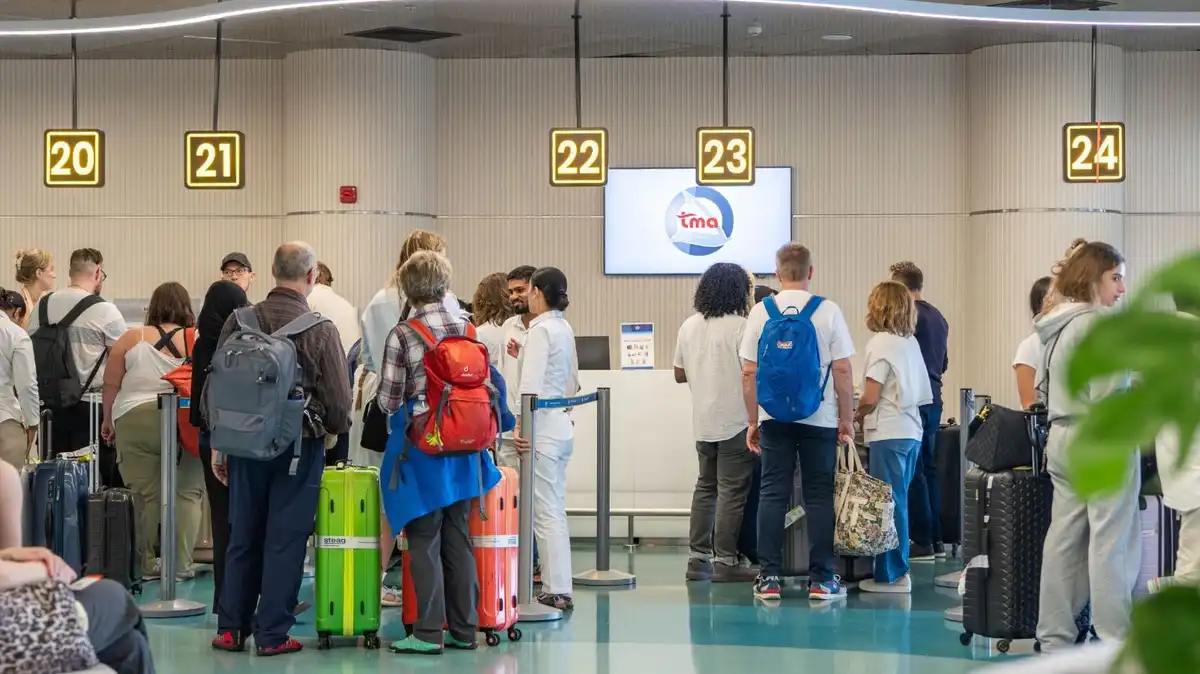
Tourists queuing at the seaplane check-in area. | MACL | MACL
Reports indicate that approximately 3,000 bookings are being canceled daily due to the ongoing conflict in the Middle East.
Maldives' tourism statistics indicate a clear downward trend in visitor arrivals. During the first 14 days of this month, tourist arrivals saw a 21 percent decline compared to the same period last year.
According to statistics from the Ministry of Tourism, 69,648 tourists have visited during this period so far this year, compared to 88,274 arrivals during the same period in 2025.
In a post on X, Inner Maldives CEO Mohamed Firaq shared further details regarding the matter.
He stated that between 2,500 and 3,000 tourist bookings are currently being canceled daily. He further noted that this trend will have a significant impact on businesses across the Maldives, which remains heavily dependent on the tourism industry.
Firaq stated that remaining complacent by assuming nothing is wrong will not provide any relief, and that the consequences will soon impact numerous sectors.
He emphasized that the nation must work together, plan ahead, and responsibly confront the reality of the situation before it worsens.
Furthermore, many are calling on the government to take decisive action during this period. Specifically, there are mounting calls for the state to reduce expenditures and suspend certain spending for the time being. In this regard, former President Mohamed Nasheed also recently spoke on potential measures that could be implemented to curb state spending at this time.
Nasheed stated that the Maldives has a total storage capacity of 70 million liters of diesel, a figure that includes the combined capacity of the State Trading Organization (STO) and the private sector. He further noted that the country’s petrol storage capacity stands at 25 million liters.
Nasheed stated that the current reserves would only last for 20 days. Consequently, he warned that the Maldives faces a high risk of a fuel shortage.
Nasheed highlighted several critical measures that must be implemented immediately. These include assessing the fuel storage capacity of the Maldives' private sector, establishing a schedule for planned power outages, regulating the use of land vehicles, and reducing the operating hours of government offices and schools.
Furthermore, Nasheed has called for a reduction in social activities and emphasized the importance of securing fuel supplies for the fishing industry, resorts, and the aviation sector. He also highlighted the necessity of rerouting supply lines by identifying alternative air and sea routes that bypass Western Asia.