Three years too late as Pres. Muizzu outlines his vision for “Dhivehinge Raajje”
18 ނޮވެމްބަރު 2026 | ބުދަ 18:01President Muizzu’s presentation of his nation-building vision through diagrams on a board during an event marking the third anniversary of his administration has drawn widespread public criticism. Many observers have described the president’s reliance on English terminology as confusing for the general public and a clear indication of a lack of strategic planning within the government. Consequently, there is a prevailing sentiment that introducing policies in such a manner midway through the presidential term is fundamentally absurd

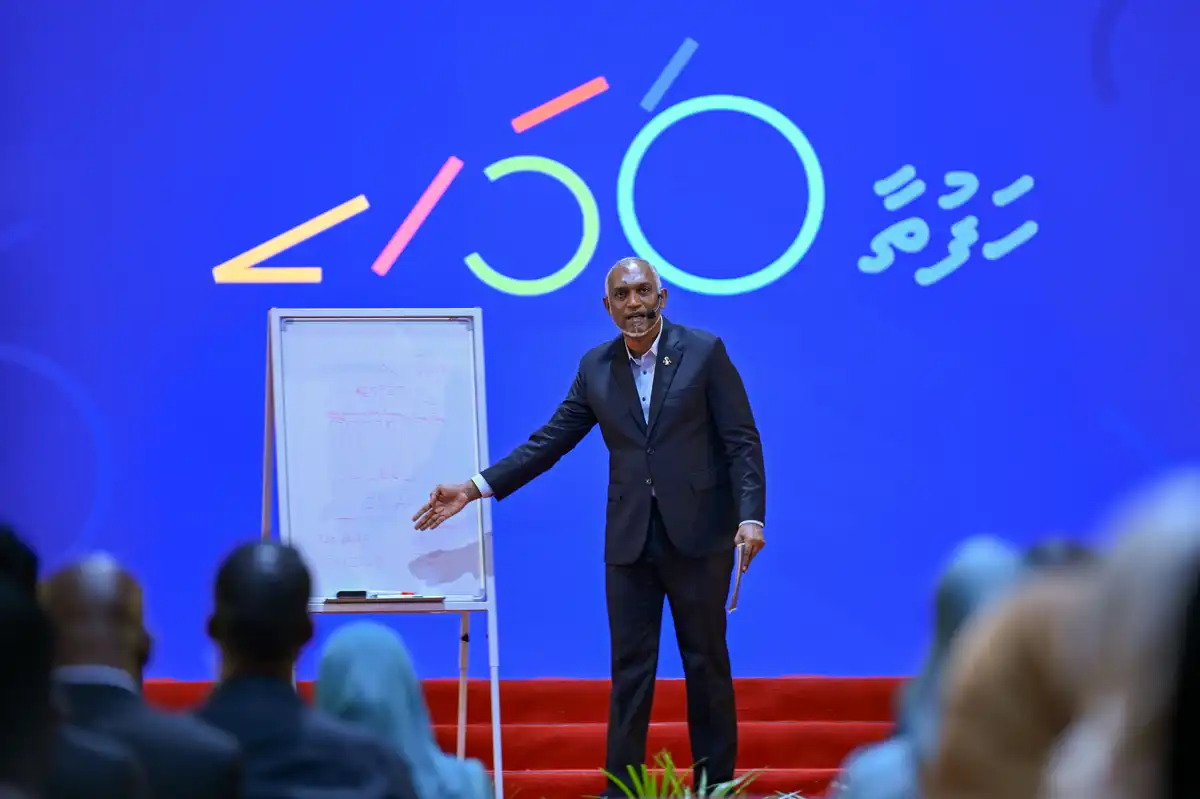
Articulating the blueprint that encapsulates President Dr. Mohamed Muizzu’s "vision" | Presidents Office
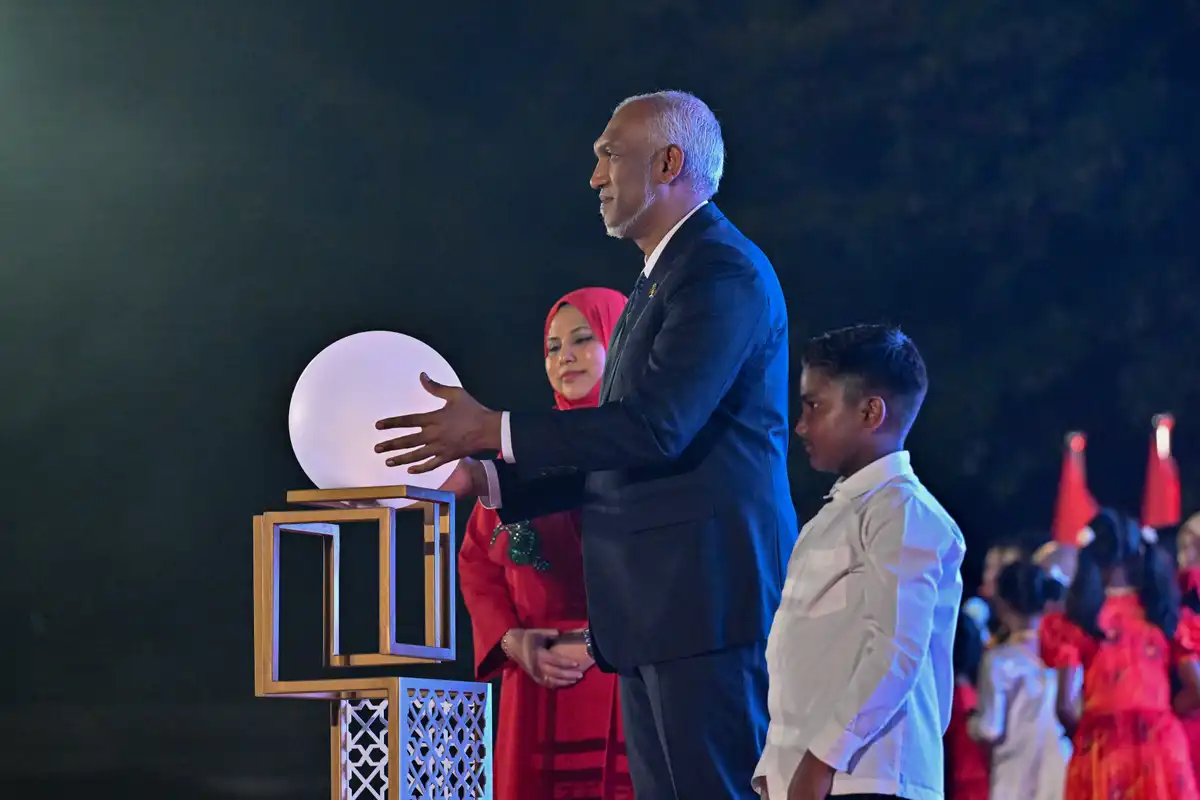
Watching President Dr. Mohamed Muizzu sketch out his grand vision for developing “Dhivehinge Raajje” on a whiteboard during his administration’s third-anniversary rally has certainly captured plenty of public attention, though mostly as fuel for widespread mockery.
With more than half of his presidential term already behind him, the sudden urge to map out the basic pillars and foundations of nation-building after three full years only invites deeper suspicion about where the incumbent administration is truly headed.
Addressing the crowd, the incumbent explained that his background as an engineer inspired him to reach for a traditional whiteboard to lay out his strategy, hoping to prove that his administration is not simply making things up as it goes along.
He pitched the idea of constructing the nation atop a firm foundation of Islam, held up by a series of pillars representing a "healthy and skilled", "creative", "resilient", "sovereign", "prosperous", "connected", and "trusted Maldives".
However, in a rather awkward attempt to flaunt his technical credentials, his live illustration saw him sketching the pillars onto the board before he had even bothered to draw the foundation underneath them.
Unsurprisingly, critics and media commentators wasted no time poking fun at the spectacle, sarcastically pointing out how lucky the country is that the incumbent is not a fisherman, lest he haul fishing gear and traditional boats onto the rally stage.
Others quipped that a carpenter in office would have arrived armed with planes, chisels and measuring tapes, while a tailor would have hauled out a sewing machine for a live demonstration.
The jokes kept rolling, with remarks that a baker-turned-president would have lined the podium table with eggs and baking powder, all highlighting the sheer irony of resorting to engineering props to explain basic policy three years into a presidency.
To make matters worse, the way President Muizzu phrased and presented these ideas offered virtually zero clarity to everyday citizens. Rather than speaking plainly, his reliance on English buzzwords and abstract architectural metaphors left many people scratching their heads in immediate confusion.
When a national vision remains murky even to the supporters standing right in front of the podium, it points to a glaring breakdown in the government’s ability to communicate its actual direction to the public.
Now that three years of this term have officially elapsed, it is worth asking why the country’s roadmap is only just making its debut on a whiteboard.
Having no visible foundations or pillars at the outset of the presidency, only to sketch them out well past the halfway mark, speaks volumes about the administration's apparent lack of foresight and planning.
As ordinary citizens continue to grapple with deep uncertainty over their daily livelihoods, one is left to wonder what real, tangible progress a handful of English-labeled pillars drawn on a board will ever deliver to the people.