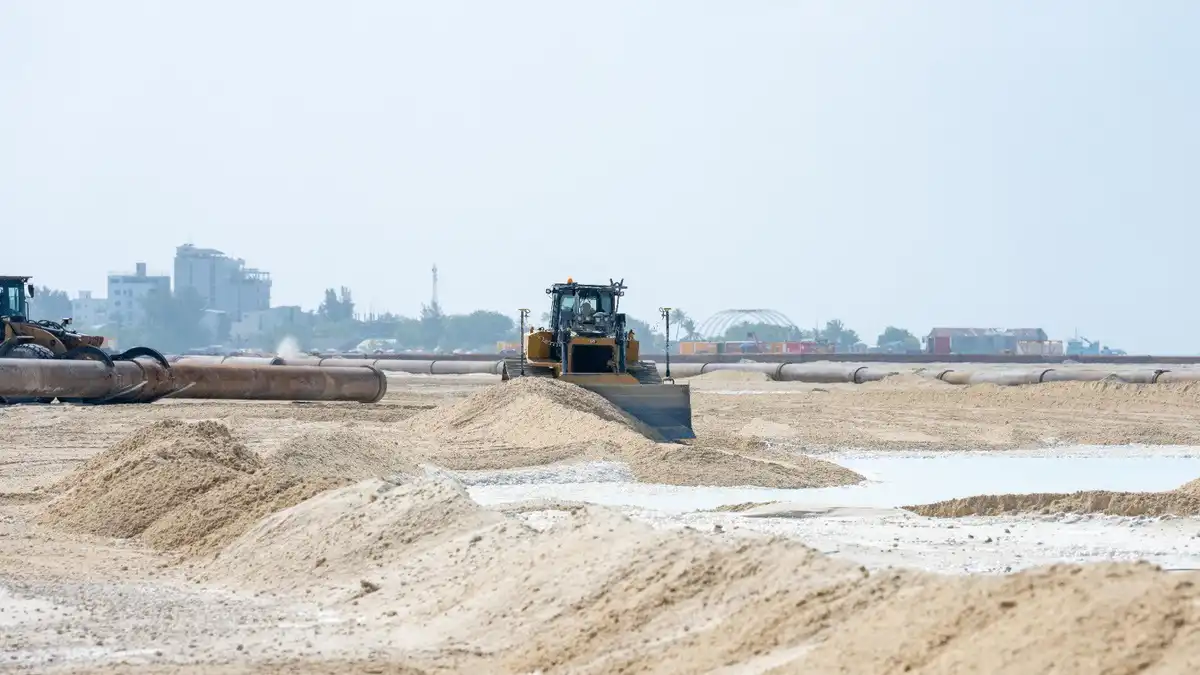
Ras Malé housing vows trashed as land is sold cheap to Zionists
28 ސެޕްޓެމްބަރު 2026 | ހޯމަ 10:28Ras Malé is a sovereign asset of the Maldivian people. To put it bluntly, this land has been signed away at an undervalued rate. No Maldivian citizen would ever consent to relinquishing such a significant national asset in a manner that benefits Zionist interests. The government and all those facilitating this deal must remain mindful of this fact

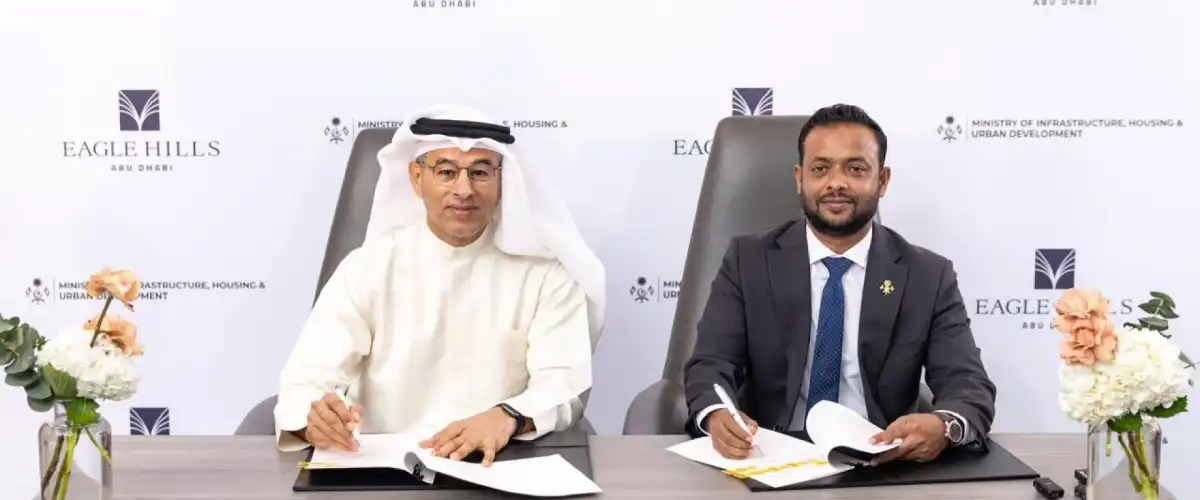
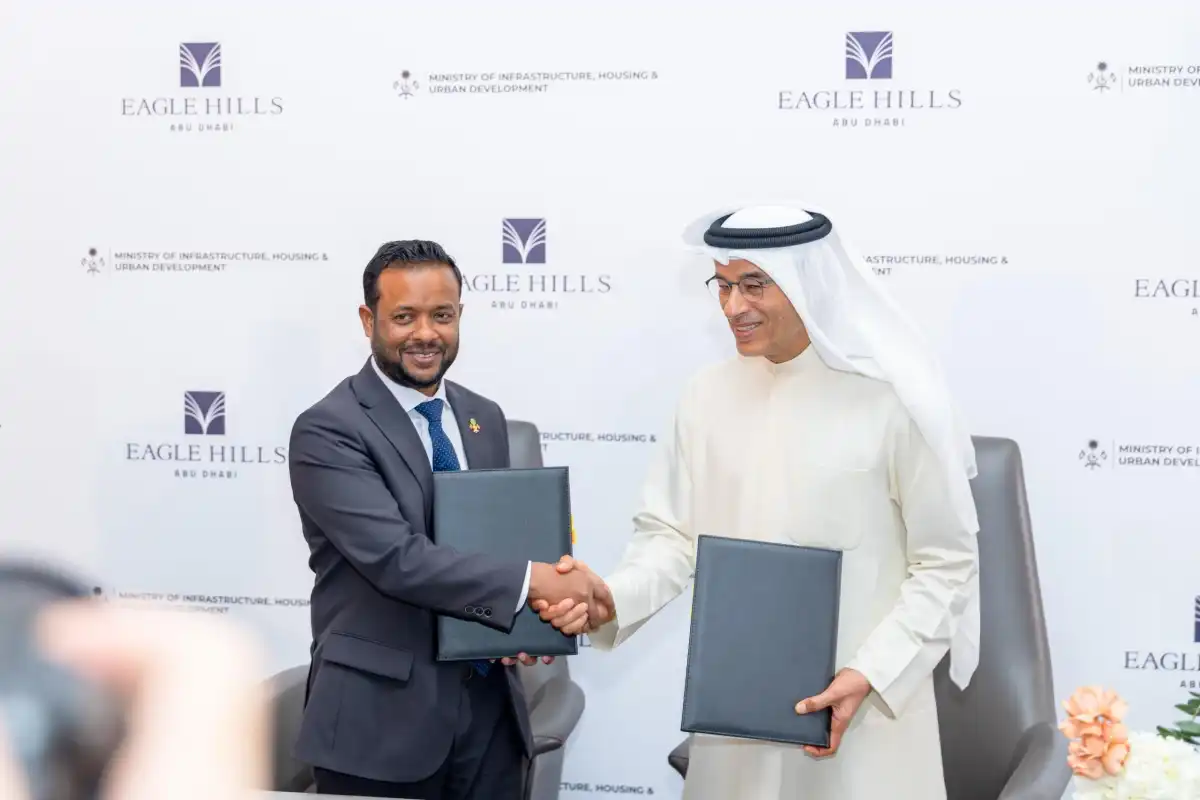
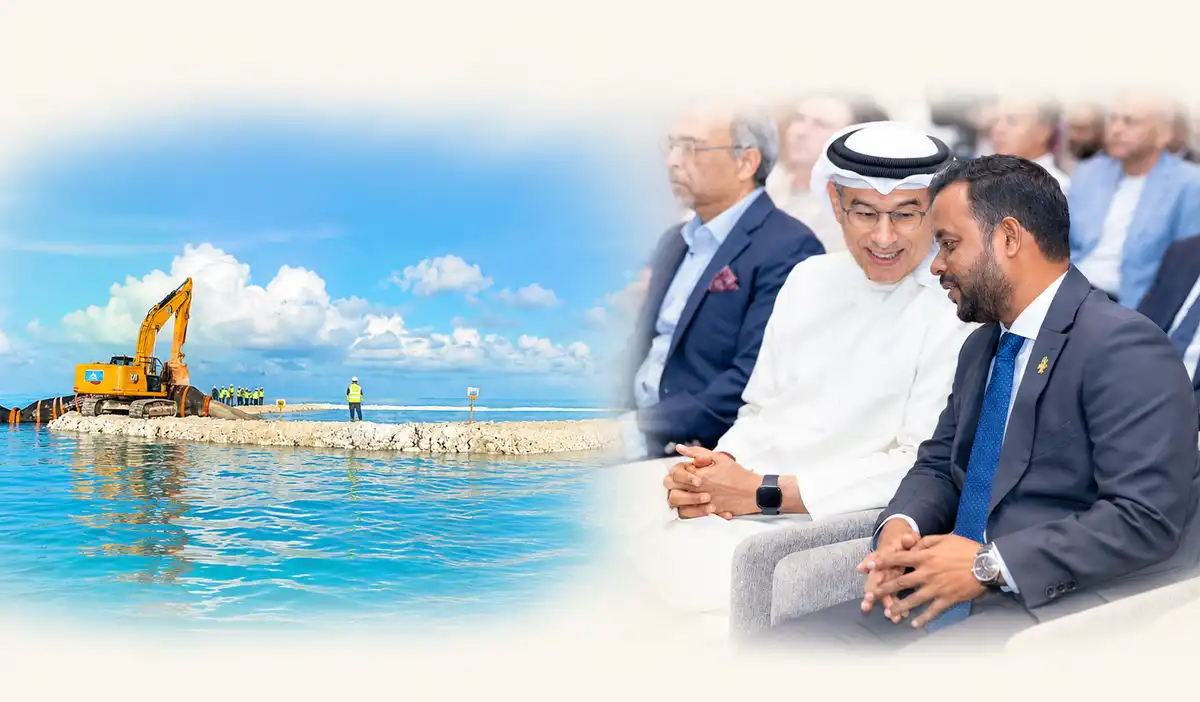
The government has signed an agreement with UAE-based Eagle Hills to develop the "Maldives Waterfront and Marina" in Ras Malé | Eagle hills
The grand national dream sold to the Maldivian public was never supposed to be an elite playground for high-end real estate moguls.
Reclaiming 1,153 hectares from the sea was marketed as the ultimate turning point, a transformative undertaking designated for roughly 65,000 residential apartments designed to wipe out the chronic Malé living space crisis once and for all.
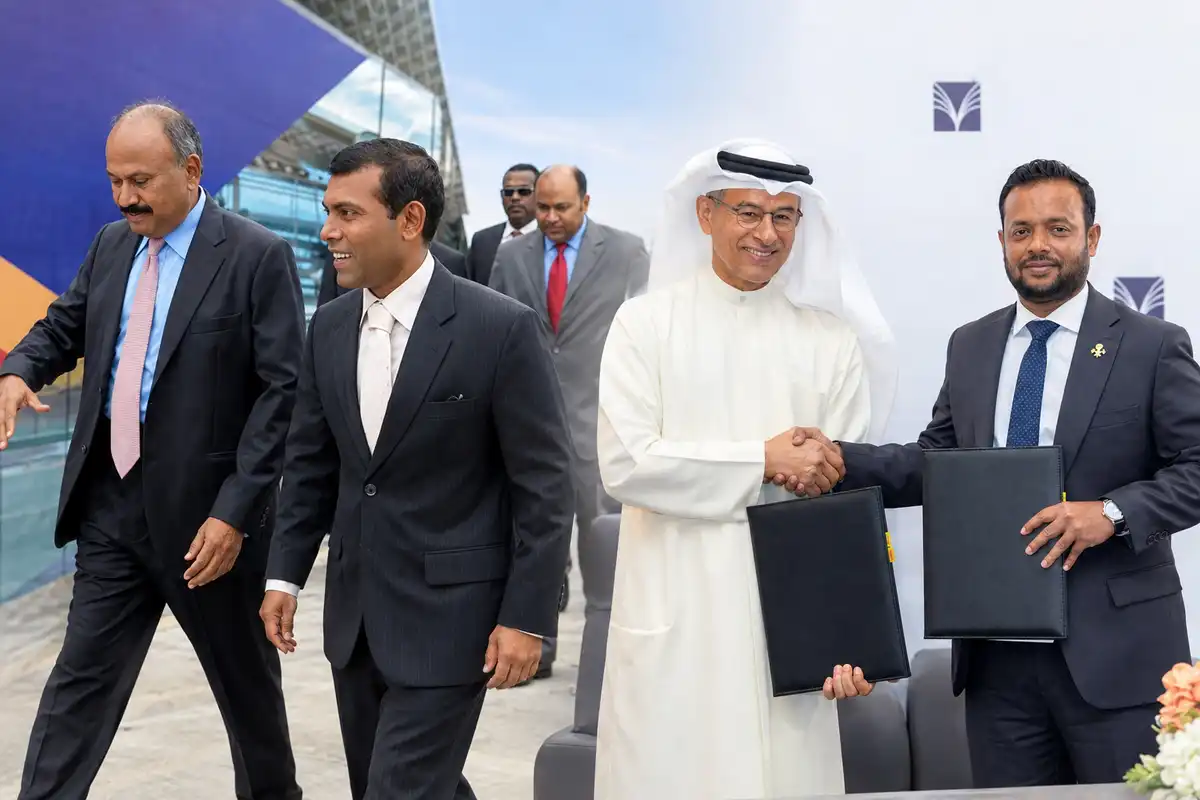
However, on 21 September 2026, the administration quietly entered into a Commercial Terms Agreement alongside Abu Dhabi-based firm Eagle Hills to orchestrate the Maldives Waterfront and Marina venture.
Representatives from Eagle Hills were quick to clarify that this paperwork is far from a finalized pact, with finer contractual specifics promised at an unspecified future date. In the meantime, the signed document itself stays firmly buried away from the citizens it impacts.
Official state narratives claim that 500 hectares of Ras Malé are being handed over for this initiative, though various foreign press dispatches point to a steeper 550 hectares. When these backroom commitments were arranged, Article 251 of our national Constitution sat unequivocally on the books, forbidding the transfer of Maldivian sovereign territory into foreign hands while capping foreign property leases at a hard ceiling of 99 years.
99 years, by any legal logic, ought to mean 99 years. However, Eagle Hills has publicly acknowledged that holdings across this complex can be leased for a 99-year stretch, with the entire 99-year timeframe resetting back to zero whenever an asset is sold off or passed down through inheritance.
In plain terms, this clever bureaucratic workaround amounts to surrendering national land forever. The glaring constitutional challenges triggered by this rolling lease mechanism continue to linger without a shred of public legal resolution.
Worse still, the overarching timeframe, leasehold rates, and contractual parameters governing the master lease for these 500 hectares remain entirely hidden from view.
Which brings us to the elephant in the room: exactly how much is the Maldives giving this land away for?
Rather than demanding an upfront financial settlement, authorities claim they are relying on a profit-sharing arrangement. The state insists it will capture a 10 percent cut of the master developer's earnings, take a four percent slice from every single unit transaction, and rake in service levies from hotels, eateries, and commercial outlets.
We are also assured that incoming sale receipts will sit inside an escrow facility within a Maldivian banking institution. However, no one has bothered to explain whether this 10 percent slice is sliced out of gross turnover, operational revenues, or bottom-line net profit. How many years or decades this 10 percent trickle will flow remains another guarded mystery.
Not a single objective, independent property appraisal of these 500 prime hectares has ever been placed before the public. Likewise, there is zero documented proof that any open, competitive bidding exercise took place prior to anointing Eagle Hills.
As a consequence, the public is left completely blind as to whether the wider global market would have tendered far better financial rewards or superior leasing conditions.
While domestic officials boast that the grand venture carries a 20-billion-USD valuation, major financial publications like Reuters and Bloomberg report a starkly lower figure of USD 12 billion. That represents an enormous, unexplained gulf.
Further, throwing around an abstract development valuation does not translate to cold hard cash wired to the Maldives by Eagle Hills. How much actual financial capital the company is staking out of its own coffers remains an open question.
Meanwhile, the administration maintains that it will steer clear of borrowing funds, offering sovereign payment pledges, or granting special tax exemptions for the venture.
The scheme also includes a publicized side arrangement wherein Eagle Hills plans to build 5,000 three-room apartments over in Hulhumalé. While these residential structures, estimated at four to five million, are initially financed by the developer, the minister has openly admitted that these expenses will simply be deducted from the future 10 percent earnings stream owed to the state. Treating these residential blocks as some charitable contribution is entirely deceptive.
The most explosive controversy tainting this arrangement lies in the documented links between Eagle Hills and Israel. On paper, Eagle Hills operates as a private firm out of Abu Dhabi; nevertheless, verifiable paper trails show that its Chairman, Mohamed Alabbar, maintains extensive relationships with Israeli bodies.
Back in 2018, Alabbar stepped forward as a financial patron backing an Israeli food security project, and by 2023, he stood as an honored attendee at a fundraising dinner for Israel's Sheba Medical Center.
Why is the voting public being locked out from the basic financial facts, operational mechanics, and legal contracts, precisely as a colossal tract of sovereign territory promised for ordinary Maldivian families is signed away into a multi-generational business arrangement?
A 99-year title established in 2026 runs straight through to 2125. If that 99-year countdown is engineered to restart with every single property transfer, that is not an entitlement a temporary political administration has the right to barter away. It is a fateful settlement over the soil and destiny belonging to generations yet unborn.
The state must release the full agreement without delay. Commission and publish an impartial valuation of the real estate. Release every legal consultation and formal opinion on the matter. Show the public the precise statutory grounds that permitted direct private negotiations over a transparent public tender.
Produce concrete verification detailing the direct financial equity Eagle Hills is actually contributing. Detail the mathematical formula used to figure out that ten percent revenue share, and explain precisely how this perpetual 99-year lease reset functions under the law.
This soil belongs entirely to the Maldivian populace. No citizen in this country wants to see our sovereign ground bartered away under conditions that end up serving Zionist interests.
The politicians and power brokers steering this arrangement would do well to wake up to that reality.