Who really gains from the hidden deal as Muizzu hands MVR 2.3bn in Ras Malé land to a foreign entity for nothing?
25 ސެޕްޓެމްބަރު 2026 | ހުކުރު 16:36Significant criticism has emerged regarding the lack of transparency in the confidential allocation of a substantial portion of Ras Malé to Abu Dhabi's Eagle Hills. As the agreement involves long-term land concessions with no immediate state revenue or discernible public benefit, questions have been raised concerning the actual beneficiaries of this deal

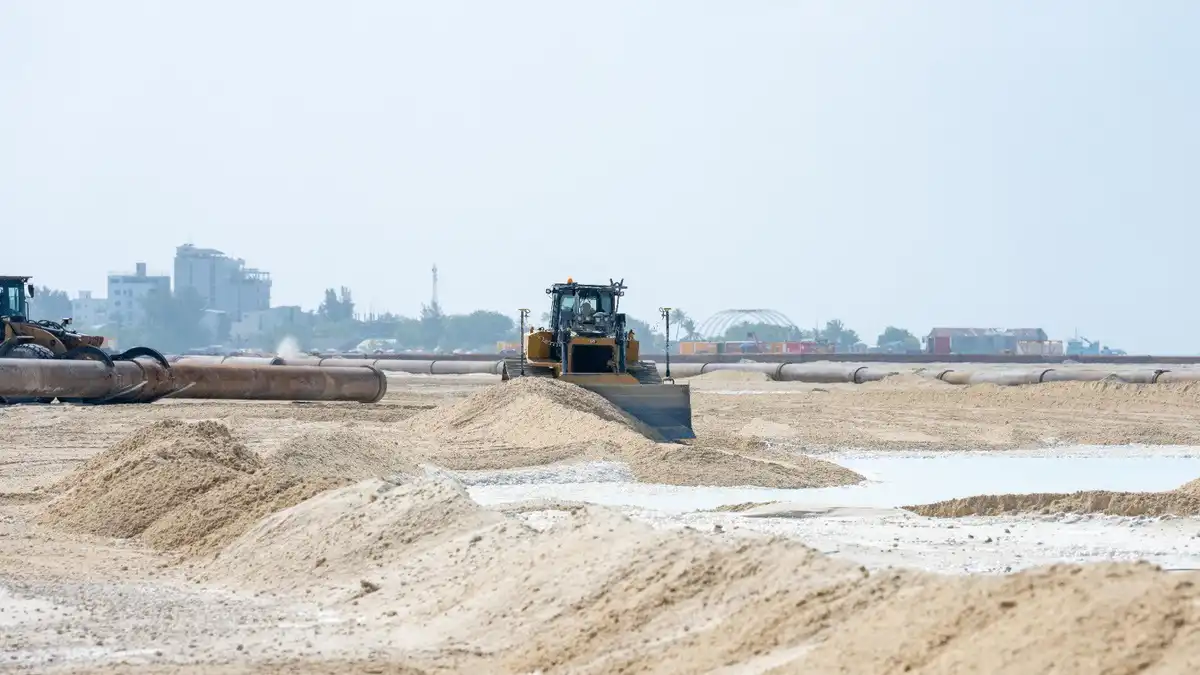
Reclamation work underway at Ras Malé Site A | MACL
Under the guise of resolving the national housing emergency, the current administration has quietly handed over a colossal expanse of Ras Malé, an artificial landmass dredged entirely out of taxpayer funds, to Abu Dhabi-based Eagle Hills without charging a single coin. Peel back the official spin, and what surfaces is an arrangement wrapped in deep secrecy, raising far more troubling questions than it answers.
President Dr. Mohamed Muizzu frequently preaches the virtues of integrity and openness, yet his tenure has developed an unmistakable pattern of executing massive state transactions via strictly confidential arrangements. Key national initiatives are suddenly handed off to handpicked corporations with zero public notice and entirely absent competitive bidding, making it impossible for anyone to prove that the public interest is being served. Even worse, while the incumbent explicitly insisted in the past that foreign entities would never receive so much as an individual grain of sand from Ras Malé under any agreement whatsoever, long-term or otherwise, his government has without warning surrendered 5.2 million square meters of sovereign soil to an overseas corporation without delivering a solitary upfront gain to everyday citizens.
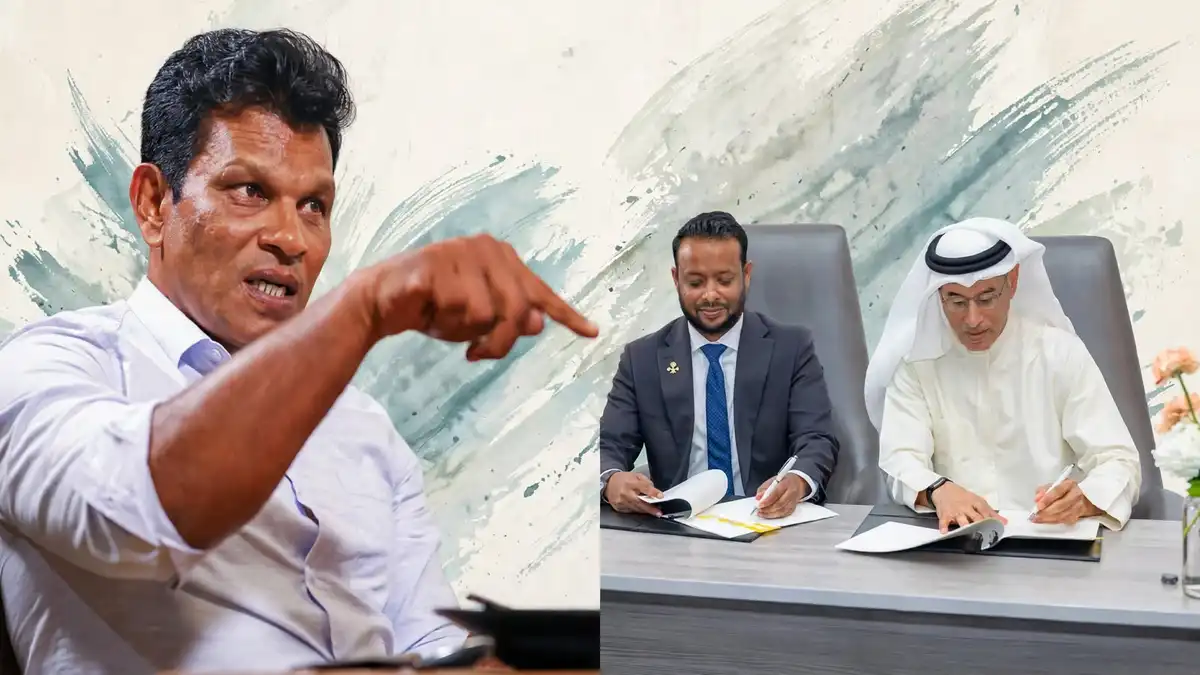
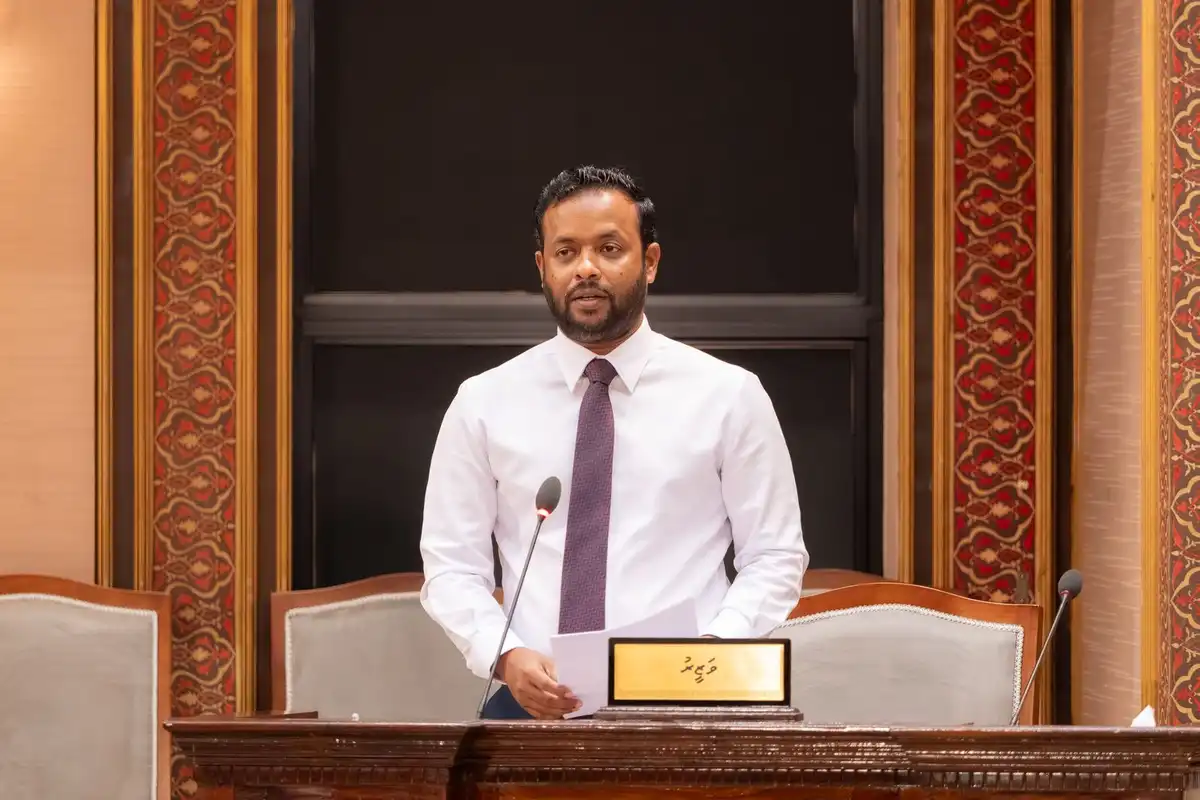
Rushing to shield this backroom maneuver, Housing Minister Dr. Abdulla Muththalib took to LinkedIn on September 22. However, scrutinizing his defense alongside Eagle Hills’ official release and contemporary coverage exposes this pact as merely a commercial terms document. In plain terms, it is only an initial outline, with the actual governing rules still under active discussion. The monumental sums tossed around by Muththalib are consequently nothing more than raw projections and unsubstantiated guesses, functioning as little more than a polished distraction to conceal why the nation’s prime real estate was handed away for nothing upfront.
Zero return for the public ledger
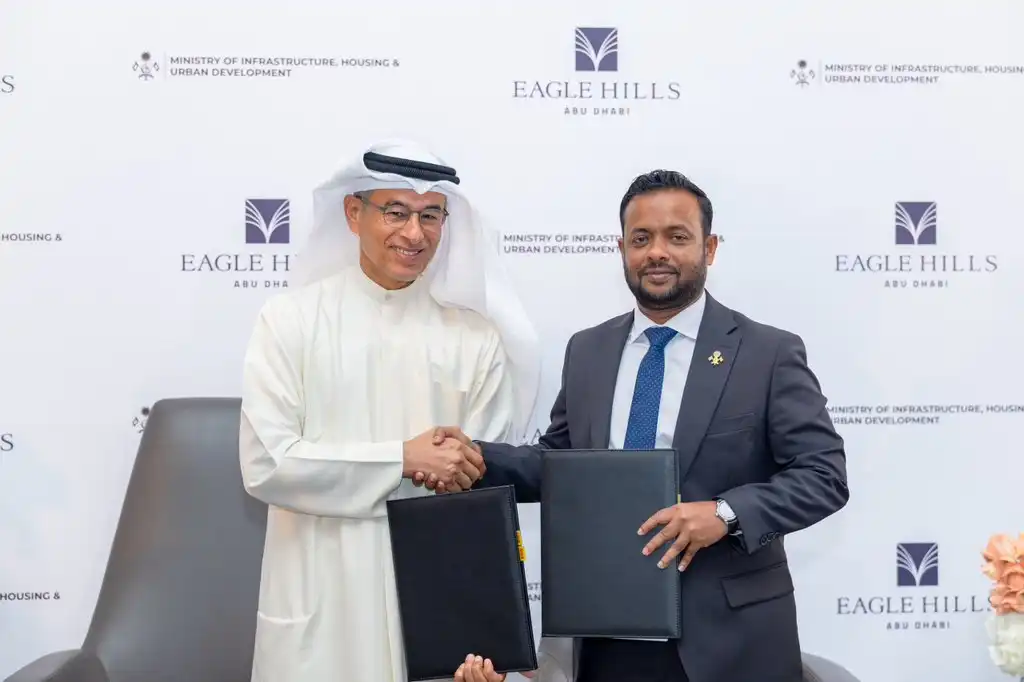
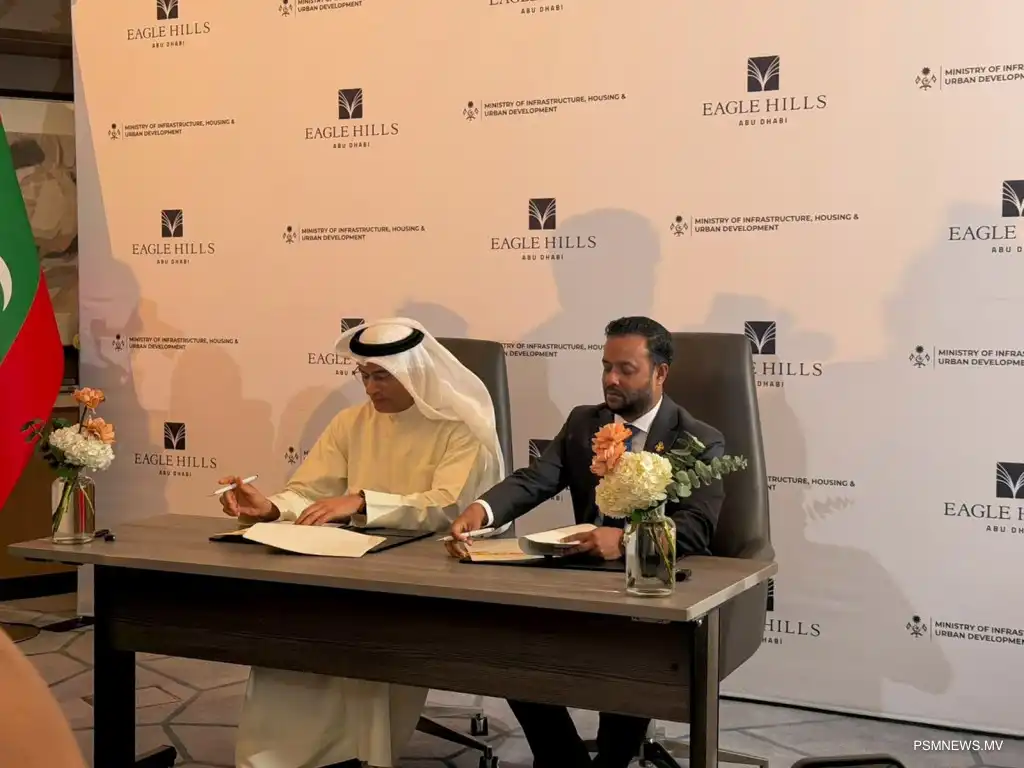
A Commercial Terms Agreement was signed today for the USD 20 billion Maldives Waterfront and Marina project in Ras Malé | Housing Ministry
The massive parcel of 5.2 million square meters went to Eagle Hills without demanding a cent in upfront capital, an embarrassing reality verified directly by Muththalib. He conceded that the pact involves zero immediate money entering the country, arguing instead that cash will eventually trickle in through prospective tax collections and tourism earnings once facilities are built and running. The minister dismissed standard state windfalls like land lease rents and upfront acquisition fees, which the treasury systematically takes from resort developers, claiming they pale next to vague long-term fortunes. This reasoning collapses under basic scrutiny: operational luxury resorts routinely pay all those taxes alongside standard ground rent. If Muththalib’s bizarre premise had any validity, the Maldives might as well stop collecting land rent across the entire tourism industry.
Under this preliminary paperwork, the national treasury stands to gain nothing in the foreseeable future. The minister failed to supply any calendar dates for when the state will start pocketing TGST, its 10 percent slice of master developer earnings, or the four percent transaction levy. Behind the media fanfare of staging a record-breaking mega-development, the public timeline for recovering any tangible value remains completely blank.
Meanwhile, the Abu Dhabi firm is positioned to extract massive commercial gains straight out of the gate. Although Muththalib insists this strategy avoids the pitfall of one-time land liquidations, the foreign firm has full permission to carve up plots, sell them off, and bank the proceeds. Benchmarked against Hulhumalé baseline property values of MVR 6,000 for each square foot, direct state sales could have delivered USD 21 billion in revenue, matching the entire projected development spend. Leased under standard resort rates, the acreage could have yielded USD 391 million annually, generating an eye-watering USD 39 billion across 99 years. Pitted against those hard numbers, Muththalib’s logic of settling for a USD 20 billion footprint spaced out across nearly a century entirely falls apart economically. Making the story even more contradictory, while the Minister hypes a USD 20 billion figure, Eagle Hills’ own literature classifies the endeavor as a USD 12 billion project. Relative to the raw market worth of this acreage, a USD 12 billion allocation stretched across 99 years is ridiculously meager.
Wishful thinking behind 5,000 social flats
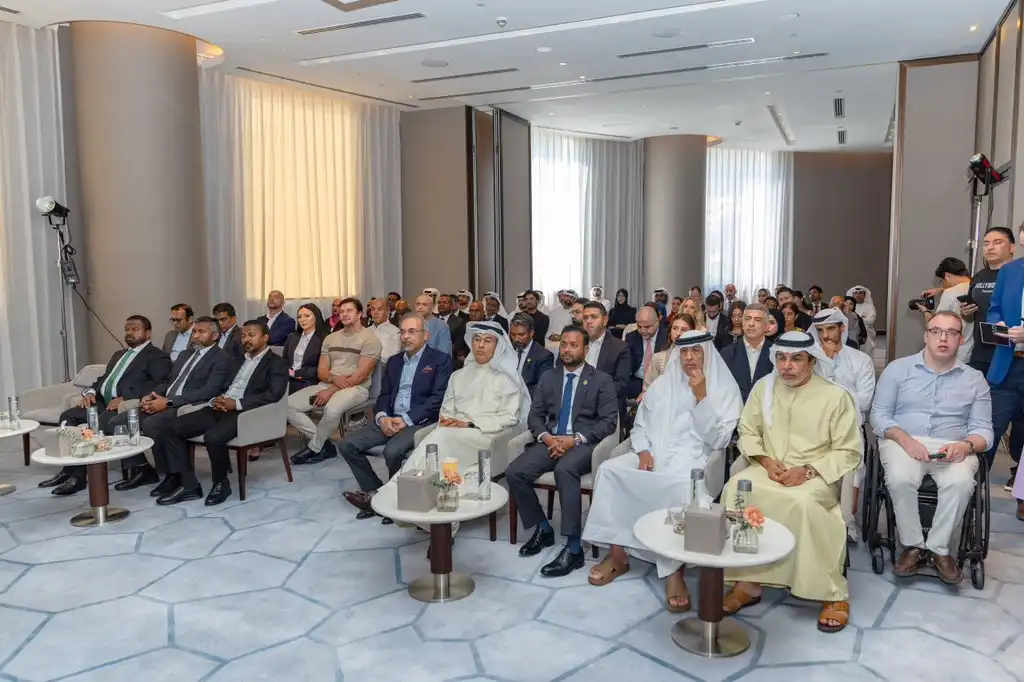
A Commercial Terms Agreement was signed today for the USD 20 billion Maldives Waterfront and Marina project in Ras Malé | Housing Ministry
Muththalib bragged that Eagle Hills will pump between USD 400 million and USD 500 million into raising 5,000 three-bedroom apartments across Hulhumalé, selling this as a way to secure citizen housing without touching the government treasury. Strip away the rhetoric, and the reality is that these residential blocks are being paid for by subtracting from the prospective revenue the developer will owe the nation. This is by no means an act of corporate benevolence; it is simply a pre-financing trick funded entirely out of money that should have belonged to the state.
Fabricated job metrics and fantasy billions
The rosy proclamations of USD 11 billion filling the government coffers alongside the creation of 54,000 positions are backed by zero evidence. Not a shred of detailed data or economic modeling has been provided to substantiate the numbers floating out of the Minister’s office.
Never-ending sovereign handover
Equally alarming is the legal architecture governing the 99-year timeframe. Per disclosures from Eagle Hills, while the initial term is branded as 99 years, the clock restarts from zero every single time a piece of real estate is sold off or transferred to heirs. What the administration actually forged is an endless, perpetual title, effectively alienating 5.2 million square meters of Maldivian territory into external hands forever.
Fiction of a USD 20 billion bankroll
Despite being dressed up as an unprecedented financial milestone for the country, this supposed USD 20 billion is by no means an immediate wire transfer into the economy. There is zero transparency surrounding how the work will be funded, with accounts indicating the firm aims to secure the needed capital by taking on debt, offering equity, and running off-plan pre-sales within Ras Malé itself. Compounding the ambiguity, Eagle Hills has refused to specify how much direct equity it will deploy or put forward any binding construction schedule.
The con game of undefined gains
Because the final contracts remain hidden, calculating the real economic impact of this venture is virtually impossible. Basic realities are entirely obscured: the exact mathematical definition of 10 percent of developer revenue, what corporate expenses can be deducted first, concrete construction deadlines for the 5,000 apartments, penalties if operations grind to a halt, minimum equity guarantees from the firm, who shoulders basic utility infrastructure, mandatory domestic employment quotas, and the framework for dispute resolution. Barring real answers to these points, all promised economic rewards remain nothing more than wishful speculation.
Who Walks Away Enriched
While the government spins grandiose dreams of economic transformation, this preliminary agreement provides no enforceable assurance that any of these rewards will materialize. The public will only know the genuine cost through rigorous fiscal auditing and finalized agreements, rather than the glossy USD 20 billion or USD 30 billion figures broadcast by state public relations. The only irrefutable fact today is that prime, sovereign land that cost taxpayers roughly MVR 2.3 billion to dredge out of the sea has been signed away without an immediate cent of compensation, failing even to reimburse the initial dredging costs. The national treasury has not collected a solitary dollar from this immense tract of real estate. If the citizens derived no value from this transaction, the lingering reality must be faced: who truly profited? It would have been far more honest if Minister Muththalib had spent his LinkedIn post answering that question directly.