Glaring red flags behind grand Ras Malé vision
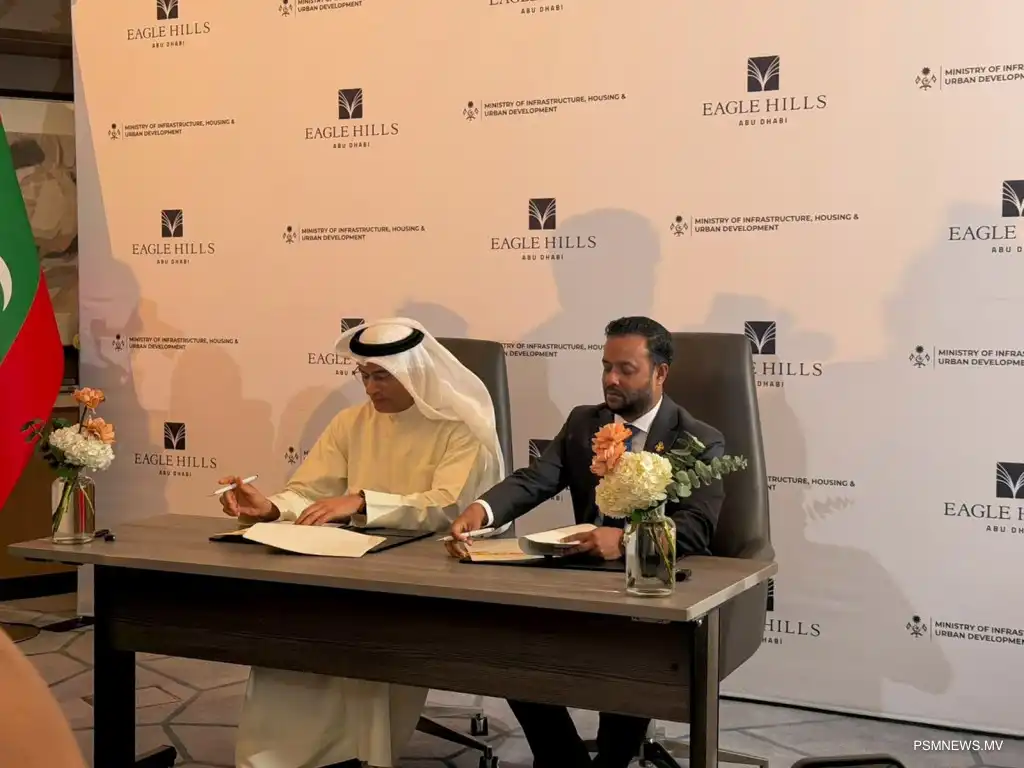
23 ސެޕްޓެމްބަރު 2026 | ބުދަ 13:07Significant public concerns have emerged regarding the financial details and financing framework of the USD 20 billion Ras Malé project, which has been awarded to UAE-based Eagle Hills. Given the actual investment levels and the subsequent benefits to governments in previous projects undertaken by this company in Serbia and Albania, it is crucial to disclose the specific details regarding the capital and loans the investor is required to bring under the Maldivian agreement. Although the government characterizes this project as a catalyst for economic transformation, there are profound concerns regarding the actual benefits the Maldives will derive from this contractual arrangement

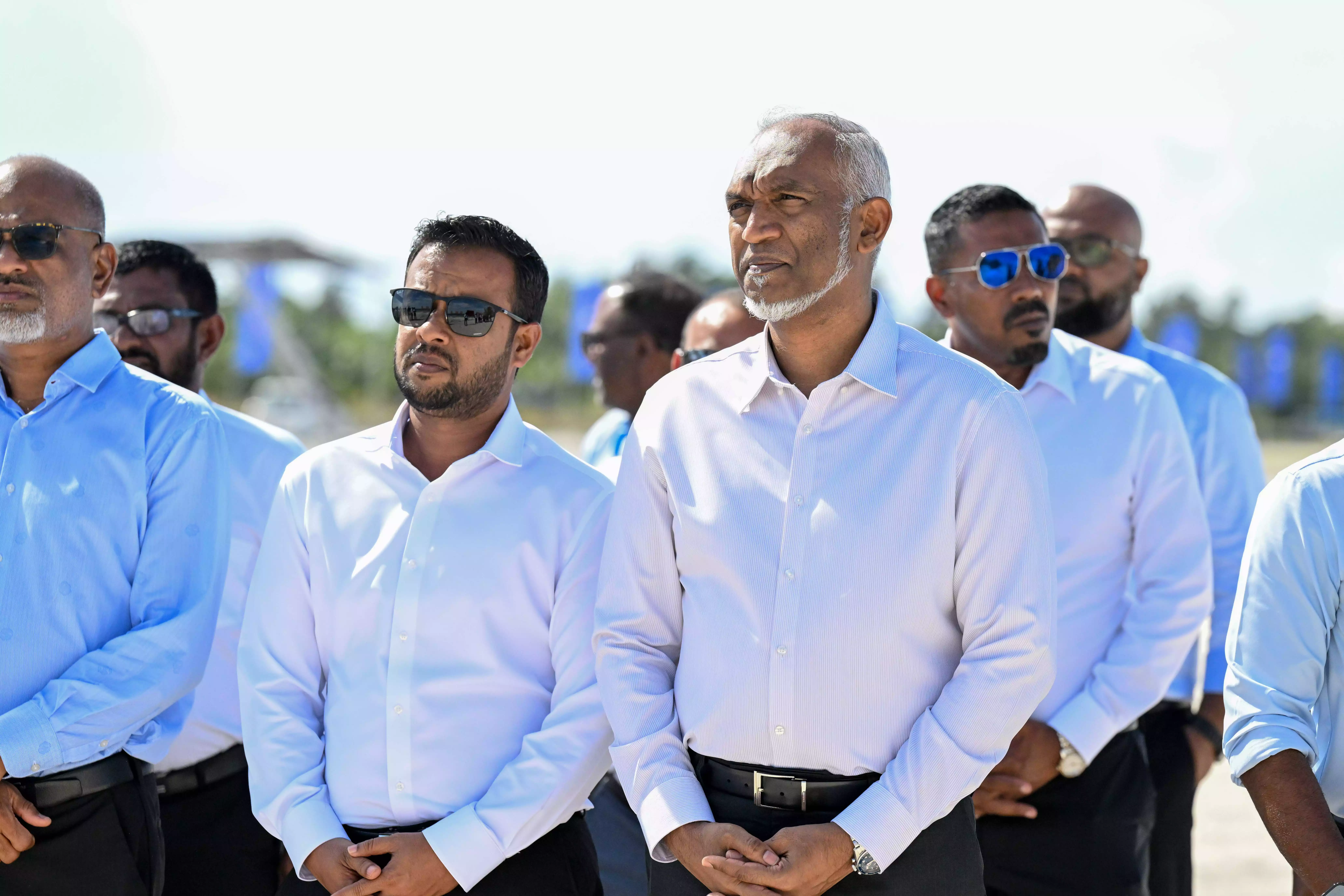
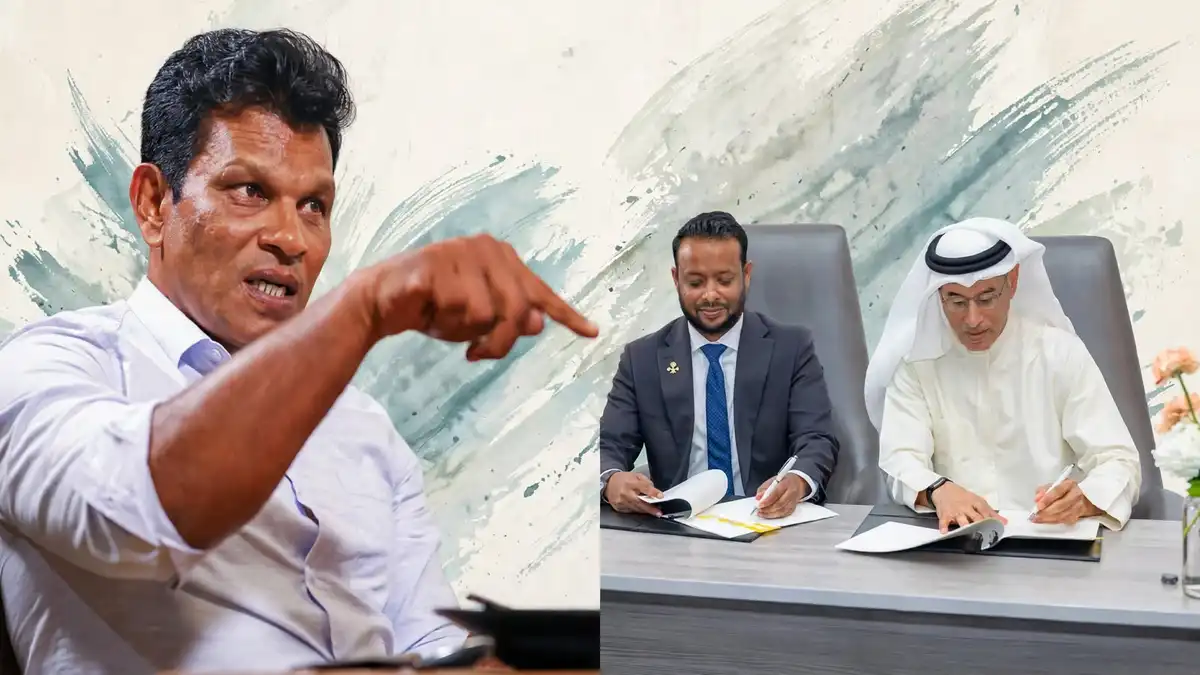
Housing Minister Muththalib (L) with President Muizzu (R) at an event to inaugurate a project | president office
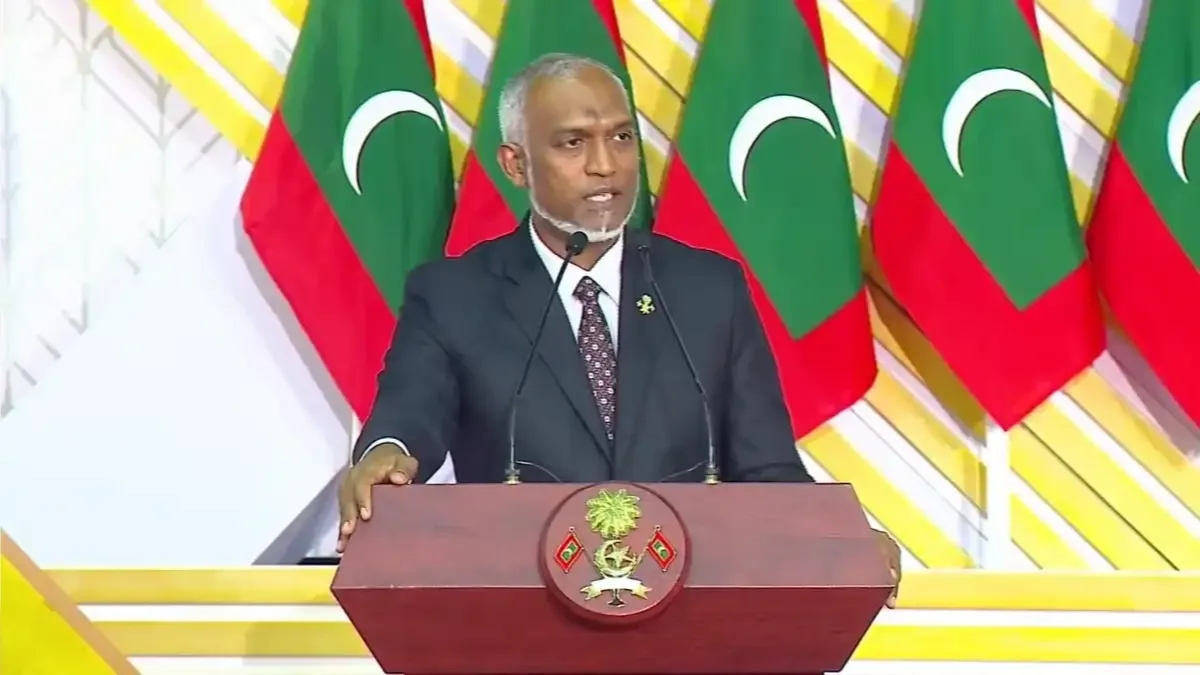
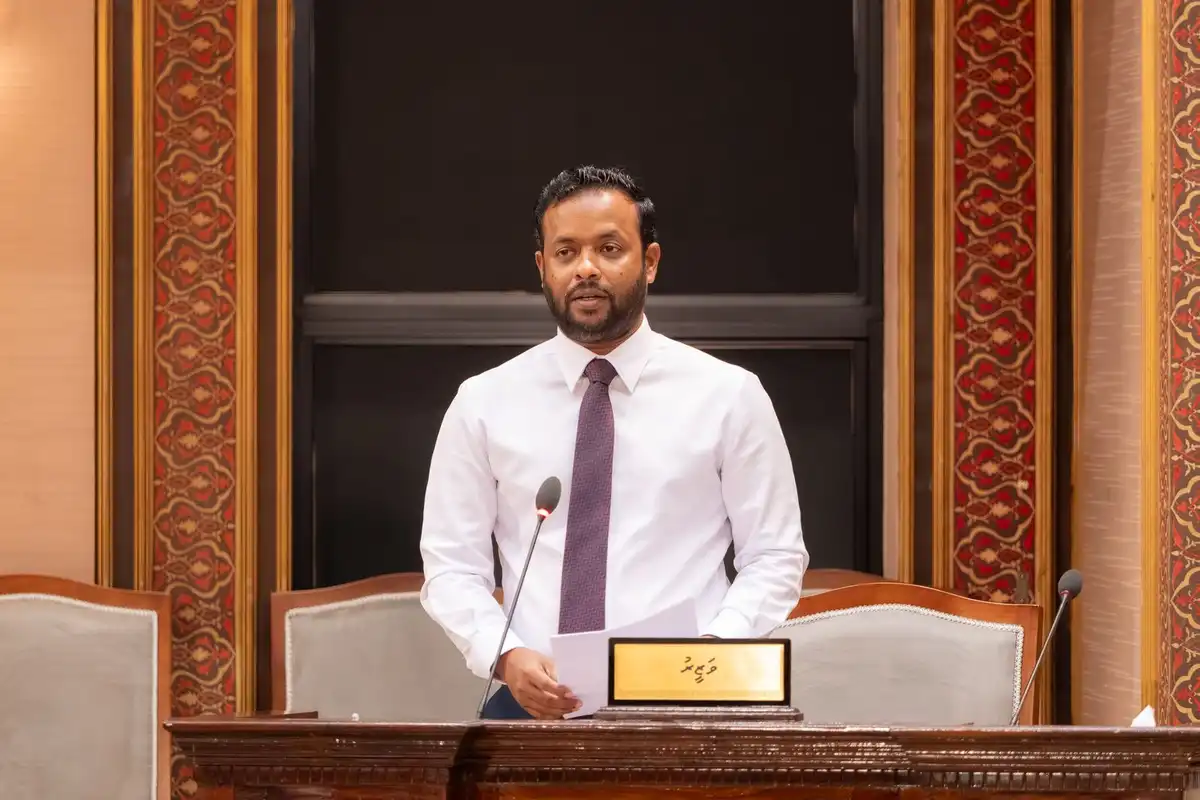
The current administration is busy selling the pact inked with UAE developer Eagle Hills as an economic miracle cure. Minister of Infrastructure, Housing and Urban Development Dr. Abdulla Muththalib assures us that this move stems from exhaustive research, rigorous data gathering, and deliberate, thorough policy discussions.
The state enthusiastically markets the Ras Malé Waterfront and Marina undertaking as a mammoth capital injection of roughly twenty billion U.S. Dollars. Adding to the chorus, Minister of Finance And Public Enterprises Hassan Zareer insists this venture will cure the persistent U.S. Dollar drought plaguing the country. In a nation desperately hunting for foreign currency inflows, outside capital, and broader economic horizons, dangle a figure that gargantuan and you naturally grab the entire public's eye.
However, this sudden, dizzying mega-investment brings far more pointed questions than solutions, especially given that the global footprint of the chosen developer sits in plain sight for anyone willing to look.
Shell game between committed capital and decades-long valuations
State officials endlessly parrot the line that Ras Malé represents a USD 20 billion project. Curiously, Eagle Hills itself originally pegged the total worth of this multi-stage development closer to twelve billion dollars. Only later did Mohamed Alabbar float to the news outlet The National that the scale might theoretically balloon to twenty billion dollars as the years roll on. There is a vast, unbridgeable chasm between hard cash amounting to twenty billion dollars locked in today and a development that might simply aggregate to that balance-sheet valuation over endless decades.
Eagle Hills is notorious for piecing together its ventures through a cocktail of private equity, commercial debt, and upfront property pre-sales. This brings forward fundamental questions that authorities here pointedly dodge.
Exactly what dollar figure of direct equity is the developer legally bound to bring across our borders?
What will the debt-to-equity split look like?
Is the entire engine dependent on customer pre-sales before ground is even meaningfully broken?
As it stands, officials have concealed every single one of these decisive financial mechanics.
Serbia's waterfront debacle as a stark warning
A glance at how this firm operates abroad highlights Belgrade Waterfront in Serbia as a classic cautionary tale. That venture was hailed as a legendary urban triumph at first, but Serbian journalists have since exposed its toxic balance sheet and the negligible crumbs left behind for the state. In 2024, the Serbian publication Radar revealed that over a four-year window, Belgrade Waterfront raked in approximately 836 million euros purely through residential unit sales. Yet, despite holding a full one-third equity stake in the development vehicle, the Serbian state collected a pitiful 9.9 million euros in dividends which translates to a laughable 1.50 euros per Serbian citizen.
This makes it painfully obvious that possessing a hefty government equity share means almost nothing if the underlying financial architecture is engineered against you. Belgrade audit filings display massive capital movements funneled toward Eagle Hills subsidiary companies. Reporting from Forbes Serbia uncovered that the project entity owes billions of Serbian Dinars in long-term debt owed directly to its majority shareholder. Peel away the lofty investment pledges and celebrated government shares, and the shadowy financial plumbing tells an entirely different story.
Albania's troubled port deal
Scrutiny has similarly plagued the Durrës Marina undertaking orchestrated by Eagle Hills in Albania. In that two-billion-euro layout, the Albanian government holds merely a minority slice. Accessible accounting documents show that capital is patched together through various pipelines, combining developer equity, borrowings, buyers' advance payments, external bank credit, and outside third-party cash recruited through the developer's network.
In plain terms, the total sticker price of the development must never be confused with actual, direct cash injections from the foreign backer. Albanian investigative journalists have underlined how heavily the operation hinges on pre-sales compared to any skin in the game from the actual sponsors.
Minister Muththalib insists this entire arrangement was born out of meticulous study. If that holds any truth, the dismal realities of Serbia and Albania were sitting right there on the table during those deliberations. The Minister further pledges that the developer will enjoy zero tax breaks or special waivers, with every single operational layer at Ras Malé taxed under standard domestic statutes.
He also added that the state will refuse to back the five thousand residential units with sovereign guarantees. Even so, these surface-level verbal assurances fail to dismantle the alarm bells surrounding a USD 20 billion gamble that completely dwarfs the gross domestic product of our entire country.
A mountain of unanswered questions
The public deserves to see the fine print laid bare on the table. What is the developer's strict, non-negotiable cash equity obligation? What exact slice of the venture will be buried in borrowed debt? Who are the actual creditors funding this? Are corporate affiliates permitted to issue internal loans to the local operating firm, and if they can, at what interest rates? Will those debt repayments be skimmed off the top before any profits are shared with the state? Just how much of this enterprise leans on pre-selling unbuilt properties? Exactly what plots of land are being surrendered to Eagle Hills, and under what lease duration?
Beyond the money, who genuinely retains administrative and operational command of the project entity? Who gets the power to seat board directors? What concrete protections exist if the promised capital simply fails to appear? Are there rigid minimum investment quotas tied to binding deadlines? What legal mechanisms does the nation retain should the company default? Above all, will the entire corporate and financial framework be opened up to outside, independent inspection and audit?
Legal and environmental compromises
Global reporting from recent years establishes a pattern: while these grand ventures promise endless riches, host territories regularly emerge empty-handed. Evidence from places such as Georgia proves that even when a state maintains a decorative shareholding position, day-to-day command remains completely monopolized by the Emirati backers.
Further, because these corporate masterplans routinely demand carve-outs from standard urban planning frameworks, employment codes, and sovereign protocols, the actual quality and scale of local job creation remain dubious at best. More often than not, the residences constructed end up priced far outside the reach of the local population, designed strictly to be flipped to wealthy foreign buyers. In certain cases, host countries have even been pressured into rewriting their national statutes and diluting environmental protections simply to keep the developer happy, as demonstrated in Georgia.
All of which exposes the undeniable contradiction: why is our administration so desperate to champion an opaque mega-deal that saddles the state with immense financial liabilities and legal exposure, while delivering virtually nothing of genuine value to ordinary citizens?