Bill to increase Utility Regulatory Authority board by two members accepted and sent to committee
3 އޯގަސްޓު 2026 | ހޯމަ 07:40The People's Majlis accepted a bill to expand the Utility Regulatory Authority Board from five to seven members. The amendment allows for member reappointment and mandates technical qualifications for all except the CEO, who will lose board voting rights. The bill now moves to the Environment and Climate Change Committee for review.

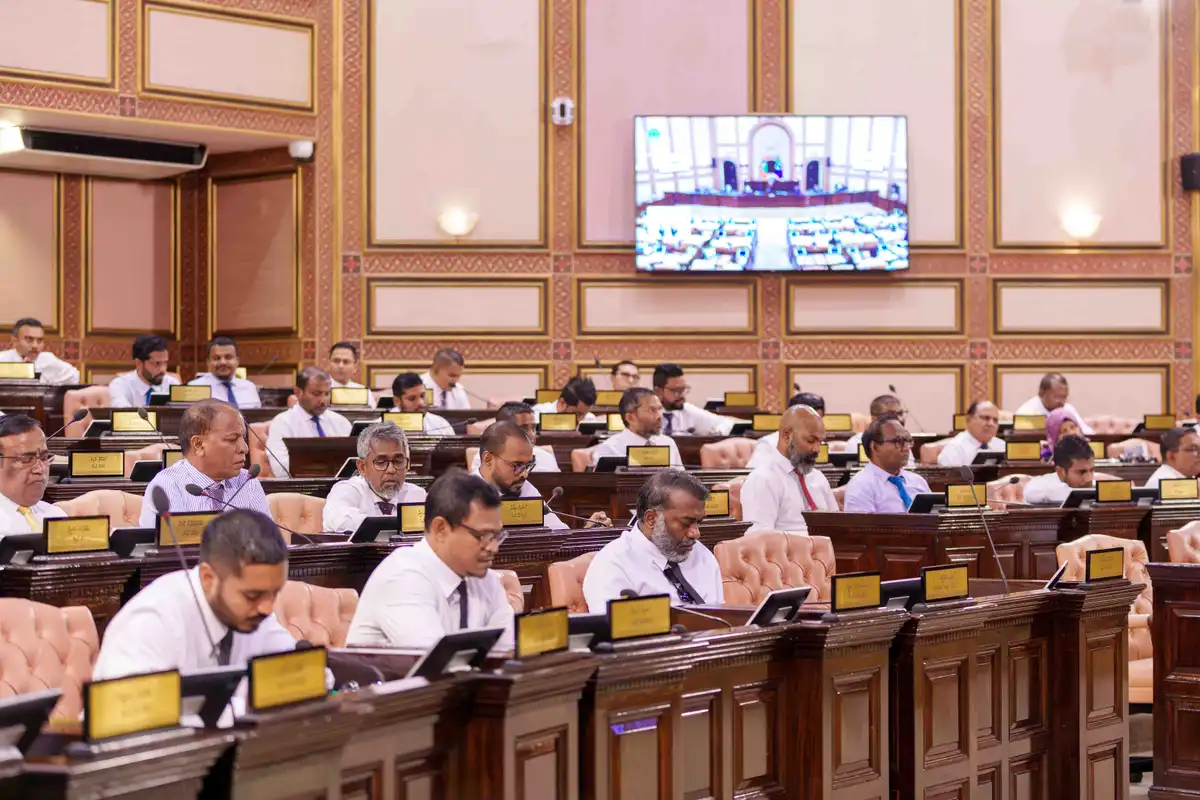
The 20th session of the People's Majlis is currently underway. | People's Majlis
The People's Majlis has accepted a bill proposing an amendment to the Utility Regulatory Authority Act to increase the number of members on the authority's Board of Directors.
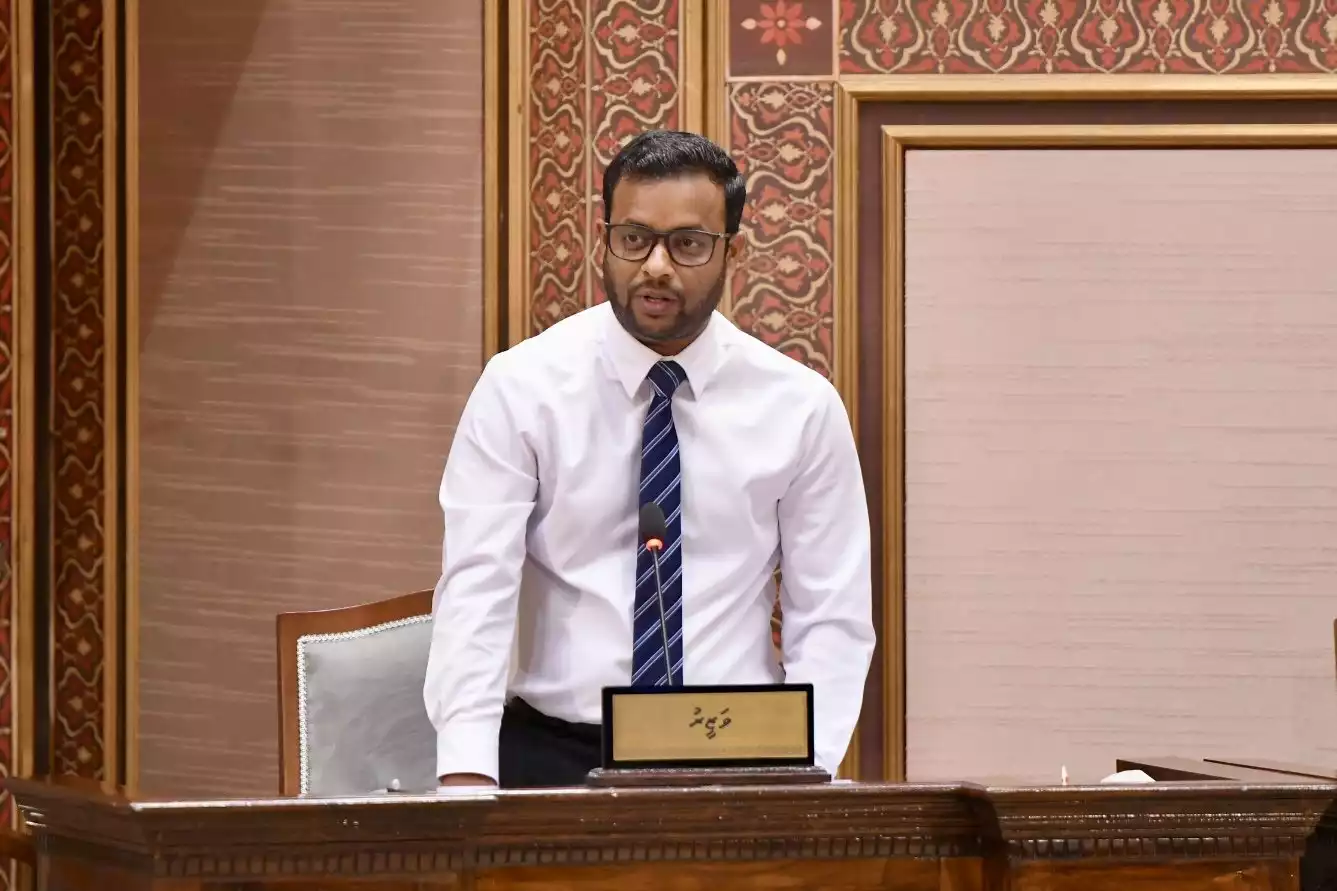
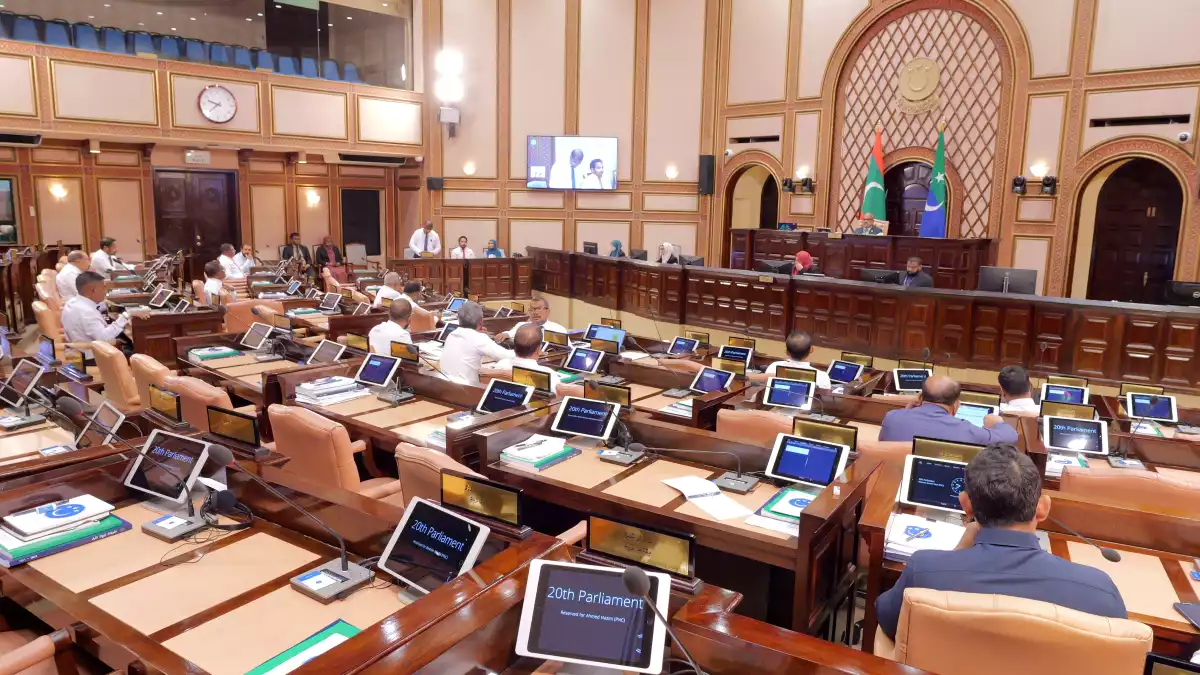
During Monday's People's Majlis sitting, a vote was held to accept a government-sponsored bill to amend the Utility Regulatory Authority Act, introduced by Vilufushi MP Hassan Waheed. The bill was accepted with a majority of 56 members voting in favor. One member abstained from the vote. Following its acceptance, the bill has been referred to the Environment and Climate Change Committee for further review.
The stated objective of the bill is to strengthen the authority's administrative governance and expand its operational scope.
Under the existing law, the Board of the Utility Regulatory Authority is composed of five members. The legislation further mandates that these members must possess academic qualifications and professional experience in specific technical fields.
The amendment proposed by the government to the Act seeks to increase the number of board members to seven, including the Chief Executive Officer of the Authority. Under this change, the bill mandates that all members, with the exception of the Chief Executive, must be technically qualified professionals.
The bill also proposes changes to the tenure of board members. Under the current law, members are appointed to the board for a single five-year term. However, the government's proposed amendment allows board members, with the exception of the Chief Executive, to be reappointed for more than one term. The bill further specifies that this eligibility for reappointment applies to all members, excluding those who have been removed from office.
The proposed amendments to the board’s administrative regulations include revisions to the quorum requirements for meetings and a legislative change to strip the Chief Executive of voting rights on board decisions.