Adhadhu journalists seek urgent appeal hearings following jail sentences and gag order registration
16 މެއި 2026 | ހޮނިހިރު 21:55A formal request has been submitted to the High Court to expedite the appeal process regarding the contempt of court conviction against Adhadhu journalists and the subsequent "gag order" issued on the news outlet's documentary. In a letter sent by attorney Hassan Falah, it was emphasized that these matters involve significant national interest, further noting that penalizing specific individuals while many others violate the court order contravenes the constitutional principle of equality. Consequently, the court has been urged to schedule hearings and reach a fair verdict before the upcoming Eid holidays.


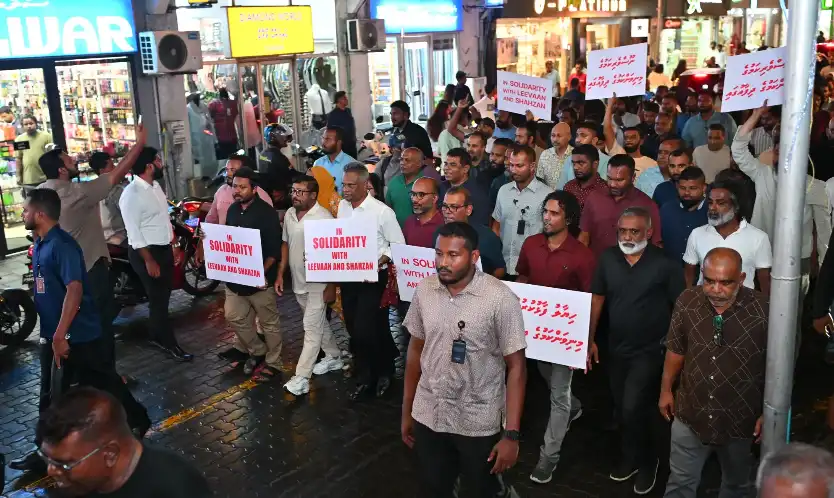
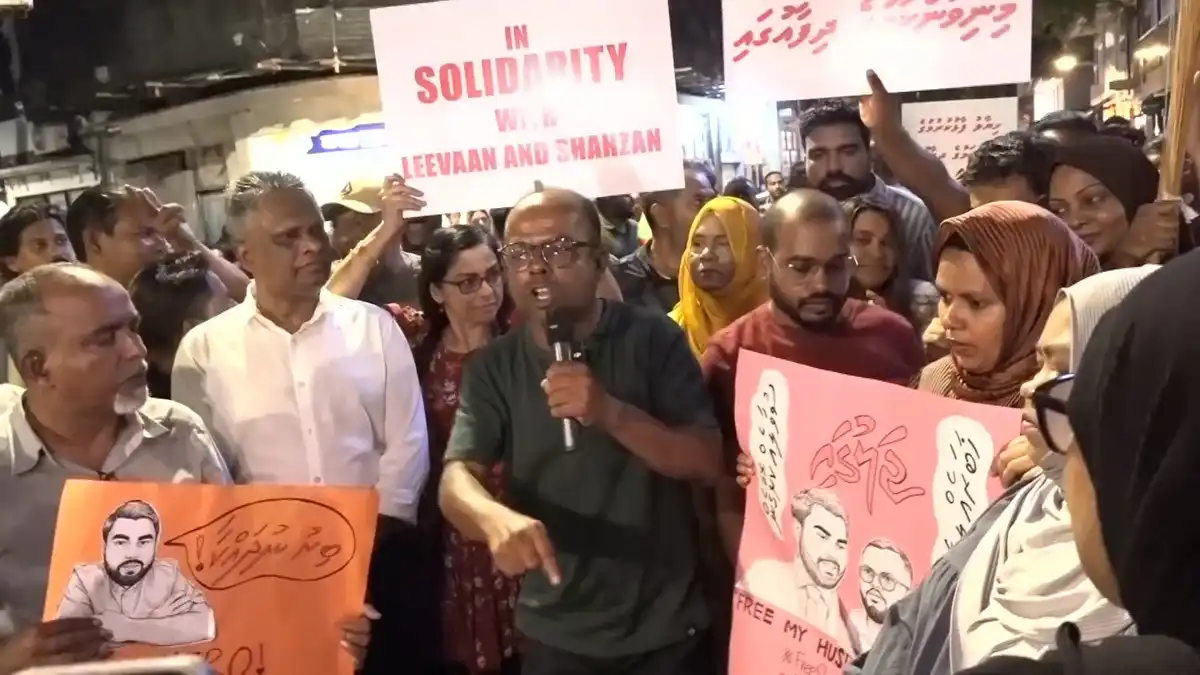
The two journalists sentenced to prison are Leevan and Shahzan. | Adhadhu
The High Court has been requested to register and expedite the appeal hearings regarding the contempt of court conviction against journalists from the news outlet 'Adhadhu,' as well as the appeal of a gag order issued by the court concerning a documentary released by the publication.
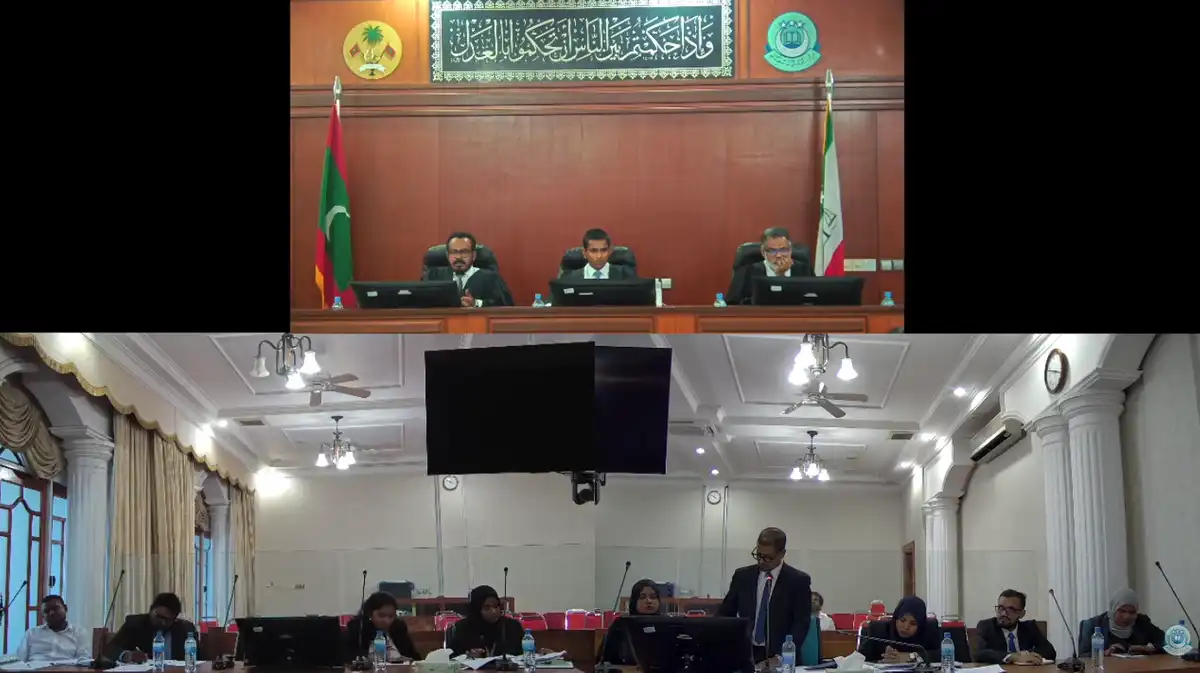
Hassan Falah, the legal representative for the appellants in these cases, has submitted a formal letter addressed to the Chief Judge of the High Court of the Maldives, Honorable Abdulla Jameel Moosa.
The letter stated that these issues are deeply intertwined with the national interest. It specifically highlighted that the appeal against the Criminal Court's gag order concerns a directive issued over the entire Maldivian population. Furthermore, the letter noted that many citizens are currently in violation of the order, though it clarified that such actions are not driven by a deliberate intent to defy the court.
Furthermore, the letter emphasized that all parties must comply with court orders. It noted that if an order cannot be adhered to, it would result in the court issuing a futile and unenforceable ruling.
For instance, even if a court were to issue an order declaring that Aisha is the property of a specific individual and prohibiting anyone else from communicating with her henceforth, such an order would be impossible to uphold.Hassan Falah, legal counsel for the appellants.
The letter noted that, in enforcing the Criminal Court order, the only action taken thus far was the determination that two individuals had violated the order. It highlighted that while Leevan Ali Naseer of 'Adhadhu' was found to have breached the order, all media outlets operating in the Maldives had reported on the Criminal Court order both before and after 'Adhadhu' published its report. However, the letter stated that the court order had not been enforced against any of those other parties.
The Criminal Court issued the order on May 10, 2026. Following the issuance of this order, during a press conference held at the President's Office on May 11, 2026, Adhadhu journalist Mohamed Shahudhaan questioned why a female employee of the President's Office was contacted late at night and for what purpose. In response, the President declared that Shahudhaan had violated the court order. Consequently, Shahudhaan was ordered to appear before the Criminal Court, similar to the summons issued to Leevan for May 12, 2026. Upon his appearance that day, the court ruled that he had breached the order; this judgment has now been appealed to the High Court of the Maldives.
The letter further noted that many members of the public have since echoed Shahudhaan’s inquiry across social media platforms and various news outlets.
The letter highlighted Article 17 of the Constitution, which prohibits discrimination, while also emphasizing Article 20, which mandates that all citizens are equal before the law.
Furthermore, the letter asserts that the proceedings in this case have been conducted in a manner that infringes upon the right to a fair trial, as guaranteed under Article 42 of the Constitution. The letter also emphasizes that courts do not possess the legal authority to take punitive action regarding matters occurring outside of the courtroom.
The Judicature Act stipulates that "no court in the Maldives shall initiate and adjudicate a case on its own motion." Under Section 76 of the same Act, the court is granted the authority to impose immediate penalties only if an individual leaves the courtroom without permission while proceedings are underway, acts in a manner that disrupts the order of the court, or fails to comply with an order issued during the proceedings.
It has also been noted that these are the types of cases that must be expedited and resolved promptly in order to strengthen public confidence in the judicial system.
Therefore, a request has been made to expedite the registration process for these appealed cases and to ensure that hearings are scheduled at the earliest possible opportunity. Specifically, the request seeks to have the hearings scheduled within the coming week in a manner that allows for a final judgment to be reached. Furthermore, it was highlighted that the upcoming week is followed by the Eid holidays. The request noted that if the cases are concluded after the holidays, it would be perceived as a miscarriage of justice; therefore, the court has been urged to take this factor into consideration.