From Oversight to Ownership: How Control Over SOEs is Being Recentralized – By Former Trade Minister Ahmed Mohamed
5 މެއި 2026 | އަންގާރަ 07:41The rebranding of the Ministry of Finance and the consolidation of state-owned enterprise (SOE) oversight under a single ministry raises significant concerns regarding the loss of corporate autonomy and the potential for increased political interference. By undermining the authority of regulatory bodies like the Privatization and Corporatization Board (PCB) and weakening accountability mechanisms, these changes could adversely impact public service quality and state fiscal stability. Consequently, any structural reforms must be implemented in a manner that guarantees institutional independence and ensures robust transparency standards.

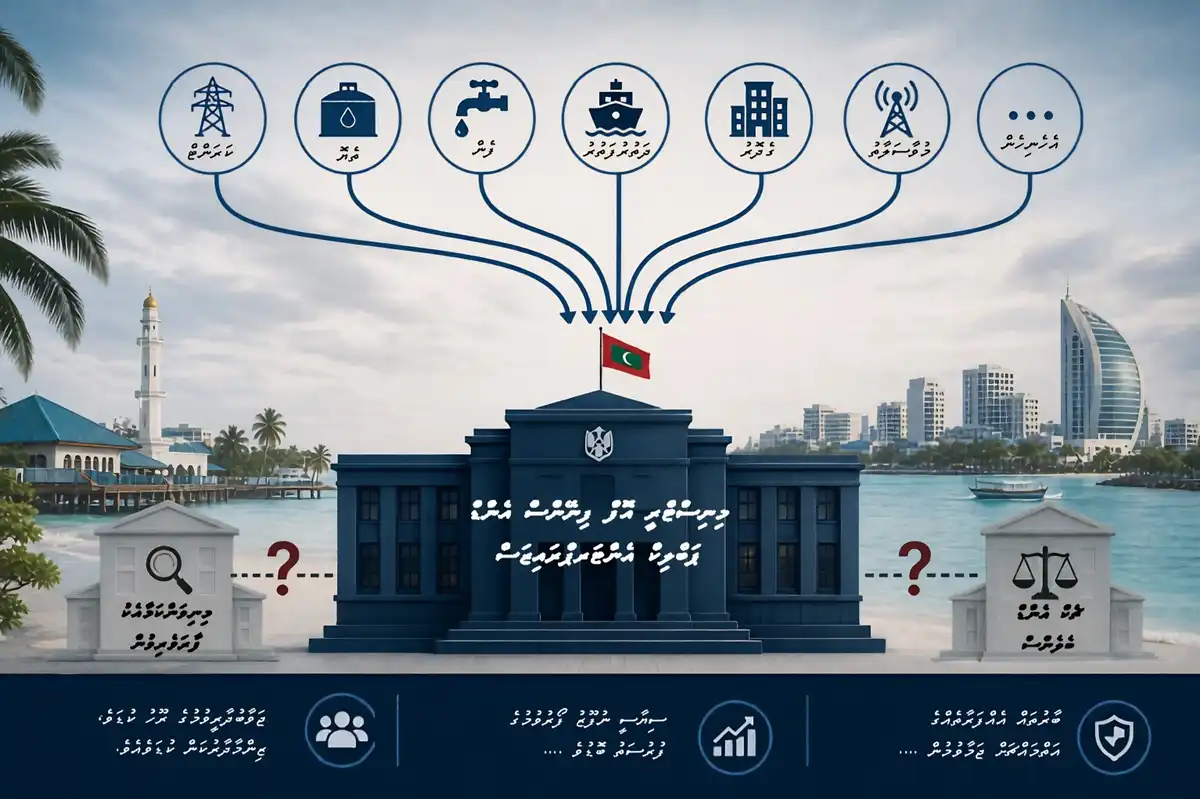
The re-centralization of control over State-Owned Enterprises (SOEs). | maldiveseconomy.com
Renaming the Ministry and Restructuring Governance: How Centralizing Power Weakens Oversight and Increases the Risk of Political Influence over State-Owned Enterprises.
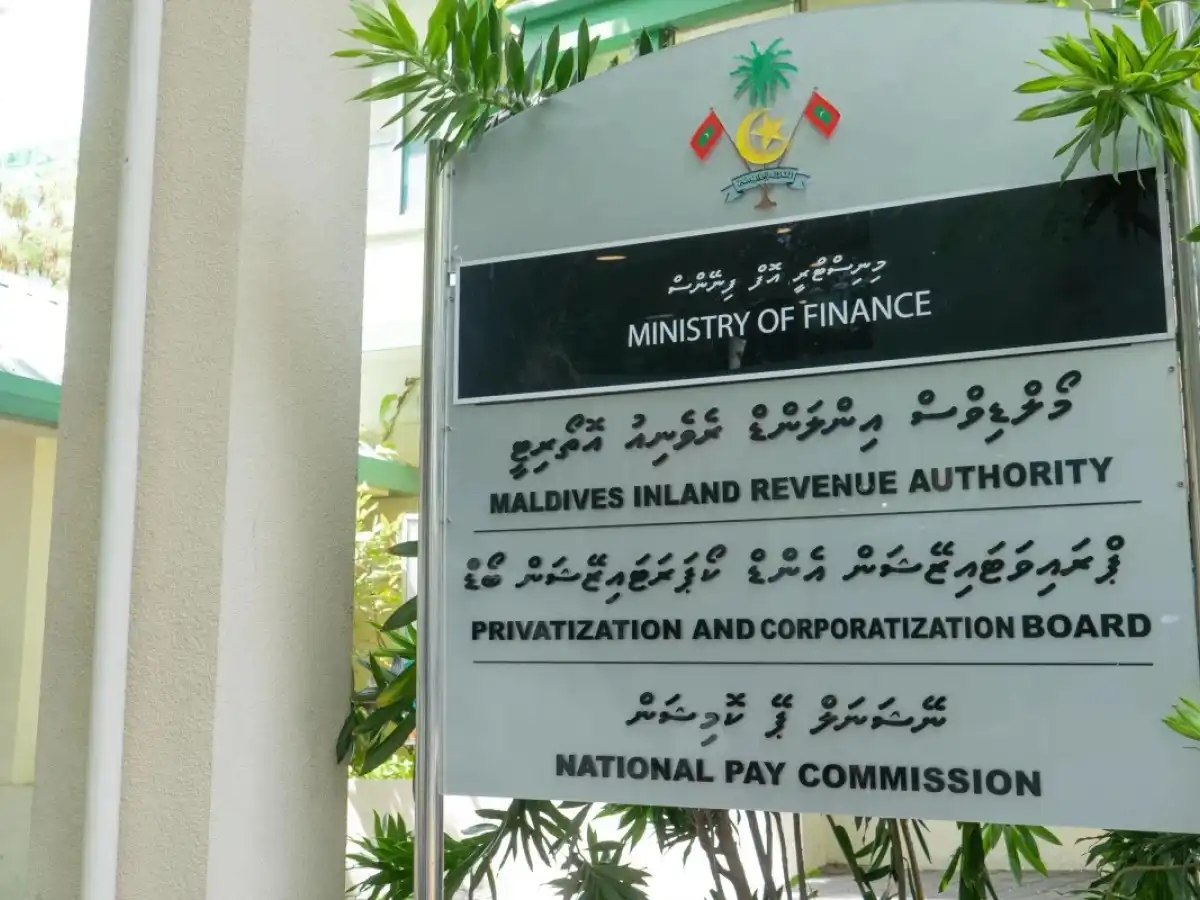
The recent decision to rename the Ministry of Finance and Planning to the "Ministry of Finance and Public Enterprises" is far more than a mere administrative adjustment. While ministry names are occasionally changed to reflect an expanded mandate or shifting priorities, this transition signifies a profound transformation in institutional governance. As a result, the oversight of State-Owned Enterprises (SOEs) is now consolidated under the same authority responsible for managing national finances, subsidies, guarantees, and sovereign debt.
Information: Key statutory responsibilities mandated to the Privatization and Corporatization Board (PCB) under Law No. 3/2013.
This shift raises significant concerns regarding the governance framework. By consolidating ownership authority, financial control, and oversight responsibilities within a single political structure, the essential institutional distance required to safeguard corporate independence is diminished. Over time, this increases the risk that strategic decisions will be driven by short-term political objectives rather than the long-term discipline of the companies.
This shift began with more than just a name change. The initial direction was first signaled during the formulation of the 2025 state budget. Information Box 5 of the 2025 Budget proposes repealing the Privatization and Corporatization Act (Law No. 3/2013) and transferring the responsibility of overseeing State-Owned Enterprises (SOEs) as a shareholder directly to the Ministry of Finance.
Even though the law was not repealed, the proposal clearly demonstrated an appetite for the centralization of power. More importantly, despite numerous advancements noted within the reform framework, there is little evidence to suggest that these reform objectives were reliably implemented. The significant gap between the pledge to reform and the actual execution by institutions remains a major concern.
Centralizing power without strengthening oversight increases risks rather than mitigating them.
Centralization of Power and Political Influence
The primary concern arising from the recent administrative changes is not merely the streamlining of operations. Rather, it is the increasing consolidation of power over State-Owned Enterprises (SOEs) within a single political framework.
State-Owned Enterprises (SOEs) manage public funds and deliver essential services. Their governance frameworks were originally designed to safeguard commercial decision-making from undue political influence. However, when fiscal policy, corporate ownership, and supervisory responsibilities are consolidated under a single ministry, the safeguards intended to protect corporate independence are significantly weakened.
Political influence does not manifest overnight. It infiltrates gradually through the alignment of organizational structures and the centralization of power. Decisions that should fundamentally be based on financial discipline and operational performance risk being diverted to serve specific policy agendas or short-term administrative requirements.
This is not merely a hypothetical concern. It is a growing threat that is gradually intensifying as time passes.
PCB was established to prevent this
The Privatization and Corporatization Board (PCB) was established in the Maldives in 2013 to implement a robust oversight mechanism for State-Owned Enterprises (SOEs). The primary objective of the Board is to maintain an institutional distance between political influence and commercial operations. The Board is mandated to monitor the performance of these companies, enforce corporate governance standards, and ensure transparency in the management of state assets.
The rationale behind this framework is clear: state-owned enterprises are funded by the public. The decisions made by these companies directly impact the national treasury and the daily lives of citizens. Establishing an independent oversight mechanism is essential to prevent self-serving decision-making and to mitigate the risks associated with politically motivated financial choices.
In theory, the Privatization and Corporatization Board (PCB) serves as a safeguard against the centralization of power. The board was designed to ensure that state-owned enterprises operate under established governance principles, rather than being subjected to direct political control.
The protection of institutions depends not only on the existence of laws but also on the effectiveness of their enforcement.
The institution's capacity developed at a slow pace.
Although the Privatization and Corporatization Board (PCB) was established by law in 2013, the institutional requirements necessary for it to operate with full autonomy have been met only gradually over time.
- An independent Secretary General, essential for providing operational leadership, was finally appointed in late 2022.
- The framework approved by the Civil Service was subsequently established in January 2023.
For many years following the board's establishment, the authority to recruit administrative staff and manage operational resources remained closely tied to the Ministry of Finance.
While these structural conditions did not diminish the Privatization and Corporatization Board’s (PCB) legal authority, they significantly hindered its operational independence. Despite possessing the statutory mandate for oversight, the Board functioned within administrative frameworks that restricted its ability to take action with full autonomy.
The sequence of events demonstrated that monitoring and evaluation processes are heavily dependent on institutional support, which has proven to be inconsistent. While key policies and administrative frameworks were established, the broader organizational environment required to sustain independent oversight has been slow to evolve.
This situation has resulted in a system where, despite the existence of institutional safeguards, the effectiveness of the framework relies more heavily on administrative cooperation than on structural independence.
The promise of reform: Pledges made, but implementation falls short
The 2025 budget outlines several proposed reforms aimed at State-Owned Enterprises (SOEs). These measures include strengthening governance frameworks, improving financial discipline, and restructuring oversight responsibilities. These proposals are part of a broader initiative to modernize the operations of state-owned companies.
However, despite the clearly stated intentions for reform, subsequent developments have raised significant questions regarding their implementation. Certain elements of the framework required for meaningful change are not progressing at the pace originally envisioned.
Strengthening institutions requires more than the mere announcement of policies. It demands tangible improvements in organizational capacity, the rigorous enforcement of regulations, and a visible commitment to transparency. When the expansion of power outpaces the development of accountability mechanisms, the risk of institutional failure significantly increases.
The discrepancy between the promise of reform and its actual implementation creates a highly precarious environment. This imbalance facilitates the centralization of power while the oversight framework remains structurally weak.
Renaming the Ministry formalizes its strategic direction
Given these circumstances, the addition of "Public Enterprises" to the Ministry's name marks the formalization of a strategic direction that had already begun to take shape.
The inclusion of public enterprises within the Ministry’s title signifies a strategic shift toward the centralization of shareholder control. Financial authority, corporate ownership, and supervisory influence have now been consolidated under a single administrative framework.
Modern management principles emphasize the critical importance of separating ownership from oversight.
Even when the government acts as a shareholder, independent institutions must retain the authority to evaluate the performance of companies and hold them accountable.
Consolidating these responsibilities under a single ministry significantly increases the risk of politicization. Decisions regarding debt financing, subsidies, tariffs, and capital investments become deeply intertwined with government priorities, making it increasingly difficult to maintain independent oversight.
While this change may not lead to the immediate collapse of the institution, it creates a situation where operational discipline is gradually eroded over time.
The question is not whether the PCB should exist, but whether it can function with true independence.
It must be stated clearly that the Privatization and Corporatization Board (PCB) has not been abolished. The legal framework governing the establishment of the Board remains fully in effect.
However, the practical question today is not whether the PCB legally exists. Instead, the question is whether the board possesses sufficient functional independence to effectively achieve its objectives.
Legal authority alone is insufficient to guarantee independence. It requires direct control over recruitment, resources, reporting frameworks, and operational decision-making. Without these elements, oversight ceases to be a mechanism for reform and becomes a mere procedural formality.
Experience over the past decade has demonstrated that statutory independence does not automatically translate into operational independence. If administrative structures are designed in a way that restricts operational autonomy, there is a significant risk that oversight mechanisms will fail to produce meaningful results.
This is a crucial distinction for understanding the current administrative environment.
Why is this important for the general public?
The consequences of weak oversight are not confined solely within state institutions. Its impact is felt directly by the citizens.
Most State-Owned Enterprises (SOEs) are providers of essential services, including electricity, fuel, water, transportation, and housing infrastructure.
- The debt incurred by these entities directly impacts the overall level of the national debt.
- The operational decisions of these establishments directly impact the quality of their services.
- The household expenditure is determined by the tariffs set by those establishments.
As governance becomes centralized and oversight weakens, financial risks begin to accumulate quietly and subtly. Debt obligations expand, subsidies increase, and fiscal liabilities shift onto the balance sheets of state-owned enterprises.
These risks will manifest later through increased tariffs, a decline in service quality, or a heightened burden of public debt. Consequently, weak oversight will lead to significant adverse economic impacts.
A warning against further centralization
Recent administrative changes should be viewed as a signal regarding the current governance framework. They indicate a trend toward centralizing control over State-Owned Enterprises (SOEs) at a time when institutional independence remains incomplete.
While centralization may improve administrative coordination, it also increases the risk of political interference in corporate governance if independent oversight is not strengthened accordingly.
Experience over the past decade demonstrates that consolidating power without strengthening accountability mechanisms weakens administrative discipline. This leads to a decline in transparency and restricts the space for independent evaluation.
This is not an inevitable outcome. It will depend entirely on how the roles of the institutions evolve from this point forward.
The fundamental question regarding the system of governance
Reforming State-Owned Enterprises (SOEs) is a vital necessity. Key policy priorities include enhancing operational performance, ensuring financial discipline, and maintaining the reliability of services.
However, reforms must be designed in a manner that maintains the balance of institutions.
Ownership alone must not supersede the space for independent oversight. Administrative convenience should never be a justification for weakening internal controls. Furthermore, the drive for centralization must not be allowed to undermine the principles of accountability.
The rebranding of the Ministry signifies an increasing centralisation of power. Whether this shift will streamline operations or merely heighten political influence depends entirely on how effectively the institution's independence is safeguarded in practice.
This serves as the most significant warning from recent events. The question is not whether State-Owned Enterprises (SOEs) will be restructured; rather, it is whether the oversight mechanisms designed to monitor these entities remain robust enough to safeguard the public interest.
Editor’s Note: This report is based on an article originally authored by Ahmed Mohamed, former Minister of Trade and former High Commissioner of Maldives to India, published on the 'Maldives Economy' website.