Expired kits and barren shelves reveal a government sustained by constant excuses
28 އެޕްރީލު 2026 | އަންގާރަ 12:07The healthcare system is facing a severe crisis marked by fatal diagnostic errors, contaminated blood transfusions, and critical shortages of life-saving medications like insulin and blood pressure pills. Despite these life-threatening failures and reports of expired medical equipment, the government has rejected emergency motions to address the situation. This systematic negligence and lack of political accountability are leaving citizens vulnerable to preventable tragedies.

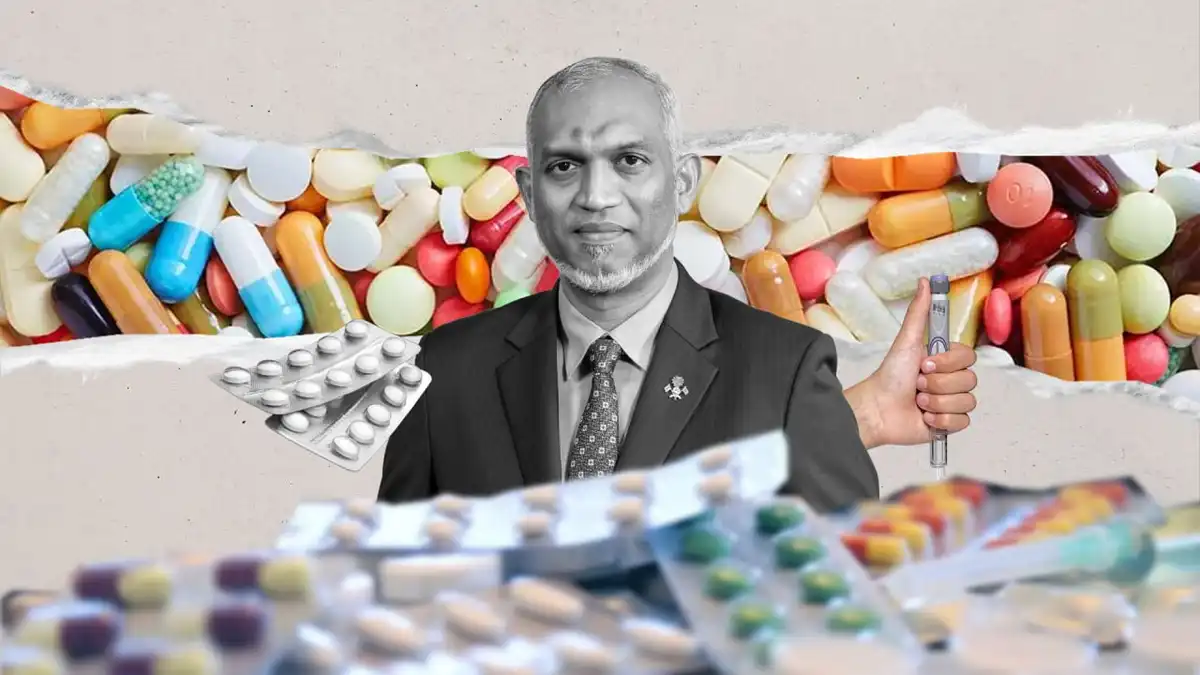
It has become near impossible to find essential medicines in the capital region, under the administration of President Dr. Mohamed Muizzu | Raajjemv graphics
The cracks in the Maldivian healthcare system have moved past the point of warning signs and are now gaping craters. A disturbing string of recent tragedies and investigative reports has pulled back the curtain on a health sector defined by fragility and staggering mismanagement. While the authorities remain preoccupied with spinning a web of endless excuses rather than meeting their basic duties, it is the common citizen who is left to navigate a landscape of suffering and loss.
Fatal errors and diagnostic disasters
The headlines from April alone provide a horrifying glimpse into a system that has lost its way. In Muli island of Meemu atoll, reports surfaced that the local hospital was utilizing expired test kits, a scandal that coincided with the heartbreaking death of a 17-year-old boy from Dengue fever. This revelation should have sent shockwaves through the nation. When the most elementary tools for diagnosis cannot be trusted for safety or accuracy, the foundation of public faith in medical care is effectively destroyed.
Negligence in the most sensitive spaces
As if faulty diagnostics weren't enough, a devastating report emerged from the Thalassemia Center, where contaminated or spoiled blood was allegedly transfused into three children. This level of professional negligence is more than just a mistake; it is a profound betrayal of trust in one of the most delicate areas of public health. It raises the terrifying question of how such a basic safety protocol could fail so spectacularly.
The crisis extends deep into the pharmacy shelves, where essential medications have become a luxury. The shortage of drugs used to treat ADHD has become so severe that calls have been made to drag both a pharmaceutical importer and the Maldives Food and Drug Authority (MFDA) before the People’s Majlis. These are not optional supplements; they are requirements for the daily function, education and mental stability of patients. Yet, the government continues to let the shortage linger.
A heart attack waiting to happen
The failure to maintain stock has now hit the most common ailments. Pharmacies run by the State Trading Organization (STO) recently saw their supplies of standard blood pressure medication vanish. In a country where hypertension is widespread, a stockout of these pills is essentially an invitation for a wave of strokes and heart attacks. By failing to secure these basic prescriptions, the state is knowingly exposing thousands to life-threatening complications.
Perhaps the most chilling development is the report that "Glargine" insulin has been wiped out across the country. For diabetic patients, this isn't a medication that can be swapped out or delayed until a shipment eventually wanders in. It is a fundamental requirement for staying alive. The total depletion of such a critical life-saving resource is a glaring indictment of the current administration’s procurement priorities.
Political games over patient lives
While the healthcare system screams for help, the political response has been cold and calculated. An emergency motion brought to the Majlis to address these life-threatening shortages was struck down by members aligned with the government. This rejection serves as a grim signal to the public that despite the ringing alarms, urgent action is not on the agenda. It seems no one in the current leadership is willing to even admit there is a problem, choosing instead to hide behind a shield of rhetoric.
Failure of leadership and systematic negligence
The administration cannot simply point the finger at logistical hiccups, global market shifts, or unreliable suppliers to escape the blame. Real governance is defined by the ability to see a shortage coming and stop it before the shelves are empty. It involves a rigid commitment to ensuring that expired equipment never touches a patient and that the blood supply is beyond reproach. Protecting the people is supposed to happen before the tragedy occurs, not after it becomes a headline. When the diagnostic tools fail, the blood supply is compromised and life-saving drugs disappear while leaders look the other way, it is no longer just a series of accidents. It is a case of systematic national negligence.