Muizzu’s stalled hospital project in Muli turns into breeding ground for mosquitoes; disease control efforts fail
27 އެޕްރީލު 2026 | ހޯމަ 08:36Residents of M. Muli are expressing grave concern over stagnant water accumulating in excavation sites for a new hospital and police station, which has become a breeding ground for mosquitoes and a significant public health hazard. As dengue fever cases rise on the island, the local hospital confirmed that while diagnostic services were previously hindered by expired testing kits, a new supply has now been received to resume screenings.

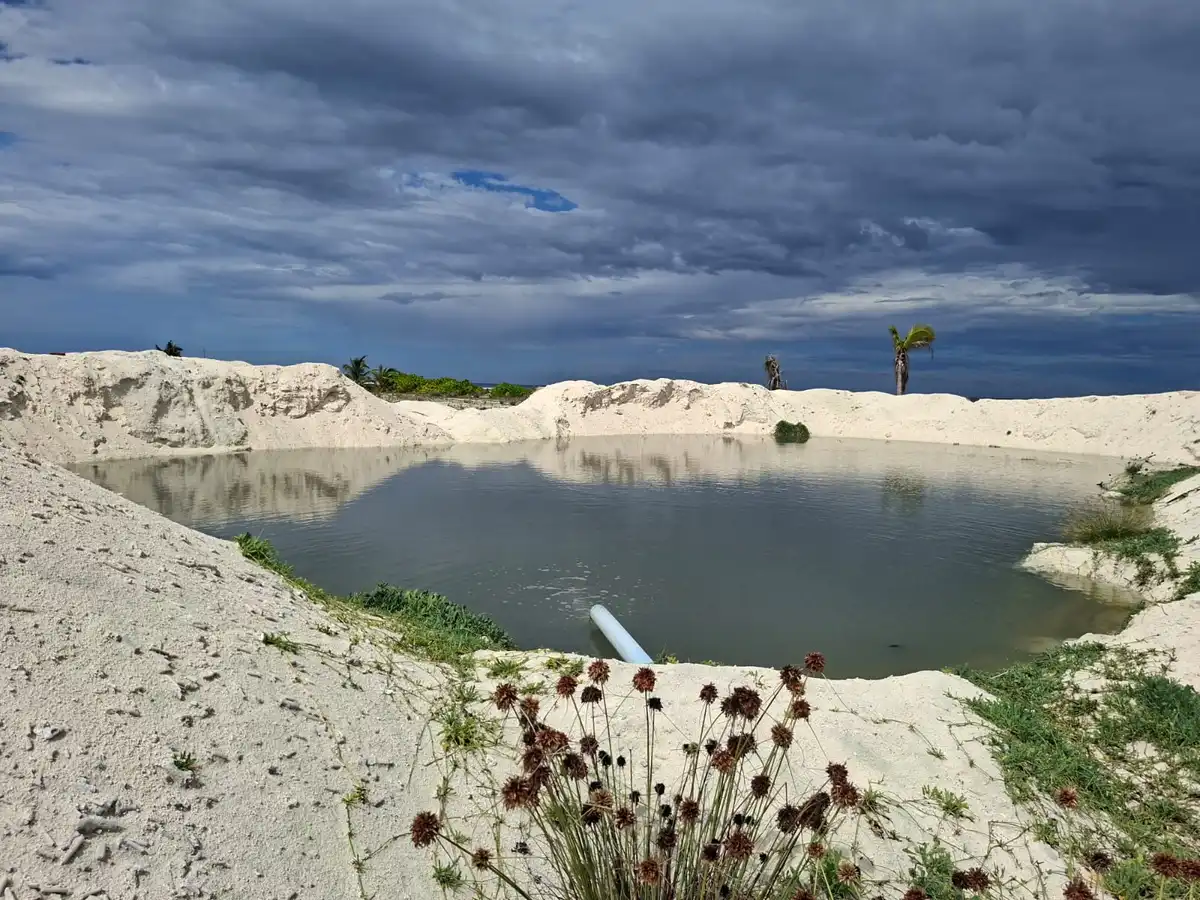
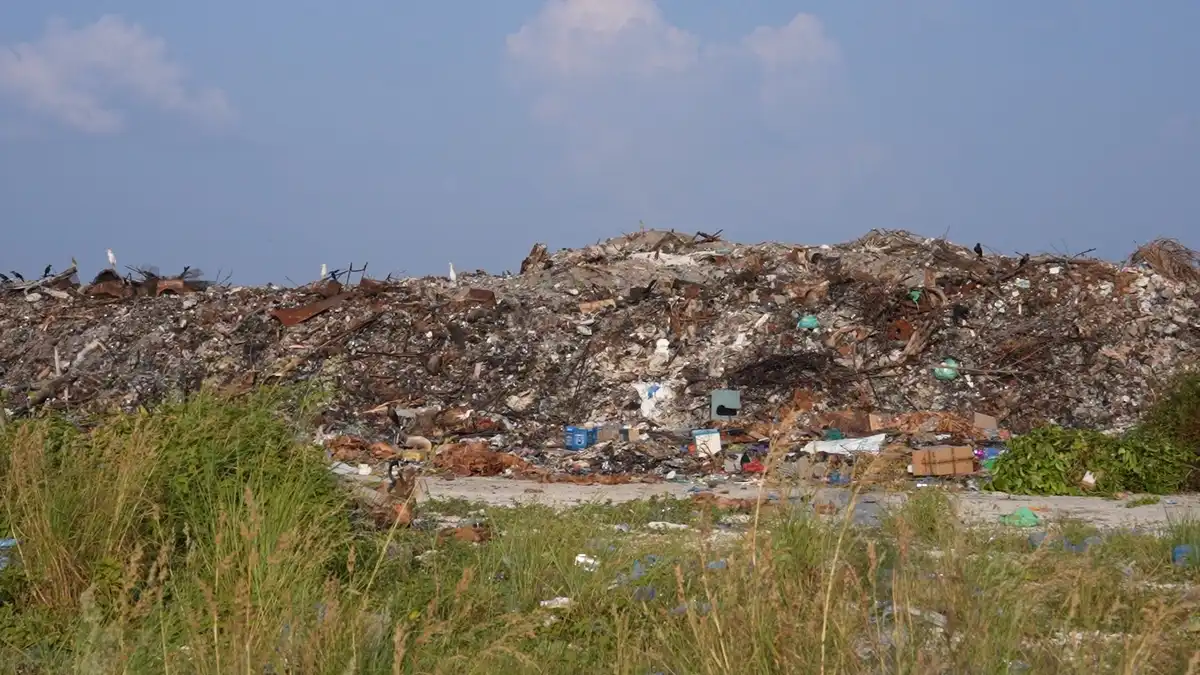
The excavation site for the construction of the new hospital building in Muli. | Social Media
Residents have begun expressing deep concern over the construction site for the new hospital building in M. Muli, initiated under President Dr. Mohamed Muizzu's administration. They report that the excavated foundation pit has transformed into a massive breeding ground for mosquitoes, posing a significant threat to public health.
Several members of the public have expressed their concerns regarding this issue, sharing information across social media platforms. Residents who spoke to this newspaper noted that since the early days of the current administration, the excavation site for the hospital has been left abandoned, allowing water to stagnate. Those who provided information stated that this has led to the area becoming a breeding ground for mosquitoes. While some of the areas excavated for the foundation have recently been backfilled with sand, residents pointed out that several spots remain exposed, continuing to serve as active breeding sites for mosquitoes.
Furthermore, some residents have reported that stagnant water has also accumulated at the excavation site for the island's new police station. Public concern has escalated significantly following the tragic death of a 17-year-old girl last week while receiving treatment for dengue fever in M. Muli. Residents report that a large number of people on the island are currently seeking medical attention for illnesses. Additionally, the community has expressed frustration over the lack of transparency from authorities regarding the full extent of the disease outbreak on the island.
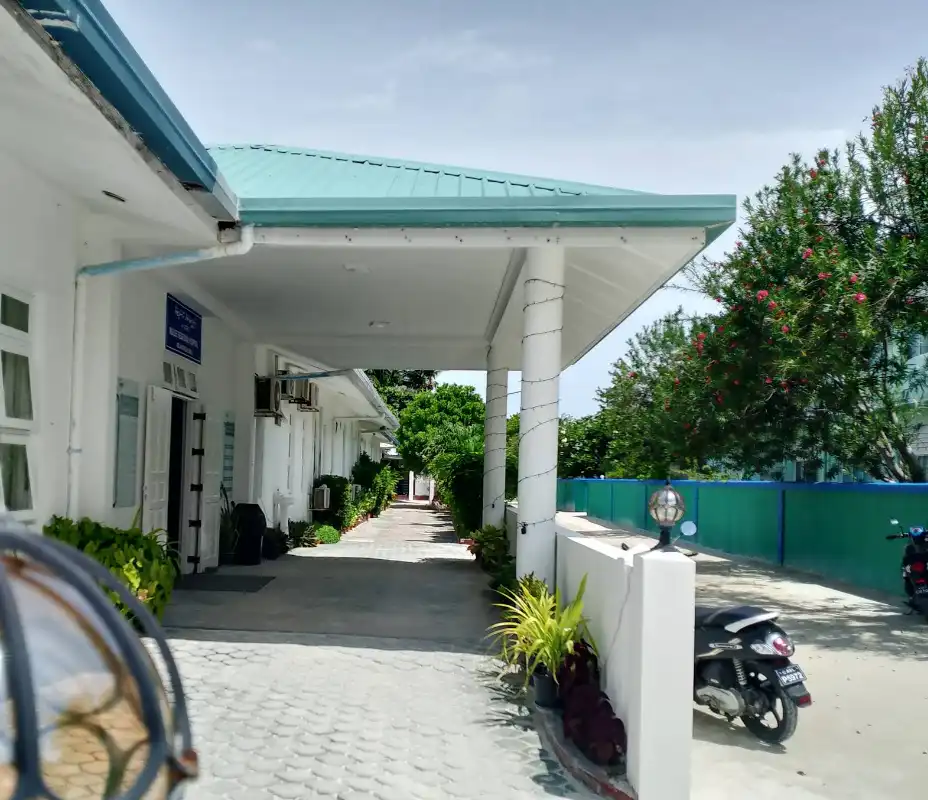
Following the tragic death of a child from dengue fever last week, an investigation by RaajjeMV revealed that the dengue testing kits at the local regional hospital had expired at the time. When questioned about the current health situation on the island, Muli Hospital informed RaajjeMV that a new supply of testing kits has since been received. The hospital further clarified that even during the period when diagnostic kits were unavailable, testing remained uninterrupted, as alternative laboratory procedures were in place to identify the virus. According to the hospital, there is currently only one active case of dengue on the island. The patient is presently admitted and undergoing treatment.
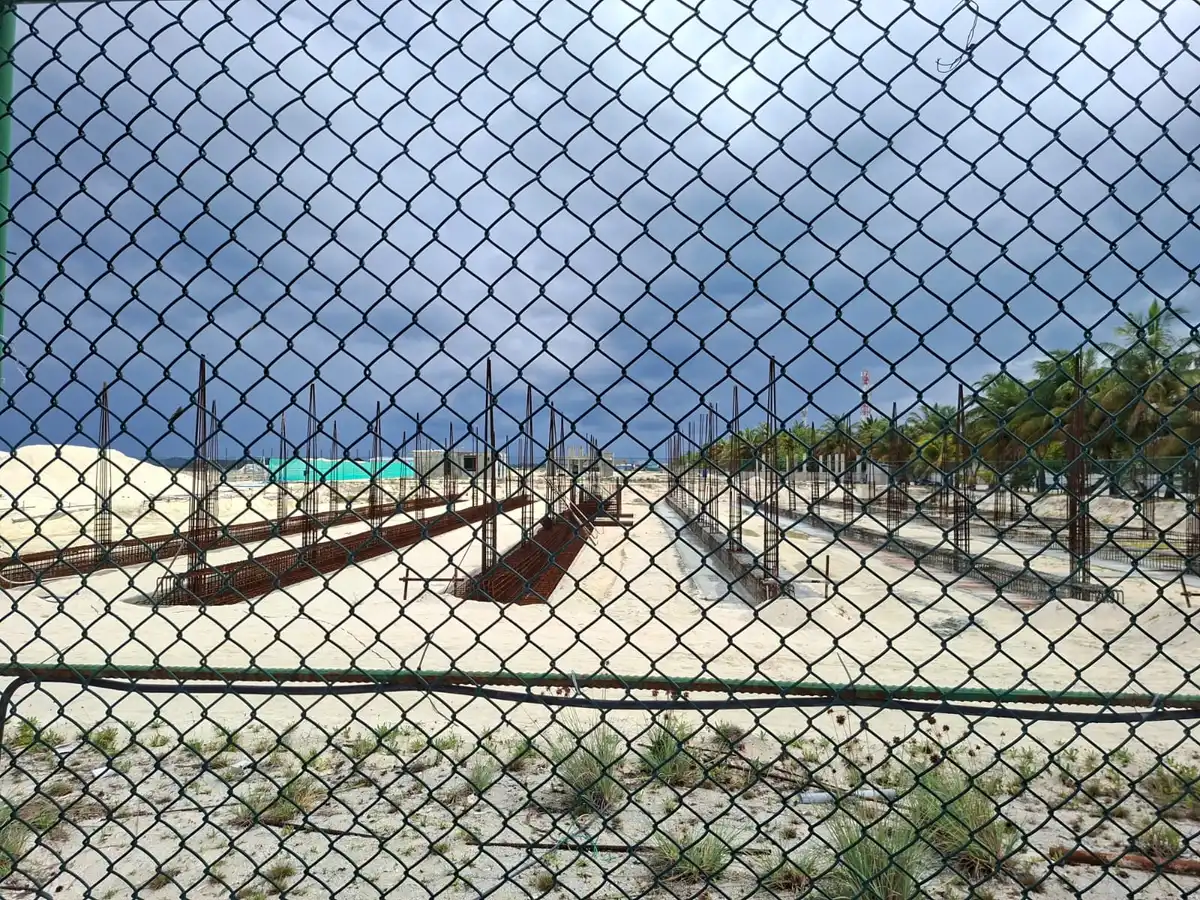
Excavation work underway for the construction of the new hospital building in Muli.
While the hospital has issued this statement, RaajjeMV has reliably learned that several individuals, including three workers from the MTCC site, are currently receiving treatment for dengue fever at the facility. Furthermore, this news outlet has confirmed that the number of reported dengue cases on the island exceeds the single case initially disclosed.
Furthermore, residents have expressed concern that public health officials have done little to raise awareness about the disease beyond distributing leaflets. Efforts to obtain an official comment from the relevant authorities regarding these allegations have so far been unsuccessful.