Shiyam’s shell game: dodging accountability while key industries crumble
21 އެޕްރީލު 2026 | އަންގާރަ 01:35Shiyam faces criticism for his perceived incompetence and failure to address domestic shortages in fuel and fertilizer. During a 2026 briefing, he was accused of using geopolitical conflicts as excuses for administrative failures while providing inaccurate data regarding global urea production. Critics argue the government is deflecting responsibility instead of utilizing international ties to stabilize the nation's core economic sectors.

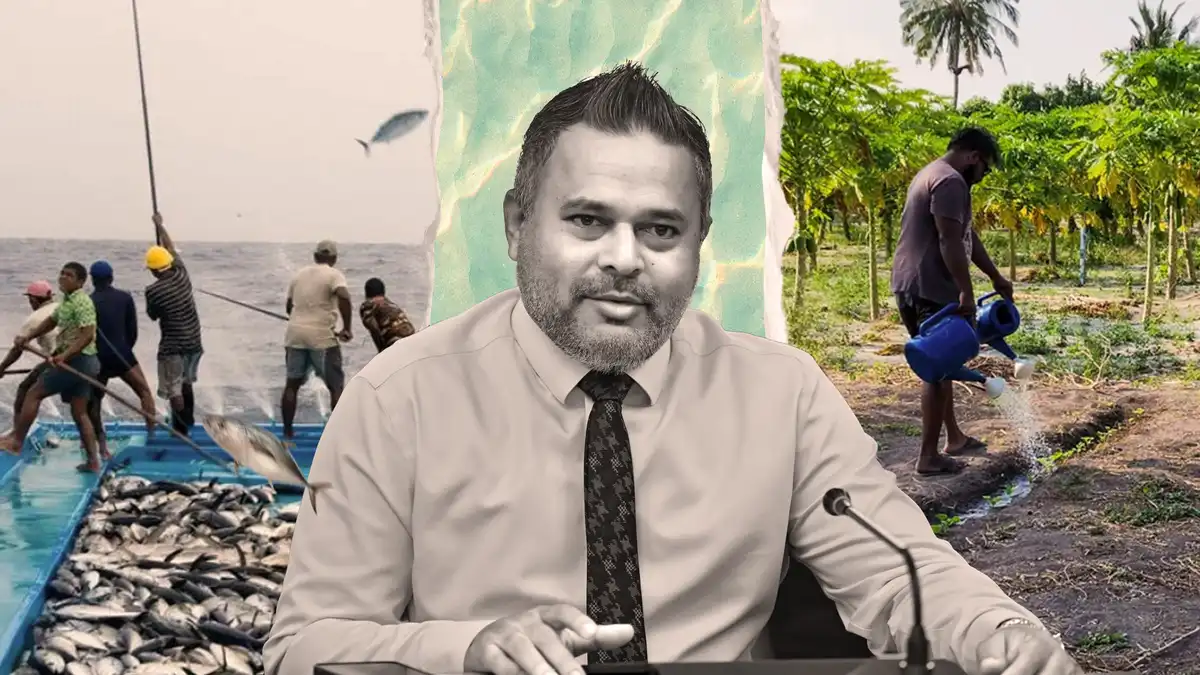
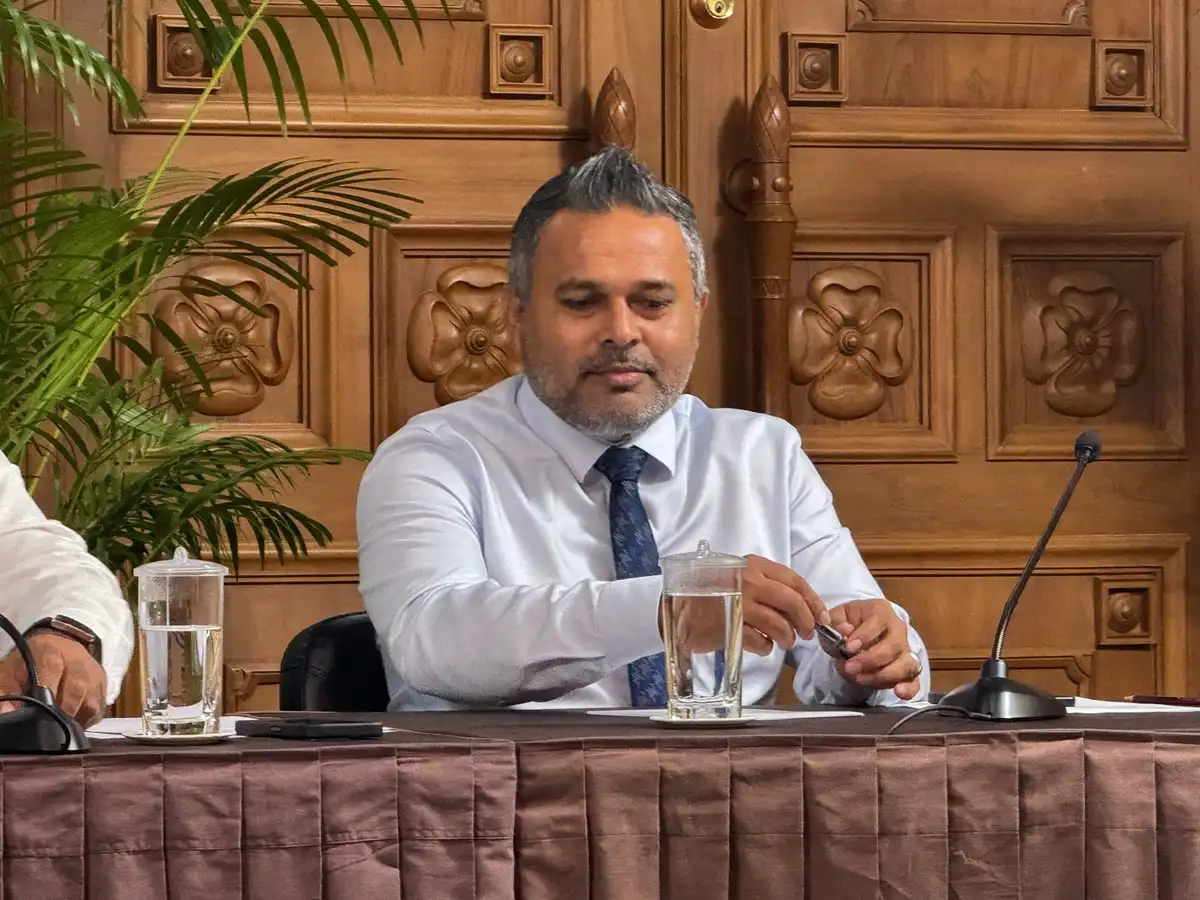
Minister of Fisheries, Agriculture and Ocean Resources Ahmed Shiyam has been evading responsibility instead of actually fixing the issues, using international conflicts as convenient scapegoats. | RaajjeMV Graphics | Raajjemv graphics
It is a blatant reality that the ministers under President Dr. Mohamed Muizzu’s leadership have mastered the art of dodging direct questions. When faced with pressing national concerns or public anxieties, these officials often appear completely oblivious to the situations they are supposed to manage. Within the fisheries and agriculture sectors which are the literal backbone of the Maldivian economy, a toxic culture has taken root where international conflicts are used as convenient scapegoats to evade responsibility instead of actually fixing problems.
Clueless at the helm
This pattern of incompetence was on full display during the Crisis Committee's press briefing held on 19 April 2026. It was painfully obvious that Minister of Fisheries, Agriculture and Ocean Resources Ahmed Shiyam did not have a grasp on even the most basic hardships hitting the public. For example, the minister was in the dark about the fact that fuel supplies for fishermen at Kooddoo island had been completely tapped out for two days. This ignorance raises a glaring question: has the management of the entire industry totally collapsed?
Farmers left in the dirt
The minister’s dismissive attitude toward the grievances of farmers only confirms that the agricultural sector is suffering from the same level of abandonment. When confronted with the total lack of essential fertilizers and the resulting predatory prices, his remarks fell far short of the professional standard expected from a cabinet member. While farmers are desperate for tangible solutions and affordable access to materials like Urea, the minister’s explanation lacked any academic weight, sounding more like casual gossip on the streets.
The "Urea" excuse
In a display of shallow rhetoric, Shiyam noted that Urea is the most common fertilizer but claimed that sourcing it is difficult because Iran is the world's fifth-largest producer and the Middle East handles nearly a third of global production. He suggested that because certain export regions have halted production or banned exports, Maldives is struggling. Beyond that, he dismissed the skyrocketing costs of farming, like electricity, as just the "usual" daily challenges.
Geopolitical fairy tales
While the Muizzu administration tries to tie every local economic failure to the geopolitical drama involving the United States, Israel and Iran, the public sees right through this deception. Long before these specific conflicts made headlines, farmers were already sounding the alarm over the scarcity and rising costs of fertilizer, which had jumped by MVR 30 per bag. Shiyam’s desperate attempt to blame domestic failures on foreign wars is a massive red flag regarding the government's administrative weakness.
Fact-checking the minister
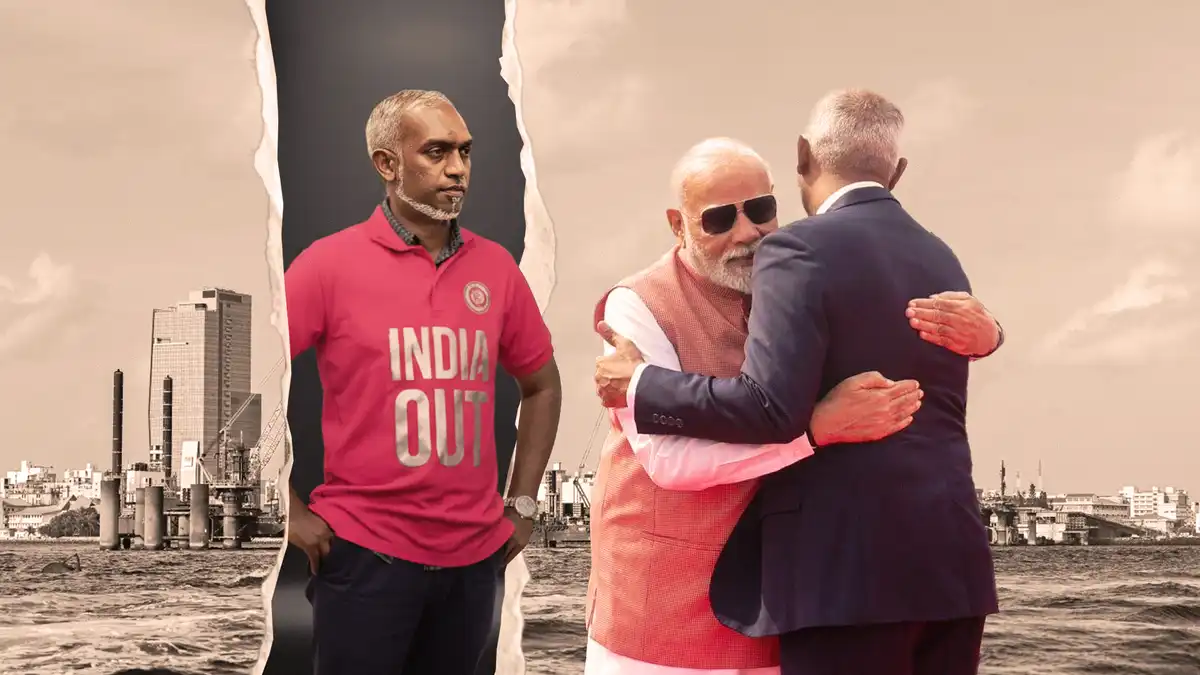
The minister’s claim that Iran’s production status is the bottleneck for Urea is simply wrong. In reality, the world’s heavy hitters in Urea production are Russia, China and India. This misinformation hasn't gone unnoticed by the public, who argue that if the government actually bothered to seek help from India as a nation with deep historical ties to the Maldives, or even China; a country the president claims to be close with, support for farmers would be easily secured.
Deflection over development
Ultimately, Shiyam’s behavior is a blend of misinformation and a desire to evade his duties. The people are tired of international wars being used as an excuse for local failure. They are demanding actual work and practical strategies to stabilize and grow the two industries that put food on the tables of most families across the island nation.