
Civil society organizations claim judiciary prioritizes government interests over justice
2 އެޕްރީލު 2026 | ބުރާސްފަތި 20:47In a joint statement, Maldivian civil society organizations have expressed grave concern over the judiciary’s tendency to favor the government in election-related disputes rather than upholding justice. The organizations highlighted a decline in judicial transparency following changes to the Supreme Court bench and the summary dismissal of cases, asserting that these actions obstruct the path to legal redress and continue to erode public confidence in the justice system.

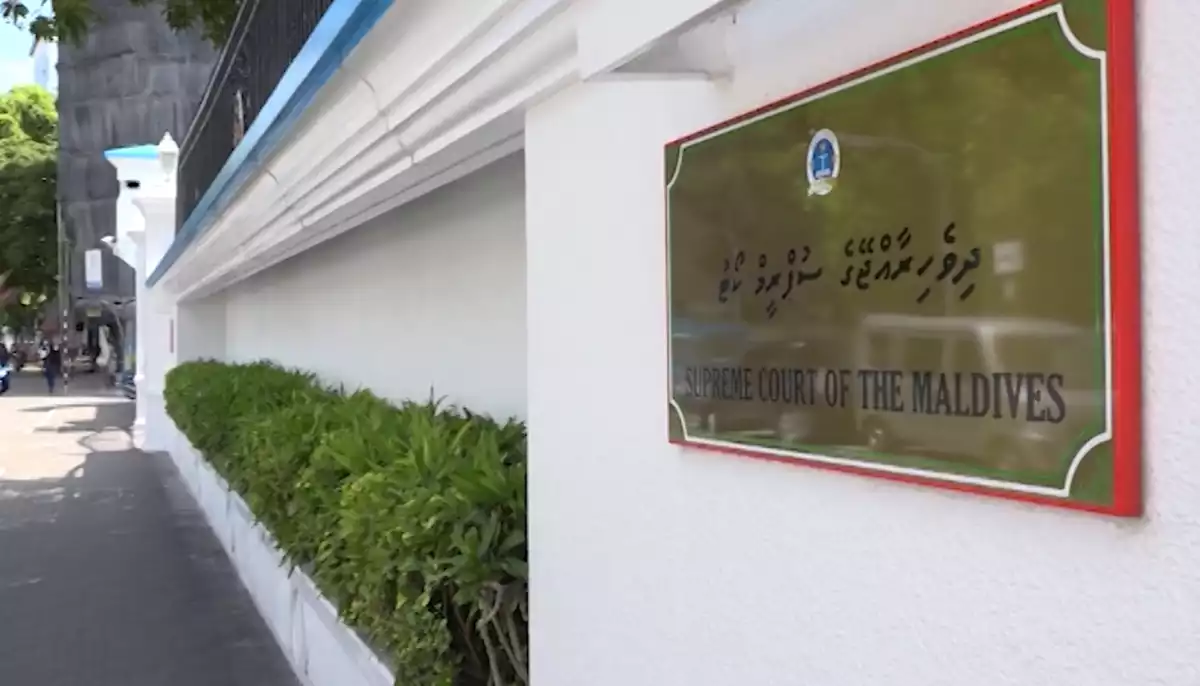
Supreme Court. | RaajjeMV | RaajjeMV
The Maldives Coalition for Good Governance (RCG), a collective of several local civil society organizations, has stated that instead of upholding justice, the judiciary is increasingly seen as facilitating the government's agenda.
RCG made these remarks in a joint statement issued by several Maldivian human rights and advocacy organizations, including the Association for Democracy in the Maldives (ADM), Save Maldives, Transparency Maldives, Mental Health Support Group, and Zero Waste Maldives.
In a joint statement, the organizations expressed grave concern that the judiciary appears to be facilitating the government's agenda rather than upholding justice. The statement further noted that while electoral disputes require urgent resolution, the courts are failing to fulfill their legal obligation to provide fair hearings and reach settlements within a reasonable timeframe.
The RGC noted that the Civil Court has thus far dismissed one case citing administrative issues. Additionally, the Supreme Court Registrar has rejected and dismissed another case.
At the same time, in a separate case, a ruling was issued against the plaintiff following the initial hearing. While a fourth case submitted to the High Court remains in the registration phase, it was noted that the parties involved retain the right to appeal the cases that were dismissed.
The RGC believes that the high volume of complaints raises serious questions regarding the legal validity of the referendum question and the procedures being followed. The statement further emphasized that in the absence of a specialized judicial mechanism to oversee referendum-related electoral disputes, it is essential to ensure fair procedures at every stage of the process.
Furthermore, the organizations expressed grave concern over significant and questionable changes made to the Supreme Court bench following the submission of the amendment regarding the loss of parliamentary seats. They further noted that since these changes, the court's transparency has diminished, with some cases being decided in a single hearing while others are being summarily dismissed through the Registrar.
The RGC stated that this obstructs the pursuit of justice and paves the way for the government to influence proceedings to its advantage. The council further noted growing criticism from both the legal community and the general public regarding judicial delays and rulings that are perceived to impede the fair administration of justice.