Mauroof: Court acted to waste time as desired by the government following request to nullify referendum resolution
26 މާރިޗު 2026 | ބުރާސްފަތި 10:59The MDP has condemned the decision, alleging that the court’s repeated requests for form amendments were a stalling tactic intended to serve the government's interests. The party further emphasized that there is no legal recourse other than judicial intervention to determine the validity of a presidential decree.

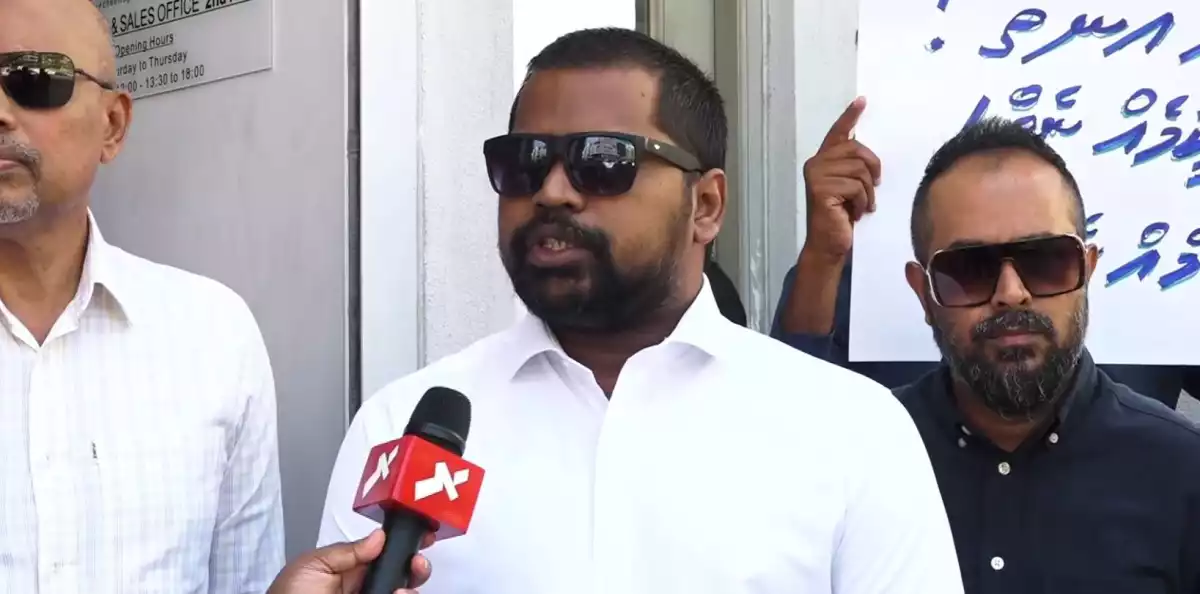
Ahmed Mauroof, Legal Director of the MDP. | RaajjeMV | RaajjeMV
Ahmed Mauroof, the Legal Director of the opposition MDP, has alleged that the Civil Court handled the case seeking to invalidate the referendum resolution in a manner intended to waste time, as desired by the government.
The Maldivian Democratic Party (MDP) has submitted its fourth revision of a lawsuit to the Civil Court, seeking to nullify a presidential decree that scheduled general elections for April 4 in an effort to combine two separate polls. The court confirmed receipt of the amended filing on Monday, following its submission on March 11.
However, Civil Court Registrar Abdul Salam Ali has decided not to accept the case. The Registrar's ruling stated that the claim form submitted failed to include any documentation proving that a formal complaint had been lodged with the relevant administrative body or that an administrative decision had been reached regarding such a complaint. Consequently, the Registrar concluded that the requirements under Section 96(c) of the Civil Procedure Act had not been met, and therefore, the claim could not be registered as a judicial review in its current form.
Regarding the matter, Mauroof stated that the Civil Court has refused to accept the case filed by the MDP seeking to annul the presidential decree issued to hold a referendum on merging two elections. He noted that the rejection came after the party had submitted the case form for the fifth time following various amendments. He further explained that the court cited the MDP's failure to specify the prior actions taken by the party to resolve the issue as the reason for the rejection.
Mauroof stated that this was an excuse the court had failed to raise during the four previous instances when they were instructed to amend the form. He further noted that once the President issues a decree, there remains no institution to which a complaint can be lodged, nor any legal avenue available to seek a resolution.
Mauroof stated that the courts are the proper venue to determine the validity of the matter. However, he noted that once the case was filed, the court acted in a manner that aligned with the government's interests by unnecessarily delaying the process.