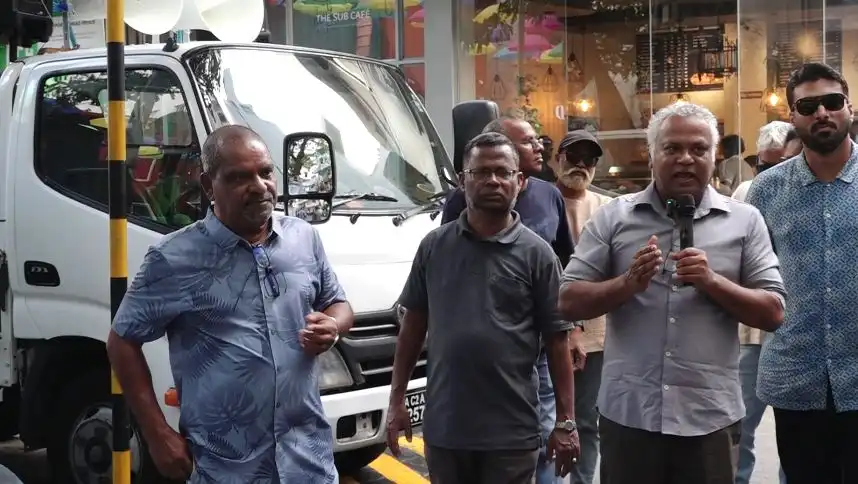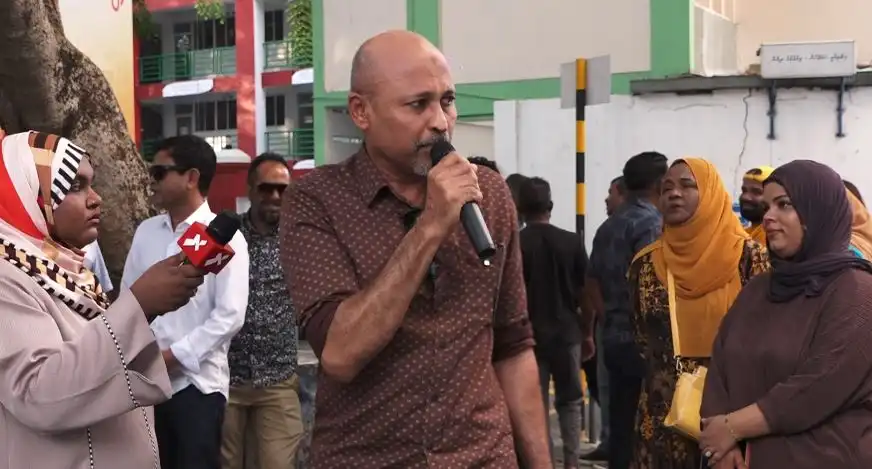
Rakeedhoo residents stage protest, shut down island council office
3 މާރިޗު 2026 | އަންގާރަ 10:40Administrative services at the Rakeedhoo Council have come to a standstill following the mass resignation of all administrative staff and three council members.

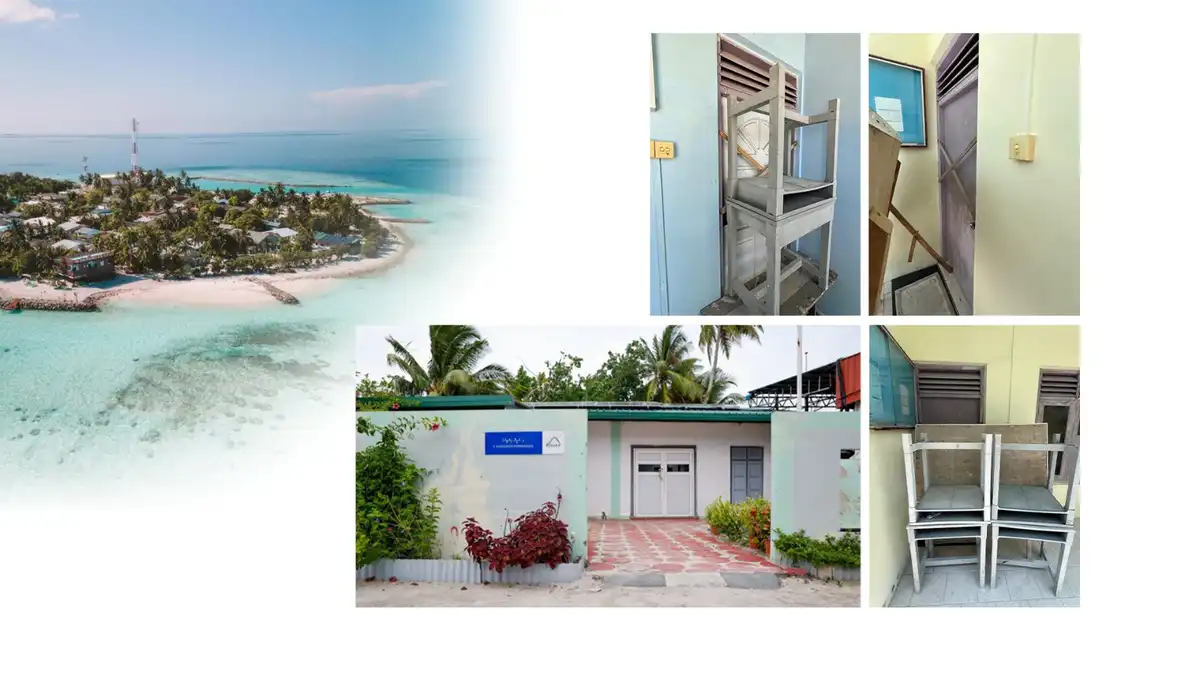
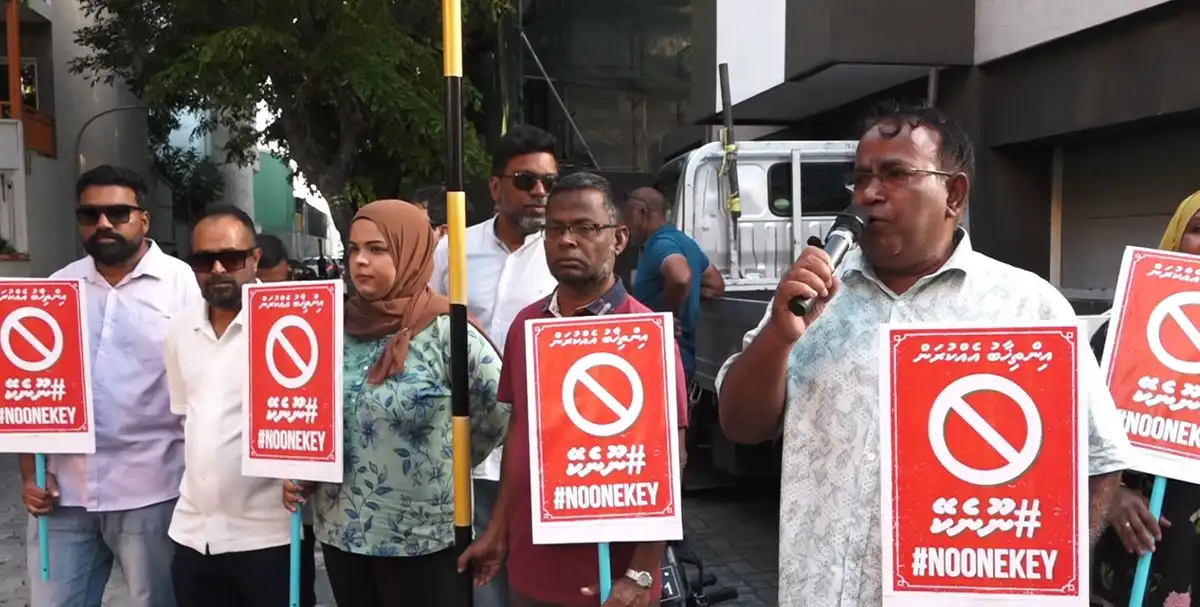
Residents of V. Rakeedhoo have shut down the island’s council office in protest over the lack of essential services. | RaajjeMV | Raajje MV
Residents of V. Rakheedhoo shuttered the island’s council office on Monday in protest over the suspension of essential public services, following the mass resignation of the council’s administrative staff and all three elected members.
Photos shared on X by Shujau Ali, President of the Vaavu Atoll Council, show tables barricaded against the entrance of the Rakeedhoo Council Office, effectively blocking access to the building. The demonstration is believed to be an expression of public frustration over significant difficulties and delays in accessing essential administrative services.
According to Shujau's post, the suspension of administrative services at the Rakeedhoo Council is due to the mass resignation of all administrative staff and three council members. Residents have expressed deep concern over the situation, as the lack of personnel has brought essential services, including the processing of official documents and other municipal functions, to a complete standstill.
According to reports, the Rakeedhoo police desk is also located within the island’s council office building. Consequently, it is unlikely that police officers stationed in Rakeedhoo will be able to report for duty today. This situation is expected to disrupt the essential safety and security services provided to the island's residents.
In addition to Rakeedhoo, numerous island councils across the Maldives are currently operating without the minimum staff required to function effectively. This crisis emerged following the implementation of a restrictive policy by President Muizzu’s administration, which prohibits the recruitment of permanent employees.
According to the legislation passed by the Parliament, which is under the full control of President Muizzu, local councils are prohibited from hiring any permanent employees if there are only six months remaining in their current term. Furthermore, the government has also banned the implementation of any new development projects during this period.
It has been observed that this law has brought council services to a standstill in many islands across the country, leaving citizens unable to access essential administrative services. Many have noted that the resulting staff shortages have also delayed local development projects, causing significant hardship for residents.