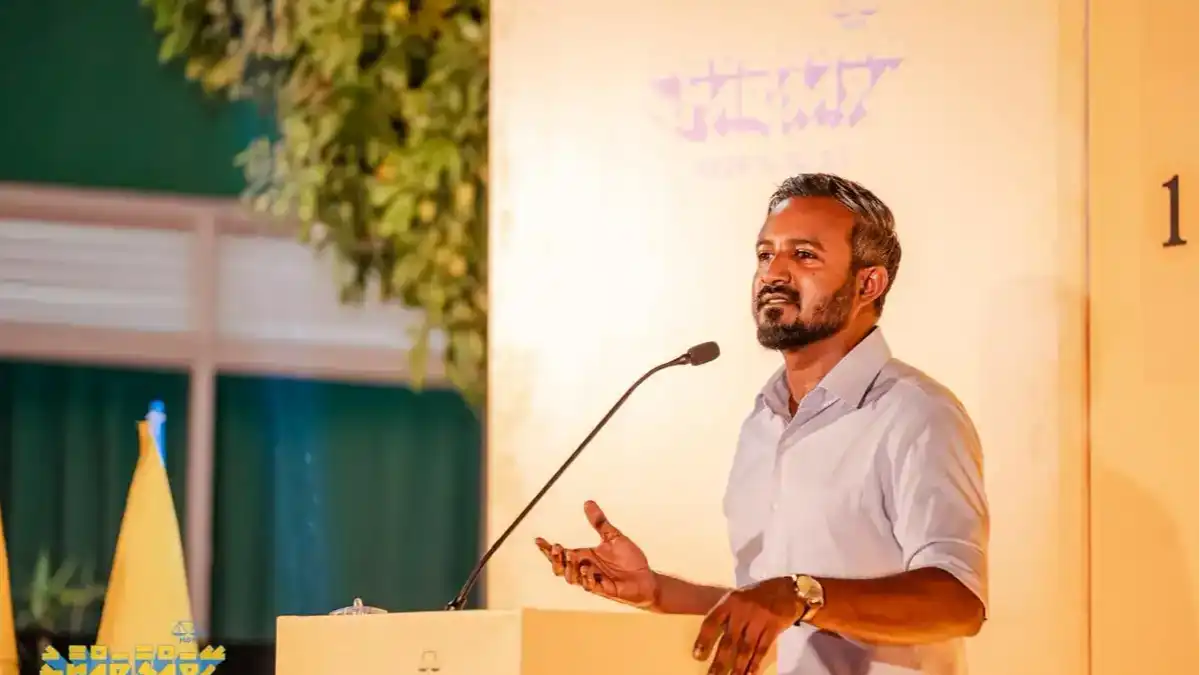
Opposition figures are resisting the move to hold two elections simultaneously because they are accustomed to the practice of making empty promises during election periods: President Muizzu
27 ފެބުރުއަރީ 2026 | ހުކުރު 10:27President Muizzu stated that the government decided to hold presidential and parliamentary elections concurrently to reduce state expenditure and enhance public participation. He further alleged that the opposition's resistance to this move is motivated by a desire to launch new projects and lay foundation stones specifically to coincide with election periods.

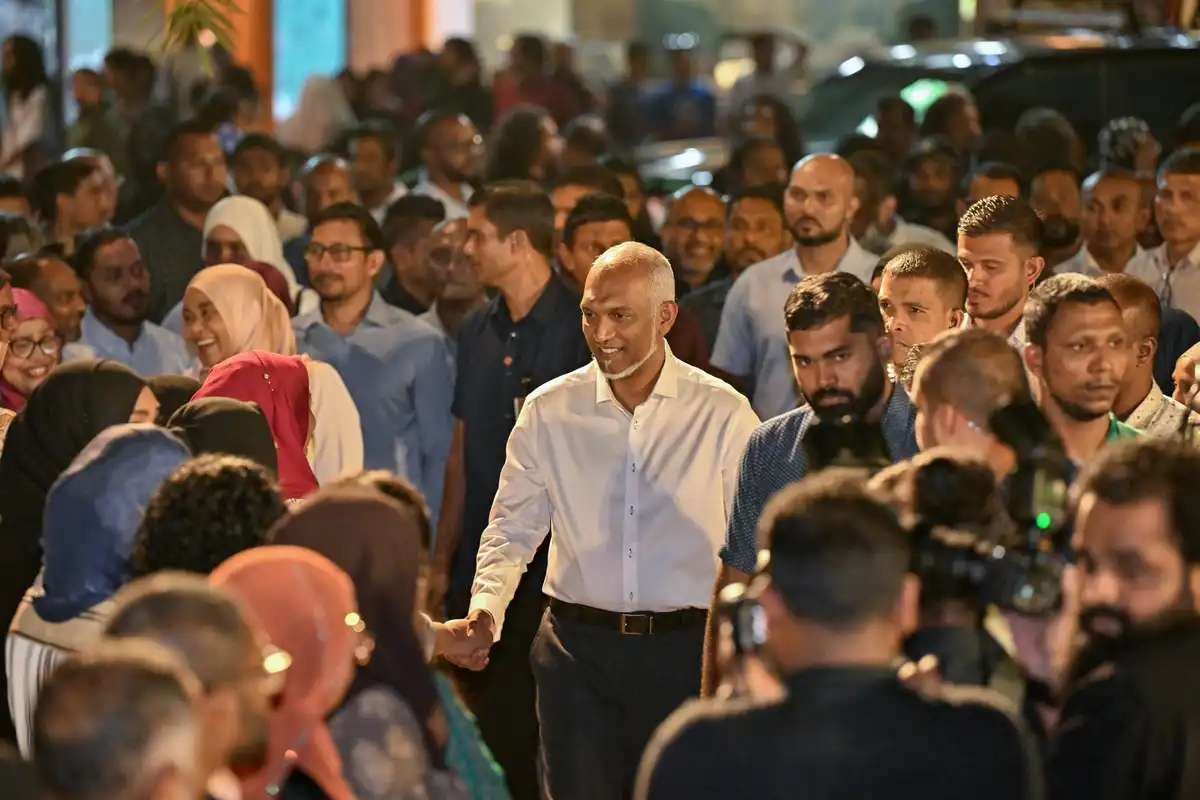
President Dr. Mohamed Muizzu attends a special Taraweeh prayer gathering hosted by the PNC. | PNC | PNC
President Dr. Mohamed Muizzu has stated that the opposition's resistance to holding presidential and parliamentary elections concurrently stems from their habit of attempting to influence election outcomes through strategic maneuvering.
Speaking at a 'Taraweeh' gathering hosted by the ruling People's National Congress (PNC) on Thursday night, President Muizzu stated that prior to the decision to synchronize the elections, several opposition figures had expressed support for holding the presidential and parliamentary elections on the same day. However, the President noted that he has carefully considered the matter from various perspectives, given that the opposition has now changed its stance and is actively opposing the move.
President Muizzu stated that the opposition to this move stems from a long-standing habit of using project inaugurations as a political tool to influence elections.
President Muizzu stated that as elections approach, candidates typically visit islands to lay foundation stones or inaugurate projects, only to disappear afterward. He noted that they are often not seen again until it is time to inaugurate a new project or when the next election cycle begins.
The reason for concern is that before we officially reached a decision on this matter, several senior opposition figures were also advocating for holding the presidential and parliamentary elections on the same day as the most viable option. However, I began to wonder why their stance has suddenly shifted. Upon reflection, I realized that this stems from the old practice of "planting stakes" for elections. This is not a recent phenomenon; since the earliest times, candidates and various officials would visit islands as elections approached. They would inaugurate a project by driving a stake into the ground or laying a foundation stone, and then vanish without a trace. They would not be seen again until the next election cycle. When the next election arrived, they would return to renew that same stake, plant a new one, or find some other symbolic gesture to perform. Then, they would disappear once more. It appears that those who are accustomed to this cycle of empty promises are now opposing what they previously agreed upon, simply because they wish to maintain this outdated practice.President Dr. Mohamed Muizzu
President Muizzu highlighted that the government is working to synchronize the two major elections to be held on a single day, noting that the current six-month gap between them is inefficient and that this change would benefit the nation. He further stated that this move would enhance public participation, pointing out that voter turnout has been significantly higher in every presidential election held since 2008.
Our objective is not to merge two separate elections into one. Rather, we are seeking to align the dates so that both elections are held on the same day, eliminating the current six-month gap between them. This change offers numerous advantages. It is a measure intended to facilitate greater public participation. I say this because historical data shows that the presidential election consistently draws the highest voter turnout.President Dr. Mohamed Muizzu
Despite President Muizzu’s assertions, the government laid foundation stones for numerous projects across various islands during the recent parliamentary and local council election campaigns. Residents report that many of these initiatives were halted immediately following the conclusion of the parliamentary elections, only to be restarted or prepared for relaunch as the next election cycle approaches. Many citizens have accused the government of using these tactics to deceive the public, alleging that project timelines are being manipulated solely for electoral gain.
Furthermore, several legal experts have asserted that the proposed referendum on synchronizing presidential and parliamentary elections is unconstitutional. Consequently, the Maldivian Democratic Party (MDP) has filed a lawsuit seeking an injunction to halt the process.