Concerns raised over changes to healthcare workers' duty hours during Ramadan
23 ފެބުރުއަރީ 2026 | ހޯމަ 10:17MHPU has expressed concern over some healthcare staff being required to work six to eight hours daily during Ramadan, despite the President's Office officially setting the workday at four hours. The union characterized this discrepancy as a violation of the Constitution and the Employment Act, labeling it discriminatory and demanding fair compensation for the additional hours worked. Furthermore, the MHPU called for the uniform application of working hours across all government employees under the state pay framework.
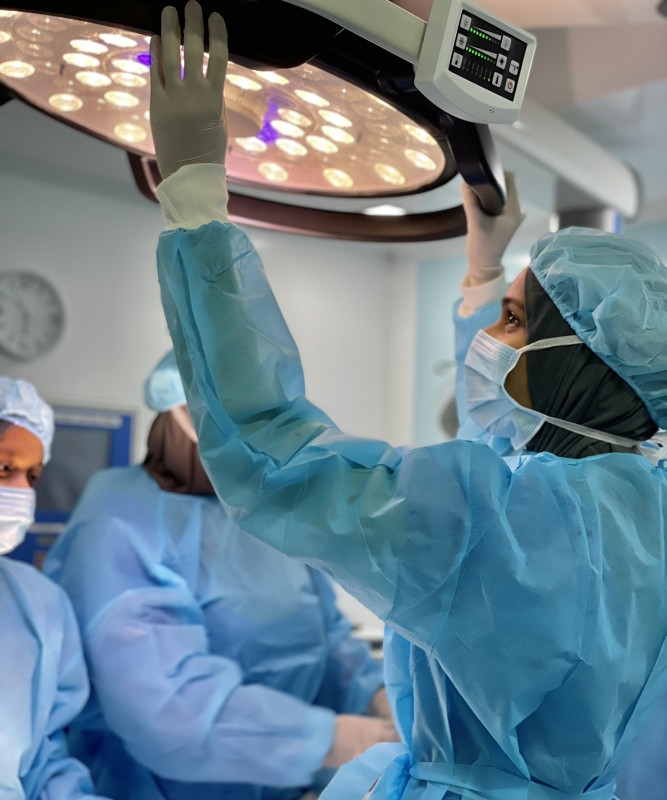
A perioperative nurse at work. | theatre nurses | Theater Nurses
The Maldives Health Professionals Union (MHPU) has expressed concern over discriminatory practices by hospitals regarding the official working hours set for the month of Ramadan, noting disparities among different categories of healthcare workers.
In a statement, the Maldives Health Professionals Union (MHPU) noted that the President's Office announced on February 15, 2026, that official working hours for the month of Ramadan 1447 and the first seven days of Shawwal will be from 9:00 am to 1:00 pm, consistent with previous years. The union expressed concern that while the President's Office has mandated a four-hour workday for all state institutions during Ramadan, various healthcare facilities have established inconsistent working hours for their staff, resulting in unequal official duty shifts across the sector.
The statement noted that all Maldivian civil servants transitioned to the state’s new employment frameworks on November 1, 2025. It further emphasized that the employment regulations and standards for these staff are governed by the "National Pay Standards." Given that these standards establish uniform employment conditions and principles for all civil servants, the statement asserted that maintaining such disparities among workers contradicts the spirit of Article 37 of the Constitution of the Republic of Maldives, which guarantees the right to work, as well as Section 4(a) of the Employment Act, which prohibits discrimination.
The statement noted that under the Maldives National Pay Framework, which came into effect on May 1, 2022, salaries for employees transitioned to this framework are based on an 8-hour workday and a 6-day work week. Consequently, the standard working hours for staff under the new state employment structures are indirectly set at 8 hours a day, six days a week. However, as part of the flexibility granted by the government to state institutions, some employees currently work only 6 hours a day, five days a week. Meanwhile, it was highlighted that certain categories of healthcare workers continue to work 8 hours a day, six days a week. The Maldives Health Professionals Union (MHPU) stated that this represents a significant disparity among employees whose salaries and employment terms are supposedly governed by a uniform standard.
Furthermore, the Maldives Health Professionals Union (MHPU) stated that while the President's Office has officially mandated a four-hour workday for the month of Ramadan, various hospitals have set the official working hours for certain categories of healthcare staff between six and eight hours for the current Hijri year 1445. The union emphasized that such disparities are deeply unjust, noting that staff instructed by hospitals to work beyond the President's mandated four-hour limit are being required to do so without any additional compensation for the extra hours served.
The President's Office has shortened official working hours during Ramadan to four hours to allow government employees maximum time for worship and spiritual devotion during this holy month. The statement noted that despite standardized salary and employment frameworks, hospital management is compelling certain staff to work between six and eight hours a day. This practice is described as a disregard for fairness and justice by hospital leadership, which risks creating unnecessary discord among employees.
The statement highlighted that healthcare professionals provide essential and sensitive services to the public in environments fraught with numerous risks to their own health and safety. It further noted that imposing such unfair disparities among employees governed by the same salary scales and employment regulations has placed an additional psychological burden on these workers.
The union has called upon the government and the National Pay Commission to designate the four-hour workday mandated by the President's Office for this Ramadan as the official working hours for all categories of staff across hospitals and healthcare facilities. Furthermore, the union urged the authorities to ensure that employees required to work beyond these four hours are provided with appropriate compensation. The statement also called for a standardized approach to determining official working hours throughout the rest of the year, ensuring equitable treatment for all employees under the state pay framework.