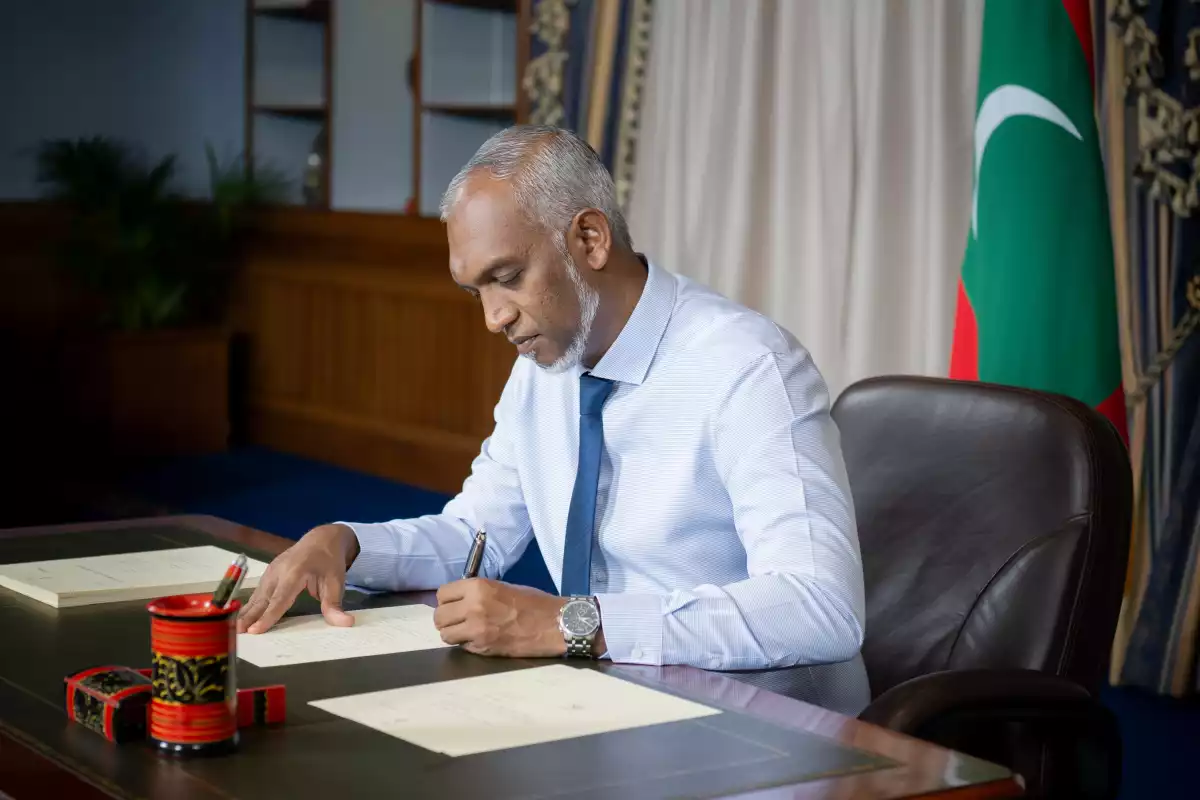
It is very easy to govern by consolidating all powers within the President's Office, as President Muizzu is currently doing: Solih
17 ފެބުރުއަރީ 2026 | އަންގާރަ 08:35Former President Ibrahim Mohamed Solih stated that while national development can only be achieved by empowering local islands, the current administration is attempting to centralize all authority within the President's Office. He urged citizens to question the feasibility of President Dr. Muizzu’s promises and called on the government to ensure that ongoing development projects in Thinadhoo proceed without interruption.
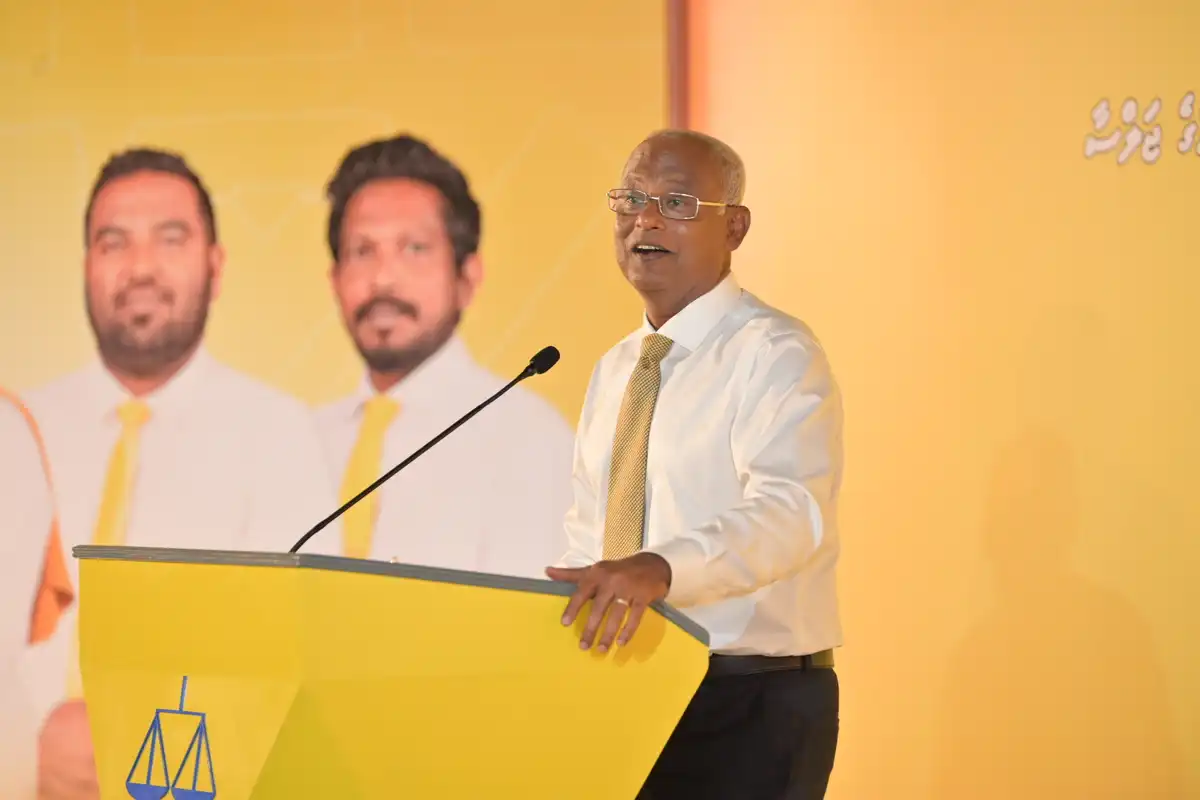
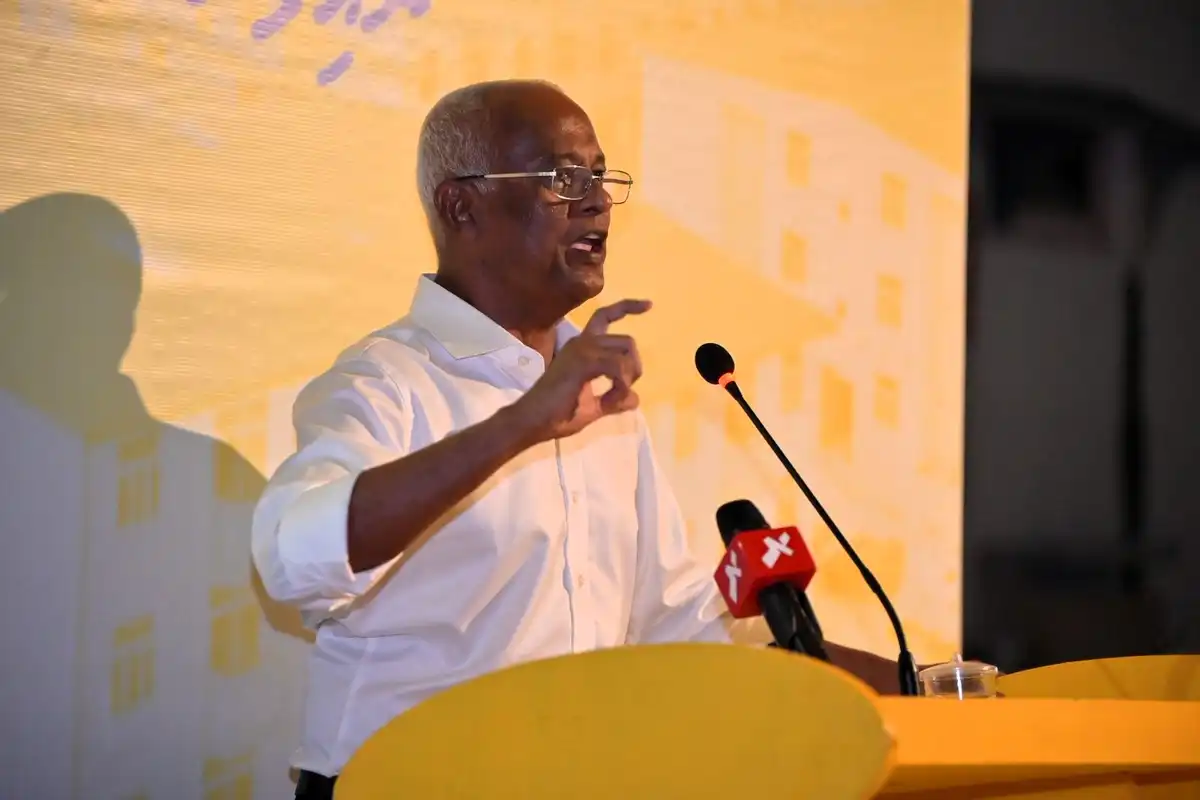
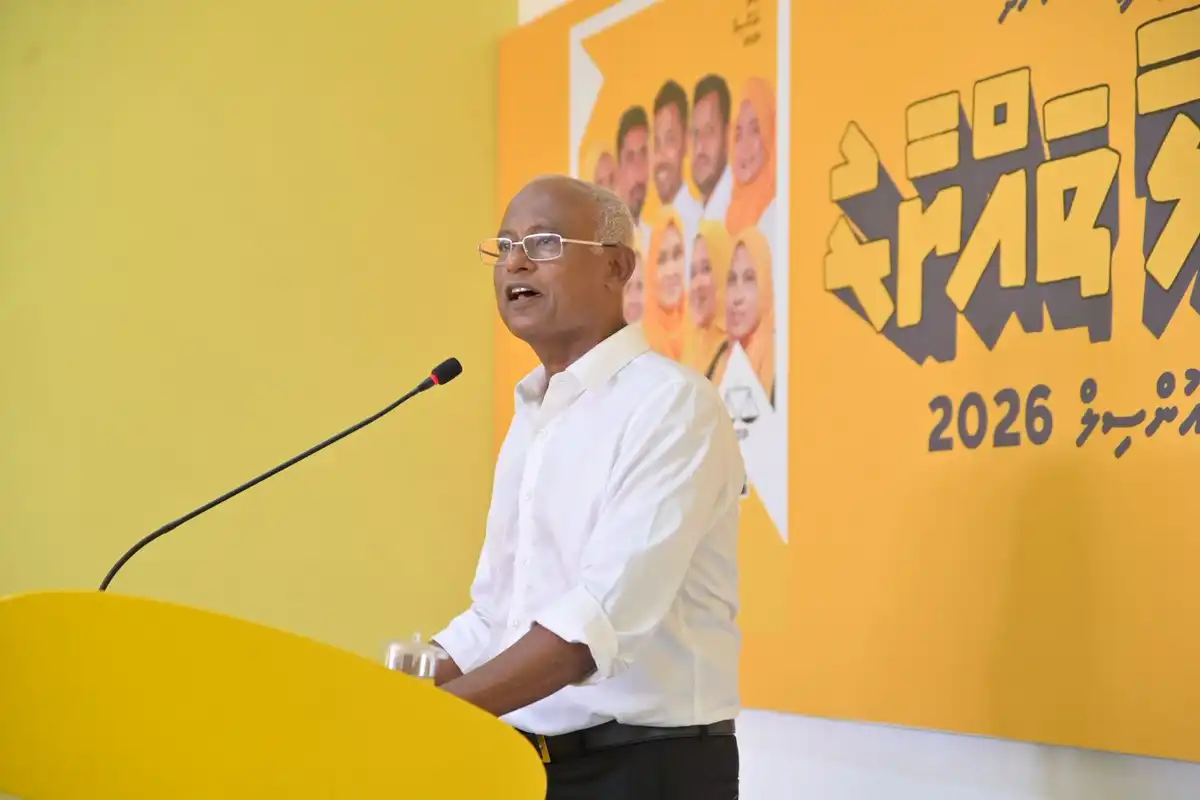
President Solih addresses the gathering held in Thinadhoo City to launch the MDP's election campaign. | Munshid | Munshid
Former President Ibrahim Mohamed Solih stated that while it is easy to govern by consolidating power within the President's Office as President Dr. Mohamed Muizzu is currently doing, the MDP's policy remains focused on decentralizing power and fostering development through a local governance system.
Speaking at the MDP campaign launch event in Thinadhoo City, former President Ibrahim Mohamed Solih highlighted the stark differences between the MDP’s core policies and those of the party currently undergoing frequent changes to its identity and platform. Solih emphasized that the MDP has always maintained that national development can only be achieved by empowering local islands and granting ownership of progress to their residents. He noted that while decentralization is a challenging endeavor, it remains a fundamental principle of democracy. Solih further remarked that the governance style adopted by President Dr. Mohamed Muizzu is far simpler to execute. He stated that it is easy to govern in isolation from the President’s Office by centralizing all authority and stripping away the powers previously granted to local islands. However, he stressed that this centralized approach is not what the citizens desire today.
Therefore, I urge the residents of this island to consider this carefully and vote for the [scales] logo as I have suggested. The members we elect to the council are not chosen to sing praises to those in power. Nor are they meant to be individuals who simply nod in agreement with everything leaders say. When a project is proposed, they must use their own intellect to evaluate its feasibility. This is especially true for those in leadership positions. For instance, one must question whether the grand promises made during the last presidential and parliamentary elections are actually achievable. During the presidential campaign, the President initially visited and spoke of connecting this island to Kaadedhdhoo via a bridge. Three months later, he returned and announced plans to reclaim land to establish a city in Thinadhoo, complete with a floating terminal, on a scale unseen in this region. Those same investors he mentioned also approached us during our administration. We conducted our due diligence to see who they were. How can a group involved in poultry farming be expected to build an airport and develop an entire city?Former President Ibrahim Mohamed Solih
Former President Solih stated that the visions presented by President Muizzu have proven to be nothing more than an illusion. He emphasized that citizens must critically evaluate the promises made by leaders and determine whether such pledges are actually feasible. Solih noted that when the Mayor of Male' City requested the reclamation of Villingili and Gulhifalhu to be connected via a bridge, President Muizzu instead spoke of reclaiming "Ras Male'" and proposed connecting the islands through an underwater glass tunnel at a depth of 200 meters.
Furthermore, he stated that while traveling through the tunnel, sharks, whales, and various species of fish would be visible. He noted that numerous such excuses were provided, and even in the most recent Presidential Address, he spoke of developing 10 resorts.
They claimed they would provide $400 annually. If that were the case, they are essentially talking about making an investment of $1 billion. They are suggesting that by investing between $800 million and $1 billion, they can generate a net profit of $200 million per year. I encourage you to ask resort operators how such a feat could possibly be achieved. They continue to peddle these kinds of delusions. Therefore, you must consider the consequences of electing those who believe such rhetoric.Former President Ibrahim Mohamed Solih
Solih stated that Thinadhoo is a town with a rich history, home to a hardworking, capable, and industrious population. He noted that looking back 70 to 80 years, Thinadhoo stood as the wealthiest island in the Maldives. Reflecting on the historical challenges the island faced, the President remarked that the people of Thinadhoo have since recovered and persevered. He further asserted that there is no reason why such a significant town should not be entrusted to its own people for governance, emphasizing that Thinadhoo possesses the capable leaders and citizens necessary to manage its own affairs.
How can we develop the Maldives by centralizing all power? We must decentralize and grant local ownership. The central government’s role should be to enact legislation and ensure compliance with those laws. We initiated that very process. I had a specific vision for Thinadhoo, under which an industrial island was developed, a commercial port was initiated, and the establishment of a 1,000-ton cold storage facility began. Every project we undertook was launched after consulting with the public, seeking their advice, formulating a plan, and securing the necessary funding. When these projects commenced, the required finances were already in place. Among these, the cold storage facility was funded through the Saudi Fund for Development. In addition to the project on this island, the Saudi Fund’s assistance for fisheries development also includes the cold storage facilities at Kooddoo and the ongoing work at Kanduoiygiri.Former President Ibrahim Mohamed Solih
Solih stated that the government's current priority should be the completion of ongoing projects. He noted that Thinadhoo possesses the potential to be developed as a major city. He further highlighted that previous administrations had neglected housing issues in Thinadhoo, asserting that such initiatives were only undertaken during the MDP government. Solih also remarked that the current administration lacks a vision for rural development and the decentralization of powers.