Ras Malé and the reckless surrender of an inherited paradise
28 ސެޕްޓެމްބަރު 2026 | ހޯމަ 21:46Significant public concern has been observed regarding the agreement to lease 500 hectares of land for the development of Ras Malé to a UAE-based company for a period of 99 years. While such large-scale projects may offer economic benefits, ensuring transparency and disclosing the specific details of these agreements is a fundamental right of the citizens, essential for safeguarding the nation's sovereignty and future

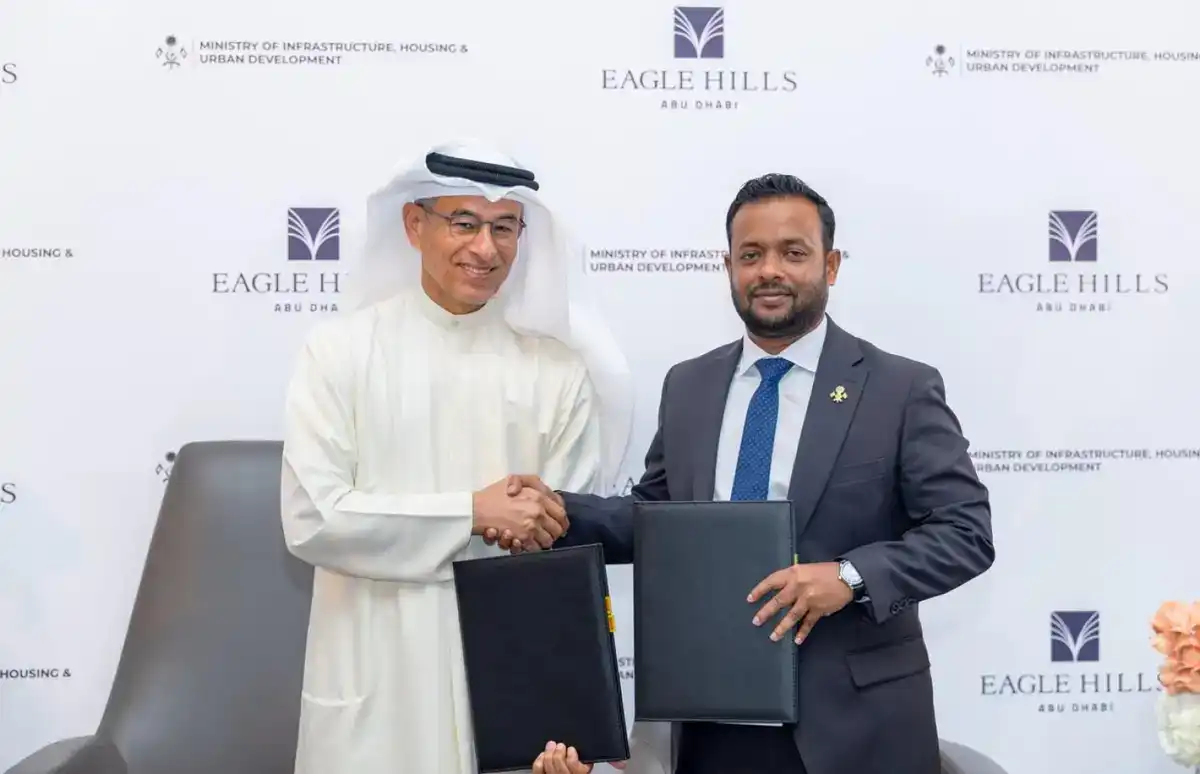
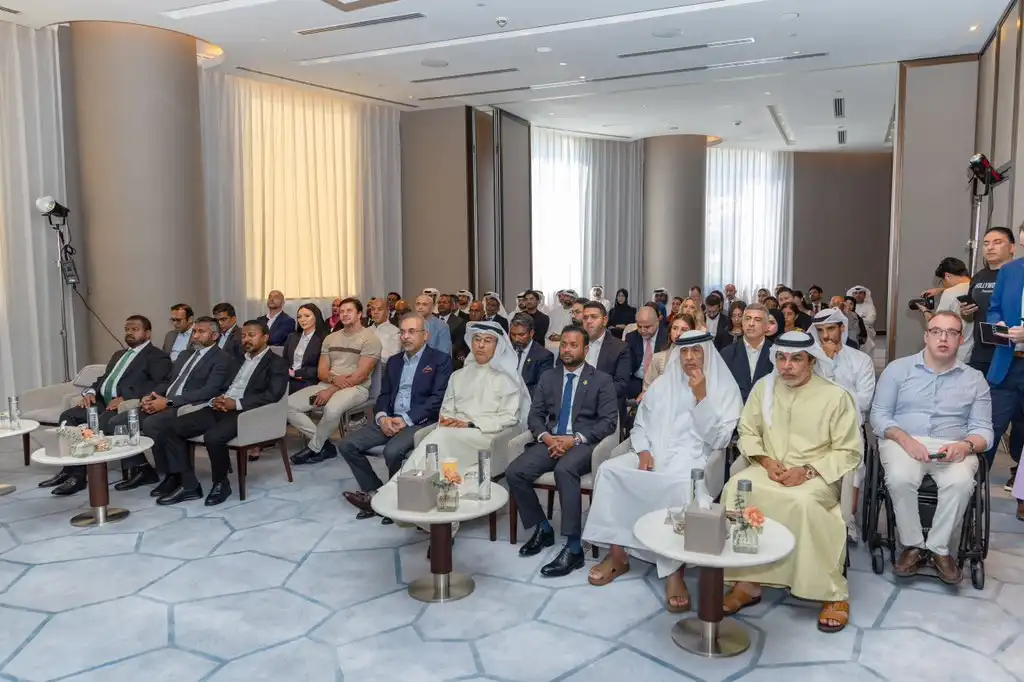
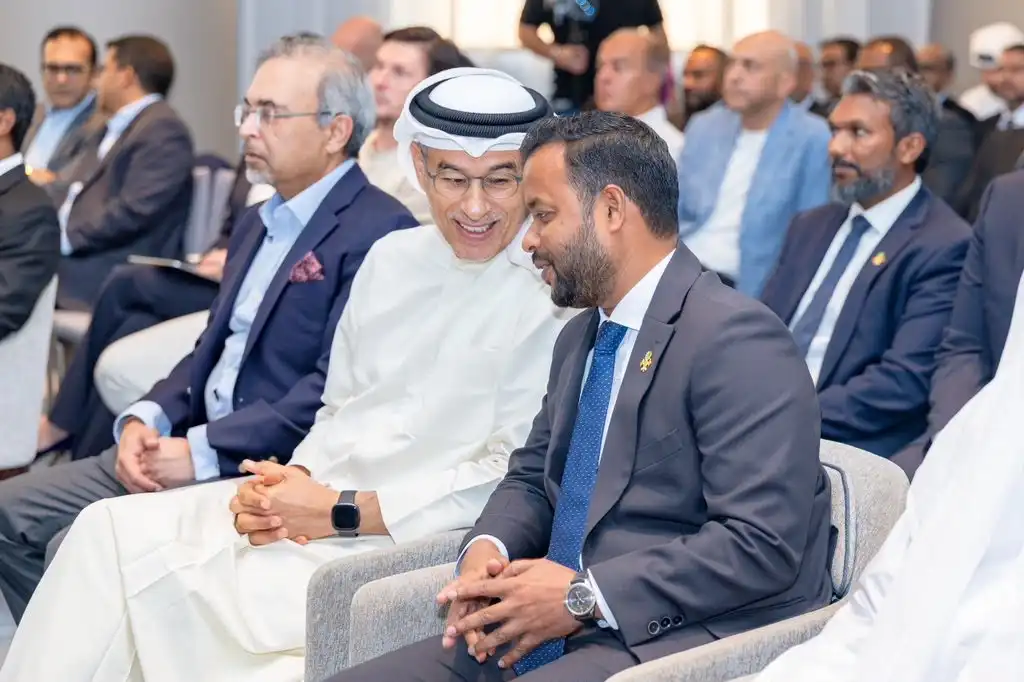
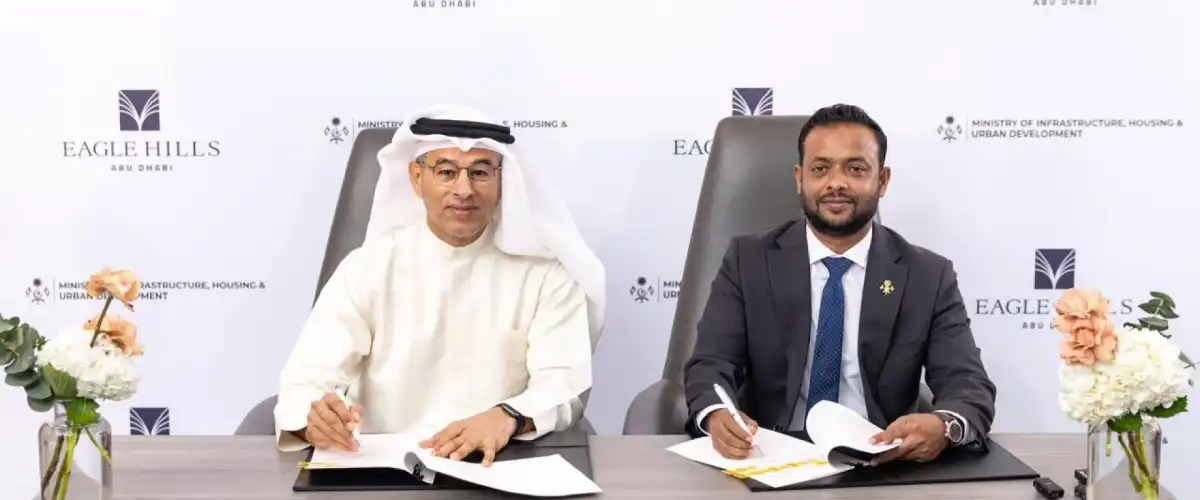
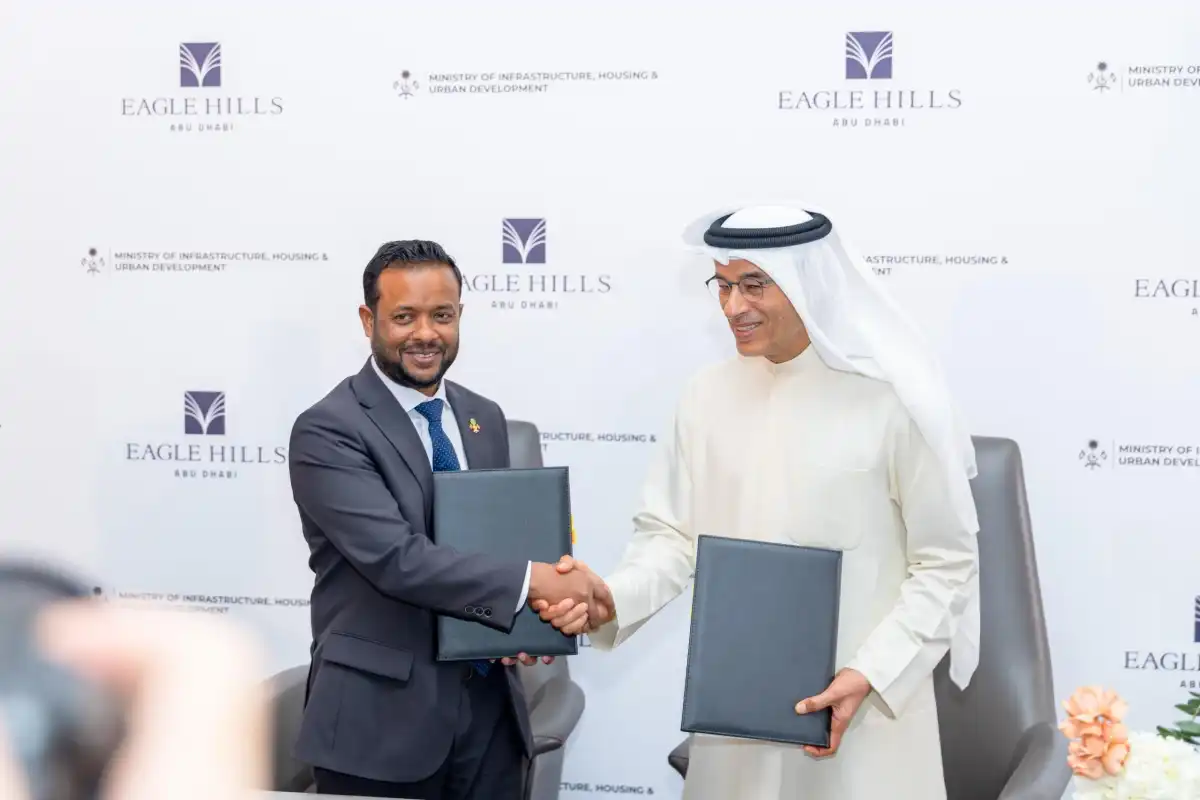
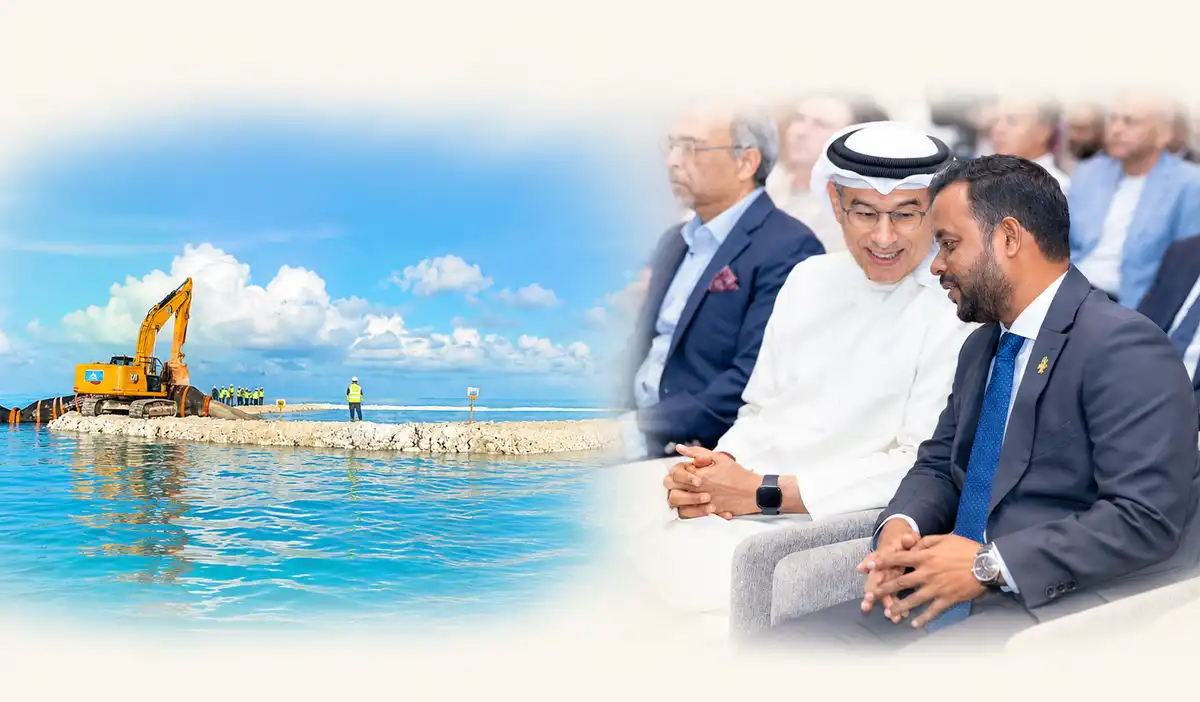
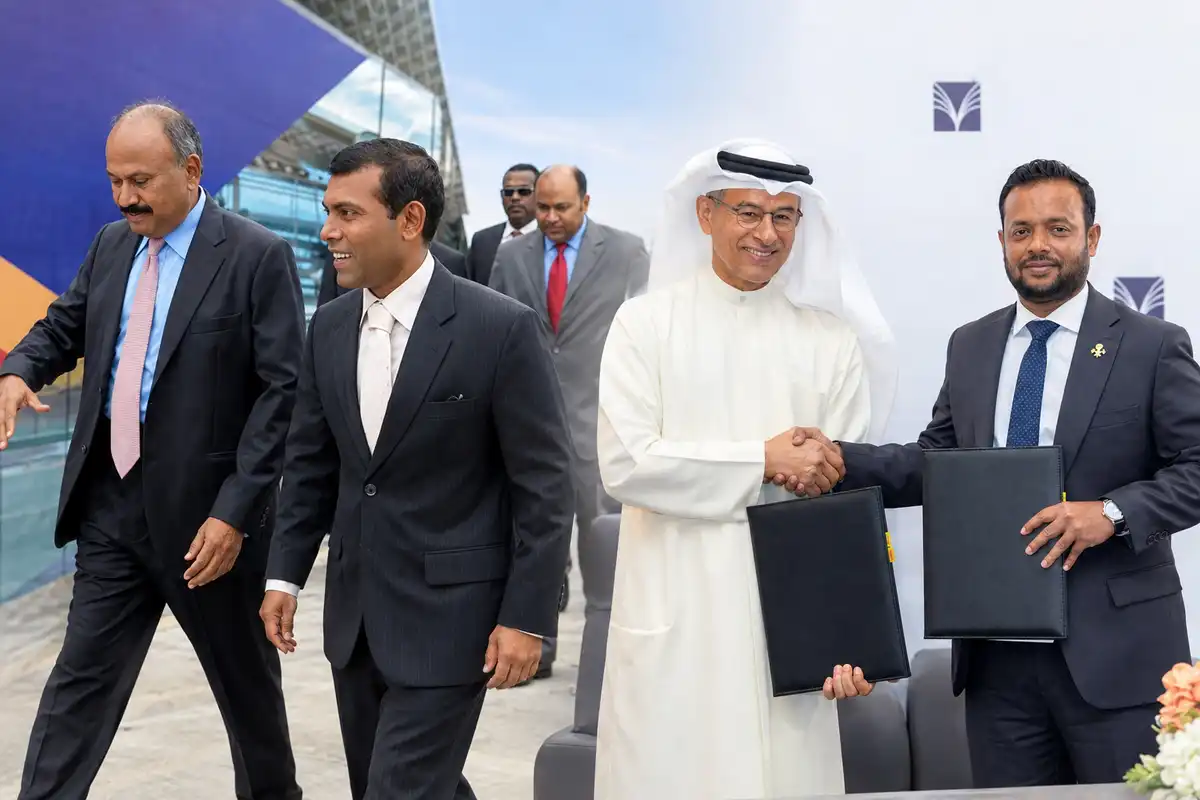
The Maldivian government and UAE-based Eagle Hills have signed an agreement to develop a marina in Ras Malé | Raajje MV
Stepping onto foreign soil frequently exposes the fragile uniqueness of our tiny island home. A recent journey through Kerala, India, prompted deep contemplation regarding Maldivian geography and heritage, triggering a nagging worry that we take our divine blessings for granted.
Global voyagers spend their entire lives scraping together funds, braving bleak overcast skies and freezing winters, merely to travel thousands of kilometers for a fleeting glimpse of our pristine white shores, clear turquoise seas, and tropical climate.
We, by contrast, open our eyes to this exact marvel every morning. Our surrounding waters, coral systems, and weather patterns are among the supreme gifts Allah SWT granted to this homeland.
For this reason, willingly parting with any fragment of our territorial legacy requires fierce scrutiny over what is surrendered, the exact duration of the handover, and the long-term fallout awaiting us.
Echoes of cannon fire and the guises of modern subjugation
Our past proves that foreign interests have endlessly coveted these atolls. Back in 1752, soldiers under the command of Ali Raja of Cannanore swept in from the Malabar Coast to seize Malé City, dragging our monarch into captivity and running their own administrative machinery in our capital.
They never departed out of goodwill. The local populace waged war against the invaders, rallying behind Muleege Dhon Hassan Manik, later remembered as Dhon Bandaarain. Through armed resistance, the islanders routed the colonial occupation and reclaimed self-rule after roughly four months of foreign domination.
While tying an eighteenth-century Malabar potentate to the contemporary Indian state is unfounded, and zero proof suggests modern India seeks to annex our territory like it did with Sikkim in 1975, the central lesson remains pressing.
The strategic weight of our archipelago dwarfs our microscopic physical footprint. In the twenty-first century, outside dominion arrives without gunboats. Subjugation now masquerades as foreign direct investment, critical logistics hubs, harbors, landing strips, suffocating debt traps, speculative residential developments, and binding legal treaties that outlive generations.
Carving up Ras Malé for a century of wealthy strangers
The sovereign administration's recent pact with the Emirati real estate conglomerate Eagle Hills exposes alarming realities that should trouble every citizen. Legitimate international capital is not inherently poisonous, as the country clearly requires outside funding to generate employment, build housing, expand infrastructure, and break away from economic monotony. What demands outrage, however, is the sheer immensity of this scheme alongside the breathtaking timeline of the contract.
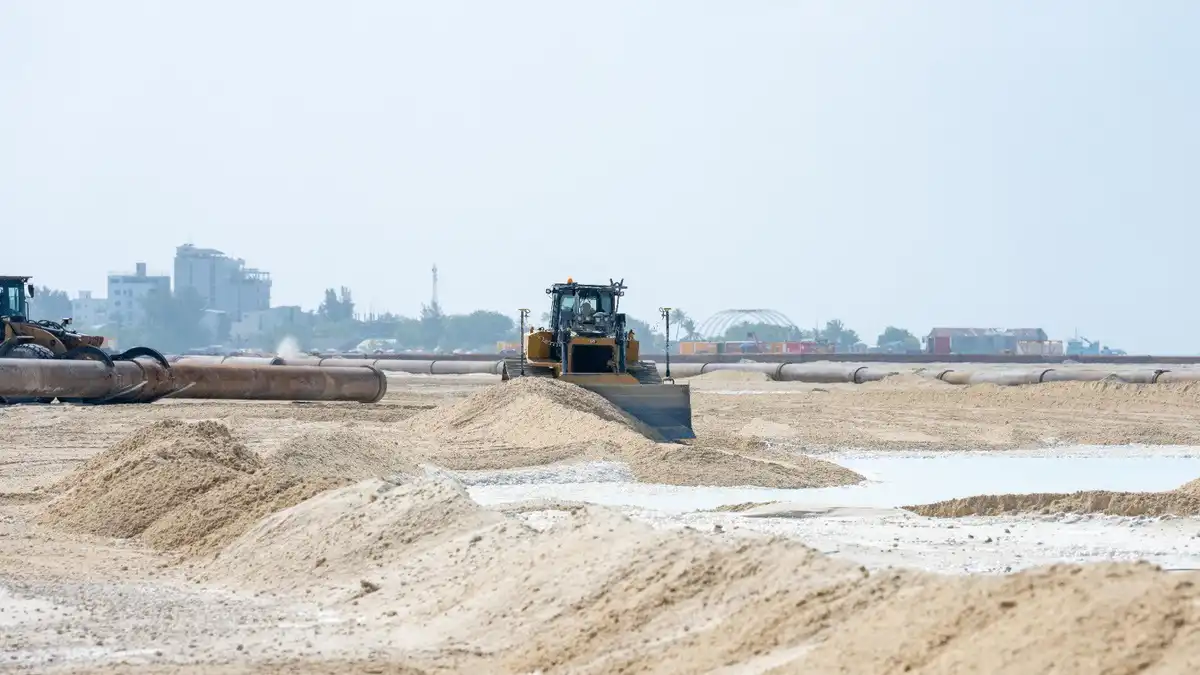
Official channels reveal that roughly 500 hectares of Ras Malé will be converted into a project known as the Maldives Waterfront and Marina. This enclave is designed to feature luxury residences, resorts, hospitality venues, a boat harbor, retail outlets, dining establishments, alongside clinical and schooling facilities, with real estate offered on lease terms reaching up to 99 years. An infant born in our islands today could live an entire lifetime and pass away before that contract reaches its conclusion. This is not a brief five-year arrangement or a 25-year lease; it binds the nation for a complete century. To make matters worse, 500 hectares cannot be dismissed as a typical tourist islet.
Given that the whole Ras Malé reclamation spans 1,100 hectares, the state is handing over nearly half of this artificial landmass. Slipping an undertaking of this magnitude into the public domain via a simple bureaucratic media dispatch is an insult to the public.
Disappearing clauses and behind-the-scenes reassurances
The earliest declarations from Eagle Hills indicated that whenever an occupant sold or bequeathed a property to an heir, a fresh 99-year countdown would initiate. This absurdity prompted an unavoidable dilemma: if the century-long lease resets with every transaction or inheritance, the land would practically never return to our republic. Only after fiery public outrage erupted did Eagle Hills scrub that toxic clause from their release, an about-face that proves why vigilant public skepticism remains vital.
The state now insists full land titles remain anchored to the Maldivian people, barring foreigners from holding unencumbered ownership, while promising that title reassignments will require strict official background checks and executive clearance.
However, these defensive statements appeared exclusively after citizens expressed profound alarm. Because the text of the transaction remains shrouded in secrecy, the public has zero means to verify these claims.
Spoken words and verbal pledges count for nothing without an unredacted legal contract, particularly when dealing with massive expanses of territory bound for the next hundred years.
Counting golden eggs while the contract stays locked
Officialdom is eager to tout the perceived windfalls of the enterprise, insisting it will unlock thousands of occupations, pour billions of foreign currency into our economy, and swell state coffers.
Authorities declare the treasury will collect ten percent of the parent company's gross intake and four percent of overall deal transactions, layered on top of regular tax obligations.
They also assure that this project bypasses sovereign loan guarantees, adds zero public debt, and grants no exceptional fiscal exemptions.
Such financial yields could indeed be enormous. Yet if the arrangement is truly a miraculous triumph for the nation, operating behind closed doors makes no sense. Revealing the core provisions of the deal would immediately calm public skepticism.
Maldivians are left asking critical questions that deserve concrete answers:
- Who possesses ultimate governing authority across this reclaimed territory?
- What specific profiles or entities qualify to acquire these extended leasehold plots?
- What legal mechanics govern subsequent property sales?
- What protocols dictate the inheritance of these leases?
- Can massive corporate entities monopolize large swaths of the real estate?
- Can those purchasing corporations subsequently be flipped to foreign interests?
- What occurs if the parent holding company running the venture undergoes a corporate buyout?
- Will our legal framework be compelled to protect the civic entitlements of non-Muslim dwellers?
- What concrete process unfolds the very second the 99-year umbrella pact concludes?
- What does our country actually take home in exchange for surrendering such a monumental piece of geography?
Posing these inquiries is not an assault on the United Arab Emirates, nor is it an obstruction of national progress. Any self-respecting sovereign territory must demand these answers when preparing to alienate vital soil across generations.
Looking beyond wealth to protect fragile shores
The modern UAE cannot be viewed as a mere deep-pocketed regional financier. It operates as an aggressive global actor wielding economic and military leverage across the Middle East, the Red Sea, the African continent, and the broader Indian Ocean. Welcoming Gulf investment should not trigger knee-jerk panic, but our leaders must wield the same rigorous legal shields that great powers employ whenever parting with critical land to outside sovereign forces.
That unyielding standard must apply across the board, whether capital flows from Abu Dhabi, New Delhi, Beijing, European capitals, or Washington. This is an issue of unvarnished national survival, institutional transparency, and domestic defense.
The true worth of these atolls defies balance sheets. Land in our archipelago is an irreplaceable, finite commodity.
Our barrier reefs, quiet lagoons, and coastal sandbars cannot be manufactured infinitely. Pumping sand over reefs fundamentally transforms delicate ecosystems that took millennia to stabilize.
By signing away sovereign jurisdiction over geographically crucial land across multiple generations, future leaders and coming generations of Maldivians will be forced to shoulder the consequences of deals they never sanctioned.
There is only one Maldives on this planet. Even Mohamed Alabbar, the Chairman of Eagle Hills, openly acknowledges this reality. When unveiling the initiative, he observed that our archipelago showcases an incomparable natural allure that the entire world lusts after, remarking to foreign media outlets that international buyers will happily pay exorbitant sums to claim a piece of our paradise.
Maldivians must show equal reverence for their own birthplace. When past generations stood watch over these atolls, they were not calculating billion-dollar developments or erecting skyscrapers. They simply understood the land belonged to them and their posterity.
Safeguarding the republic in an era of signatures
Back in 1753, defending the homeland required swords, muskets, and shed blood to drive an occupying garrison out of Malé. In 2026, the defense of the nation requires an entirely different armory. Independence is guarded through robust domestic institutions, an uncompromising People’s Majlis, bulletproof legislation, stringent conservation policies, transparent governmental processes, and the vigilant oversight of autonomous watchdog panels. It is preserved when investigative journalists ask relentless questions and everyday people demand to inspect every clause signed in their name.
The argument is not that Eagle Hills must be blocked from investing in our economy. The demand is straightforward: Maldivians possess the absolute right to inspect the exact terms governing the century-long transfer of their precious territory.
Make the primary articles of the agreement public. Document the legal protections. State unequivocally what occurs when the 99 years expire. Detail the conditions of property transfers, and prove mathematically what the public gains from this massive compromise. The state must demonstrate that this project leaves our children with genuine advantages rather than stripped opportunities. True economic growth should elevate the generational patrimony we pass down, not function as the mechanism that slowly liquidates it.
Centuries before these islands were tagged with multi-billion-USD price tags, our ancestors knew their priceless value, laying down their lives and their souls to shield our home from foreign conquerors. We must honor that same reality. The Maldives is not a commercial lot waiting for the highest bid, nor an open prize to be granted to whoever guarantees the fastest construction timelines under the guise of progress.
This is our homeland, and foundational choices regarding its survival must never be finalized behind the backs of those who are meant to inherit it.