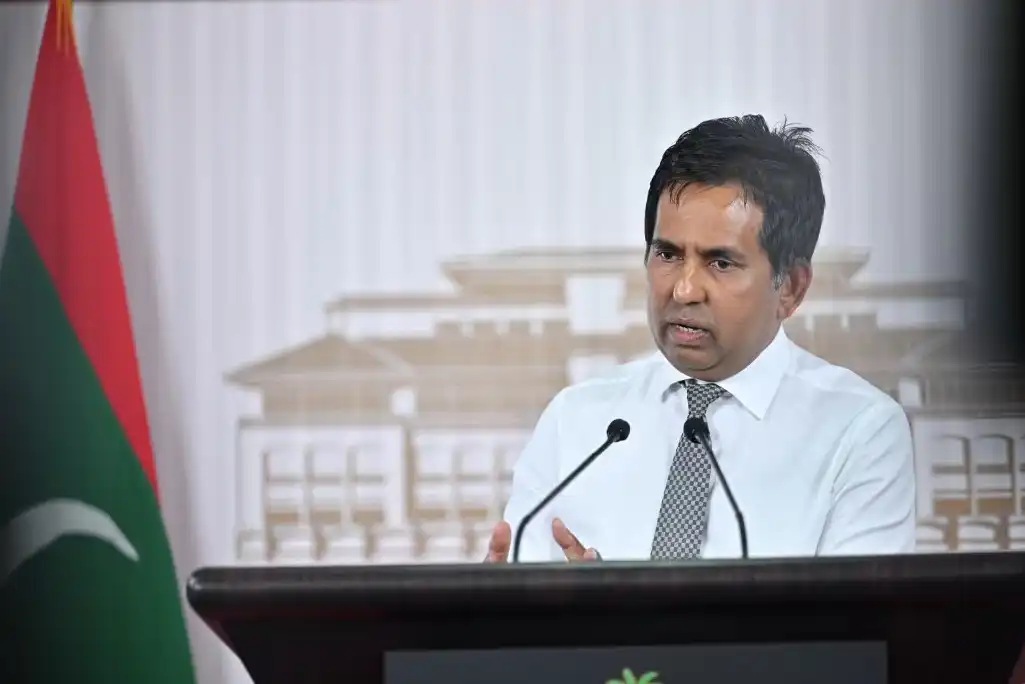
USD rate will not decrease, and it is not something the government can control: Champa Uchu
29 ޖުލައި 2026 | ބުދަ 11:18Prominent businessman Mohamed Moosa has stated that the value of the Maldivian Rufiyaa has depreciated due to an excess of local currency in circulation and a shortage of US dollars. He emphasized that the government cannot directly control the exchange rate, noting that the only viable solution to stabilize the currency is to reduce the volume of Rufiyaa currently circulating in the market.
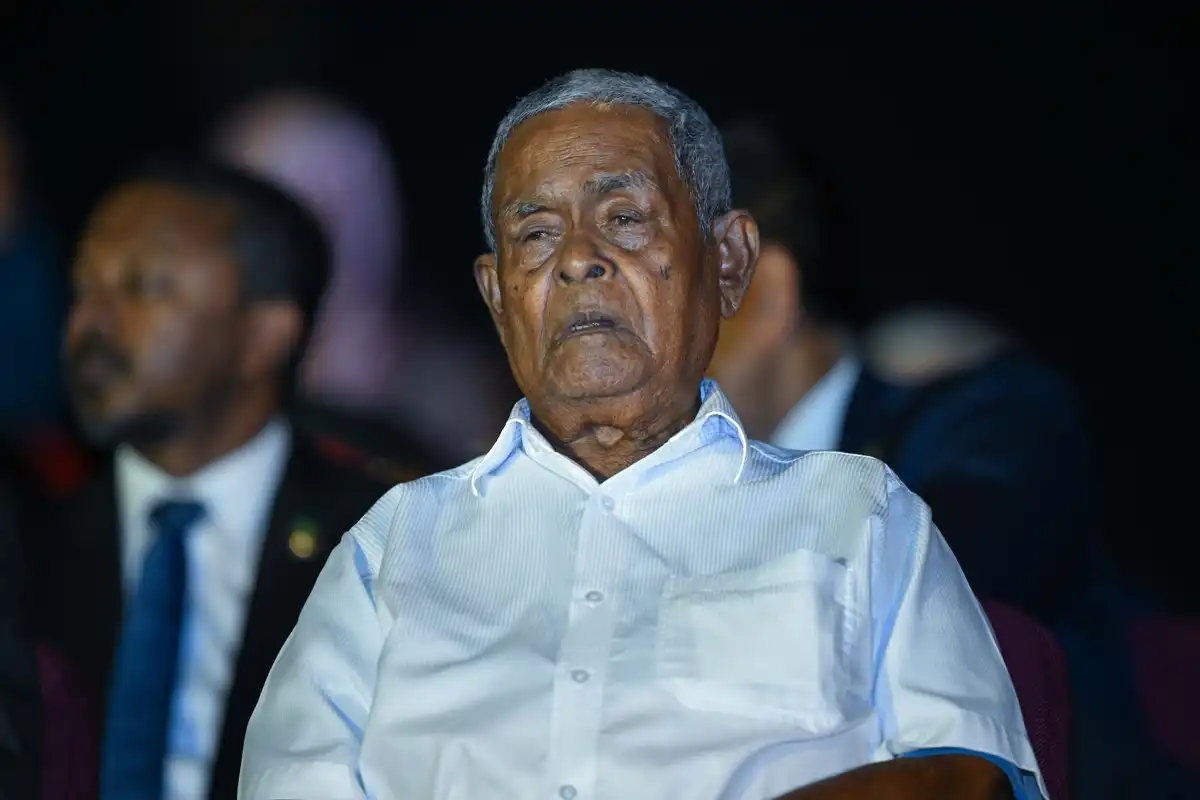
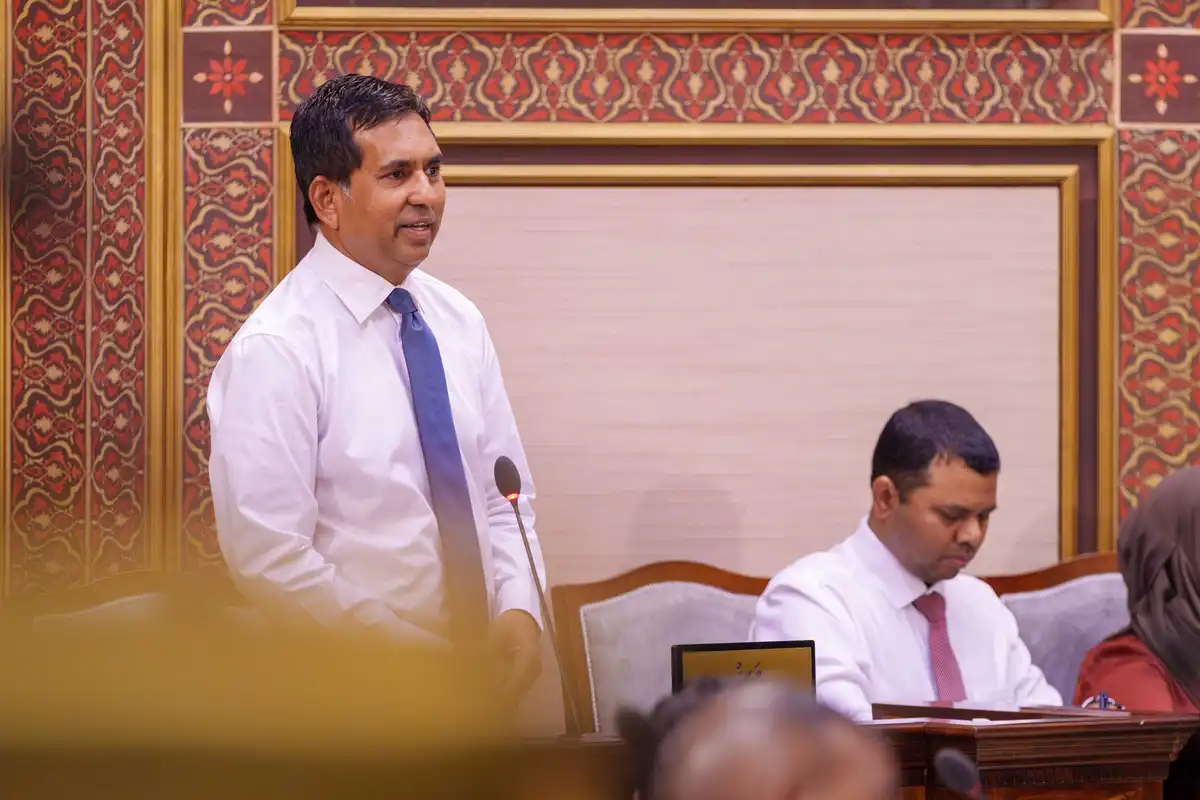
Champa Mohamed Moosa (N.I.I.V.) at the inauguration ceremony of the new terminal at Velana International Airport. | President's Office
Prominent Maldivian businessman Champa Mohamed Moosa (Uchu) has stated that the value of the dollar will not decrease in the Maldives, asserting that this is an issue beyond the government's control.
Speaking to RaajjeTV regarding the rising exchange rate of the US dollar, Moosa, recipient of the Order of the Distinguished Rule of Izzuddin and the Order of the Distinguished Rule of Muleege, stated that the primary reason for the dollar's appreciation is the devaluation of the Maldivian Rufiyaa caused by an excessive amount of local currency in circulation.
"When something becomes overly abundant, its value drops and it becomes worthless. This is exactly what is happening to the Maldivian currency"Mohamed Moosa, who has dedicated his entire career to various economic endeavors.
Moosa stated that reducing the value of the dollar is not something the government can achieve, noting that no government in the region has been able to accomplish such a feat.
Citing examples, Moosa highlighted the rising exchange rates of the US dollar in India, Bangladesh, and Sri Lanka.
Moosa stated that while a significant amount of local currency has been injected into the economy to fund ongoing projects, salaries, and government operations, the circulation of US dollars in the market has simultaneously declined.
"Dollar availability has declined while the supply of Maldivian Rufiyaa has increased significantly; the outcome of this situation is now clear"Mohamed Moosa, a key figure who played a pivotal role in the development of the Maldivian tourism industry.
"Look at the current situation regarding the rising cost of goods; it is not that prices are simply increasing, but rather that the value of our currency is declining. This is why what could previously be purchased for one Rufiyaa is no longer available at that price"Mohamed Moosa, a prominent businessman who has self-funded numerous development projects across the Maldives.
He further stated that the only viable measure the government can take in this situation is to reduce the amount of Maldivian Rufiyaa in circulation, adding that he does not believe there is much else the administration can do.
Mohamed Moosa, who played a pivotal role in the establishment of the Maldives Finance and Leasing Company and the Commercial Bank of Maldives, further stated that the value of the dollar will continue to rise and that there is little the government can do to bring the rate down.
Under the amendments to the Foreign Exchange Act, which were implemented abruptly in January last year without significant consultation with tourism service providers, foreign currency-earning businesses—including resorts—are required to exchange either $500 per tourist or 20 percent of their total revenue into Maldivian Rufiyaa through the banks.
President Dr. Mohamed Muizzu and senior government officials maintain that the black market exchange rate for the US dollar will decline once tourism businesses begin exchanging their foreign currency earnings through the banking system.
Despite the implementation of legal amendments over a year and a half ago, the value of the US dollar on the black market continues to rise almost daily. While the Maldives Monetary Authority maintains an official exchange rate of MVR 15.42, the dollar is currently trading at MVR 21.80 on the black market.
On the other hand, despite mandating tourism businesses and other major dollar-earning enterprises to exchange a portion of their foreign currency revenue, the government's exchange policy has failed to resolve the ongoing challenges businesses face in accessing US dollars at the official rate.