
Public warned of scam soliciting money through fraudulent Booking.com refund claims
2 ޖޫން 2026 | އަންގާރަ 12:05The Maldives Police Service has issued a public warning regarding phishing links sent under the guise of Booking.com refund offers to steal card information. To prevent falling victim to such scams, the Anti-Scan Centre urges the public to never share card details or OTPs with any party, to avoid clicking on suspicious links, and to verify all information through official applications. Authorities further emphasized that legitimate companies will never send links requesting sensitive card information to process refunds.

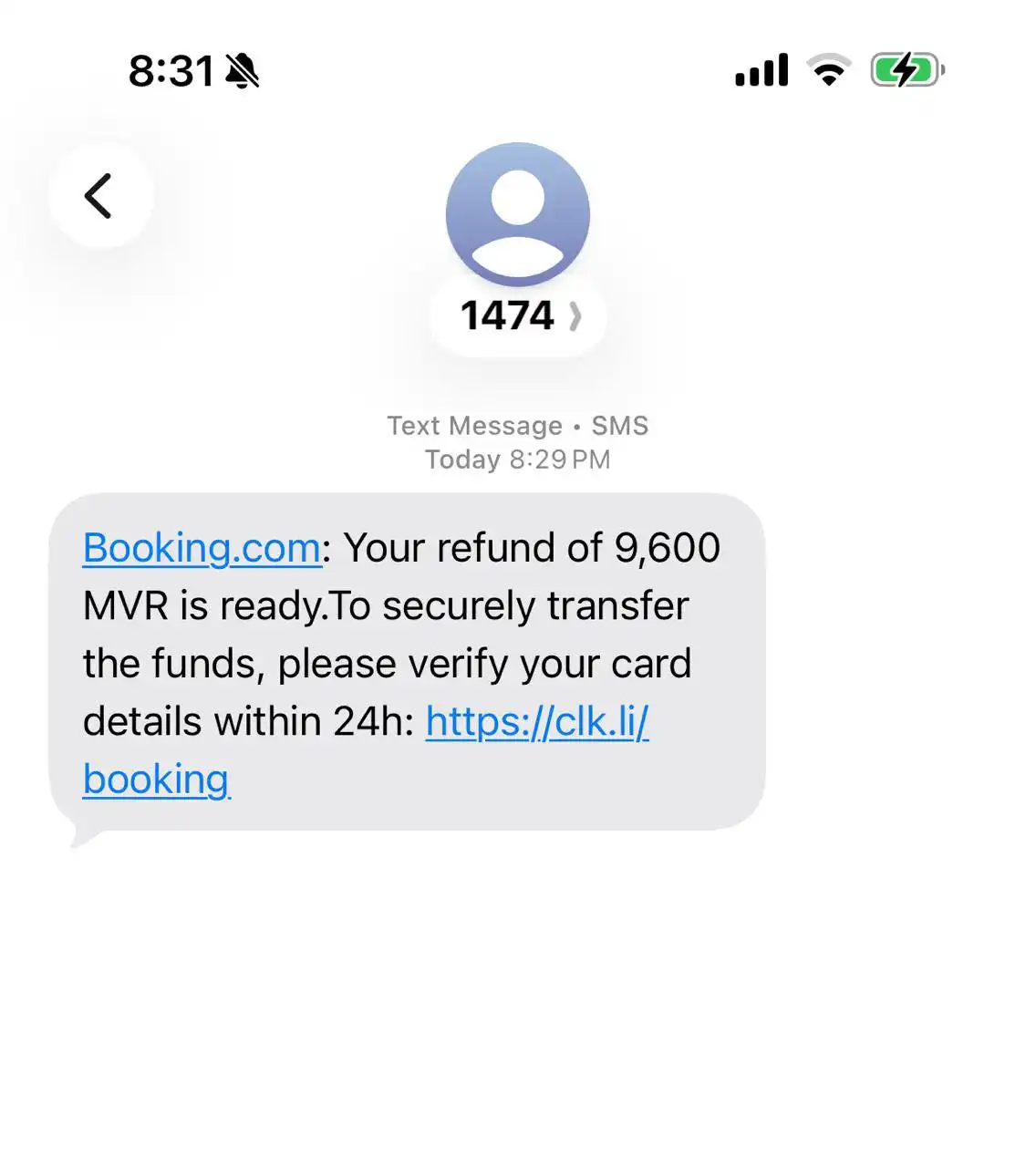
Scam messages circulating under the guise of Booking.com refunds to defraud public. | Maldives Police Service
The Maldives Police Service's Anti-Scam Centre has issued a warning regarding fraudulent messages being sent under the guise of Booking.com to swindle money from unsuspecting individuals.
The center stated that these fraudulent messages, sent under the guise of Booking.com, are phishing attempts by scammers to steal card details. The messages falsely claim to offer a refund as a tactic to deceive victims into clicking malicious links.
Phishing links are deceptive URLs sent by scammers who impersonate banks or reputable companies to trick individuals. These links are designed to appear authentic while concealing the sender's true identity. Explaining how to identify such fraudulent links, the Anti-Scam Center noted that instead of the official Booking.com URL, the message contained a shortened link. The Center further highlighted that the message employed pressure tactics, claiming that information must be shared within 24 hours to create a sense of urgency.
The Anti-Scam Centre has stated that no legitimate company will send links requesting sensitive card details—such as the card number, expiry date, or security code—under the guise of issuing a refund.
The Anti-Scam Centre has urged the public to exercise caution and refrain from clicking on suspicious links to protect themselves from fraudulent activity. Furthermore, the center advised against sharing One-Time Passwords (OTPs) or bank card details with any third party. The center also encouraged individuals to verify the authenticity of any requests by accessing official applications or legitimate websites directly.
The center has urged the public to report any suspicious activity to the police without delay, whether it is noticed during or after a financial transaction. The center further emphasized that prompt reporting is crucial in preventing others from falling victim to such scams and significantly increases the chances of recovering lost funds.
The police have issued similar warnings in the past. Authorities continue to urge the public to remain vigilant and refrain from responding to social media advertisements promising easy money. Furthermore, the police advised against sharing any information that could facilitate or encourage such fraudulent activities. The public is encouraged to report any suspicious activity by contacting the National Emergency Call Center at 911 or by calling 125.