Supreme Court rules High Court can proceed with STELCO’s appeal against disclosing details of newly hired and dismissed employees
7 މެއި 2026 | ބުރާސްފަތި 10:41The Supreme Court has ruled that STELCO may proceed with its High Court appeal seeking to overturn an Information Commissioner’s Office (ICOM) order to disclose details regarding its newly recruited employees. Although ICOM had requested the High Court to dismiss the case on the grounds that the identity of the original information petitioner could not be verified, the High Court ruled that ICOM must respond to the merits of the case. A three-judge bench of the Supreme Court unanimously upheld this decision, concluding there were no legal grounds to overturn the lower court's ruling.

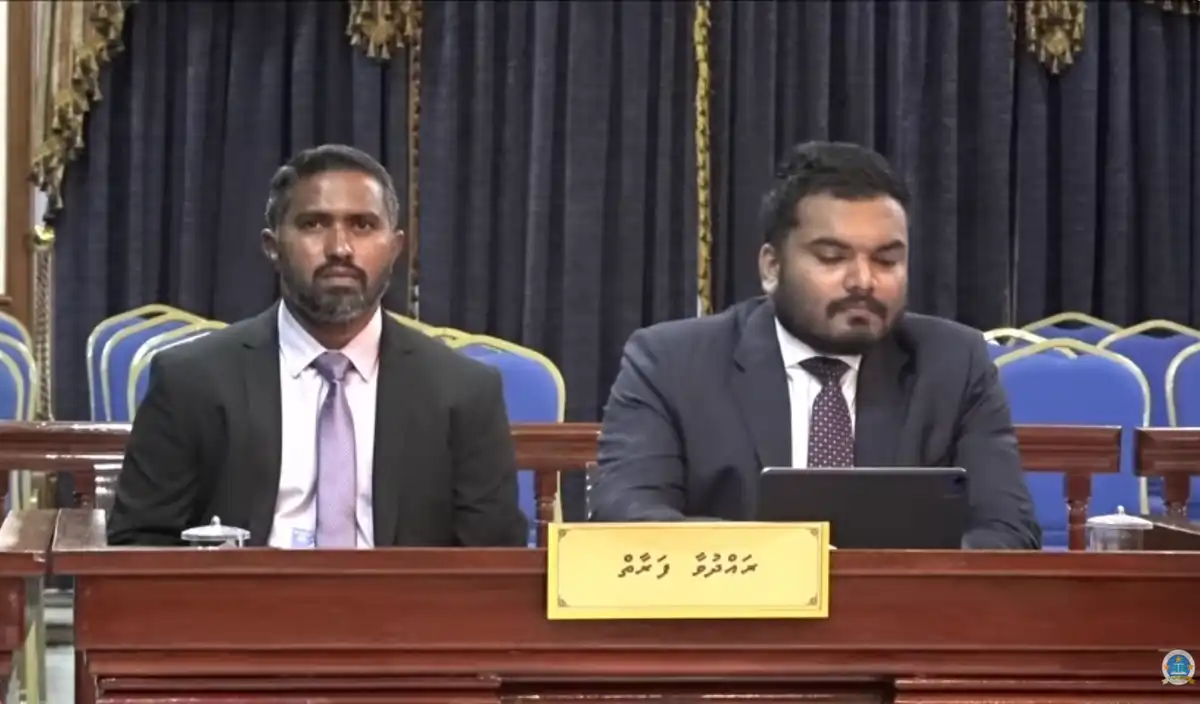
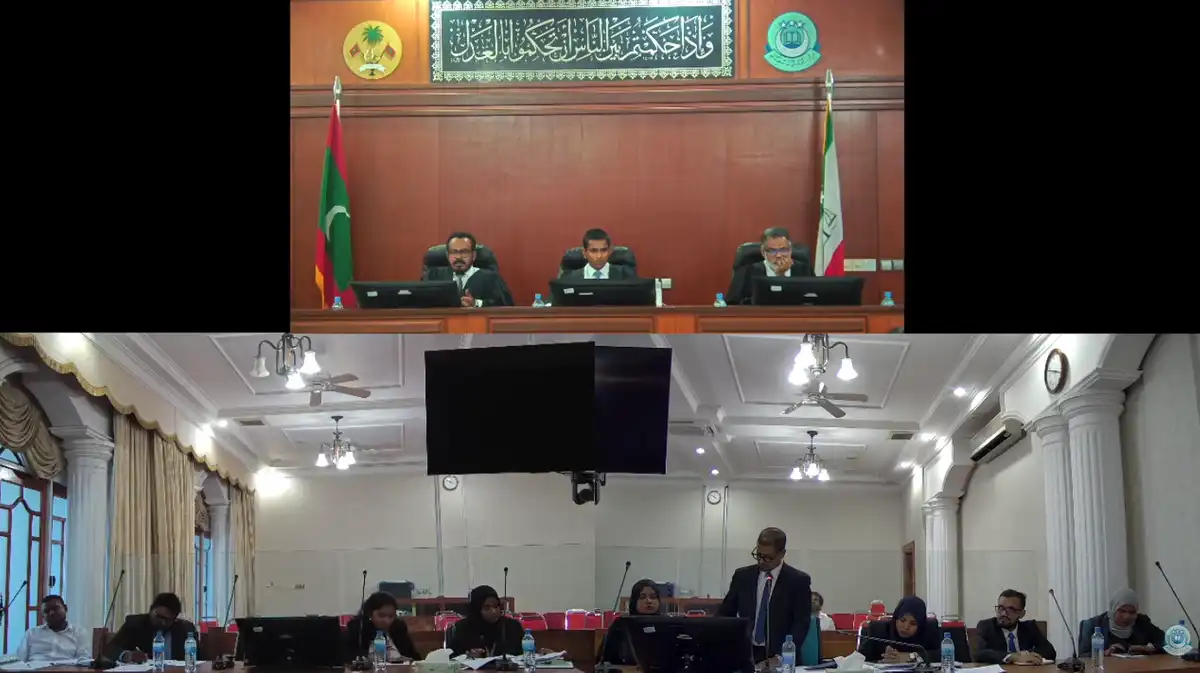
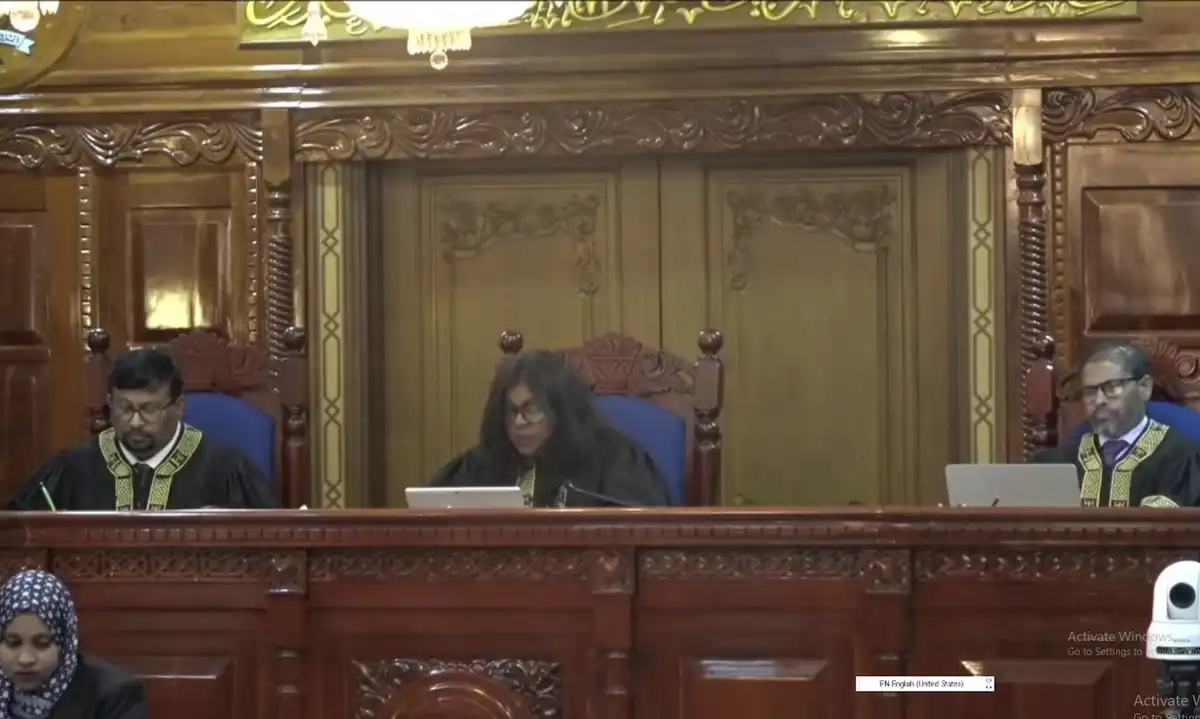
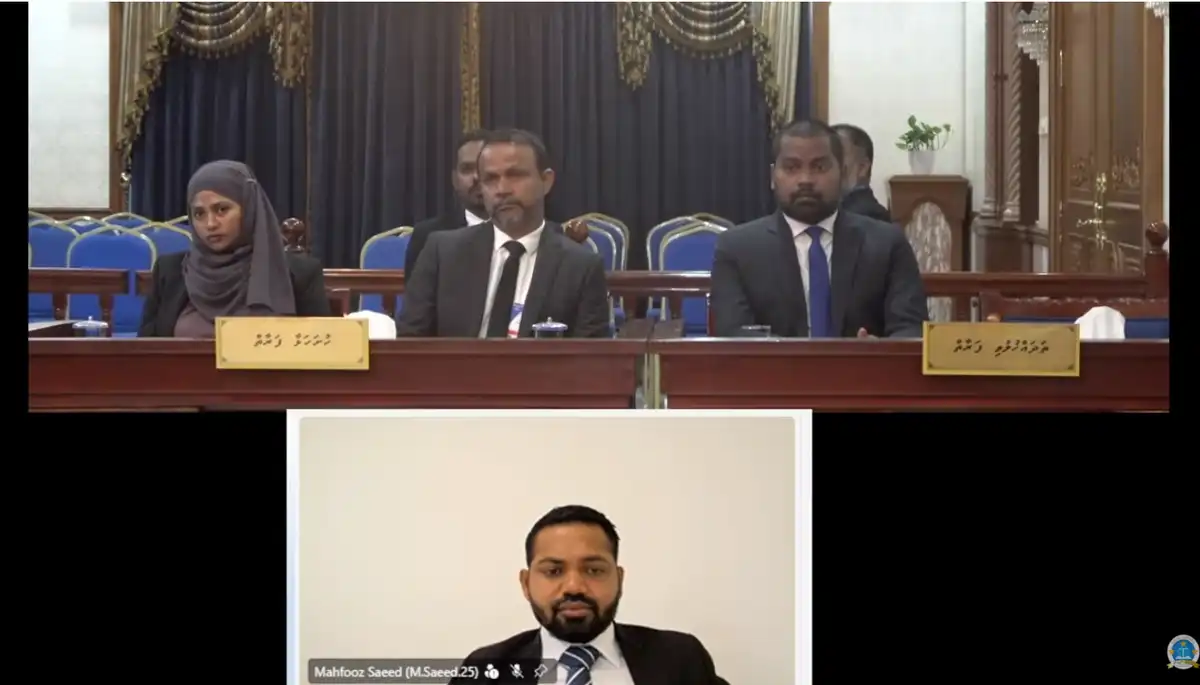
The Supreme Court has held a hearing regarding a case filed by STELCO to overturn a ruling requiring the company to disclose details of its newly hired and dismissed employees. | Raajje MV
The Supreme Court of the Maldives has ruled that it will proceed with a case filed by the State Electric Company (STELCO), in which the utility provider seeks to establish that it is not required to disclose the number of employees hired and dismissed during the period surrounding the recent parliamentary elections following the current administration's inauguration.
The information requested from the Information Commissioner’s Office regarding this case includes the total number of employees appointed to STELCO between November 17, 2023, and July 3, 2024. The request specifically seeks their names, salaries, and allowances, as well as their designated work locations and the total number of employees terminated from the company during the same period.
During a hearing held by the Information Commissioner’s Office (ICOM) in September 2024 regarding this matter, STELCO raised a procedural objection. In its objection, the company argued that the identity of the petitioner could not be verified. STELCO further contended that the case should not have been accepted for review, as the specific individual who filed the complaint remains unconfirmed.
However, the Information Commissioner’s Office (ICOM) stated that the procedural point raised by STELCO does not constitute a legal barrier to proceeding with the complaint.
Consequently, STELCO appealed the decision to the High Court, seeking to have the ruling overturned.
In this case, the Information Commissioner's Office (ICOM) raised a procedural point before the High Court. ICOM argued that the appeal filed by STELCO is baseless and constitutes an abuse of process, submitted without any reasonable grounds. Consequently, ICOM filed a procedural objection, requesting the court to dismiss the case submitted by STELCO.
However, the High Court ruled that there are no grounds to dismiss the case based on the arguments presented by the Information Commissioner's Office (ICOM). The court further determined that ICOM must respond to the lawsuit filed by STELCO in accordance with the Civil Procedure Act.
Consequently, following ICOM’s appeal of the decision to the Supreme Court, the top court ruled in favor of STELCO on Thursday. The court determined that there were no grounds to overturn the High Court's previous ruling.
The Supreme Court bench presiding over the case consisted of Justice Husnu Al Suood, Justice Dr. Mohamed Ibrahim, and Justice Mohamed Saleem.