Art of saying nothing with more people on payroll
1 މެއި 2026 | ހުކުރު 13:16The Muizzu administration is facing criticism for declining press freedom and a lack of transparency regarding government operations. Officials have deflected responsibility for the Maldives falling rank on the World Press Freedom Index while reportedly obstructing RTI requests. Furthermore, the government refuses to disclose the number of political appointees on the state payroll. This persistent secrecy and avoidance of accountability continue despite frequent changes in spokespeople.

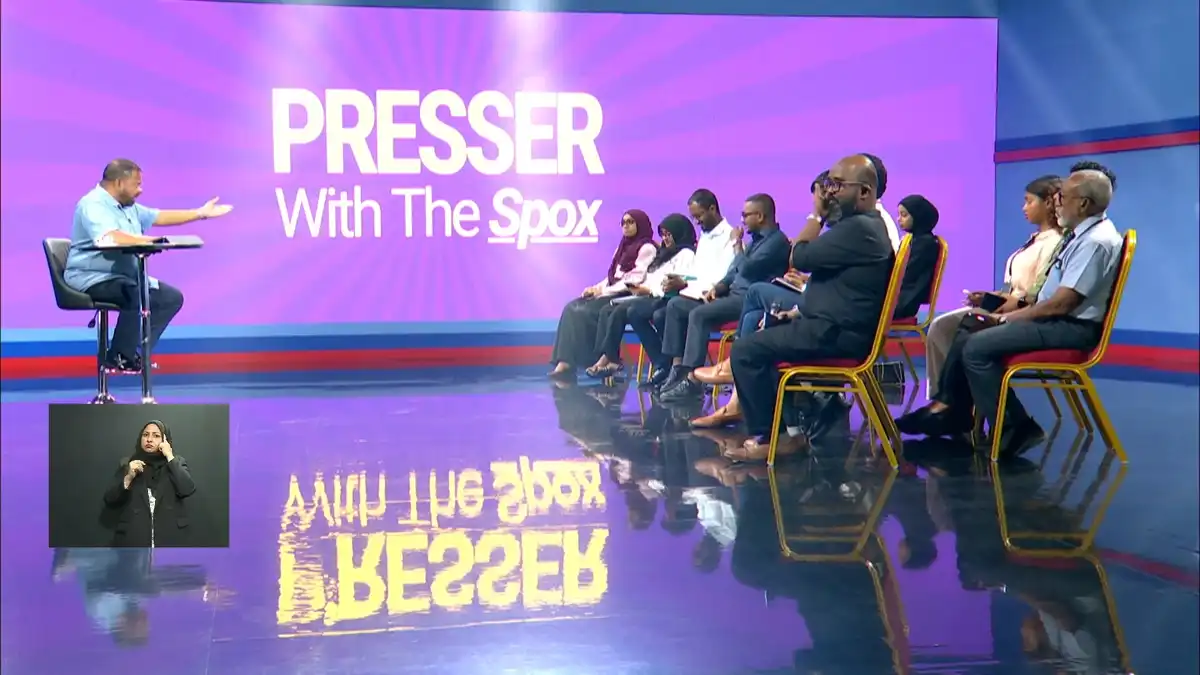
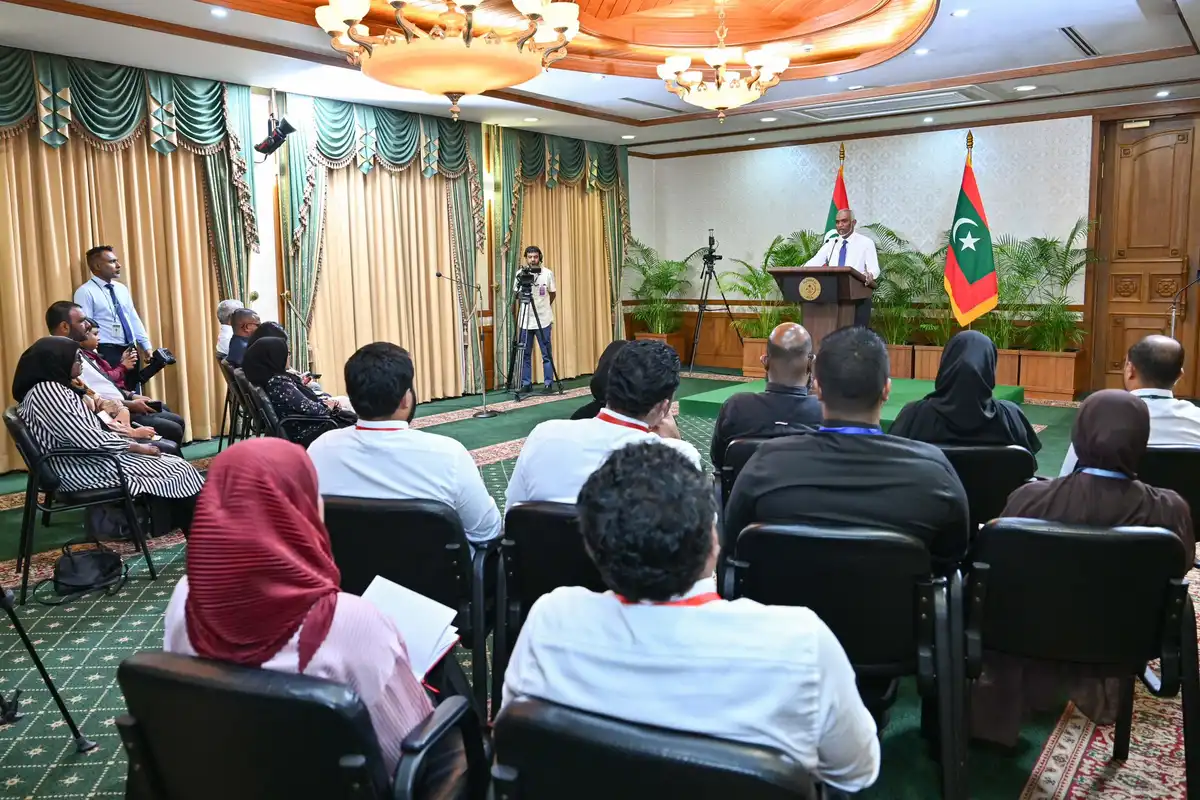
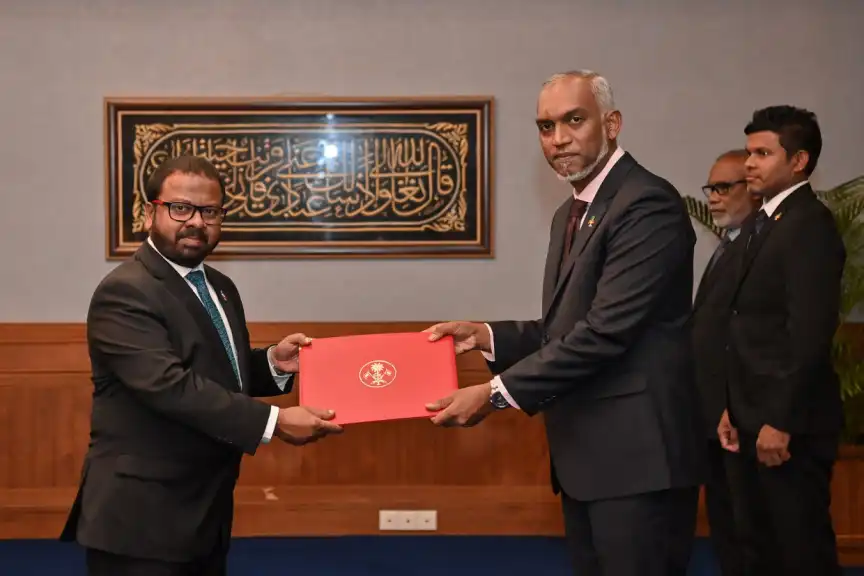
Chief Government Spokesperson Mundhu during a press conference. | Raajje MV
The cornerstone of any functioning democracy is the inherent right to information, with accountability serving as a non-negotiable duty toward the voting public. Yet, from the very first day the administration of Dr. Mohamed Muizzu took office, we have watched a tireless commitment to dodging that exact responsibility. This predictable theater was on full display yet again during the latest press briefing.
Deflecting truth on global rankings
At Thursday’s presser, government’s Chief Spokesperson Mohamed Hussain Shareef was confronted with a blunt inquiry regarding the plummeting status of the Maldives on the World Press Freedom Index. He was asked point-blank if the Muizzu administration’s specific policies and its documented treatment of the press contributed to this embarrassing slide. It was a simple question that deserved a simple answer.
Naturally, rather than offering anything resembling clarity, the spokesperson opted for a narrative detour to escape any sense of responsibility. He audaciously argued that the falling rank wasn't just a result of government failure. To imply that the state’s behavior has no impact on press freedom is a staggering dismissal of the daily reality faced by reporters, media experts and the public over the last several years.
RTI black hole and performative transparency
The primary mechanism for transparency: the Right to Information (RTI) request, has been rendered nearly useless through constant delays and a total lack of feedback. It has become the norm for questions sent to state bodies to vanish into a void of silence. While we see cabinet press conferences being staged and statements being recited for the benefit of the cameras, the actual substance of journalists' questions is consistently ignored. What we are left with is not a culture of openness, but a masterclass in political theater.
Hiding the tab for political favors
Another glaring instance of this secrecy is the Muizzu administration’s stubborn refusal to reveal the precise count of political appointees. This isn't a matter of classified national security; it is a matter of jobs created through the tax contributions of the people. Maldivians are entitled to understand the scale of the political payroll, the way state funds are being exhausted and whether these roles are born of actual need or merely given as rewards for political loyalty. By staying silent on such a basic issue, the government is doing nothing but fueling public doubt.
New spokespeople, same old secrets
Maldives is a tight-knit country where the maneuvers of the state are easily spotted by both the local population as well as the press and the global community is watching these shifts just as intently. While the individuals tasked with speaking for the government seem to be swapped out as often as the weather, the core strategy never evolves regardless of the fresh faces or the grand titles. The truth is still being buried and real accountability is nowhere to be found.