Conveniently elastic boundaries of truth under the Muizzu administration
5 މެއި 2026 | އަންގާރަ 08:00The Muizzu administration is facing criticism for applying a double standard to press freedom by restricting information they once demanded while in opposition. Officials now label investigative reporting as a threat to national security or mere gossip to shield the government from scrutiny. Despite increasing digital harassment and political pressure, the media maintains its essential role in monitoring state authority. Journalists remain committed to transparency and public accountability.

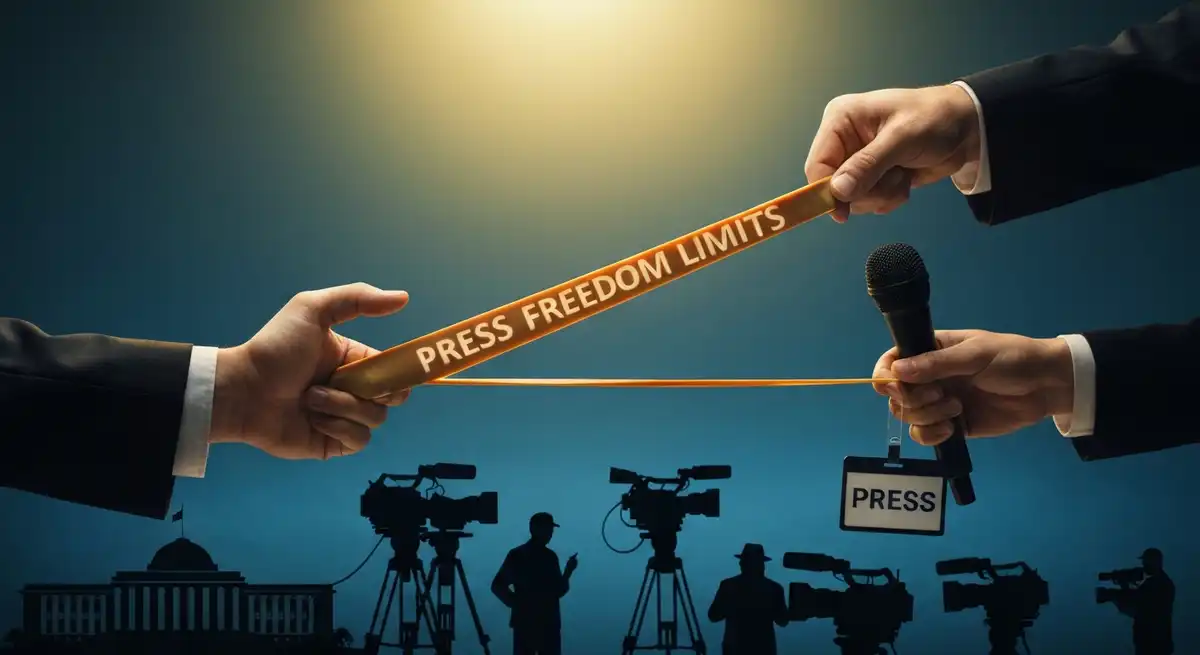
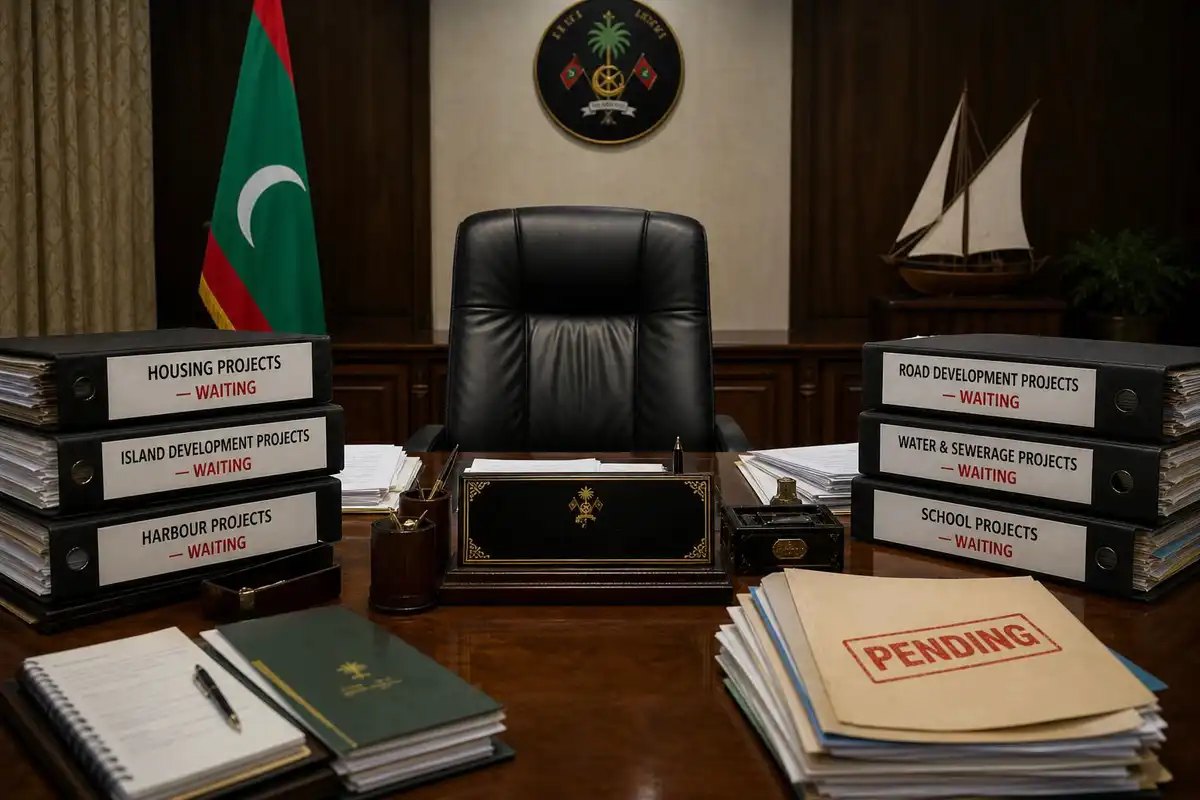
Politicians define the boundaries and limits of journalism as if they were stretching a piece of rubber. | Raajjemv graphics
Journalism is traditionally celebrated as the fourth pillar of the state and the essential lifeblood that sustains both democracy and public consciousness. Despite this lofty status, the debate over where the freedom of the press begins and ends remains a perpetual cycle of disagreement. Under the current leadership of President Dr. Mohamed Muizzu, this conversation has become significantly more heated. In the Maldivian political sphere, it has become painfully obvious that the definition of journalistic boundaries depends entirely on which side of the aisle a politician currently occupies.
Selective vision of power
When individuals hold the reins of political power, they tend to view the freedom of the press through an incredibly narrow and restrictive lens. Interestingly, those same people advocate for an expansive and unrestricted interpretation of those same boundaries the moment they find themselves in the political opposition. While they loudly demand total transparency and the release of all state-held information while out of office, these standards undergo a massive transformation once they take power. What they considered perfectly acceptable reporting just a short time ago is now branded as unacceptable and they have begun constructing hurdles to prevent the media from accessing vital information. This is the grim reality currently playing out before our eyes.
National security or political convenience?
This shift in attitude is most glaring in the language used regarding the disclosure of information and national security. While they were in the opposition, high-ranking officials in the current administration were vocal in their demands that the public see all bilateral agreements and military data. They were the harshest critics of the former administration under Ibrahim Mohamed Solih, accusing him of secrecy regarding deals made with India. However, now that they are the ones in control, they argue that such information must be kept secret to protect national security. This serves as undeniable proof that the limits of journalism are being redrawn simply for political benefit.
From truth seekers to gossip mongers
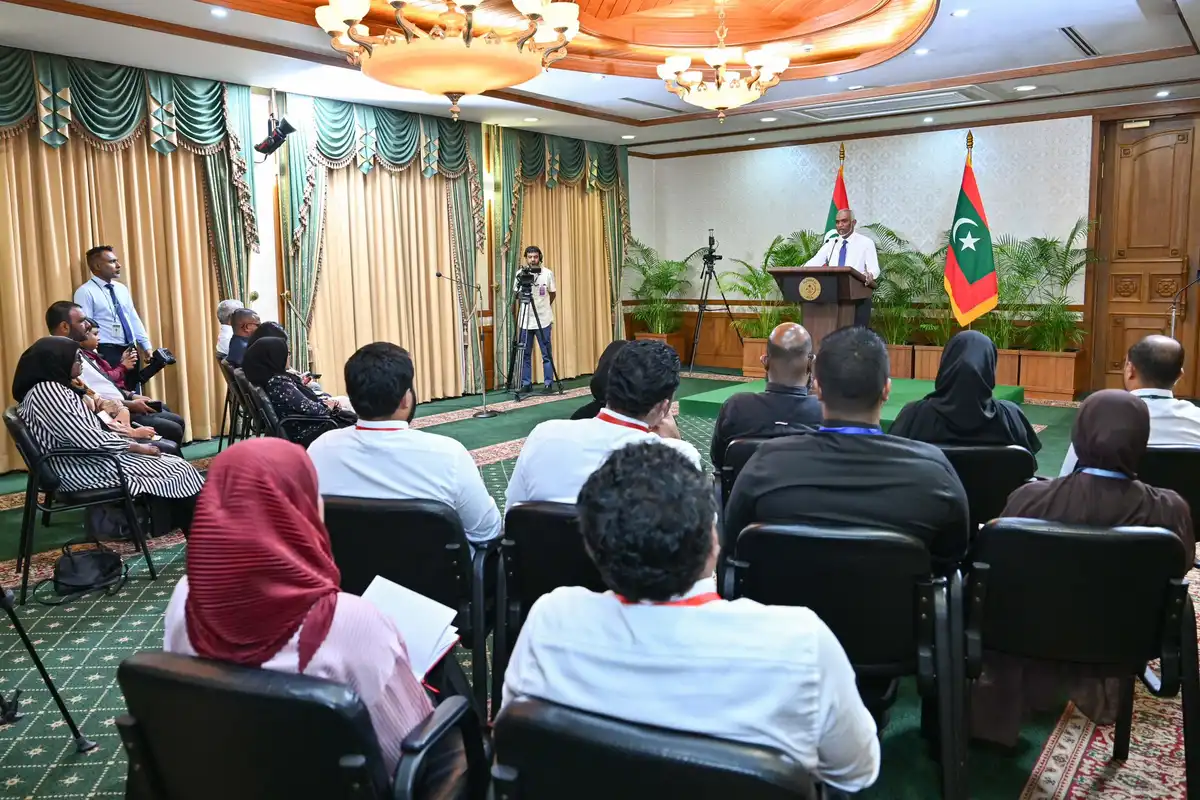
In this environment, the accusations and obstacles thrown at journalists by the Muizzu administration are increasing every day. Rather than providing clear answers to the allegations facing the president, the government spokesperson, Mohamed Hussain Shareef chooses to frame journalists as people who exist only to stir up social discord. To make matters worse, Muizzu has personally dismissed reporters by labeling them as nothing more than purveyors of idle gossip.
Double standard of professionalism
Muizzu and his inner circle now claim that certain questions are off-limits for the president and that certain narratives are better left unpublished. This is a bitter irony, given that these same individuals previously used the media to funnel those exact same questions and accusations toward the Solih administration. At that time, the reporters willing to ask those questions were praised as being professional and courageous. Today, because the administration has changed and they are the ones in power, asking the same questions is suddenly treated as a shameful and improper pursuit.
Digital execution of reputation
Beyond the rhetoric, there are blatant attempts on social media to demand the closure of specific news agencies and to destroy the credibility of individual reporters. Following the release of critical reports, the personal details of journalists are frequently leaked online and past events are dragged up and distorted to create false narratives. These tactics are intended to ruin the reputation of the press in the eyes of the public and to plant seeds of skepticism regarding their work. However, history shows that journalists are not motivated by personal gain.
An unbreakable responsibility
Even though politicians continue to treat the boundaries of the media like a piece of stretching rubber, the actual responsibility of the press remains a commitment to the nation and its citizens. The limits of journalism should never be something that can be manipulated to serve personal or political agendas. It is the fundamental duty of reporters to monitor all three branches of the state to ensure they do not overstep their authority. Regardless of the political pressure they endure, journalists stay dedicated to uncovering the truth and fighting for justice for the people.