Former President Nasheed calls for unwavering commitment to protecting press freedom
3 މެއި 2026 | އާދީއްތަ 09:34Nasheed has expressed concern over the Maldives dropping four places in the World Press Freedom Index, citing an increase in media intimidation and pressure to disclose confidential sources. With the country’s ranking falling to 108th due to political influence and systemic pressures, Nasheed urged authorities to remain steadfast in protecting press freedom. Statistics from Reporters Without Borders (RSF) indicate a decline in the Maldives' overall score, highlighting a troubling impact on editorial independence across the media landscape.

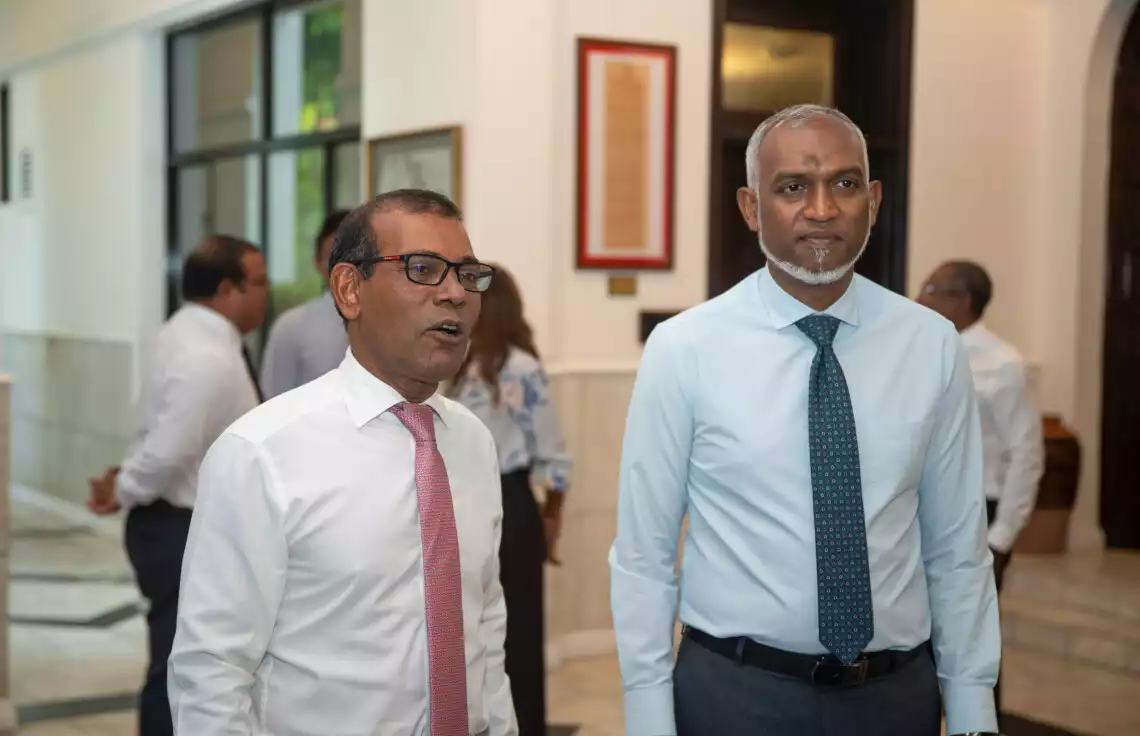
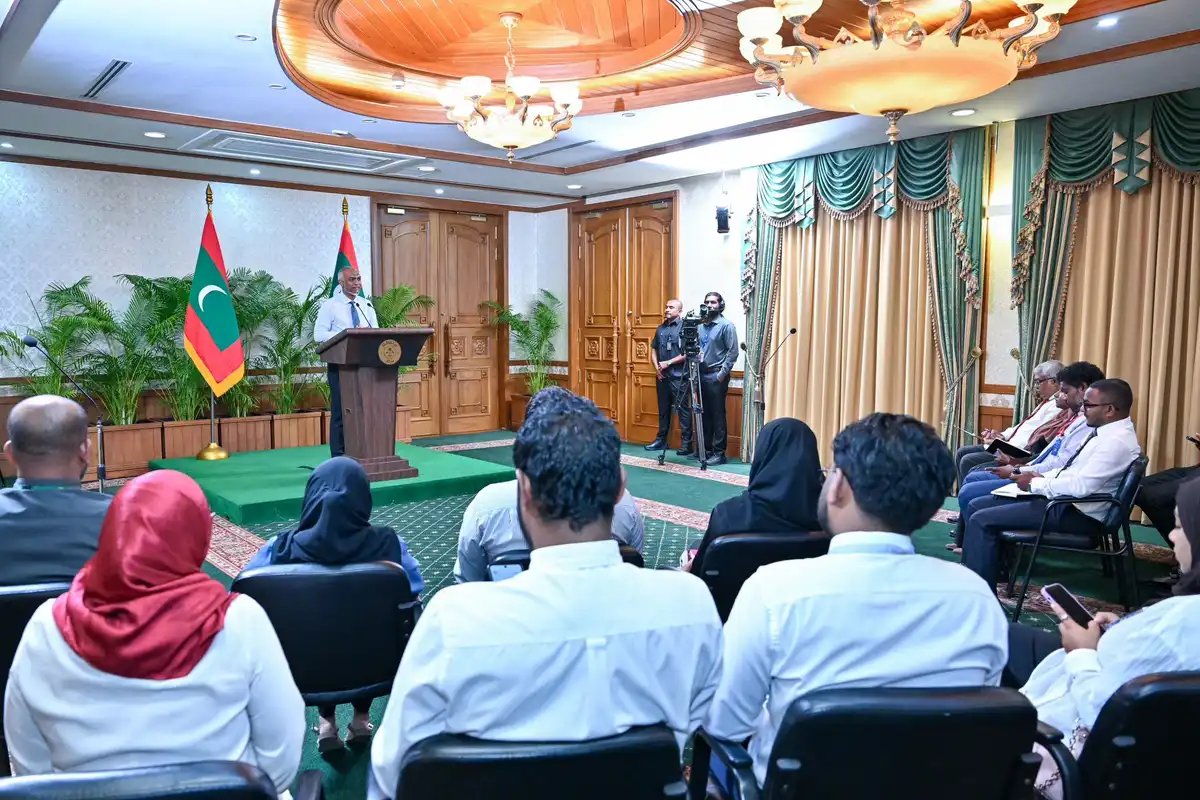
President Dr. Mohamed Muizzu (R) and former President Mohamed Nasheed (L) pictured standing together. | Majlis
Former President Mohamed Nasheed has called for unwavering resolve in the defense of press freedom.
In a post shared on X to mark World Press Freedom Day, Nasheed noted that the Maldives continues to slide down the World Press Freedom Index.
Nasheed stated that forcing the disclosure of sources and using the Media Control Commission as a tool for intimidation has become a common practice. He emphasized that compromising on the protection of press freedom is not an acceptable path forward.
Nasheed’s call comes at a time when the Maldives has slipped four places to 108th in the World Press Freedom Index.
This represents a decline compared to 2025, when the Maldives was ranked 104th.
According to the index statistics, the Maldives' overall score has declined from 52.46 to 49.23. Following this shift, the country's ranking has been negatively impacted across all key indicators used to measure press freedom.
Looking at specific categories, the political indicator score has declined from 123 to 129. In the World Press Freedom Index compiled by Reporters Without Borders (RSF), the political indicator measures the degree of government influence, pressure, and control over media content and the dissemination of news and information.
This index assesses the editorial independence of media outlets, the extent to which state propaganda is promoted, and the obstacles imposed on journalists by political actors. Furthermore, it highlights that the global decline in press freedom is primarily driven by such shifts within the political landscapes of various countries.