A president who discards his own pawns
3 މެއި 2026 | އާދީއްތަ 08:33Muizzu faces criticism for allegedly undermining state institutions and pressuring officials into corrupt acts to serve his political interests. The recent resignation of the EC chief highlights a pattern where compliant officials are used as disposable tools for executive gain. Despite manipulating electoral processes and ballot language, the administration suffered a historic mid-term defeat, further eroding public trust in the government's integrity.


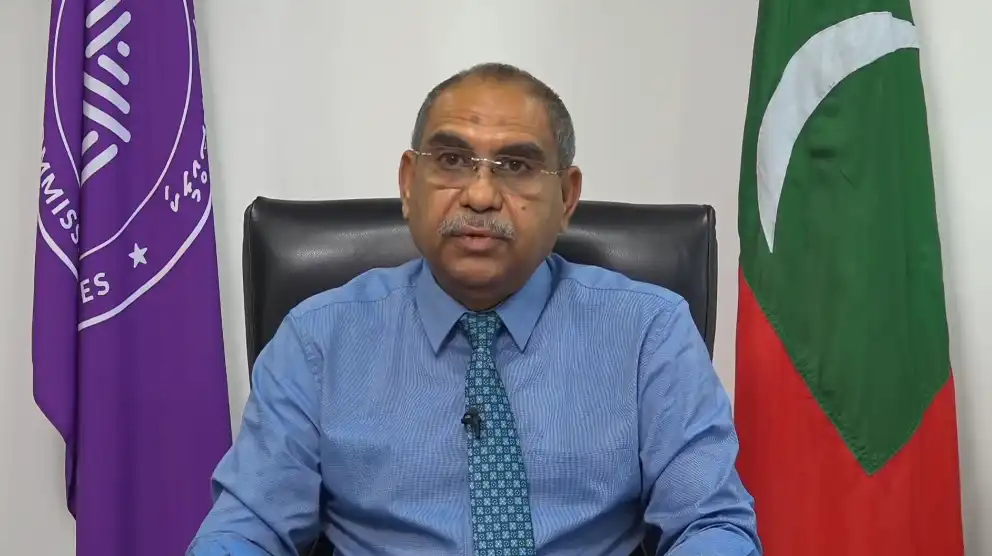
A senior official from the People's National Congress (PNC) stated that the President of the Elections Commission, Fuad Thaufeeq, resigned under the direct orders of President Muizzu. | Raajjemv graphics
A significant chunk of the population is now of the opinion that the incumbent administration of President Dr. Mohamed Muizzu has set a new record for the speed at which it has surrendered public confidence. From the very beginning, there has been a glaring decay in reliability, resulting in a constant stream of departures by the heads of various state bodies as the sense of optimism evaporates. Looking at the way things are going, it is widely expected that the rest of the current term will be defined by a tedious and repetitive pattern of naming new ministry officials only to see them step down shortly after.
A legacy of broken trust
Many critics point out that the incumbent is destined to face an uphill battle due to persistent claims of dishonesty, attempts to trick the citizenry and the pressuring of state representatives into corrupt activities. There is also a strong feeling that the dignity of the highest office in the land has been compromised. As the presidency reaches its halfway mark, the most common official business conducted by the leader seems to be the endless cycle of hiring and firing political staff. While the head of state insists these reshuffles are meant to bring the government in line with the true desires of the populace, many residents argue that not a single major action has actually mirrored what the public wants. On the contrary, there is a snowballing belief that the management of national affairs has been on a downward spiral.
Grim reality of political obedience
Members of the opposition consistently claim that the constant shifting of personnel within ministries and independent bodies is nothing more than a series of tactical moves to serve the personal political interests of the leader. Those who have walked away from their roles in this government suggest that being faithful to the administration is currently understood as following orders without question, even when those orders clash with the law. It is becoming painfully obvious to those inside the system that even the individuals who function exactly as the leader requires eventually find themselves used as disposable tools to be discarded when things go wrong.
Rise and fall of a compliant commission
The departure of the Elections Commission leader, Mohamed Zahid, on a recent Friday caught many off guard. This event carries significant weight because he was the very first person picked for the job after the administration tweaked the law to give the head of state the power to personally choose the commission’s chief. Since taking the role, he appeared to be among the most obedient officials when it came to following executive instructions.
Back in December, when news broke that the commission chief had held a private meeting with the leader at the leader's own request, the official spent more energy protecting the presidency than maintaining his own professional reputation. He argued that the sit-down was merely about getting the funds needed for a commission awareness program. However, immediately following that encounter, the body began a rushed effort to organize a referendum that would merge the presidential and parliamentary elections, a move that sat perfectly with the administration's political goals.
Manipulated ballots and a historic defeat
At that time, those in opposition argued that the electoral body was handling every aspect of the vote specifically to engineer a win for the government. The general public also expressed frustration, feeling they were denied enough time to understand the voting procedures. Further, many people accused the commission of spreading election data in a way that was meant to sway the final tally. Even the way the questions were written on the ballot papers was fought in the Supreme Court, with critics arguing the language was intentionally designed to baffle voters.
Despite the commission chief carrying out every task exactly as the leader wanted, the final result was a massive rejection of the government's plan by seventy percent of the voters. Consequently, the current leader suffered the most humiliating electoral loss ever recorded for a sitting president during a mid-term vote.
Final betrayal of independence
What followed was a perfect demonstration of how state institutions have lost their ability to function on their own. Without offering any valid reason, the electoral body pushed back the deadline for candidates to enter the by-election for the North Hithadhoo seat. At that point, the major parties had already settled on their choices. Just 24 hours after this strange extension, the person who had won the government party’s primary, Mohamed Sinan, announced he was quitting the race. This delay by the commission effectively gave the president’s party a fresh chance to put forward a different person in his place.
While the candidate who withdrew claimed he did so after realizing the party would have a better shot with someone else, a high-ranking party official let it slip that the candidate was actually ordered by the leader to step down. It is widely suspected that the commission moved the deadline purely because the government asked for it. When the commission head was backed into a corner to make this happen, he apparently lost the favor of the leader, which led to his forced exit. Many observers believe that keeping him in power long enough to perform one last scandalous act was a strategic decision to throw him away once his usefulness was completely drained.
Because of these tactics, many have started comparing the president to a classic villain from a Bollywood movie. These characters are known for using people to do their dirty work and then getting rid of them the moment the job is done. It reflects the cinematic trope where once the person is no longer needed, the mission is considered over and they are deleted from the script.