Procedurally speaking, constitutional amendment bill fails to meet necessary requirements: Shamsul Falah
1 އެޕްރީލު 2026 | ބުދަ 00:42Legal expert Dr. Shamsul Falah has highlighted significant procedural flaws in the passage of the constitutional amendment to hold presidential and parliamentary elections concurrently. Questioning the constitutional validity of the decision, Falah noted that the bill was passed without providing adequate time for public consultation or allowing for sufficient debate during the committee stage. He further emphasized that ahead of any referendum, the public must be presented with a balanced view of both the advantages and disadvantages of the proposed changes.


Dr. Shamsul Falah, a writer specializing in legal and constitutional research. | Facebook | Facebook
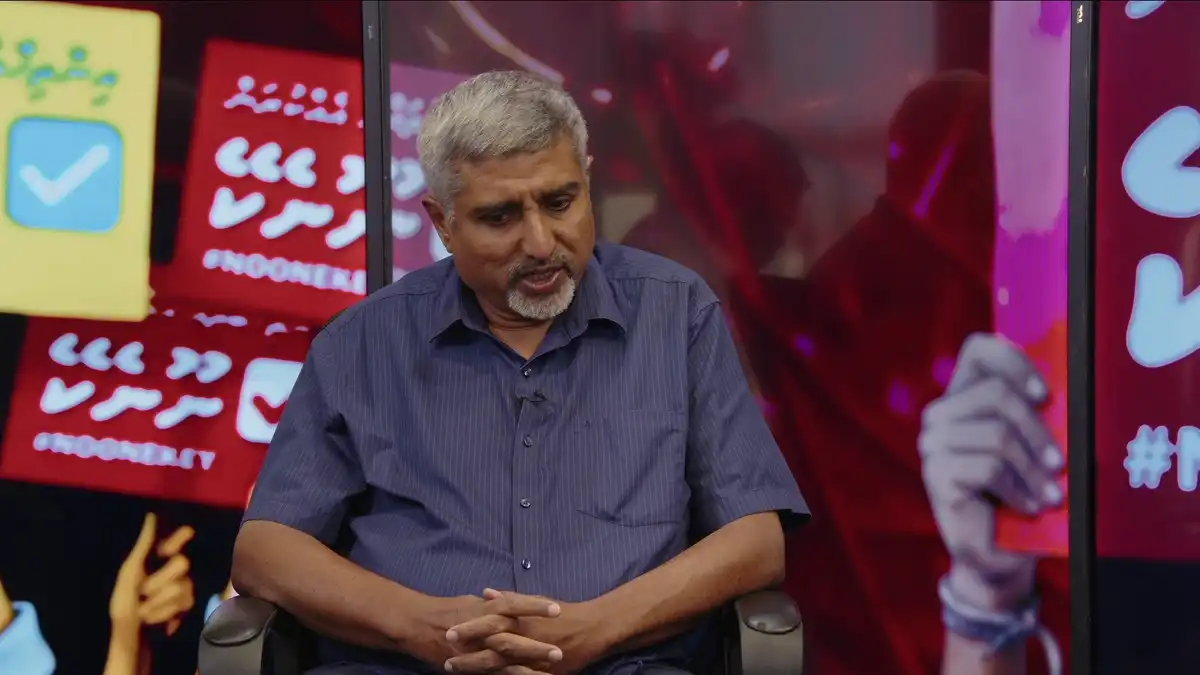
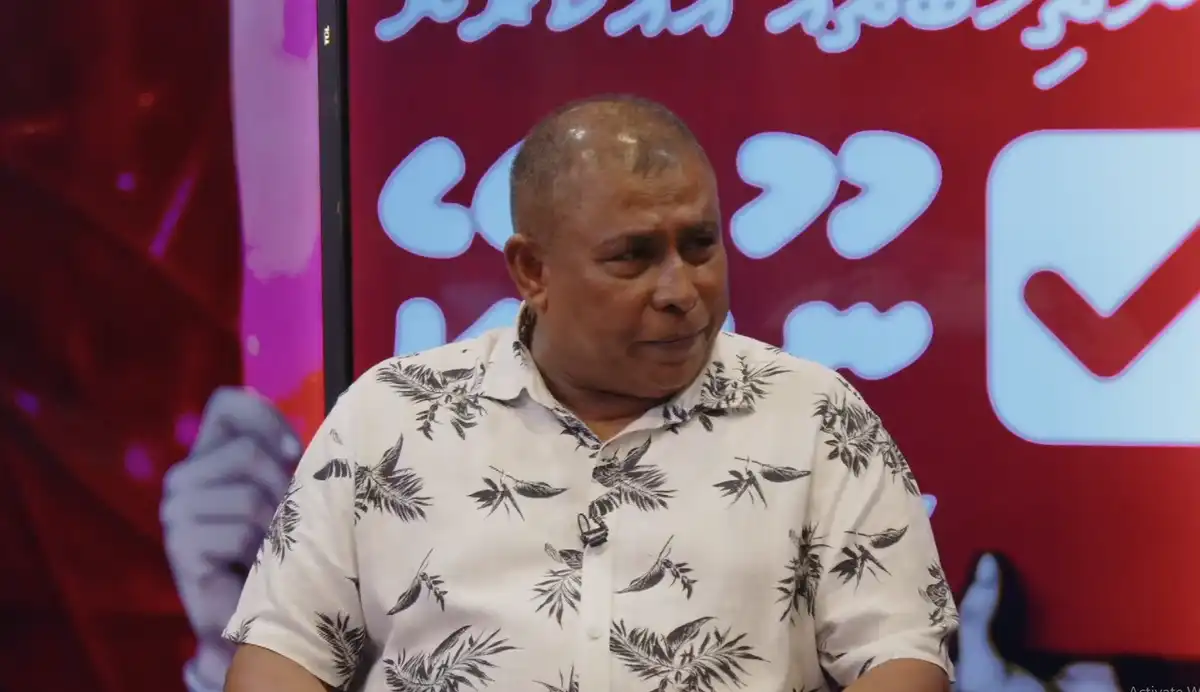
Dr. Shamsul Falah, a legal and constitutional researcher, has stated that the bill passed to amend the Constitution to hold presidential and parliamentary elections concurrently is procedurally flawed.
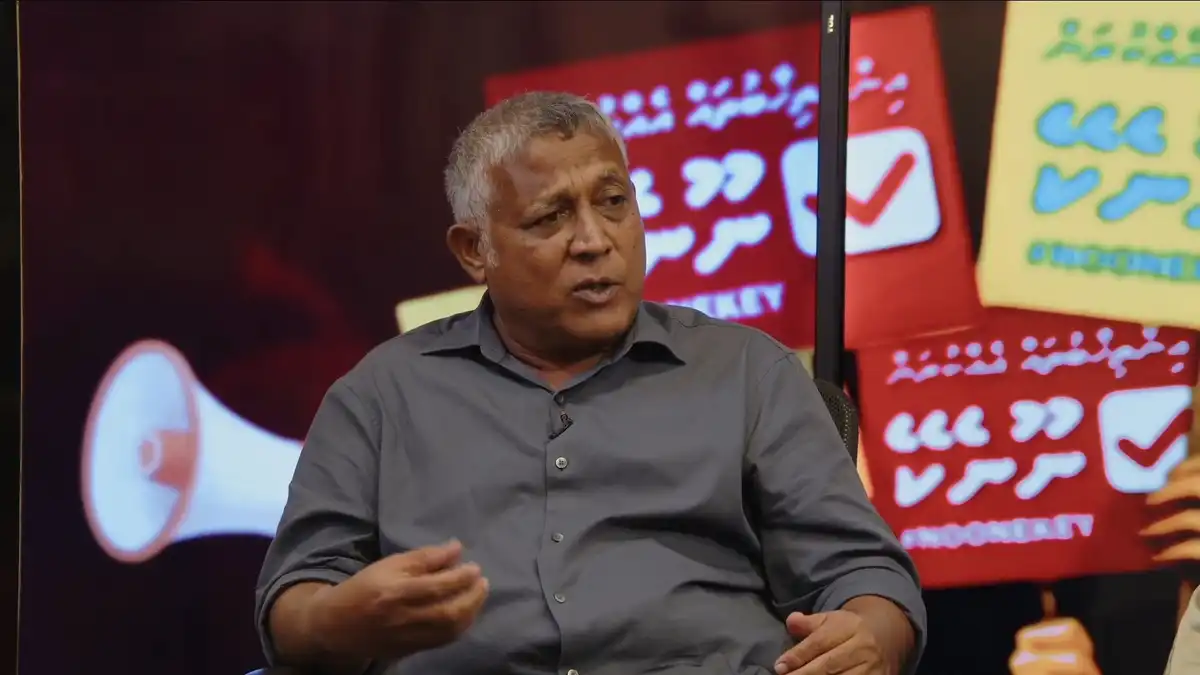
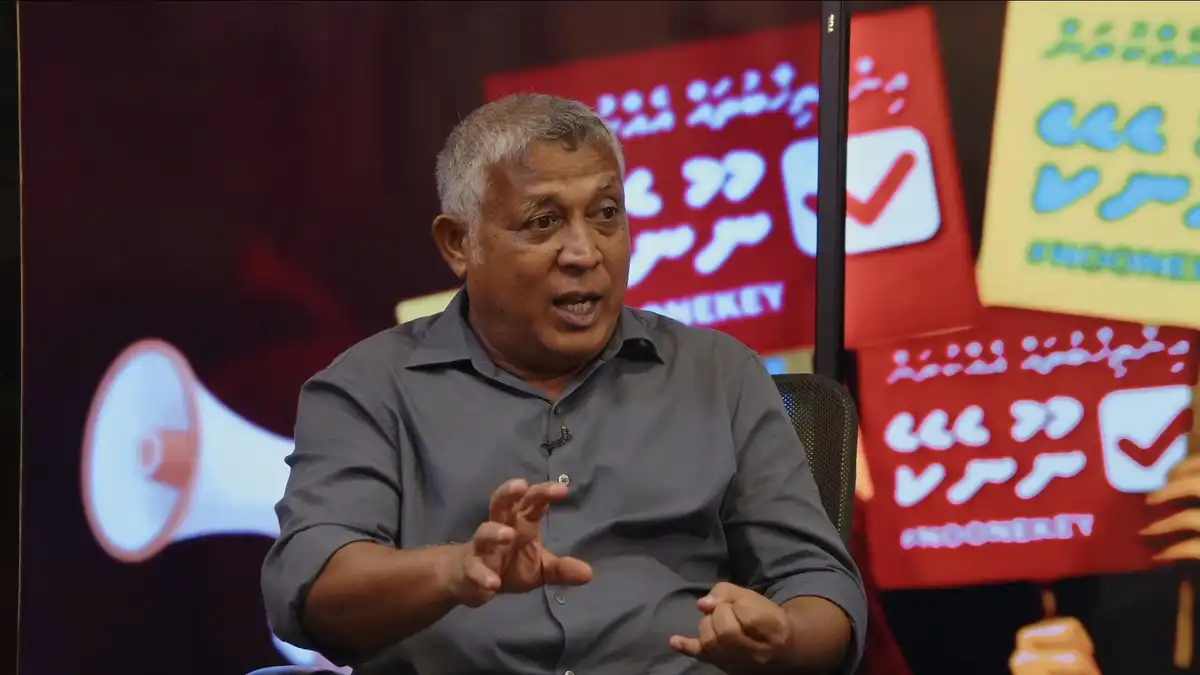
Speaking on RaajjeTV’s "Noonekey" program, Falah criticized the process followed in passing the bill and raised significant questions regarding its constitutional validity.
Falah stated that it has become commonplace for bills to be submitted to Parliament at 10:00 p.m., sent to committee the following morning, and passed by sunset that same day. He noted that while Parliament holds legislative authority, it is not a power to be exercised arbitrarily; as the people are the source of all state power, the legislative process must be conducted with transparency and accountability.
Citing Article 88(a)(2) of the Constitution, Falah stated that it is a constitutional mandate to structure parliamentary proceedings in a transparent and accountable manner that ensures full public representation and participation. However, he noted that the public was not granted adequate time to provide input on the bill. He further highlighted that the legislation was passed during the committee stage in just five minutes, without any substantive debate or amendments.
Two sessions were held regarding this matter. The first took place on January 5, beginning at 9:00 a.m. and concluding at 1:48 p.m., lasting a total of four hours and 48 minutes. To be clear, I am not suggesting that the entire four hours and 48 minutes were dedicated solely to discussing this bill; the agenda for that day included numerous other items. The next session was held on the 10th to finalize the matter, starting at 9:00 a.m. and ending at 11:08 a.m. Therefore, between the five hours and 50 minutes spent on the floor and the two hours and 50 minutes allocated during the committee stage, the records show that the final committee meeting concluded with a vote without any substantive deliberations. There is no documentation to clarify what specific issues or proposals were decided upon, or how those decisions were reached. Do you know how long that final committee meeting lasted? Just five minutes. This is the amount of time that was taken to decide on a constitutional matter of national importance. Furthermore, these sessions were conducted outside of the regular parliamentary term.Dr. Shamsul Falah
Falah stated that, from a procedural standpoint, the bill fails to meet the necessary requirements. He emphasized that no bill can be passed without any form of public participation. Furthermore, he highlighted another procedural concern, noting that Article 266 of the Constitution explicitly stipulates that an amendment to the Constitution must not include any matters unrelated to the specific amendment and its associated provisions. Therefore, he argued that Article 266 should be interpreted to mean that including relevant and necessary components is a mandatory requirement.
Since this exists as a transitional provision, it contradicts the fundamental spirit of Article 266. I wish to highlight this point. Furthermore, the matter is now proceeding toward a public referendum. The President has cited the law governing public referendums, specifically referencing various clauses. Among these is a reference to Article 10 of that Act. Article 10 explicitly mandates that arguments for both sides of the issue must be presented; however, only the supporting arguments have been highlighted. Consequently, this requirement has not been met. From a procedural standpoint, I must note that because these requirements remain unfulfilled, the bill itself fails to meet the necessary procedural standards.Dr. Shamsul Falah
Falah stated that when addressing substantive matters, one must acknowledge that perspectives will differ and that various questions may arise. He emphasized the importance of recognizing and understanding these complexities. However, he noted that if any procedural requirements are not met, the bill would remain incomplete. Falah further asserted that such failures would inevitably lead to questions regarding the bill's validity and constitutionality.