Silt accumulates during land reclamation, and that is clearly visible, but the reclamation must proceed: Minister Thoriq
2 މާރިޗު 2026 | ހޯމަ 10:16Environment Minister Thoriq Ibrahim has acknowledged that land reclamation projects cause environmental damage through sedimentation in lagoons and reefs, yet emphasized that such initiatives remain essential to addressing the nation's housing crisis. Addressing public concern following viral images of heavy siltation surrounding the Rasmalé and Hulhumalé Phase 3 reclamation sites, the Minister noted that the government’s objective is to execute these development projects while implementing measures to minimize the ecological impact.

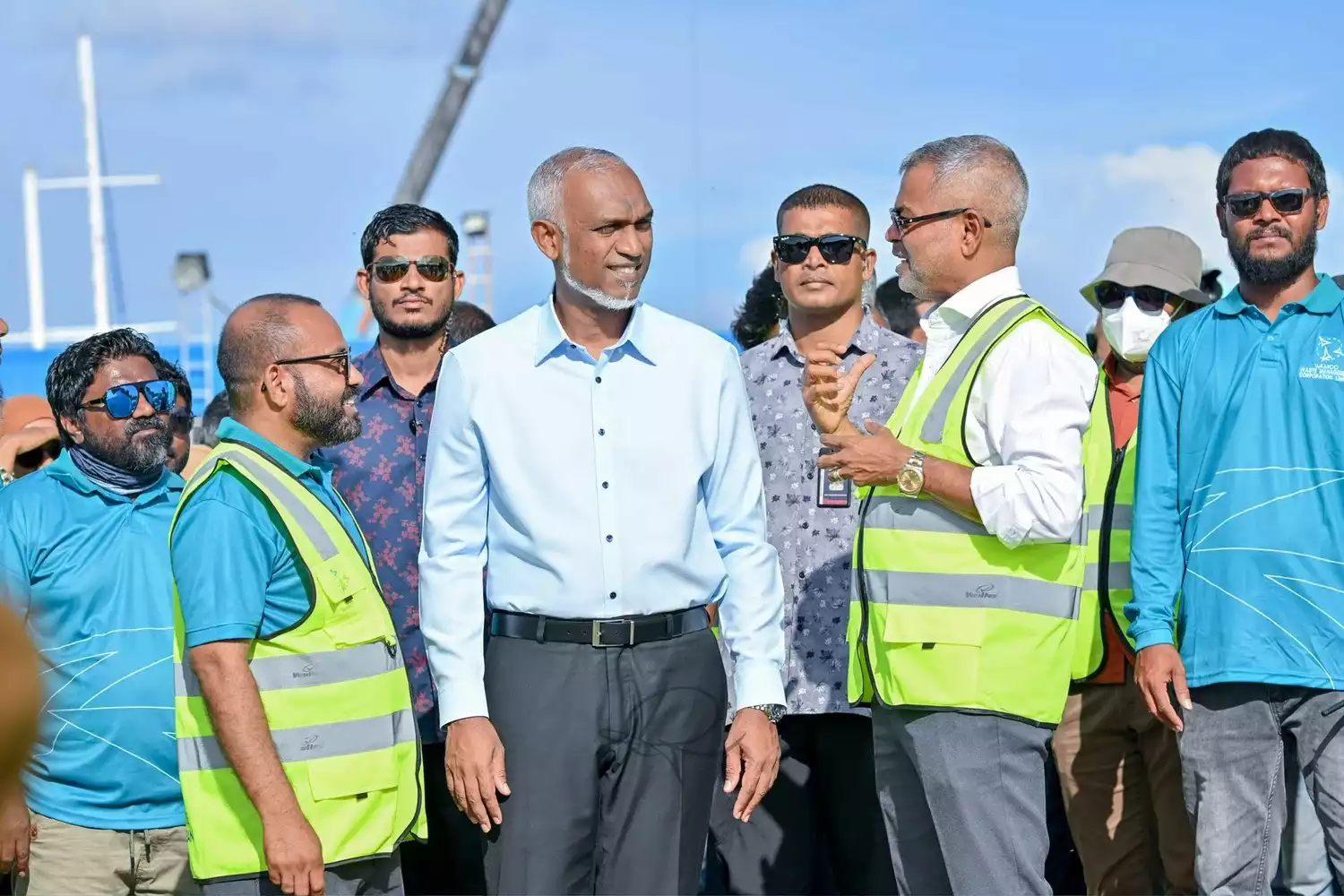
President Muizzu and Minister of Climate Change, Environmental Energy and Water, Thoriq Ibrahim. | Environment Ministry | Environment Ministry
Minister of Environment, Climate Change and Technology Thoriq Ibrahim has stated that while he has witnessed the sedimentation caused by land reclamation, such projects remain a necessary undertaking.
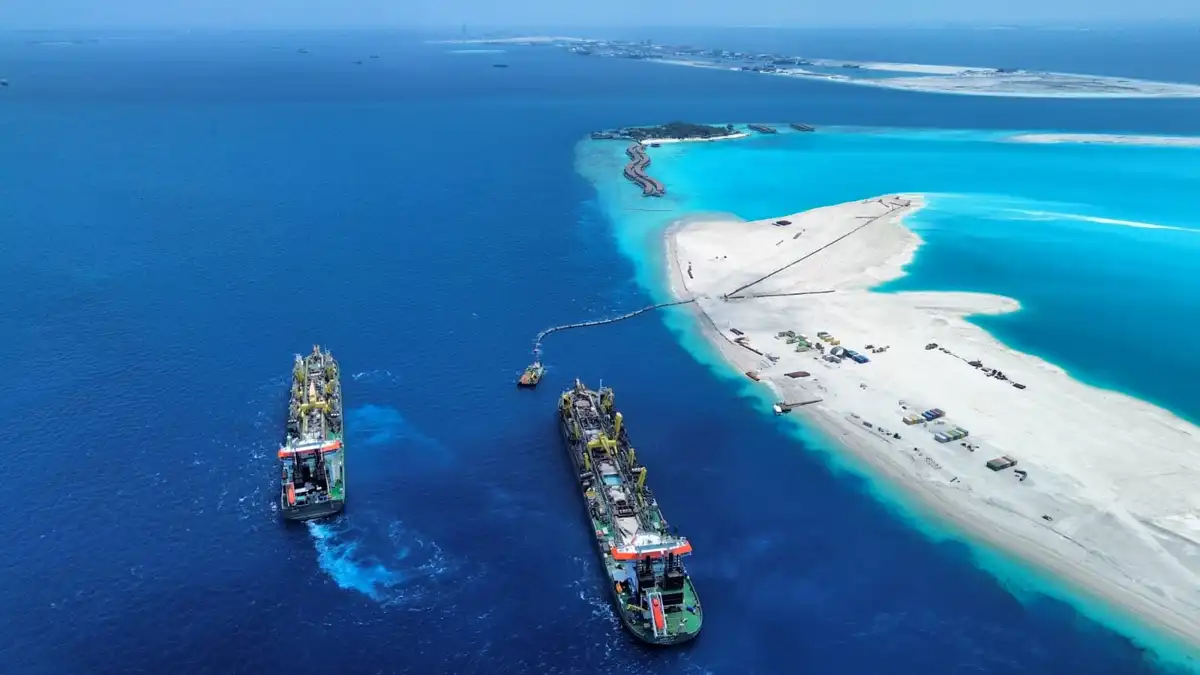
The Minister made these remarks during a press conference at the President's Office on Sunday, in response to a query from RaajjeTV regarding the visible turbidity in the waters around the Male' area. The inquiry highlighted that the sediment plumes are evident in drone photography, aerial footage, and satellite imagery, specifically showing silt runoff over the reefs at the Rasmalé reclamation site, where a large dredger from a foreign company is currently operating.
The Minister stated that he is fully aware of the situation. He noted that he has observed these scenes through photographs as well as firsthand during his travels.
I have seen the photographs myself. I will not deny having seen them. They are visible even when flying overhead.President Dr. Mohamed Muizzu’s Minister of Climate Change, Environment and Energy, Thoriq Ibrahim.
The Minister stated that land reclamation remains a necessity, particularly for the implementation of housing projects. However, he noted that any development project of this nature inevitably results in some degree of environmental impact.
Land reclamation inevitably results in sedimentation. However, it remains a necessary endeavor. We must reclaim land to facilitate housing development, a priority we all acknowledge. There is an undeniable demand for housing across the Maldives. In response to future climate change risks, we must now ensure that land reclamation projects are executed more effectively than before to mitigate potential environmental damage.President Dr. Mohamed Muizzu’s Minister of Climate Change, Environment and Energy, Thoriq Ibrahim.
The Minister stated that their priority is to execute these initiatives in a manner that minimizes environmental impact. He further noted that they are actively assessing the potential environmental consequences of development projects and are working to mitigate those risks.
The murky sediment plumes surrounding the Greater Male' area are now clearly visible in drone photography, aerial views from aircraft, and satellite imagery. In particular, videos circulating in mainstream media show heavy silt runoff spreading across the reefs as a massive dredger from a foreign company deposits sand for the Rasmale' project. Furthermore, footage has emerged showing sediment and turbidity from the Phase 3 reclamation project leaking out of the Hulhumale' lagoon and spreading toward the Hulhule' lagoon and beyond. As this mixture of silt and sand reaches Gulhi, Maafushi, and the surrounding lagoons and resort reefs, many have voiced serious concerns over the environmental impact.
RaajjeTV has previously questioned the Minister regarding the number of environmental complaints received to date concerning these projects and whether any action has been taken against the contractor. However, the Minister has refused to respond to the inquiries.