President Muizzu says coral reefs are the most cost-effective and efficient defense against climate-related threats, at a time when the government has been observed carrying out projects that cause significant damage to these ecosystems
12 ފެބުރުއަރީ 2026 | ބުރާސްފަތި 15:49Speaking at Germany's Humboldt University, President Dr. Muizzu emphasized that climate adaptation is essential for the Maldives' survival. He highlighted the importance of planning long-term, science-based projects to mitigate environmental impacts and stressed that protecting natural resources must be central to development efforts, noting that climate resilience is inextricably linked to national progress.

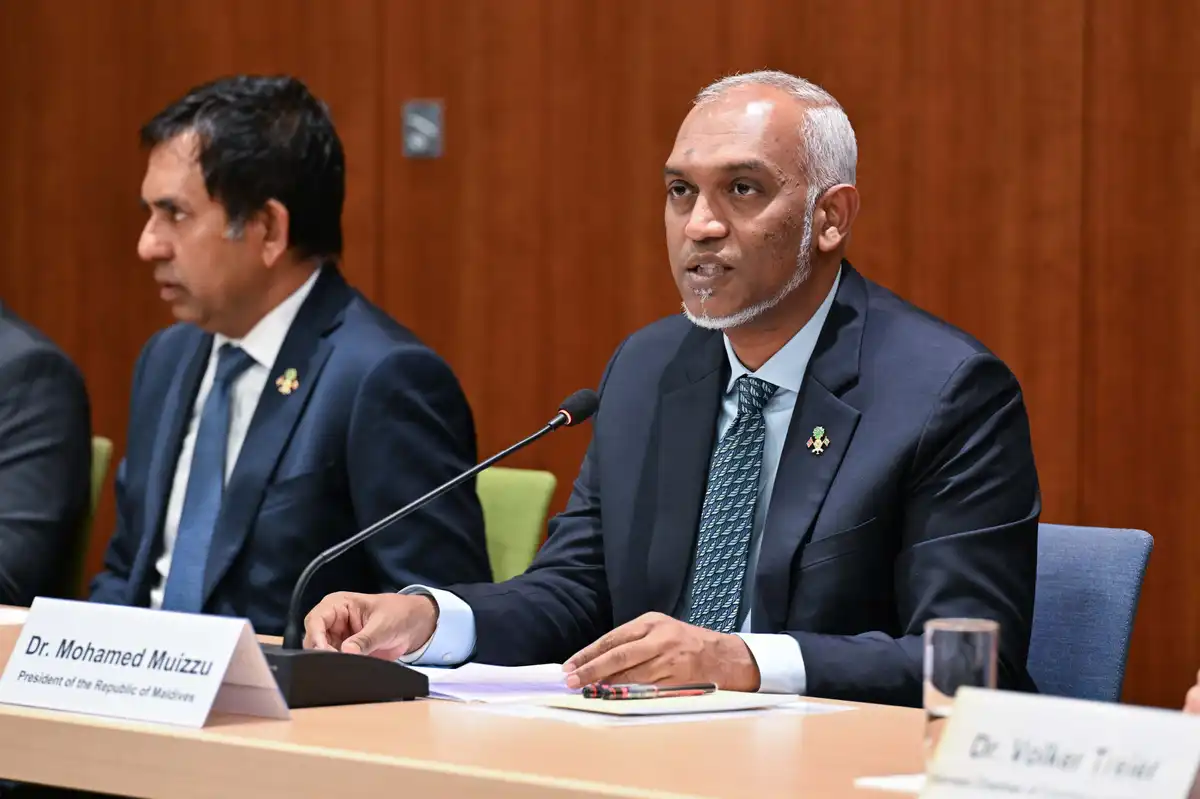
The President has visited Humboldt University of Berlin. | President's Office | Presidents Office
President Dr. Mohamed Muizzu has stated that reefs, mangroves, and other natural resources are the most cost-effective and efficient defenses against climate-related threats.
President Muizzu made these remarks during a visit to Humboldt University in Berlin on Wednesday afternoon, as part of his ongoing official visit to Germany.
In his address at the university, President Muizzu highlighted that although the Maldives’ contribution to global greenhouse gas emissions is negligible, it remains one of the nations most vulnerable to the devastating impacts of climate change.
After previously suggesting that climate change might not be a reality during an Al Jazeera interview following his election, the President shifted his stance during remarks in Germany. He emphasized that climate adaptation and resilience are not optional for the Maldives, but rather a fundamental necessity to ensure the nation’s survival and the protection of its culture and identity.
Emphasizing the urgency of addressing climate change, President Muizzu highlighted the importance of integrating climate risks into national planning and budgeting processes, guided by scientific evidence. He further called for increased funding for climate adaptation initiatives and urged for these efforts to be community-driven. He also stressed the need to enhance local governance capacity to ensure that such projects are led by the people and involve active community participation.
Furthermore, he described access to adaptation financing for countries most vulnerable to climate change as a matter of climate justice. He emphasized the critical importance of ensuring that countries like the Maldives have access to predictable, adequate, and accessible climate finance.
Reflecting on the lessons learned from the Maldives' efforts to adapt to climate change, President Muizzu emphasized that any delay in these initiatives would lead to a manifold increase in necessary expenditures in the future.
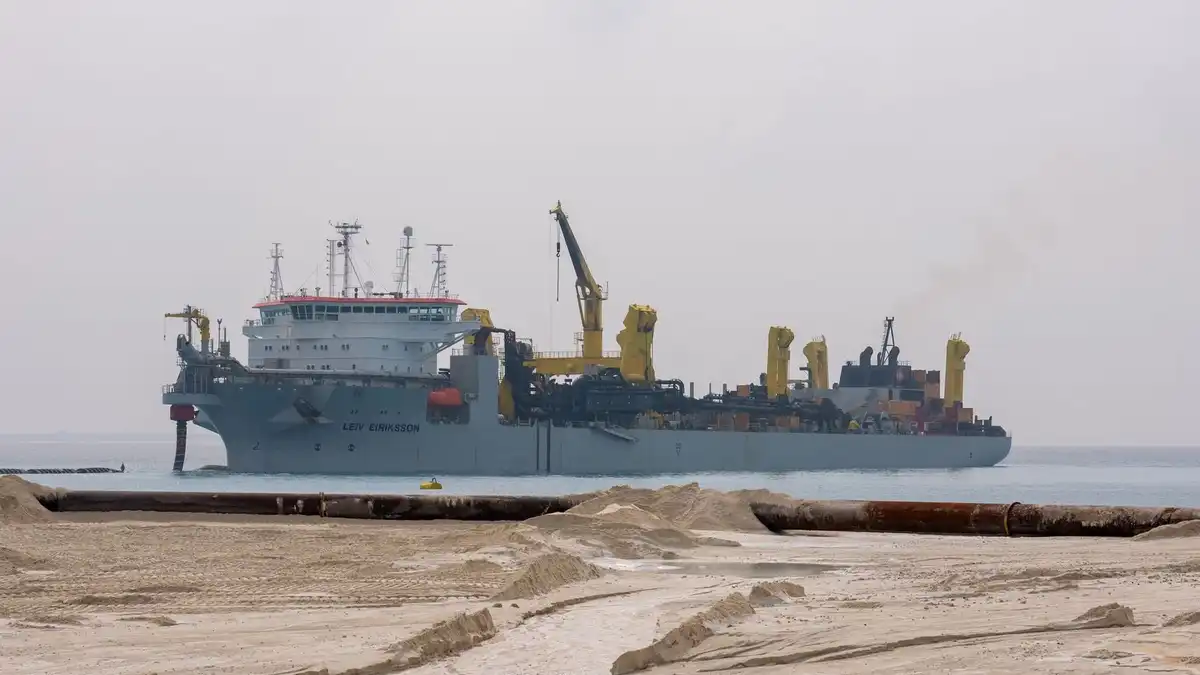
Amidst growing public outcry and social media criticism over the government's large-scale dredging and land reclamation projects—which utilize some of the world's largest dredgers without apparent environmental oversight—President Muizzu has addressed the resulting damage to coral reefs. In his remarks, the President described reefs, mangroves, and other natural resources as the most cost-effective and efficient defenses against climate-related threats. Furthermore, he emphasized that climate adaptation efforts and national development must progress hand in hand.
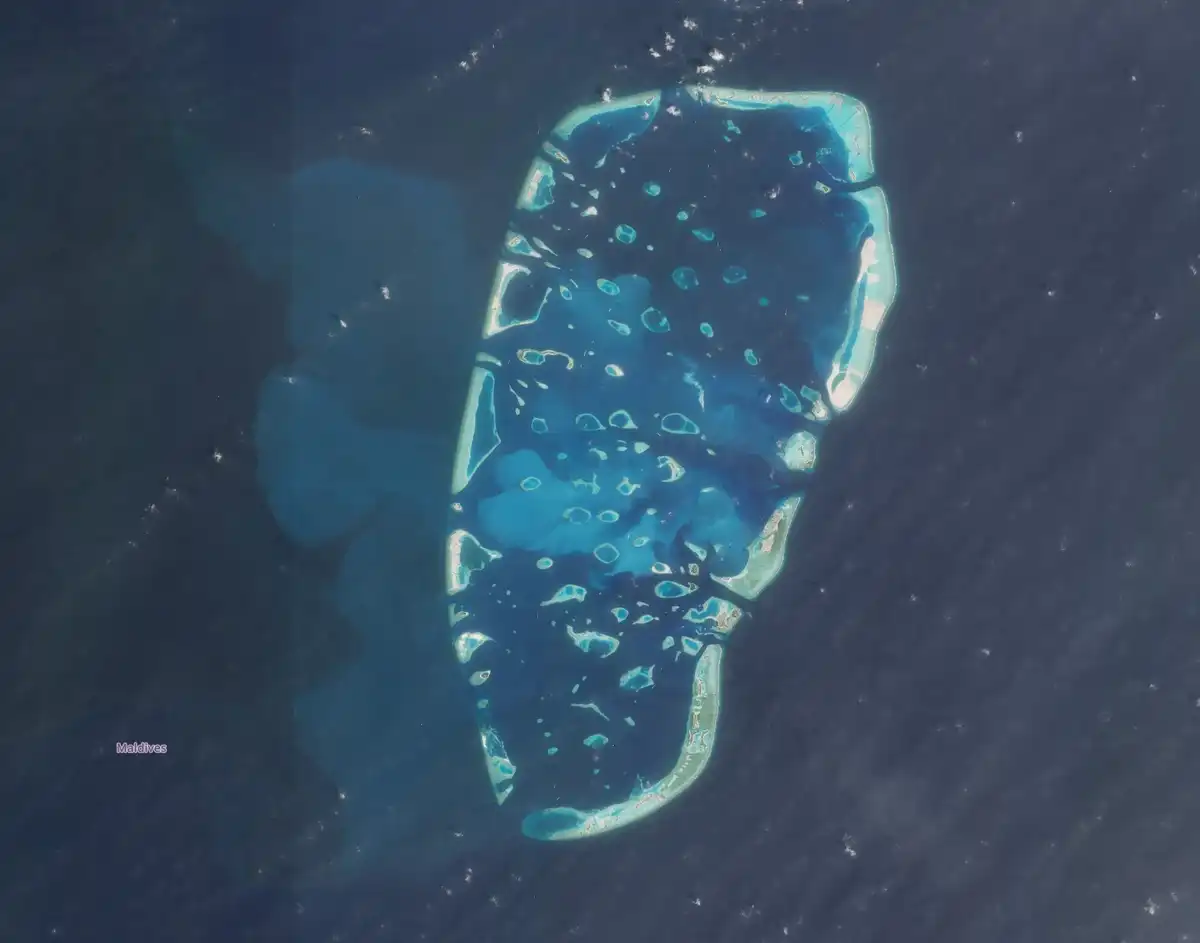
A large area of South Malé Atoll has been affected by a widespread dispersal of sediment.
President Muizzu emphasized that since the adverse effects of climate change transcend borders and regional boundaries, addressing them requires unhindered, knowledge-based efforts. He called for solutions focused on the long-term future, rather than prioritizing narrow national interests and short-term gains.
Furthermore, during the question-and-answer session held as part of the visit, President Muizzu highlighted the critical role of academic institutions in combating the spread of climate change misinformation.
Highlighting the Maldives' commitment to sustainable tourism and its transition to renewable energy, President Muizzu called for strengthened cooperation among Small Island Developing States (SIDS). He further urged major global emitters to increase their support for vulnerable nations.