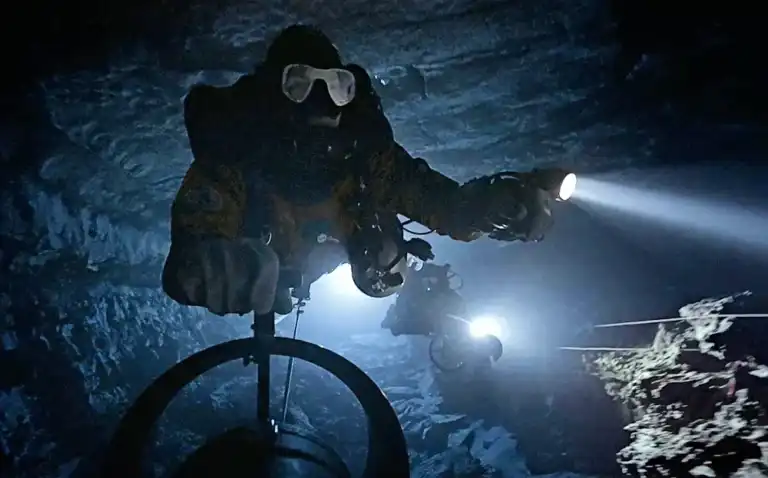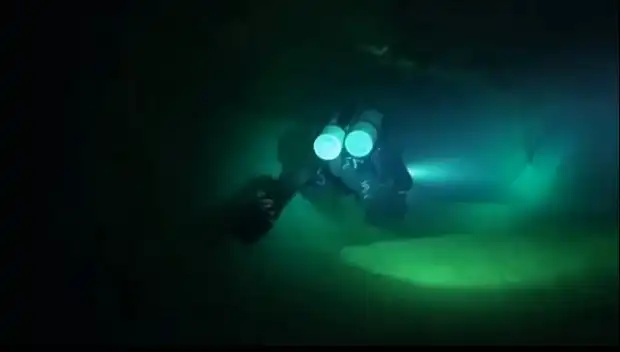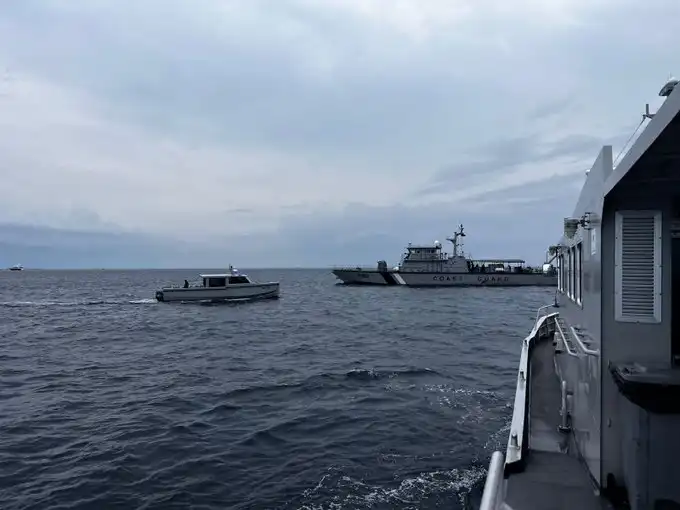
Italian divers died after losing their way out of the underwater cave
22 މެއި 2026 | ހުކުރު 22:09Investigations have revealed that five Italian tourists died in a deep underwater cave near Alimatha after losing their way and becoming trapped in a narrow passage. The group, who were in the Maldives for a scientific study, reportedly descended to a depth of 60 meters, significantly exceeding safety limits, prompting an official inquiry into the circumstances of the dive. A Maldivian military diver also lost his life during the search and rescue operation following the incident.
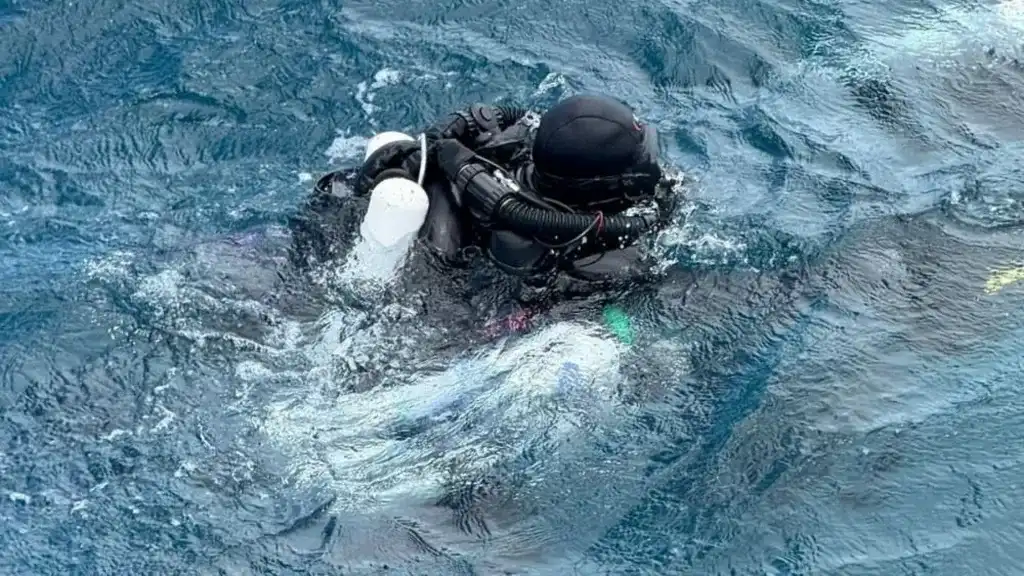
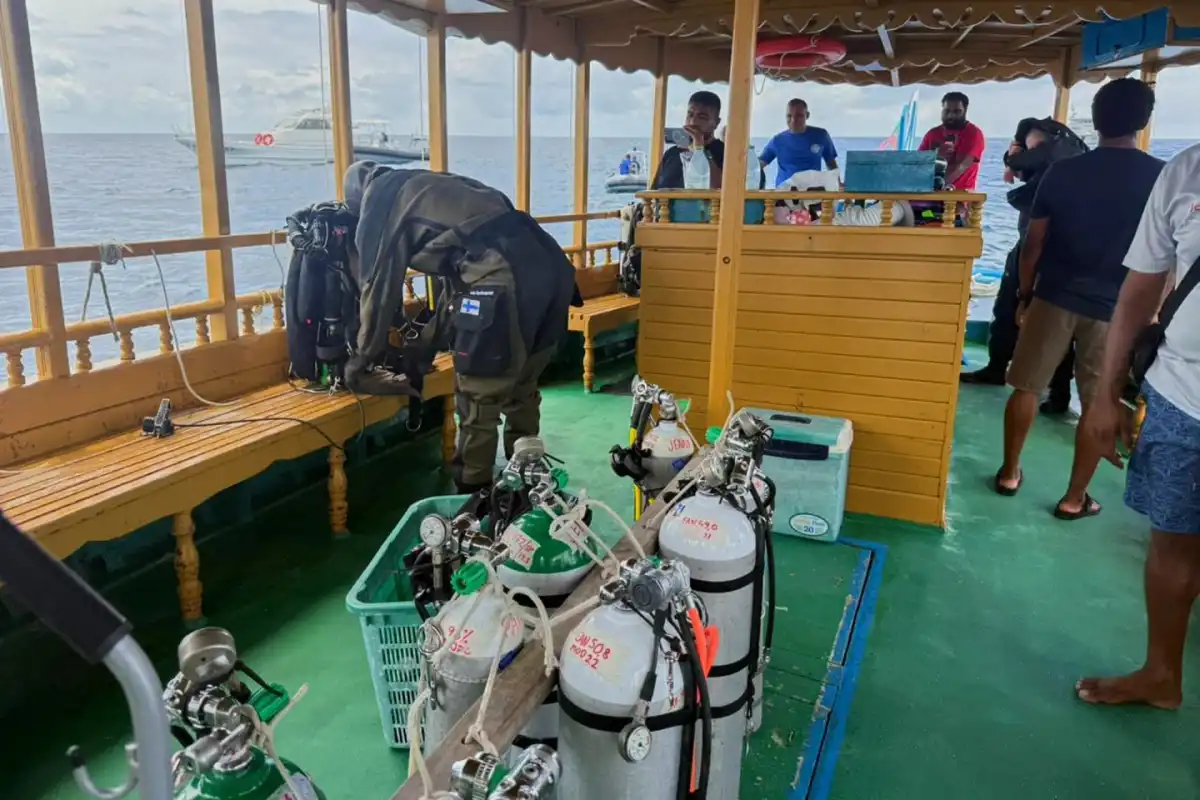
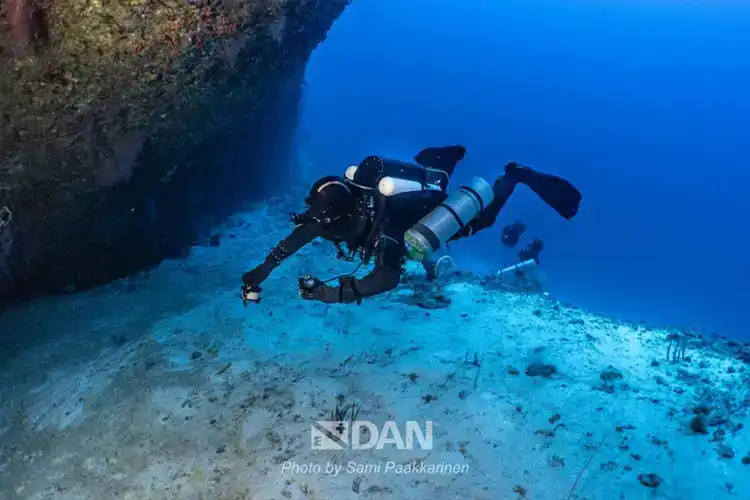
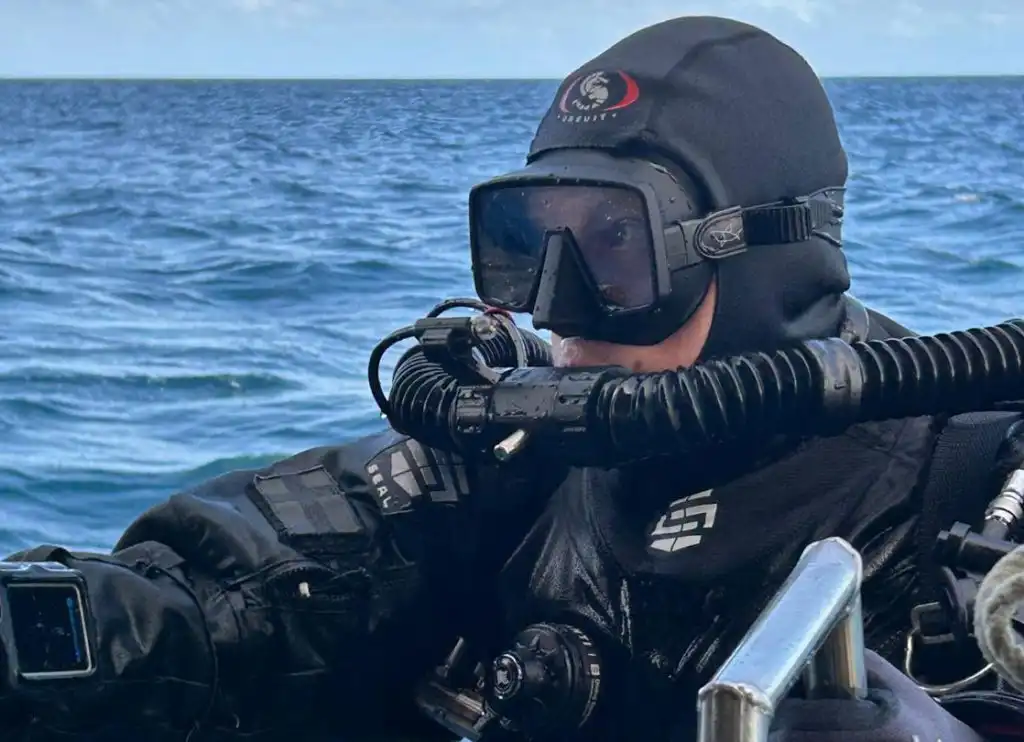
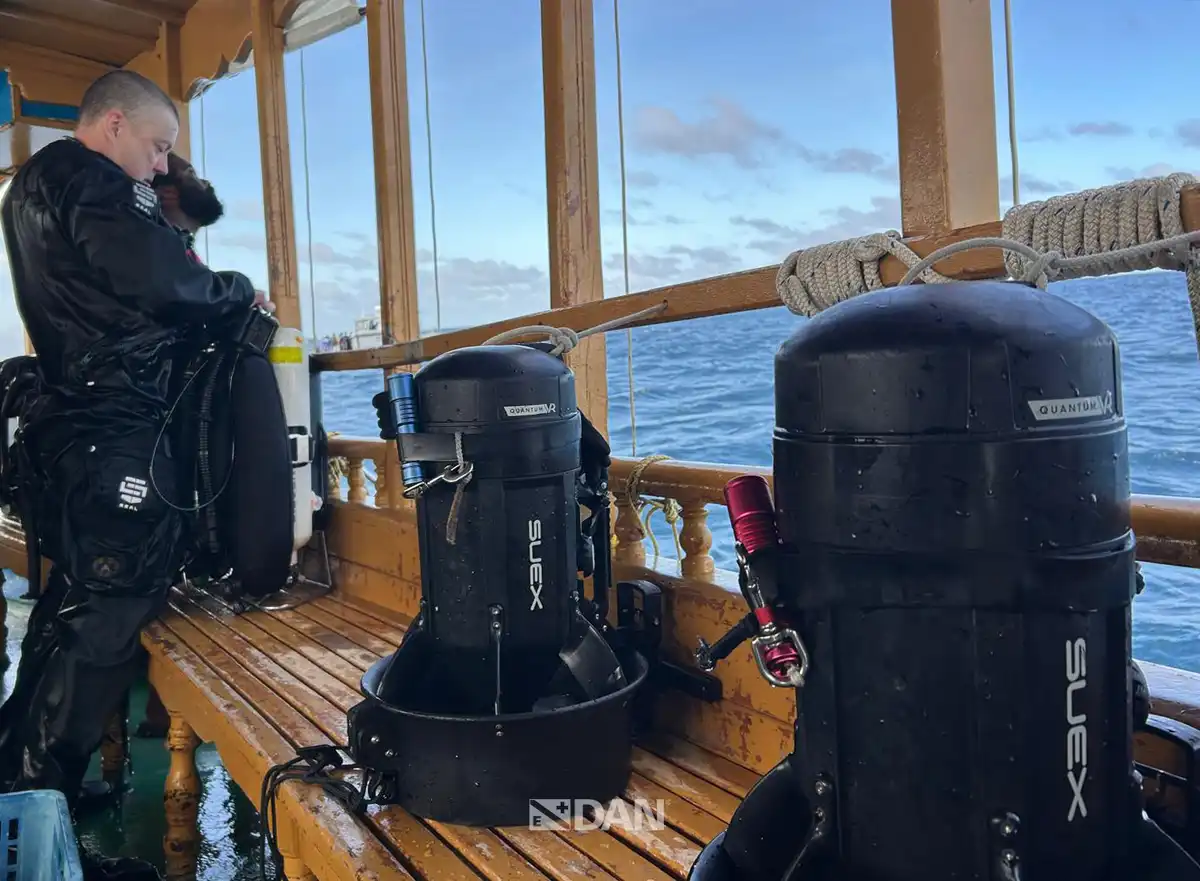
A team of specialist divers from Finland recovered the bodies of two deceased individuals from the seabed on Tuesday. | Reuters
The head of the recovery firm involved in retrieving the bodies of five Italian tourists who died in a Maldives diving accident stated on Thursday that the victims likely became disoriented inside an underwater cave and headed in the wrong direction while attempting to exit.
According to a report by the Italian newspaper La Repubblica, Finnish divers working for "Done Europe" discovered the bodies of the five individuals inside a cave at a depth of 165 feet. The remains were located within a narrow passage that offered no means of escape.
The newspaper La Repubblica, quoting the company's CEO Laura Maroni, reported that there is currently no way for those trapped to exit their location.
The Italian divers who perished in this incident have been identified as Monica Montefalcone, an Associate Professor of Ecology at the University of Genoa; her daughter, Giorgia Somacal; marine biologist Federico Gualtieri; researcher Muriel Odenino; and diving instructor Gianluca Benedetti. Additionally, a Maldivian military diver lost his life during the search and rescue operation for the missing divers.
In a statement released on Friday, the University of Genoa clarified that Montefalcone and Odenino had traveled to the Maldives on an official scientific mission to monitor marine environments and research the impact of climate change on underwater ecosystems.
In an interview with the newspaper, Marroni explained that the cave discovered by Finnish divers near Alimathaa begins with a vast, brightly lit expanse characterized by a sandy floor.
He noted that while the passage ends in a dimly lit alleyway, the area was clearly visible with the use of a handheld flashlight.
Measuring approximately 30 meters in length and 3 meters in width, this passage leads into the second section of the cave. This expansive chamber remains in total darkness, completely devoid of any natural light.
There is a stretch of sand between that alleyway and the second section.
According to the newspaper, entering the second section across the sandbank is relatively easy. However, when attempting to return, the sandbank appears as a solid wall. Consequently, it is believed that the exit path remains hidden behind the elevation of the sand.
To the left of the sandbank lies another alleyway, extending only a few meters in length.
"The divers' bodies were discovered inside that alleyway. It is believed they entered the passage under the impression it was an exit leading outside," the report stated.
Meroni stated that if a diver were to enter that alleyway by mistake, returning would be extremely difficult, particularly in a situation where their cylinder's air supply is running low.
He stated that since the divers were using standard air cylinders, they would have only a very limited amount of time to explore the second section of the cave at such a significant depth.
"We are talking about a window of approximately 10 minutes, or perhaps even less," Maroni stated.
He further explained that realizing they had taken the wrong path, combined with the panic of low oxygen levels, would lead to rapid breathing, causing the cylinder's air supply to deplete even faster.
According to the Italian Foreign Ministry, there were 25 Italian tourists aboard the safari vessel "Duke of York." This group included the five divers who lost their lives.
The divers descended to a depth exceeding the established safety limits.
Maldivian authorities are currently investigating how a group of Italian divers was permitted to descend to a depth of 60 meters, despite the national legal limit for recreational diving being set at 30 meters.
Cave diving is a highly technical and inherently dangerous activity. It requires specialized training, advanced equipment, and the strict observance of rigorous safety protocols. The risks escalate significantly in deep environments where a direct vertical ascent to the surface is impossible, particularly when water clarity is compromised. Experts warn that in such confined spaces, sediment can easily be disturbed, leading to "silt-outs" that cause zero visibility and leave divers disoriented and unable to find their way out.
Maldivian officials have described this as the most dangerous diving incident in the country's history.
While diving and water sports-related accidents in the Maldives remain relatively rare, several fatal incidents have been reported in recent years.
Following the death of a British tourist during a diving excursion last December, her 71-year-old husband, who had been grieving the loss, passed away just a few days later after falling ill.
Furthermore, a 26-year-old Japanese tourist went missing while diving near Male' last June.
According to media reports, at least 112 tourists have lost their lives in various maritime accidents in the Maldives over the past six years. Among these fatalities, 42 were attributed to diving or snorkeling incidents.