Risk of Hantavirus in Maldives is extremely low: HPA
9 މެއި 2026 | ހޮނިހިރު 09:16The Health Protection Agency (HPA) is closely monitoring the situation in collaboration with the World Health Organization following the detection of Hantavirus on a South American cruise liner. While three fatalities have been reported on an Argentine vessel, the HPA stated that the risk to the Maldives remains very low as the rodent-borne disease rarely spreads between humans. International health authorities are currently implementing control measures in accordance with global standards to contain the outbreak.

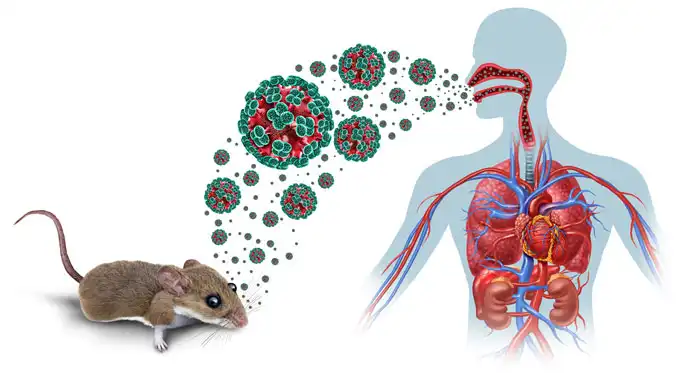
Hantavirus is transmitted to humans by rodents. | Science News
The Health Protection Agency (HPA) has stated that the risk of Hantavirus in the Maldives is extremely low.
The Health Protection Agency (HPA) has announced that it is monitoring the Hantavirus situation through the World Health Organization (WHO), following reports of an outbreak on a cruise liner traveling in the South American region.
The Health Protection Agency (HPA) has stated that no cases of the disease, nor any individuals who have come into contact with an infected person, have been identified in the Maldives to date, noting that the risk to the country remains very low.
Hantavirus is typically transmitted to humans when particles from the waste of infected rodents—such as urine, droppings, and saliva—become airborne and are inhaled into the respiratory system. This most commonly occurs during the cleaning of areas heavily infested with rodents.
As this is a "zoonotic" disease transmitted from animals to humans, person-to-person transmission is extremely rare. However, reports indicate that a specific variant known as the "Andes strain" can be transmitted between humans. This typically occurs only through direct and close contact with an infected individual.
The disease has gained global attention following an outbreak of Hantavirus aboard the cruise ship "MV Honduras," which was traveling from Argentina. Five individuals have tested positive for the virus, resulting in three deaths so far. Of the reported cases, five have been laboratory-confirmed, while the remaining three are currently classified as suspected cases.
Furthermore, the World Health Organization (WHO) stated that while the disease poses a significant risk to certain individuals, the overall risk to public health remains low. The organization added that it is working with various countries and international partners to control the outbreak under the International Health Regulations (IHR).