
Court orders Adhadhu news to provide passwords for laptops and hard drives; Adhadhu decides not to comply
5 މެއި 2026 | އަންގާރަ 07:26The news outlet "Adhadhu" has refused to comply with a Criminal Court order to provide passwords for devices currently in police custody. Citing the fundamental principle of protecting journalistic sources, the publication’s CEO stated they are prepared to face any legal consequences resulting from this refusal. Although the devices were seized under a search warrant, it has been noted that prior authorization for their continued retention had not been granted.

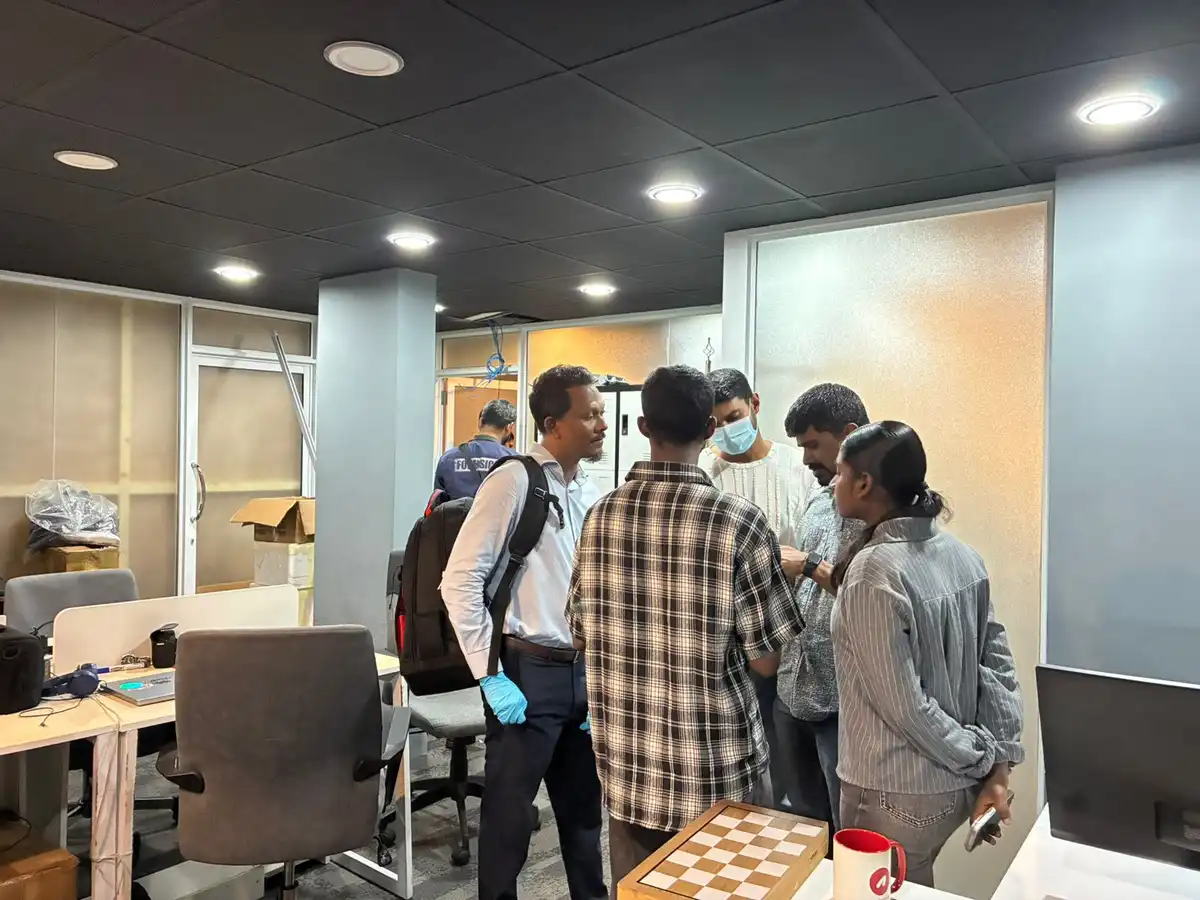
Police active at Adhadhu news office. | Raajje MV
The Criminal Court has ordered Adhadhu news to provide police with the passwords for laptops and hard drives seized from its office. The seizure is part of an ongoing investigation into the documentary "Aisha," which was published on the news outlet's social media platforms.
In the order issued by Criminal Court Judge Ahmed Shafiu, the police have been granted access to data on seized laptops, hard drives, and pen drives. The order further mandates that passcodes be provided for cloud storage and social media accounts to facilitate full access for the investigation.
According to the court order, a representative designated by the Maldives Media and Broadcasting Commission must be present while police access the data. Furthermore, as the materials requested by the police are legally privileged, the court has instructed the police to take all necessary precautions to ensure the confidentiality and protection of the information. Under this order, Hussain Fiyaz Moosa, the CEO of Adhadhu, was summoned to the police headquarters at 2:00 p.m. today.
Despite the court order, Adhadhu news has decided not to provide passwords for any devices seized by police during the raid on its office on April 25. Fiyaz’s legal counsel, Ali Hussain, stated that they have informed the police that Fiyaz has not committed defamation against anyone. He further noted that the decision to withhold the passwords was made to protect journalistic sources, as disclosing them could compromise their confidentiality.
Ali Hussain further stated that providing the password raises concerns that it could expose not only the sources related to this specific case but also individuals who have provided information on other matters. Article 25 of the Constitution stipulates that no person shall be compelled to disclose the source of any information they disseminate or publish. Furthermore, under Section 137 of the Evidence Act, the disclosure of sources can only be mandated in serious cases involving terrorism offenses or matters of national security.
The lawyer stated that the police issued a warning today, noting that failure to provide passwords as requested could result in legal action. However, Ali Hussain added that Fiyaz remains firm in his decision not to disclose any information that could reveal his sources, regardless of potential prosecution or imprisonment.
In connection with this case, police conducted a four-hour operation at the Adhadhu news office, during which they seized a total of 20 devices, including laptops, hard drives, and memory cards. Notably, the court order presented by the police to search the premises that day did not authorize the seizure of any property; it granted permission only for a search.