A minister of evasion and his never ending Muizzu praise loop
30 އެޕްރީލު 2026 | ބުރާސްފަތި 10:54Saeed has been facing criticism for failing to address the rising USD exchange rate despite previous political promises. He frequently employs diversionary tactics and praise for the administration to avoid answering direct questions regarding economic data and infrastructure projects. This pattern of vague responses has led to public frustration over the lack of transparency and accountability in his ministry.

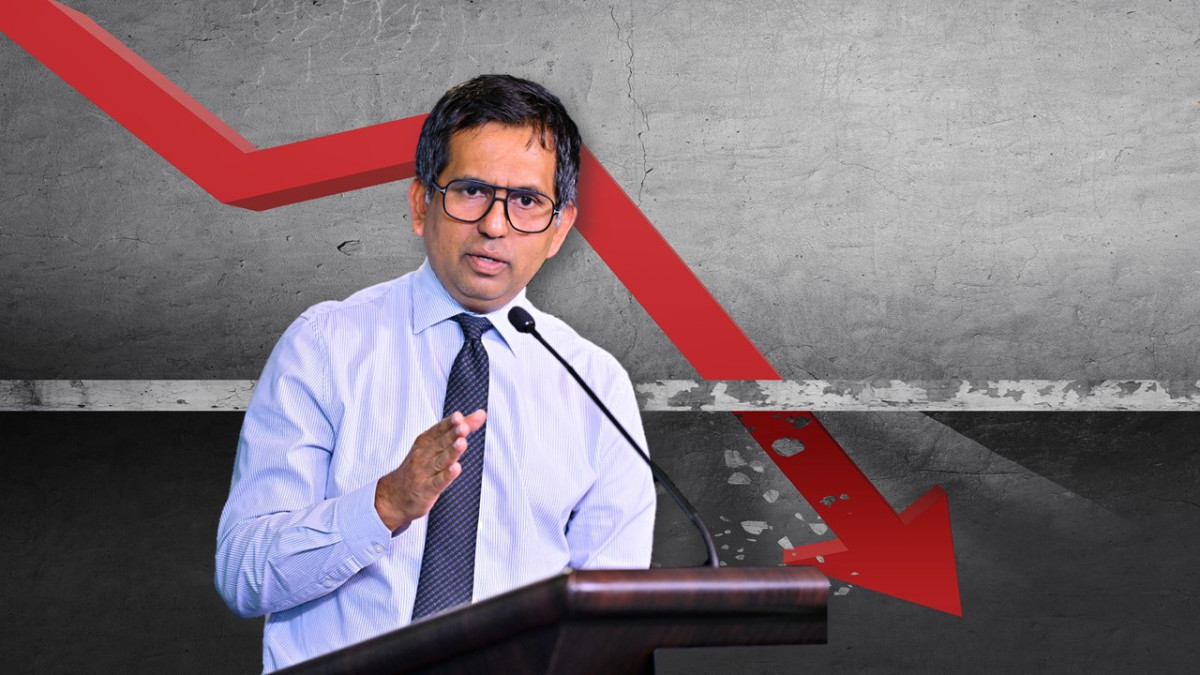
Minister of Economic Development, Transport and Trade Mohamed Saeed. | RaajjeMV
Minister of Economic Development, Transport and Trade Mohamed Saeed, has solidified his position as a heavy hitter within the current government. Viewed frequently as the primary shield for President Dr. Mohamed Muizzu, Saeed seems far more interested in burying the president under a mountain of flowery compliments and empty talk than actually performing his job of being answerable to the citizens. Despite his reputation as a genius economist, his real talent lies in dodging straightforward inquiries and replacing them with tangled, irrelevant monologues meant to mimic intellectual depth.
Vanishing USD rate solution
The most urgent inquiry the public is currently lobbing at Saeed involves the exchange rate. He originally promised the populace that if the ruling People’s National Congress (PNC) took control of the People’s Majlis, the relentless climb of the U.S. Dollar would be stopped in its tracks. Even though voters handed PNC a super-majority, the price of USD continues its skyward trek. This failure has been highlighted time and again by citizens, the press and members of the People’s Majlis.
Still, a direct response from the minister is nowhere to be found. When grilled in the legislative chamber, he changed the subject by arguing that winning the parliamentary majority was the most significant victory the country has seen lately. He then pivoted to applauding the administration's supposedly brave shifts in foreign exchange rules, moves he insisted no former head of state had the guts to try, while keeping the spotlight firmly on the alleged genius of the government and President Muizzu.
Distraction as a fine art
At a recent media briefing, the same question produced a lecture on why the administration needed that super-majority in the first place. He then meandered into a discussion about the recent choice to synchronize election dates, stressing how vital this was and urging voters to back PNC candidates in the next local council races. Through all of this, the actual question about the USD was left completely ignored.
If a trophy existed for delivering the most unrelated answers possible, Saeed would be the undisputed champion. His explanations are frequently so rambling and disconnected that the person asking the question might forget what they wanted to know in the first place. It is a sad state of affairs that these rehearsed lines are not just off-topic, but they often fail to make any logical sense whatsoever.
Empty promises and metered silences
This habit of dodging the truth goes beyond the currency crisis. Initial vows suggested that the new bunkering services in Ihavandhippolhu would bring in USD 400 million every year, yet Saeed cannot produce any hard data on actual net profits or the number of jobs created. When these specifics are requested, his go-to move is to gush over President Muizzu’s approach to foreign policy. A straight line between a query and his reply simply does not exist.
The pattern repeated when he was asked about the hold-up in rolling out taxi meters, a project the administration swore would start at the end of last year. Instead of a status report, the minister gave a circular explanation, claiming that if the rules demand meters, they must be used and if the rules change their mind, they are not needed.
People can keep asking questions, but the likelihood of Saeed giving a real answer is slim. It appears the minister might not even know the difference between what he understands and what he is clueless about. Engaging with him is like playing a broken recording; sounds come out, but they almost never have anything to do with the conversation at hand.